Understanding suffixes Grammar Worksheets for 6-Year-Olds
3 filtered results
-
From - To
Unlock the magic of words for your six-year-old with our 'Understanding Suffixes Grammar Worksheets.' Specially designed to make learning engaging and fun, these worksheets will help children master the art of suffixes. They introduce common endings like "-ed" and "-ing," enabling kids to transform base words and expand their vocabulary. The exercises are crafted to build confidence in reading and writing. Through vivid illustrations and simple examples, young learners will grasp the vital role of suffixes in language. Perfect for both classroom and home use, our worksheets inspire curiosity and lay a strong foundation for future grammar skills.
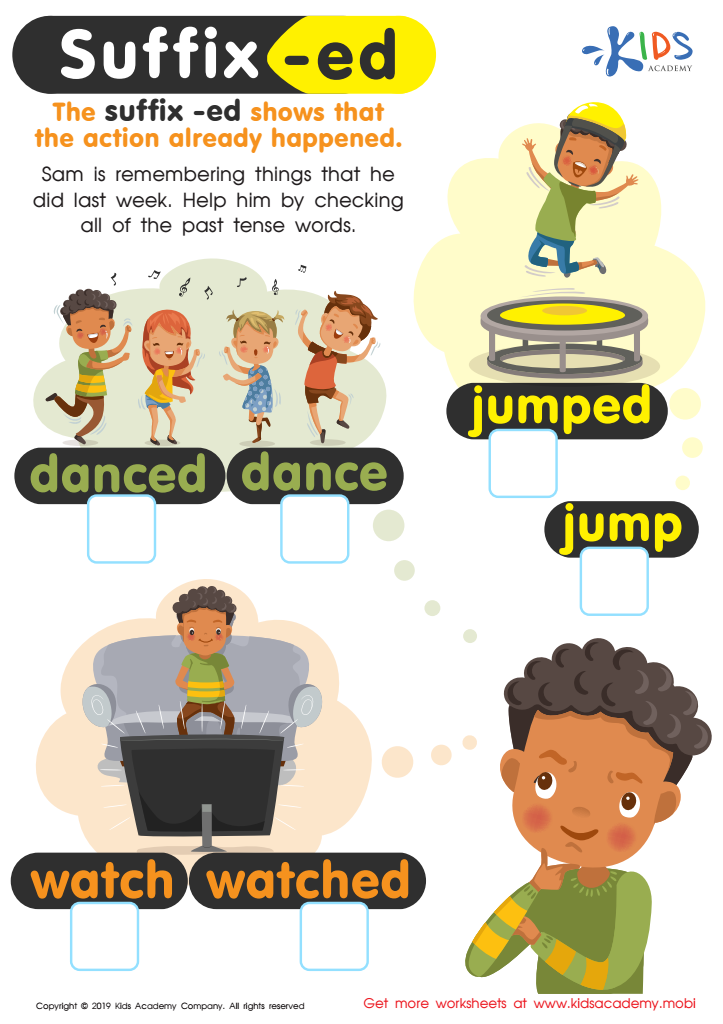
Suffix-ed Worksheet
 Assign to My Students
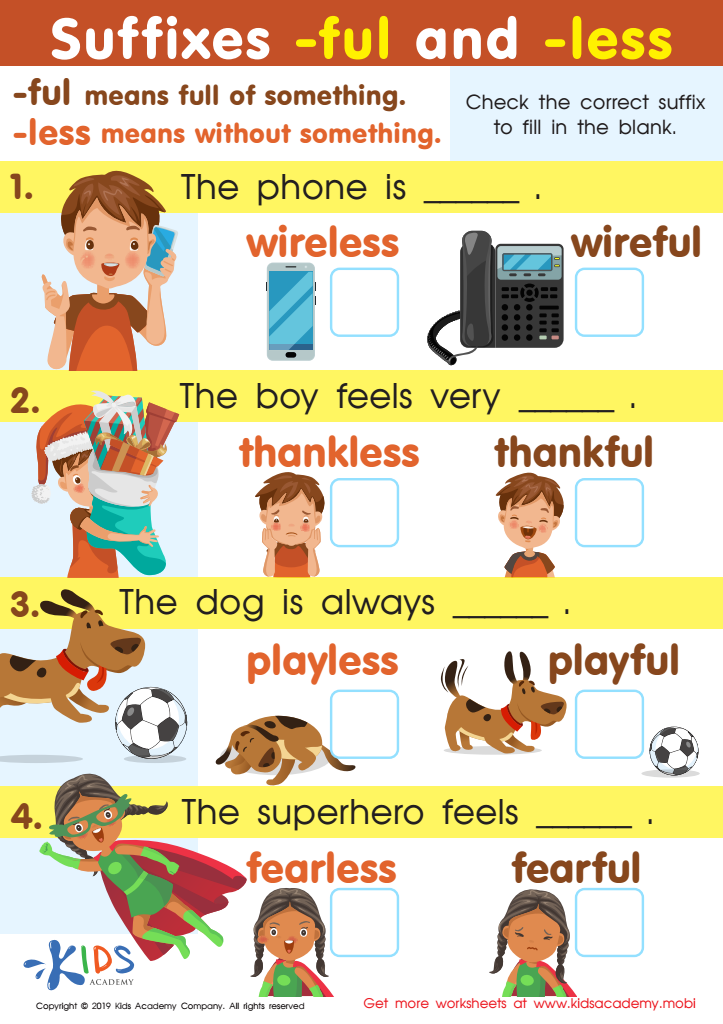
Suffixes –ful and –less Worksheet
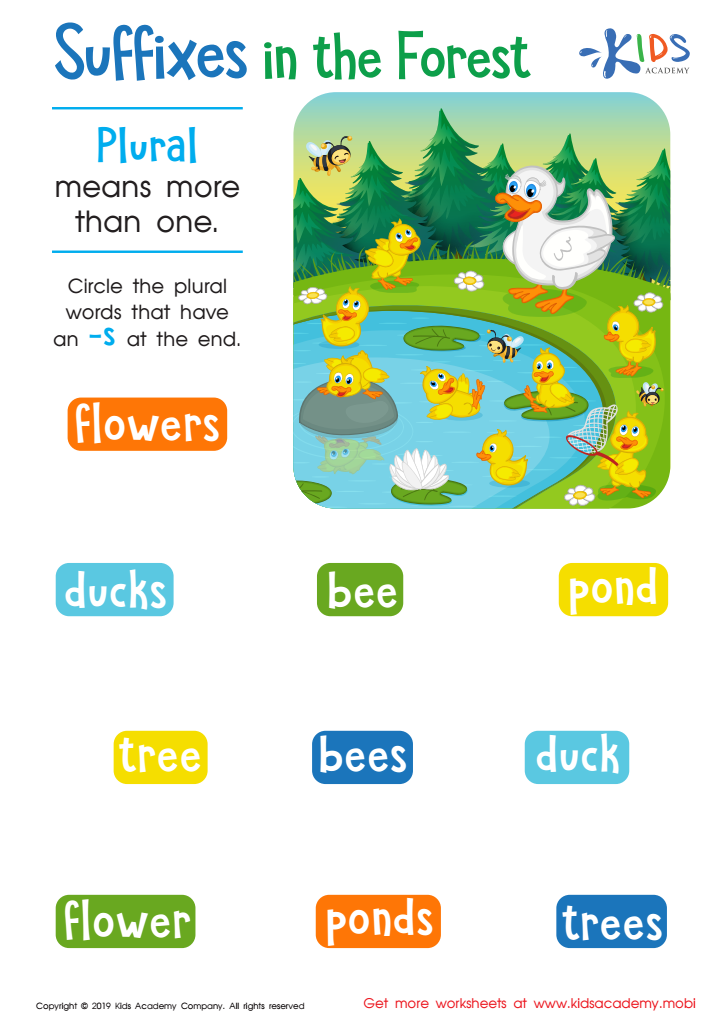
Suffixes in the Forest Worksheet


.jpg)


Understanding suffixes is crucial for 6-year-olds as it significantly aids their language development. Suffixes, which are added to the end of words to change their meaning, help young children expand their vocabulary. For instance, adding "-ed" can turn the action taking place in the present into something that happened in the past ("talk" becomes "talked"), while "-ing" can show ongoing actions ("walk" becomes "walking"). This can help children grasp the concept of time in language.
Furthermore, learning suffixes enhances reading skills. When kids recognize patterns in suffixes, they can decode unknown words more effortlessly, making reading a smoother and more enjoyable process. This is particularly beneficial in a classroom setting, where early reading proficiency can drastically enhance overall academic performance.
Teachers and parents should also note the importance of suffixes for spelling. Knowing how suffixes alter base words helps kids spell more accurately, which in turn fosters stronger writing skills. What's more, this foundational grammar knowledge boosts children's understanding of verb tenses, plurals, and comparative forms, making their verbal and writing skills more versatile and precise.
Ultimately, grasping suffixes builds a stronger foundation for language arts, which consequently benefits other learning areas by enhancing comprehension and communication abilities.








