Vocabulary expansion Grammar Worksheets for 6-Year-Olds - Page 2
27 filtered results
-
From - To
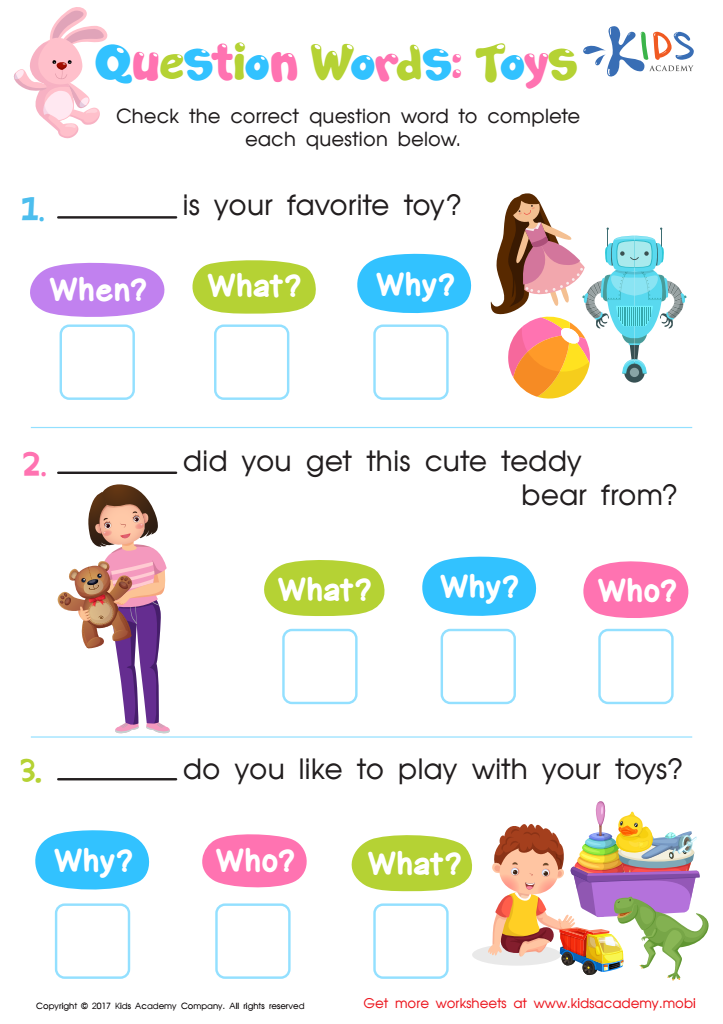
Question Words: Toys Worksheet
 Assign to My Students
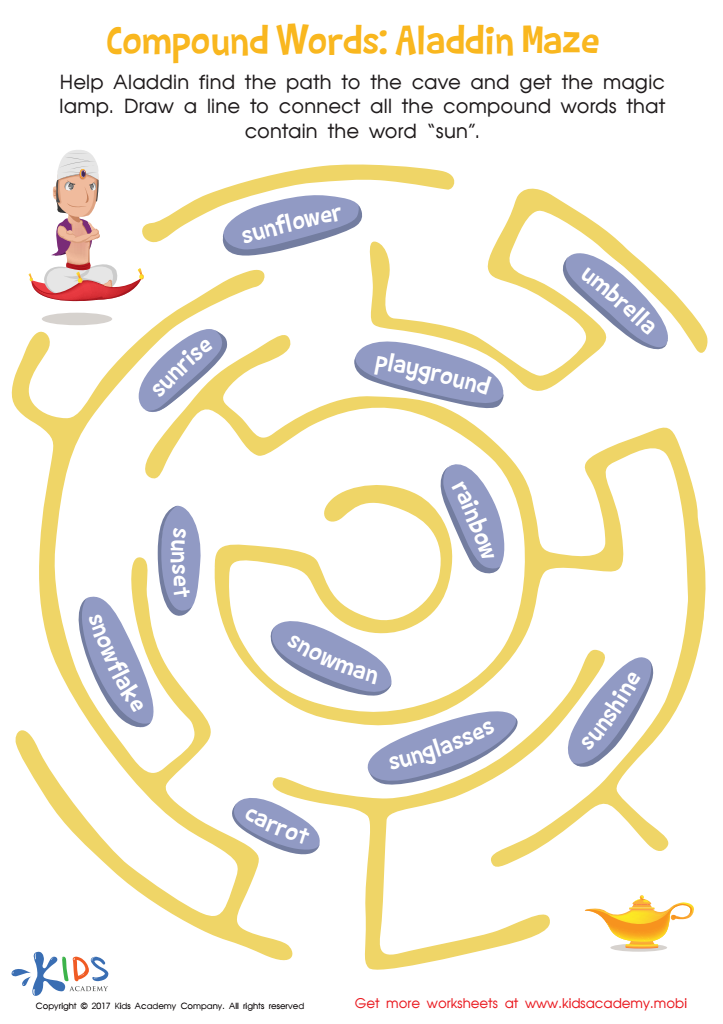
Compound Aladdin Maze Word Structure Worksheet
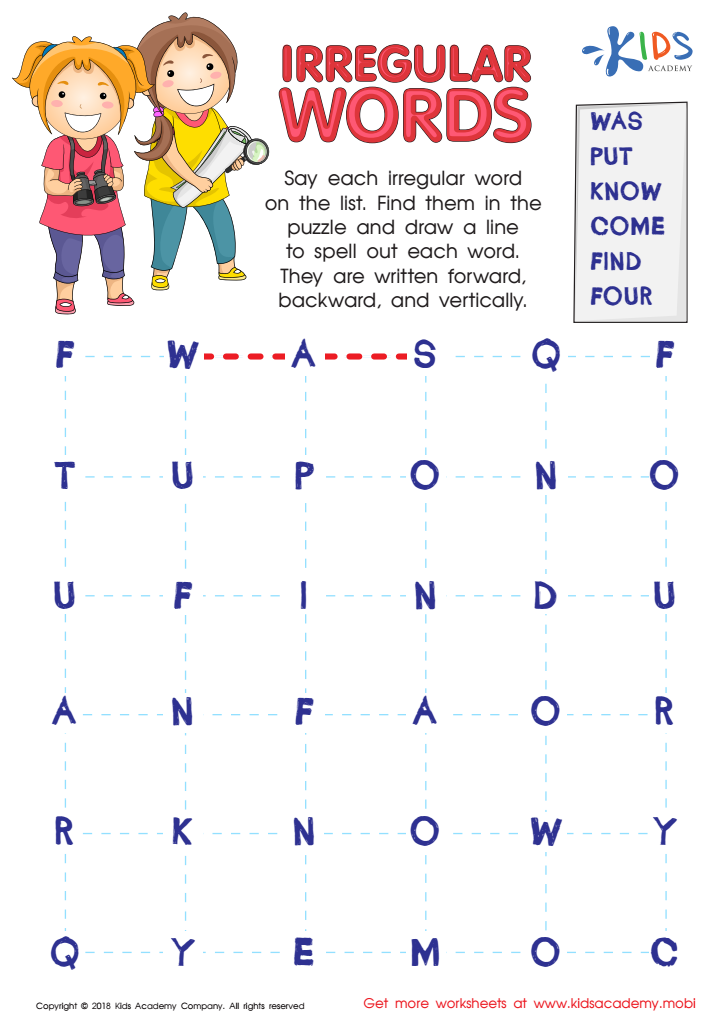
Irregular Words Worksheet




.jpg)



Vocabulary expansion and grammar development are crucial for 6-year-olds, providing the building blocks for effective communication and literacy. At this age, children undergo rapid cognitive growth and their brains are exceptionally receptive to new language skills. By focusing on vocabulary expansion, parents and teachers can significantly enhance a child's ability to express thoughts, emotions, and ideas more precisely. A rich vocabulary also fosters better comprehension skills, enabling children to understand stories and instructions more effectively.
Similarly, understanding grammar helps children construct sentences correctly, which is essential for reading and writing proficiency. Mastery of basic grammar rules bolsters their confidence in using language, facilitates clearer communication, and reduces misunderstandings. Additionally, a strong foundation in grammar and vocabulary serves as a precursor to academic success in other subjects. For example, a child who can read and understand math word problems is more likely to excel in mathematics.
Moreover, both vocabulary and grammar are linked to emotional and social development. Children equipped with the words to describe their feelings and needs are better able to navigate social situations and resolve conflicts. In essence, investing in vocabulary and grammar proficiency at this formative stage sets the stage for lifelong learning, effective communication, and social competence.








