Letter formation ABC Order Worksheets for Ages 7-8
3 filtered results
-
From - To
Enhance your child's handwriting and alphabet skills with our "Letter Formation ABC Order Worksheets for Ages 7-8." These engaging worksheets from Kids Academy are designed to help young learners practice proper letter formation and reinforce their understanding of alphabetical order. Perfect for at-home learning or classroom activities, each worksheet combines fun, educational exercises with vibrant visuals to capture your child's interest. By guiding your child through these meticulously crafted tasks, you’ll see improved writing abilities and a stronger grasp of letter sequencing. Give your child the tools they need for success with our dynamic and interactive resources!
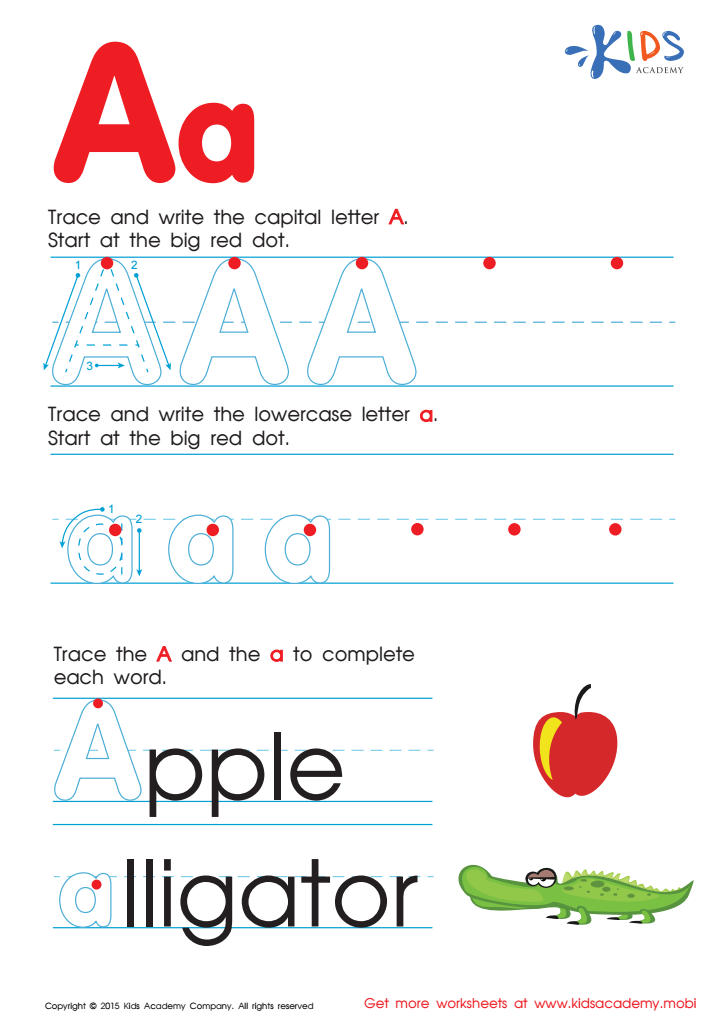
Letter A Tracing Page
 Assign to My Students

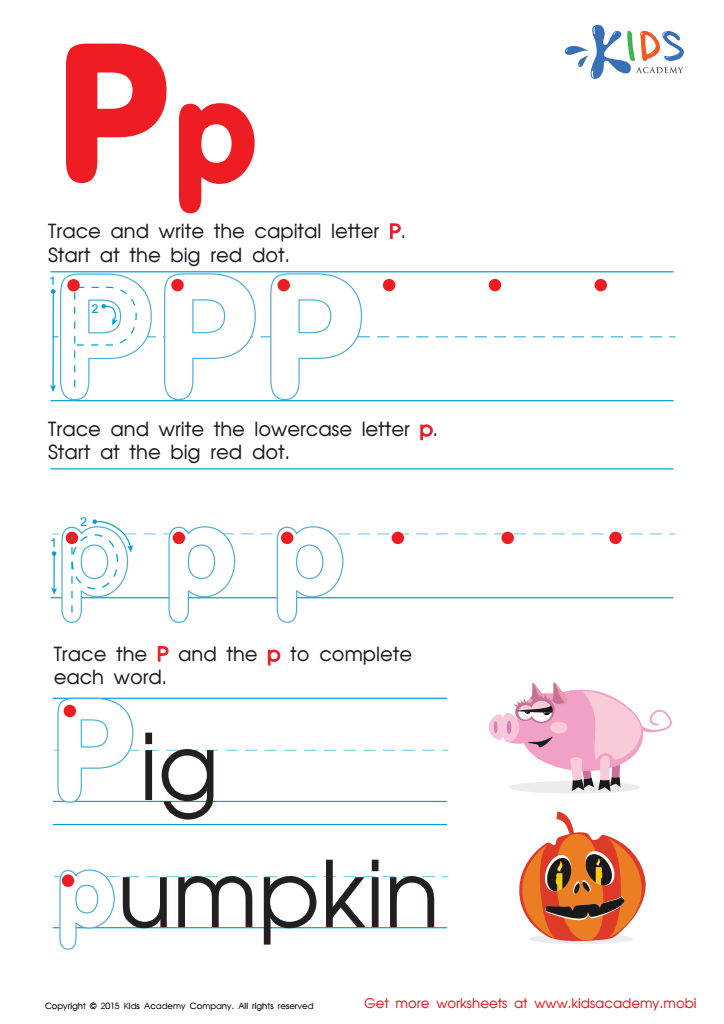
Letter P Tracing Page
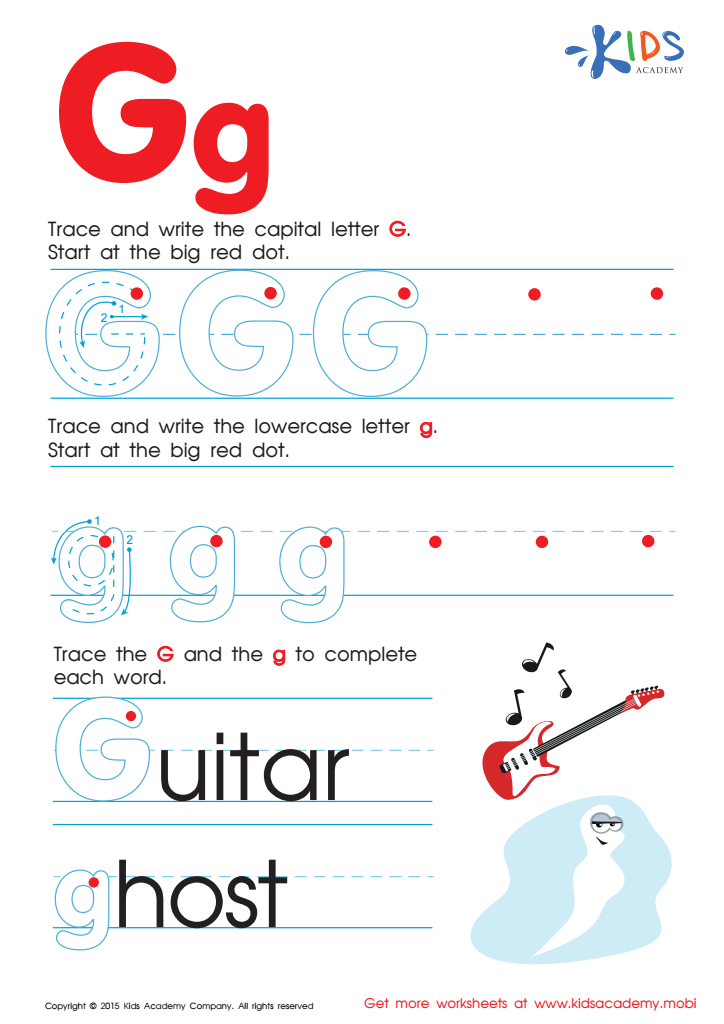
Letter G Tracing Page







Parents and teachers should care about letter formation and ABC order for children aged 7-8 because it lays a crucial foundation for literacy and overall academic success. Proper letter formation enhances legibility, allowing children to express their thoughts clearly and avoid misunderstandings in their writing. Good handwriting habits, such as proper pencil grip and consistent stroke order, can also improve fine motor skills, which are vital for tasks beyond writing, like using scissors or typing.
Understanding ABC order is fundamental for tasks such as using dictionaries, glossaries, and other reference materials, reinforcing alphabetical knowledge, and boosting early research skills. This skill is critical for fostering both independent learning and in-class activities that might require organizing information systematically.
Moreover, mastering these basics also builds confidence and reduces frustration. When children can write legibly and use alphabetical order effectively, they can focus more on the content of their writing or reading rather than being bogged down by the mechanical aspects. Additionally, neat handwriting and the ability to sort alphabetically are often part of assessments, contributing to better grades and academic achievement.
By focusing on letter formation and ABC order, parents and teachers help ensure that children develop essential skills that support a lifetime of learning and effective communication.