Letter recognition ABC Letters Worksheets for Ages 7-8 - Page 2
26 filtered results
-
From - To

Letter D Tracing Page








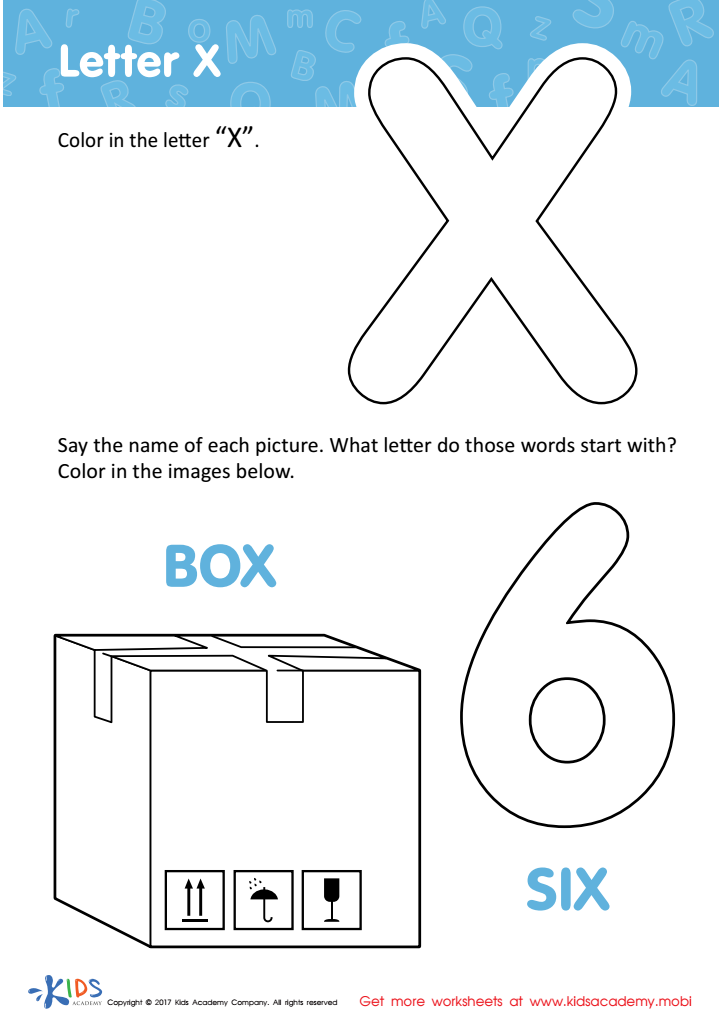
Letter X Coloring Sheet
 Assign to My Students







Letter recognition is a foundational skill that significantly impacts a child's reading and writing abilities. For children ages 7-8, mastering ABC letter recognition is crucial because it builds the groundwork for more advanced literacy skills. At this age, children are transitioning from the early stages of learning to read to becoming more fluent readers. Recognizing letters enables them to understand the alphabetic principle, which is the understanding that letters and sounds correspond in a predictable way. This principle is essential for decoding words, a fundamental reading skill.
Furthermore, proficiency in letter recognition helps children improve their spelling and writing. Being able to quickly identify and use letters allows them to focus on expressing their ideas rather than struggling with basic letter formation or identification.
For teachers and parents, fostering strong letter recognition skills can lead to greater confidence and independence in young learners. This confidence can motivate children to engage more with reading materials and enjoy the learning process, which is key to academic success. Activities such as singing alphabet songs, playing letter-based games, and reading aloud can make the acquisition of these skills both enjoyable and effective. Investing time and effort in developing letter recognition can result in a robust foundation for all future learning.







