Filters

6 filtered results

Clear all filters
Favorites
With answer key
Interactive

6 filtered results

Difficulty Level

Grade


Enhance your child's hand-eye coordination with our engaging Cursive Alphabet Worksheets designed for ages 7-8! These printable worksheets combine fun with learning, allowing kids to practice writing cursive letters while improving their motor skills. Each worksheet features creative activities that encourage focus and dexterity, making writing a joyful experience. Ideal for home or classroom use, our resources support early writing development and promote fine motor control. Perfect for emerging writers, these worksheets help children gain confidence in their handwriting abilities while fostering a strong foundation in cursive writing. Discover a world of learning through play with our thoughtfully crafted worksheets!

Check out this FREE Trial Lesson on Cursive Alphabet for age 7-8!

P

Favorites
With answer key
Interactive
  • 7-8
  • Hand-eye Coordination
  • Cursive Alphabet
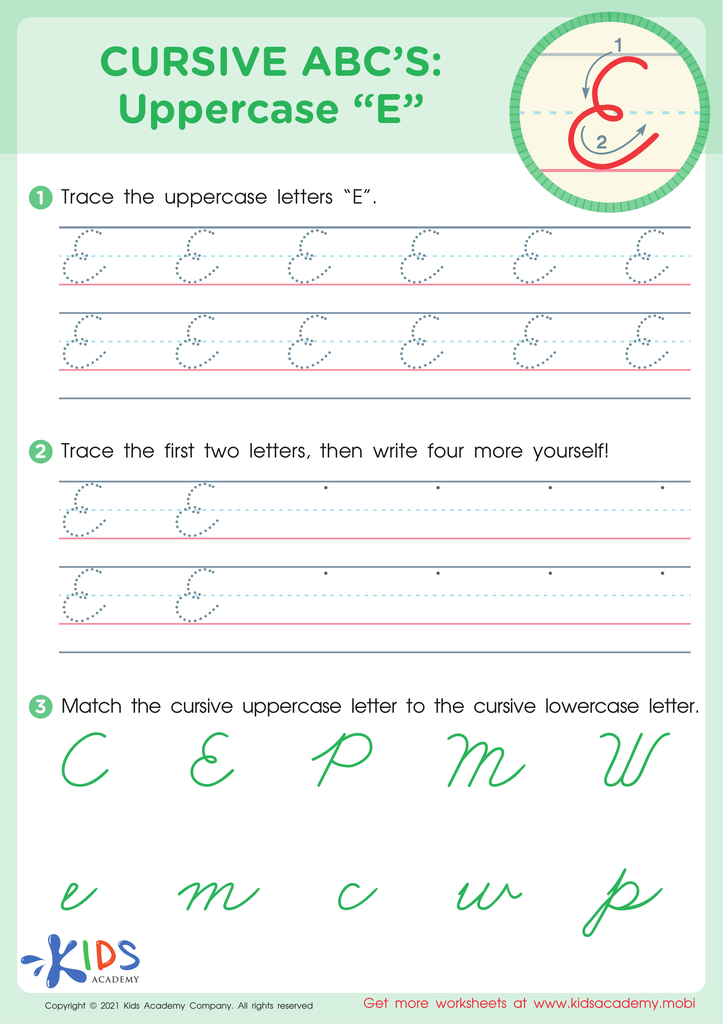
Cursive ABCs: Uppercase E

Cursive ABCs: Uppercase E

Ask your child if they can identify the letter 'E' and give examples. Each letter is unique, so provide coaching. Have them trace cursive 'E' to become familiar and boost confidence. Then, ask them to write it on their own.
Cursive ABCs: Uppercase E
Worksheet
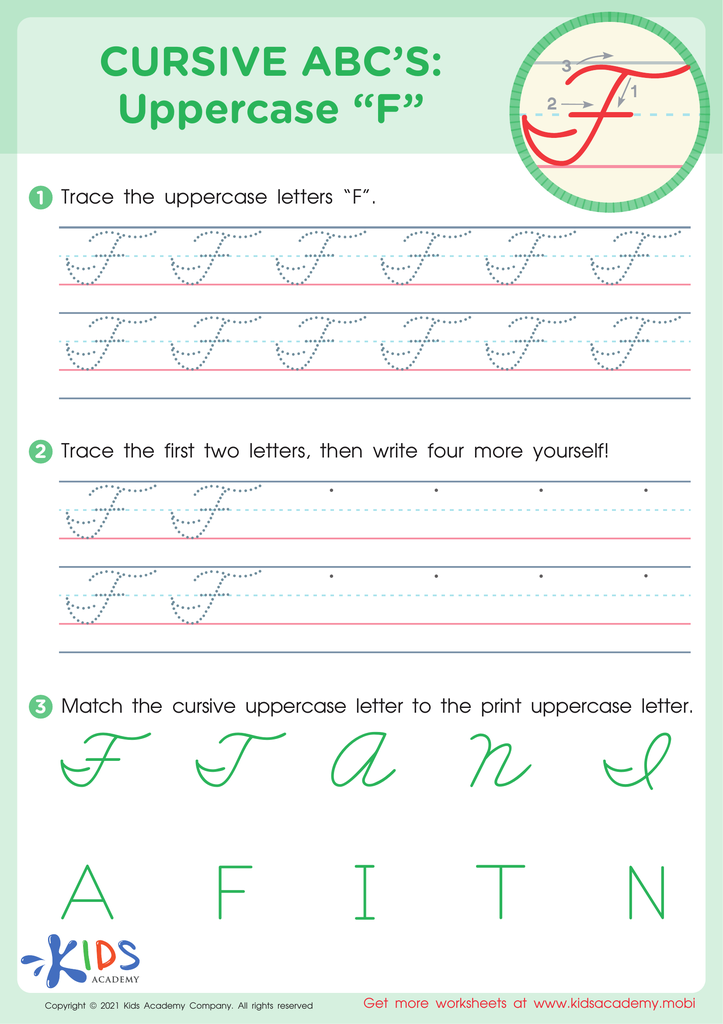
Cursive ABCs: Uppercase F

Cursive ABCs: Uppercase F

Help your kids trace the letters in these worksheets and watch their confidence grow as they learn to write cursive uppercase and lowercase letters. Ask them to identify the letters in words and give examples of words that start with an uppercase 'F', then have them write some letters on their own and assess their progress.
Cursive ABCs: Uppercase F
Worksheet
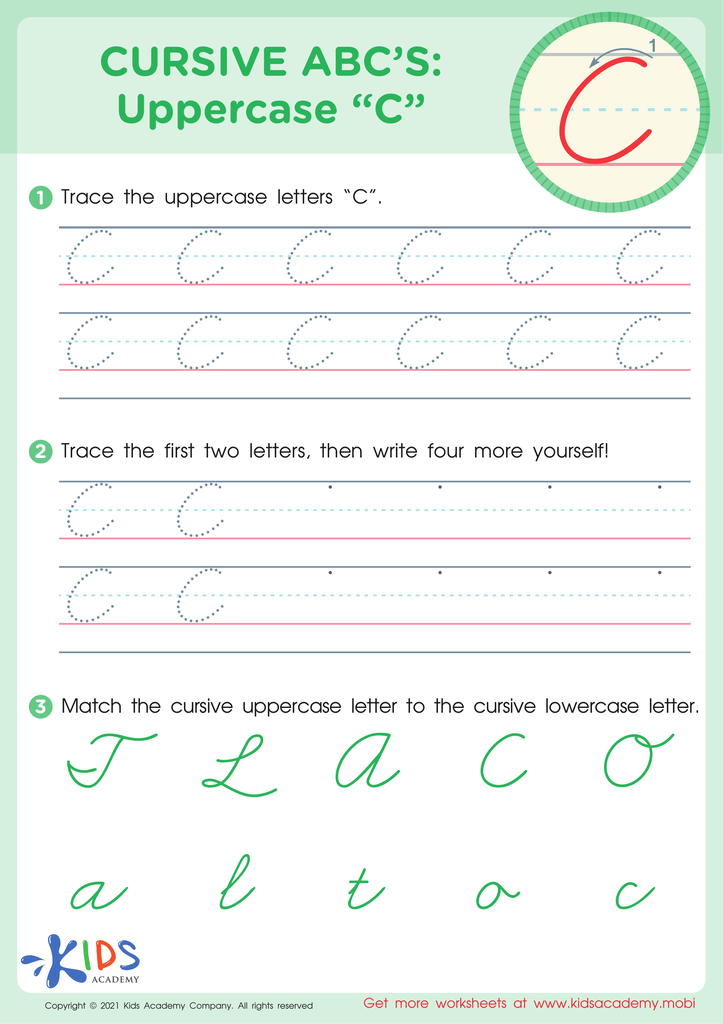
Cursive ABCs: Uppercase C

Cursive ABCs: Uppercase C

These worksheets are perfect for those wanting to improve their handwriting or learn letter recognition. The tracing exercises help younger students sharpen their writing skills and teach how to write the 'C' in cursive. First, they trace the given examples and then practice writing it solo. A letter recognition test is at the bottom of the page to check progress.
Cursive ABCs: Uppercase C
Worksheet
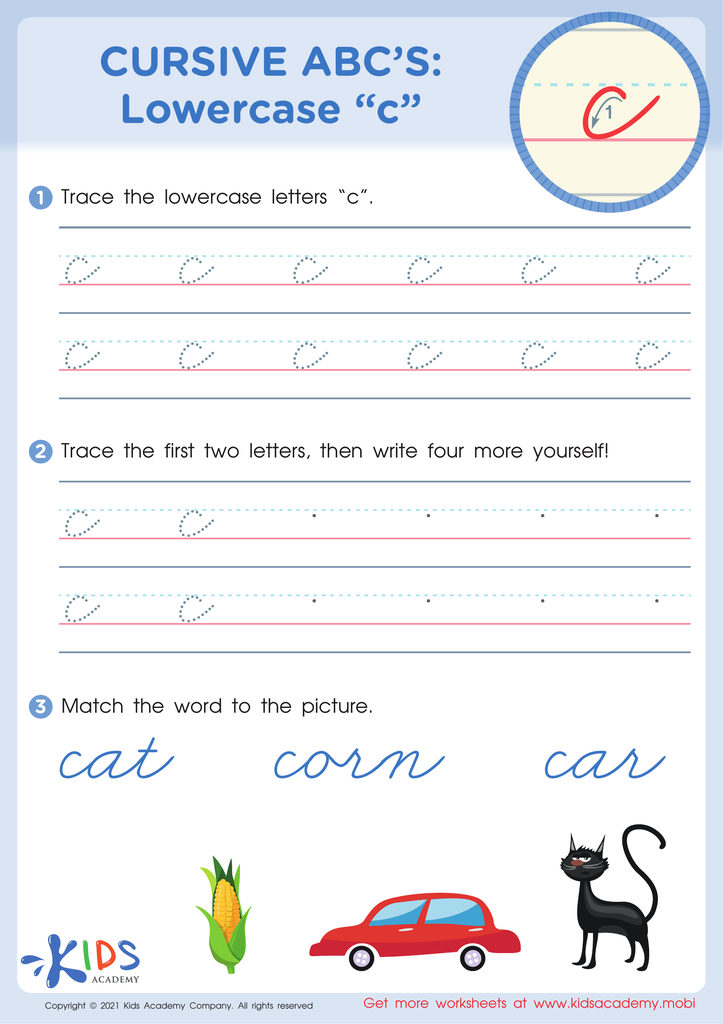
Cursive ABCs: Lowercase c

Cursive ABCs: Lowercase c

Once your child has successfully printed their letters, help them learn to recognize and write the alphabet in cursive. Struggling? This worksheet is perfect to assist them. Writing is an essential skill for kids to learn, so do all you can to help them. Use these tracing worksheets and guide them as they write the lowercase letter 'c' in cursive.
Cursive ABCs: Lowercase c
Worksheet
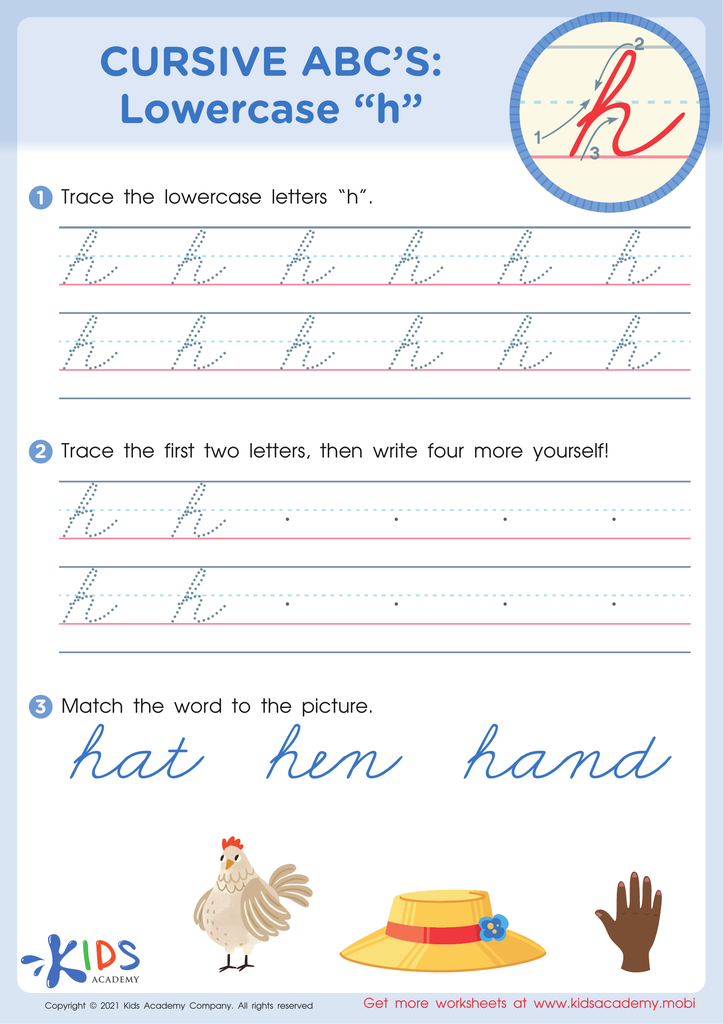
Cursive ABCs: Lowercase h

Cursive ABCs: Lowercase h

Your children will need more than just reciting the alphabet; they need to learn how to identify and write it. Cursive writing helps with neatness, and these tracing worksheets are great learning aids and offer exercises to practice writing lowercase 'h'. With these, your children get better writing skills and learn new words.
Cursive ABCs: Lowercase h
Worksheet
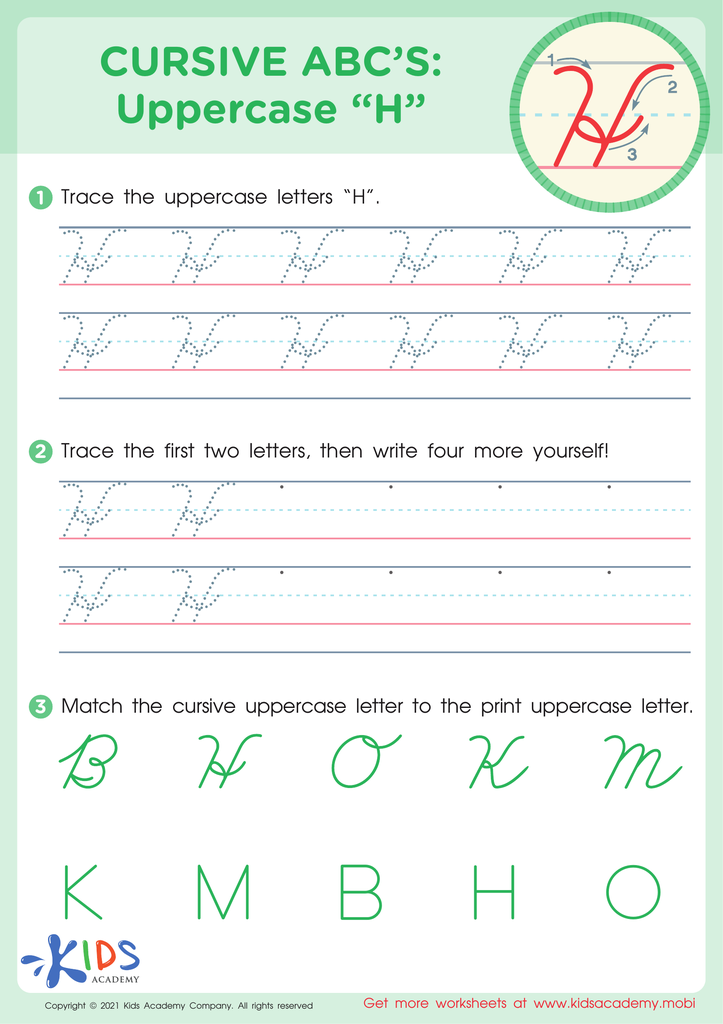
Cursive ABCs: Uppercase H

Cursive ABCs: Uppercase H

Have your child recite the alphabet and give you words beginning with H. This tracing sheet is perfect to help them improve their handwriting. Guide their hands as they trace the uppercase H, then have them practise writing it alone. At the bottom is an exercise to check their letter recognition.
Cursive ABCs: Uppercase H
Worksheet


Hand-eye coordination is a crucial skill for children, significantly impacting their learning and daily activities. For ages 7-8, when children are refining their motor skills, practicing cursive writing can enhance their hand-eye coordination. The fluid movements required in cursive writing engage both the brain and hand, fostering neural connections essential for developing fine motor skills.

By incorporating cursive writing into their routine, children not only learn to write legibly and artistically but also improve their spatial awareness and control over their hand movements. This skill is fundamental for various tasks, from drawing to sports, thus fostering overall cognitive and physical development.

Parents and teachers should be proactive about this aspect of education, as nurturing strong hand-eye coordination can lead to improved academic performance and greater self-confidence in children. When children express themselves through beautifully crafted cursive letters, they build a sense of pride in their abilities, motivating them to explore learning further.

Moreover, the ability to write in cursive can aid in literacy development, allowing children to read and understand cursive handwriting in various contexts, including personal letters and historical documents. By recognizing the importance of hand-eye coordination in cursive writing, parents and teachers can better support children’s holistic growth.