
Reading comprehension Elementary Phonics Worksheets for Ages 7-8
5 filtered results
Difficulty Level
Grade
Age
-
From - To
Subject
Activity
Standards
Enhance your child's reading skills with our engaging Reading Comprehension Elementary Phonics Worksheets designed specifically for ages 7-8. These worksheets provide a fun and interactive way for young learners to strengthen their phonetic awareness while improving their understanding of texts. Tailored for early readers, each activity promotes critical thinking and encourages exploration of new vocabulary within context. By incorporating comprehension exercises with phonics practice, children can develop essential reading strategies in a playful environment. Ideal for homeschooling or classroom use, our resources support a well-rounded approach to literacy, ensuring your child builds confidence and enthusiasm for reading. Unlock the joy of reading today!
Favorites
With answer key
Interactive
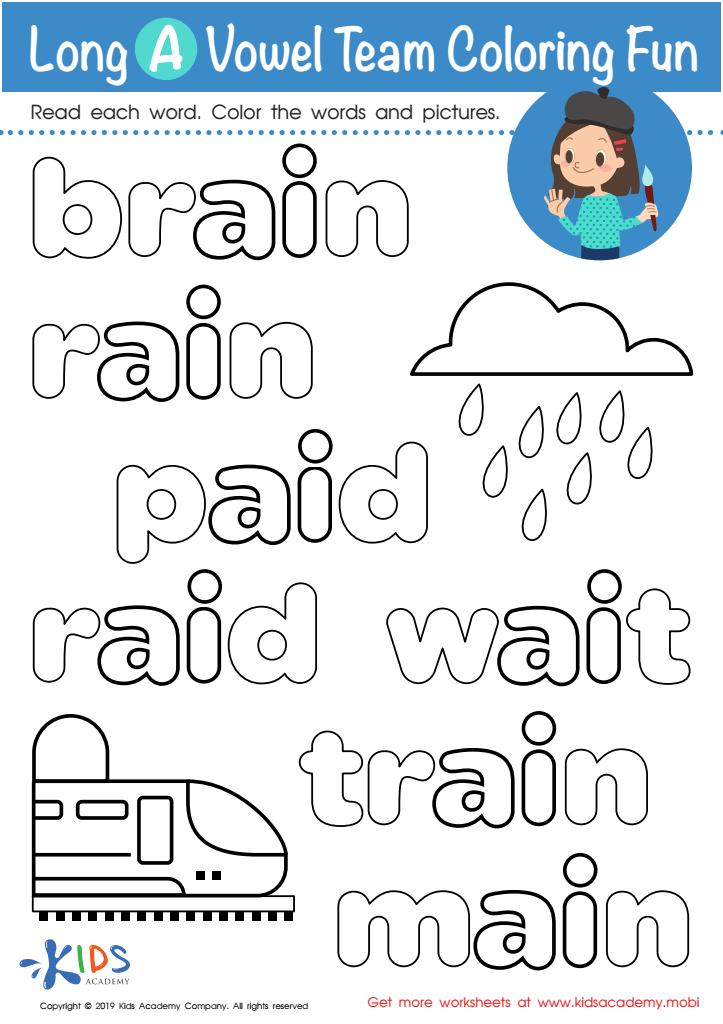
Long A Vowel Team Coloring Fun Worksheet
Divide your class into teams, give each a printout, then have them read aloud words with a long "A" sound (e.g. brain, paid). As they listen, let them reinforce this lesson by coloring in the words and pictures. Make phonics fun and interactive with this great coloring page!
Download (PDF)
 Assign to My Students
Assign to My Students
Long A Vowel Team Coloring Fun Worksheet
Worksheet
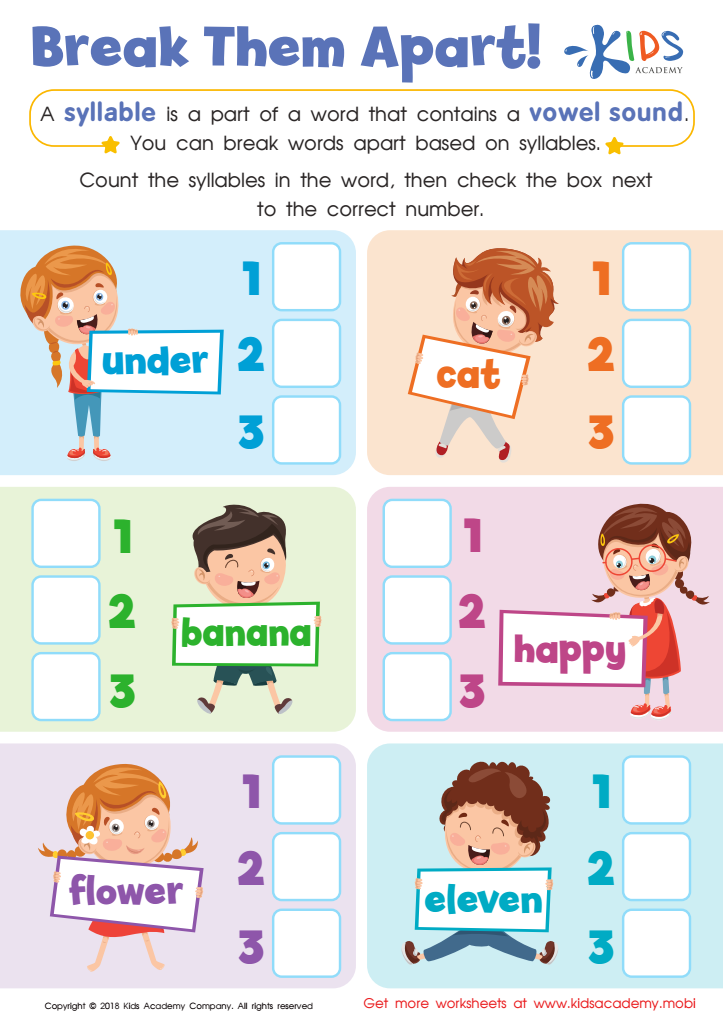
Reading: Break Them Apart Worksheet
See if students understand syllables with this fun worksheet. It teaches them that a syllable is a word part with a vowel sound. Kids read each word and choose how many parts it has. Doing this often helps them decode new words and gain confidence.
Reading: Break Them Apart Worksheet
Worksheet
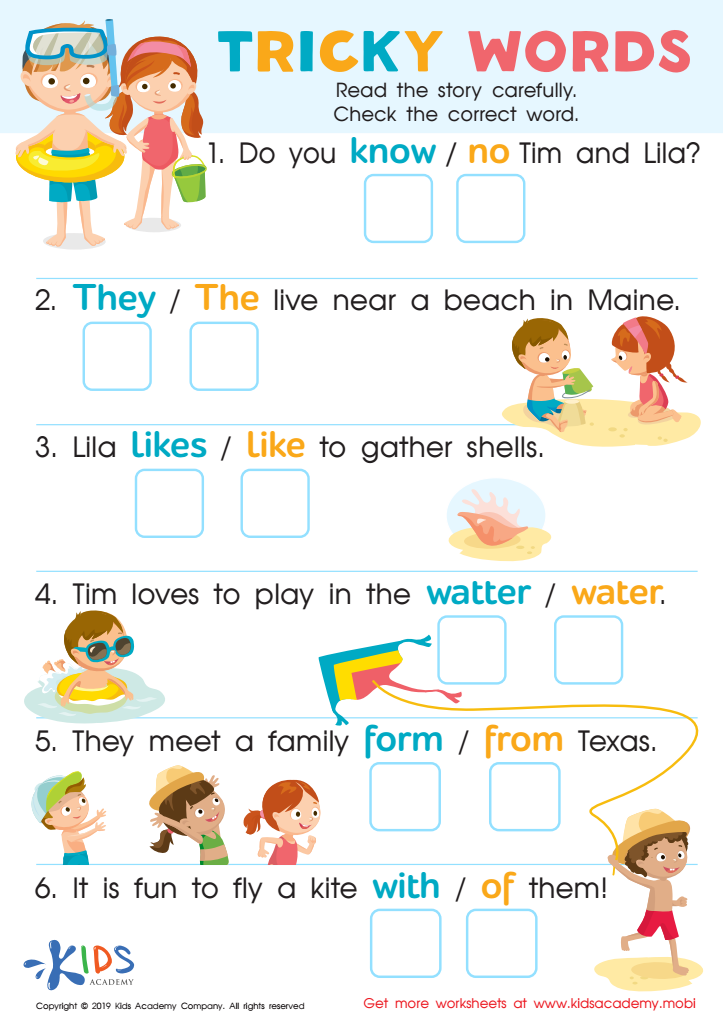
Tricky Words Worksheet
Reading can be tricky to start with, but this worksheet helps kids learn the basics of editing and strengthens their attention to detail. They'll select the right word from tricky choices, improving their reading and grammar skills.
Tricky Words Worksheet
Worksheet
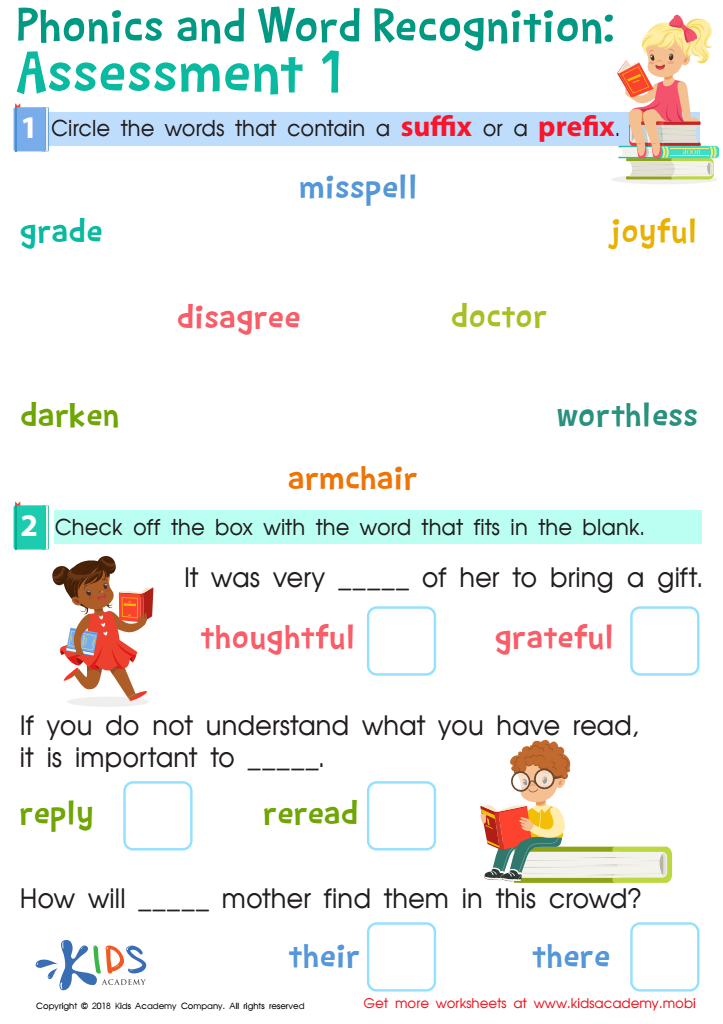
Phonics and Word Recognition: Assessment 1 Worksheet
Explain prefixes (words added to start of another word to give it a new meaning) and suffixes (added to end of word to change its meaning) to your kids with examples like 'unhappy' (prefix) and 'forgetful' (suffix). Now, help your child complete this worksheet, including circling words and checking boxes.
Phonics and Word Recognition: Assessment 1 Worksheet
Worksheet
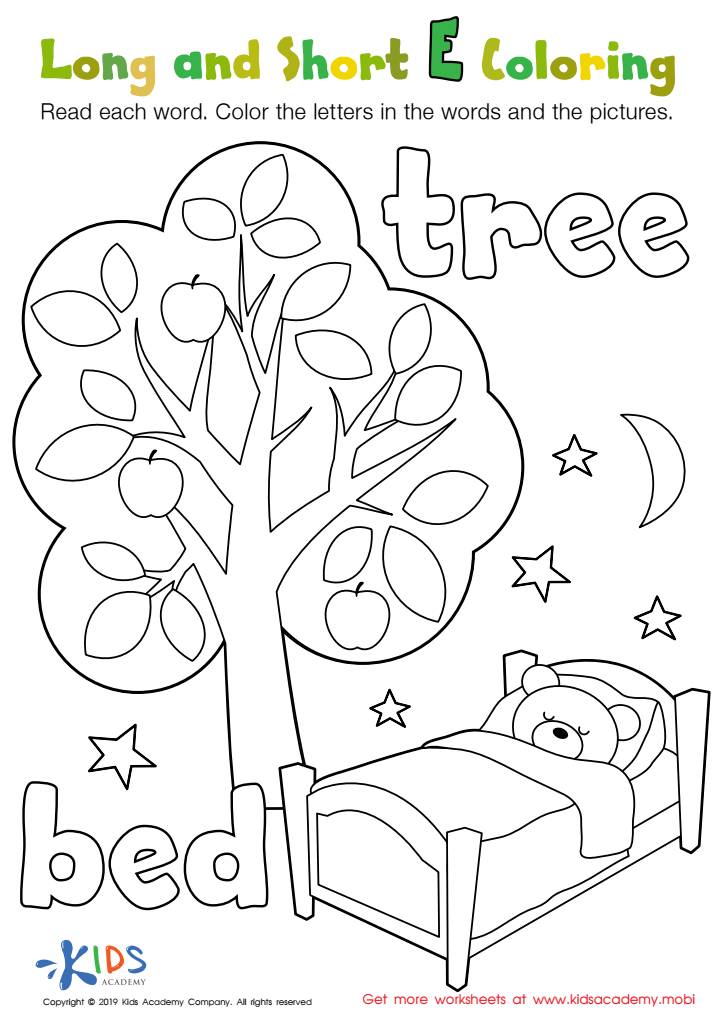
Long and Short E Worksheet
This fun printout makes learning phonics enjoyable for Grade 3 students. Get them to read the words “tree” and “bed” to recognize the different sounds of the letter “E”. After hearing the words they can color the words and the pictures to understand differences between long and short vowels.
Download (PDF)
Assign to My Students
Assign to My Students
Long and Short E Worksheet
Worksheet
Join Kids Academy for Free
Who is primarily going to use this learning content?




Parents and teachers should prioritize reading comprehension and phonics for children aged 7-8 because these foundational skills are crucial for academic success and lifelong learning. At this age, children transition from learning to read to reading to learn, making effective comprehension and phonics essential for understanding and engaging with increasingly complex texts across subjects.
Proficient phonics skills help children decode words and improve their fluency, which fosters confidence in reading. When students have a solid grasp of phonics, they can tackle new vocabulary and texts independently, enhancing their ability to engage in critical thinking and discussions.
Additionally, reading comprehension AI cognitive process enables children to retain and make sense of the information they read, which is vital for developing higher-order thinking skills. It allows them to draw connections, ask questions, and develop insights about the texts.
Moreover, strong reading skills positively correlate with academic achievement, supporting success in standardized tests and future educational pursuits. By fostering these literacy skills at an early age, parents and teachers empower children to become confident, capable readers who can navigate an increasingly complex world, unlocking opportunities for their personal and academic growth.







