Word identification Elementary Phonics Worksheets for Ages 7-8
3 filtered results
-
From - To
Discover our engaging Word Identification Elementary Phonics Worksheets designed specifically for children aged 7-8! These interactive worksheets focus on enhancing essential phonics skills, enabling young learners to identify and decode words confidently. Perfect for classroom or at-home practice, our resources are tailored to align with the developmental needs of emerging readers. Children will explore various activities that promote phonemic awareness, reinforcing their ability to recognize sounds and syllables in words. Help your child improve their reading fluency and comprehension with our fun and educational phonics worksheets today! Visit our site for a rich collection of phonics resources to support your child's learning journey.
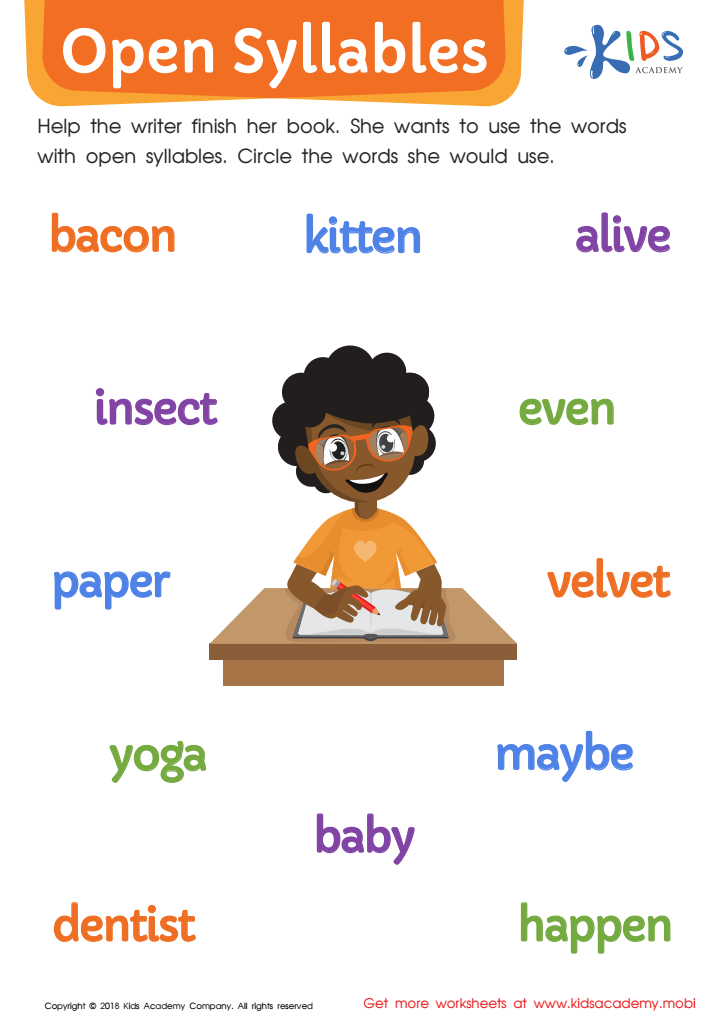
Open Syllables Worksheet
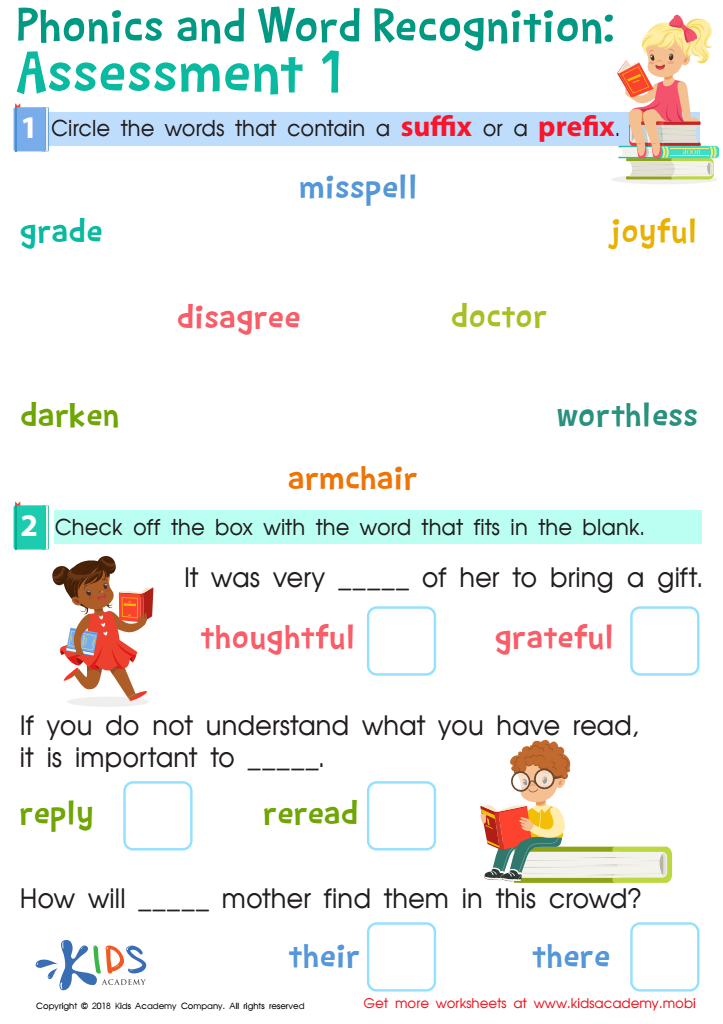
Phonics and Word Recognition: Assessment 1 Worksheet
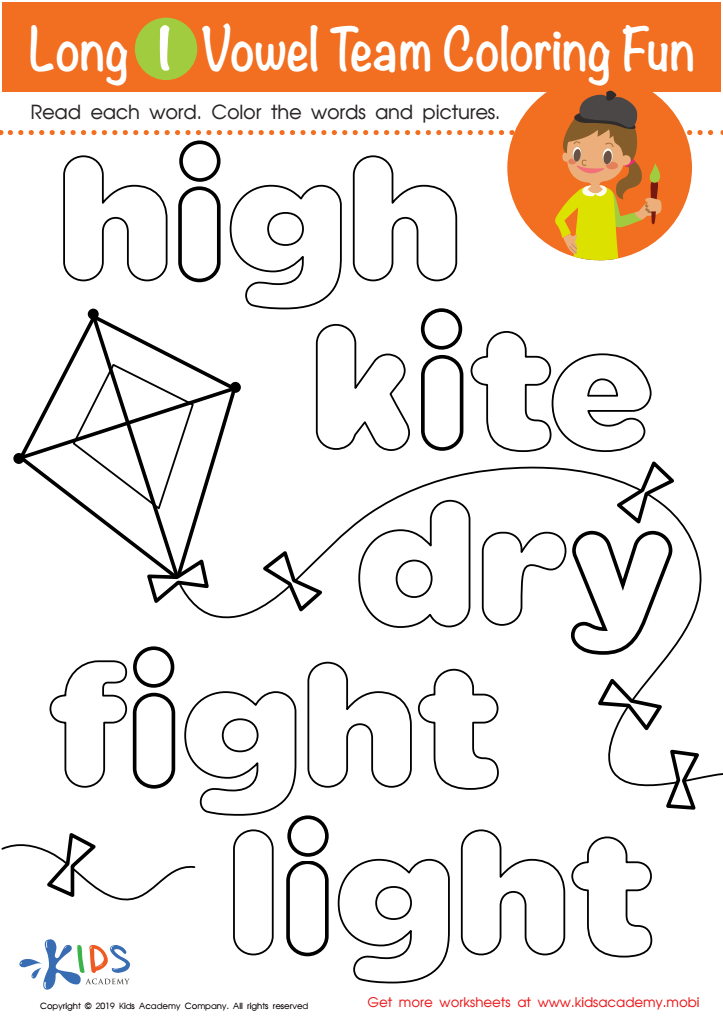
Long I Vowel Team Coloring Worksheet
 Assign to My Students




Word identification and phonics are crucial for children aged 7-8 as they build the foundation for proficient reading and writing skills. At this stage, children transition from learning to read to reading to learn. Effective word identification enables them to decode unfamiliar words, which fosters comprehension and encourages a love for reading.
For parents and teachers, understanding phonics is essential in guiding children's literacy development. Effective phonics instruction equips children with strategies to break words into manageable sounds, recognize patterns, and blend these sounds together. This not only aids in fluency but also enhances vocabulary and boosts confidence, allowing children to engage with more complex texts as they progress.
Moreover, strong word identification skills are linked to academic success across subjects, as reading skills are pivotal for accessing information in all content areas. Children who master phonics can better engage in discussions, follow instructions, and express their thoughts clearly in writing.
By prioritizing phonics and word identification, parents and teachers help create a supportive learning environment that fosters curiosity and critical thinking, ultimately leading to a more enriching educational experience for children. Ensuring that children develop these essential skills lays the groundwork for lifelong learning.







