Alphabetical understanding Alphabet Worksheets for Ages 7-8
3 filtered results
-
From - To
Enhance your child's alphabetical understanding with Kids Academy's Alphabet Worksheets designed for ages 7-8! These engaging worksheets provide a fun and educational way to sharpen letter recognition, sequencing, and alphabetical order skills. Tailored to delightful themes and age-appropriate challenges, our worksheets are perfect for building a strong literacy foundation. Whether used at home or in the classroom, they guide learners through interactive tasks, boosting confidence and fostering a love for reading and writing. Download now to support your young learner's journey in mastering the alphabet and unlocking their full literacy potential! Explore more at Kids Academy.
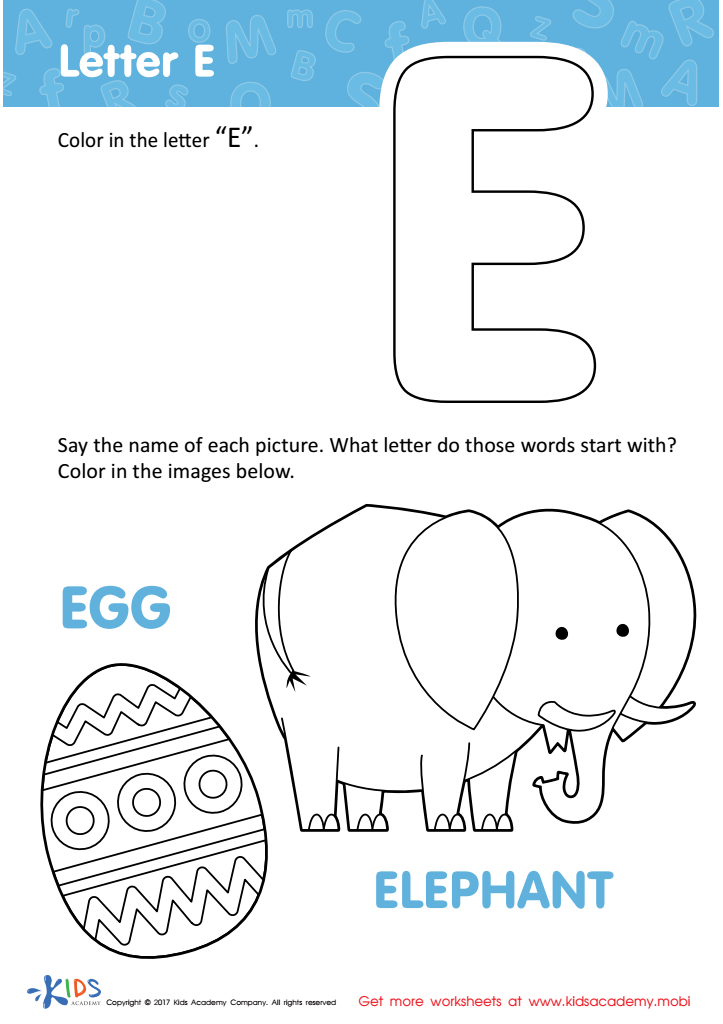
Letter E Coloring Sheet
 Assign to My Students
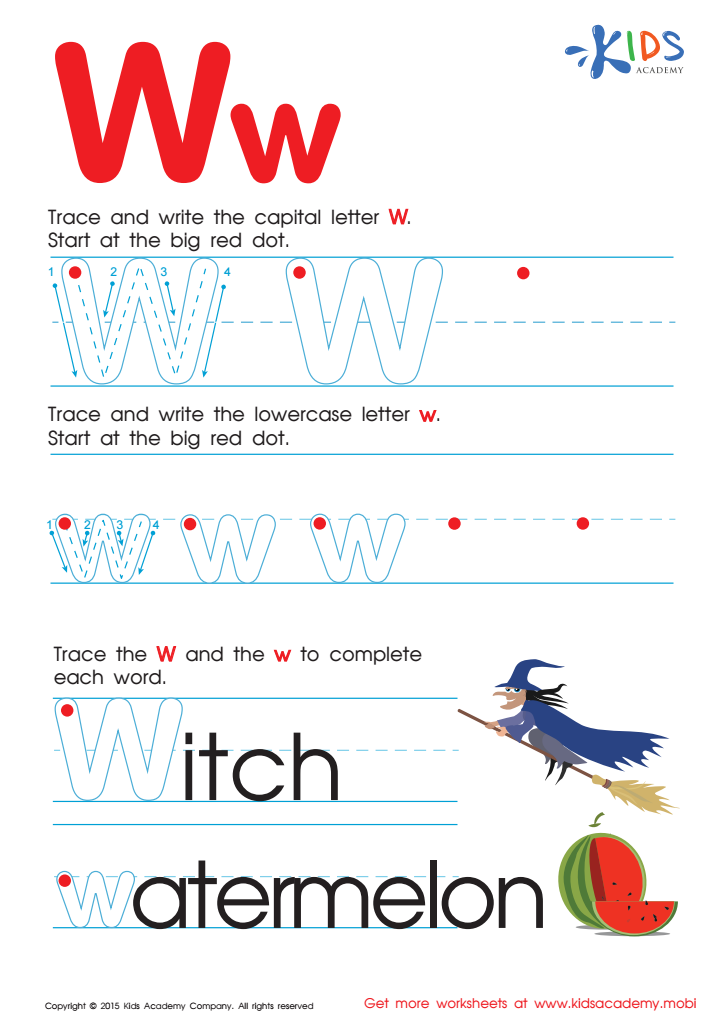
Letter W Tracing Page
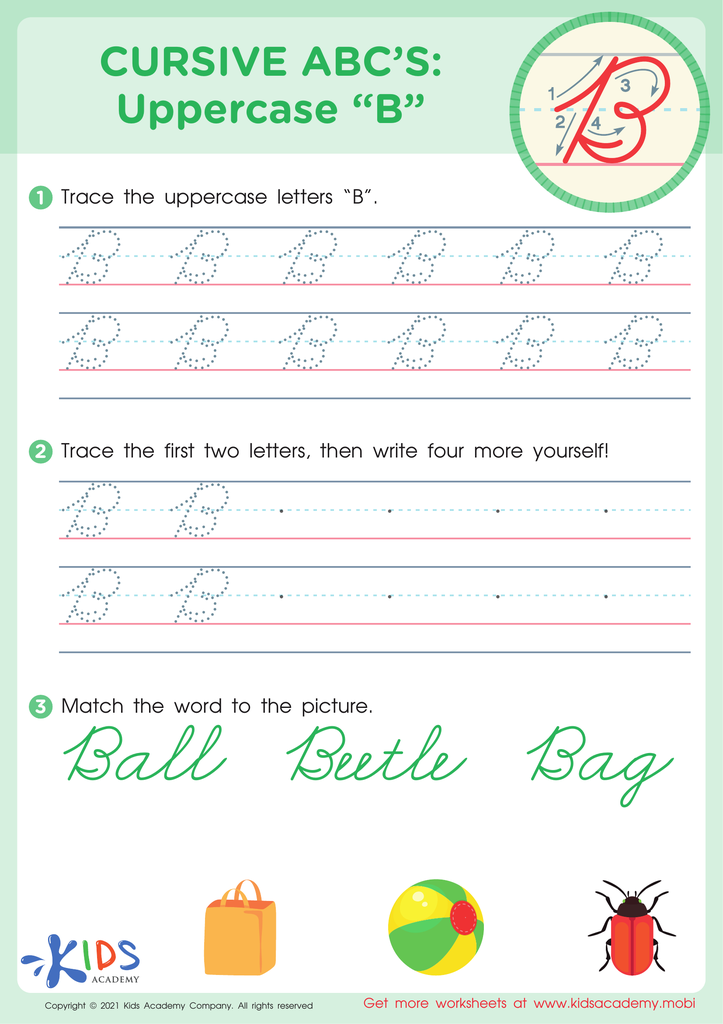
Cursive ABCs: Uppercase B








Alphabetical understanding is crucial for children ages 7-8 as it constitutes a foundational skill pivotal for their educational development and academic success. At this age, children transition from recognizing letters to using them in more complex tasks, bridging to proficient reading and writing.
Firstly, recognizing alphabetical order helps in improving literacy. It forms the basis for phonetic recognition, enabling children to decode words quickly. This makes reading less laborious, enhancing comprehension and leading to a love for reading—an essential element for learning across subjects.
Secondly, alphabetical order is a key organizational tool. Understanding it supports effective dictionary use, thus empowering children with the confidence to independently seek word meanings and enhance their vocabulary. This self-sufficiency promotes educational growth and fosters lifelong learning habits.
For educators and parents, fostering alphabetical understanding is about setting up young learners for future success. Engaging children in alphabet-related activities ensures they acquire these fundamental skills early. Activities like sorting words alphabetically, playing alphabet games, and reading alphabet books can be fun and educational.
In summary, ensuring robust alphabetical understanding for children aged 7-8 is like laying a strong foundation for a house. It supports not only their current learning journey but also their capacity to absorb and organize knowledge effectively in the years to come.







