Color Identification Alphabet Worksheets for Ages 7-8
4 filtered results
-
From - To
Enhance your child's learning with our Color Identification Alphabet Worksheets designed specifically for ages 7-8. These engaging resources help children master the fundamentals of phonics while simultaneously developing their color recognition skills. Each worksheet combines fun activities that encourage creativity and critical thinking, tailored to keep young minds engaged. By incorporating colorful images and interactive exercises, kids will strengthen their understanding of letter sounds and enhance their vocabulary in an enjoyable way. Perfect for parents and educators, our worksheets are ideal for enhancing classroom instruction or at-home learning. Download now to cultivate your child's language and color identification abilities!
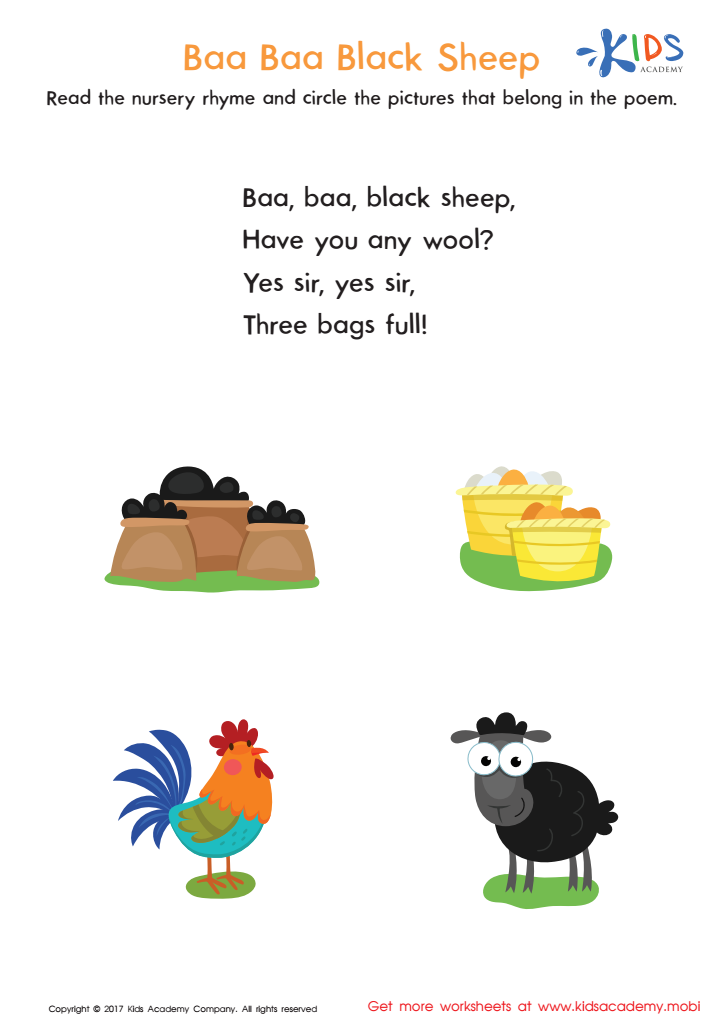
Baa Baa Black Sheep Printable
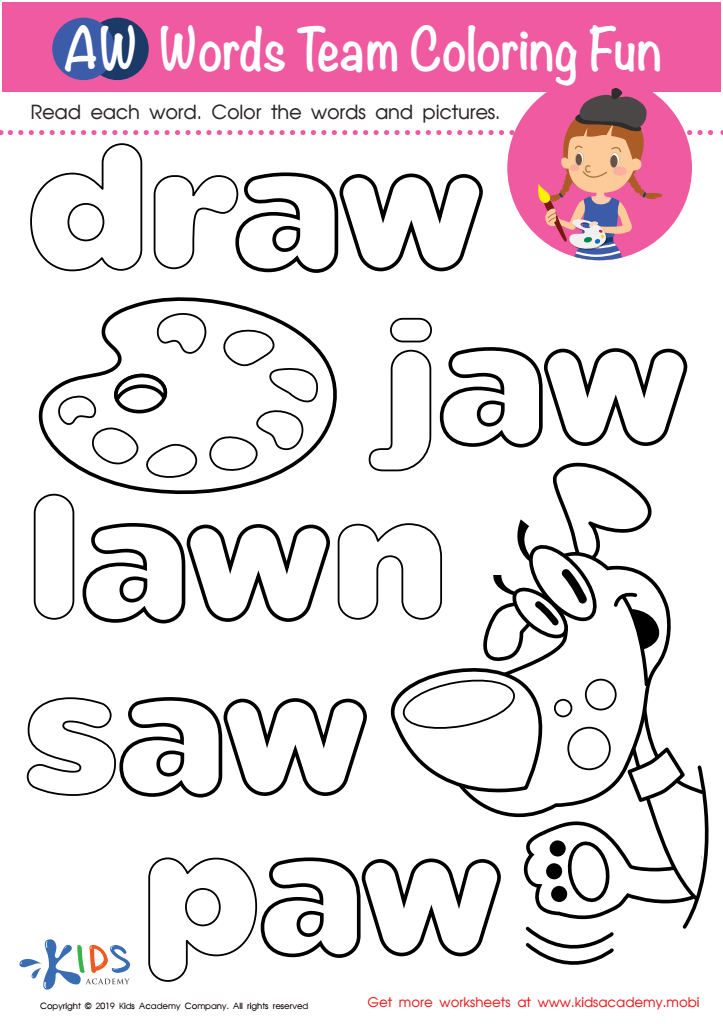
AW Words Team Coloring Fun Worksheet
 Assign to My Students
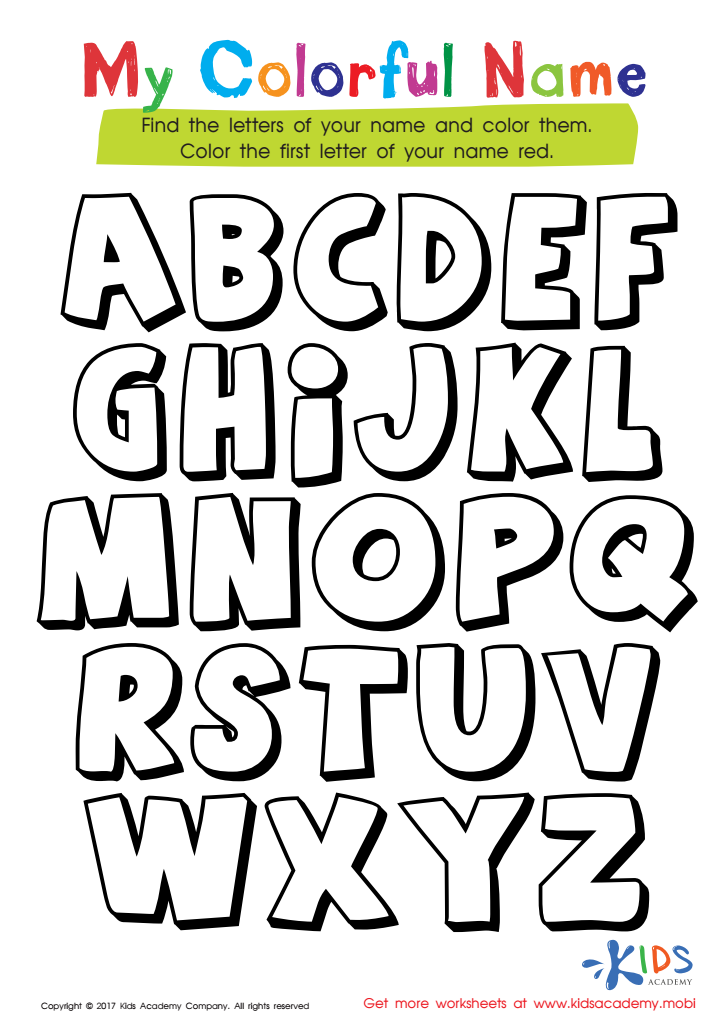
My Colorful Name Worksheet
Assign to My Students
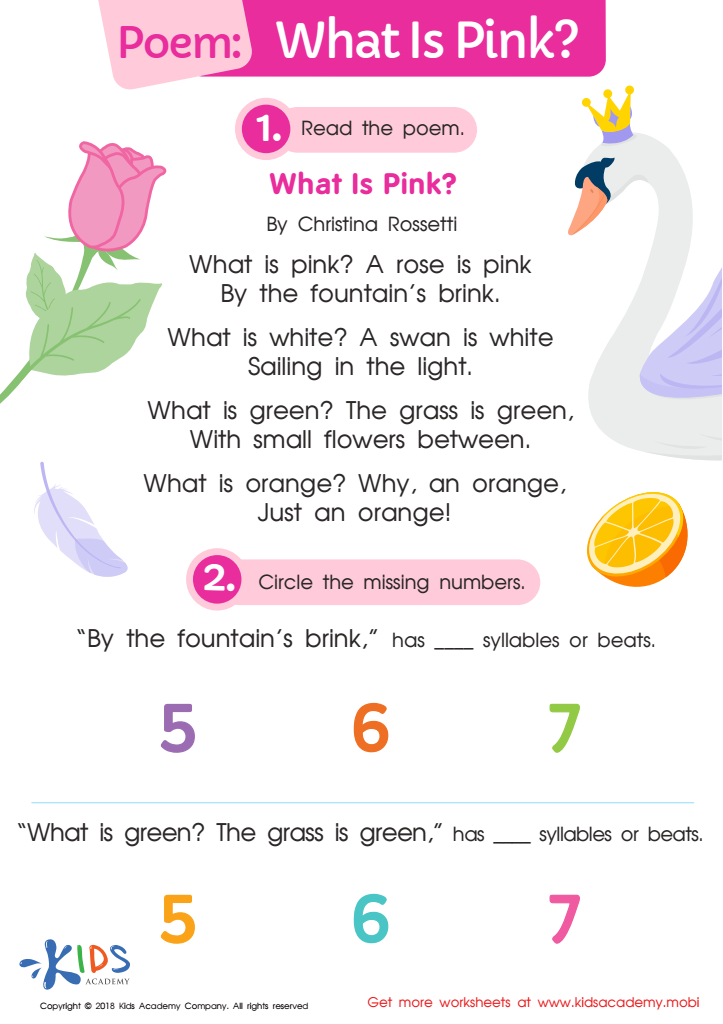
Poem: What Is Pink? Worksheet








Parents and teachers should prioritize teaching Color Identification alongside the Alphabet to children ages 7-8 for several essential reasons. First, understanding colors is fundamental to developing visual literacy, which enhances overall communication skills and artistic expression. As children learn to identify and distinguish colors, they build the skills necessary for categorization and critical thinking, both crucial for academic success.
Additionally, incorporating color identification into early education helps create an engaging and interactive learning experience. Vibrant color activities can spark interest in subjects like science, art, and language arts, making learning enjoyable and multifaceted. Vision science also highlights that color perception can influence mood and behavior; therefore, teaching children about colors can contribute to their emotional well-being.
In this pivotal age, children are also increasingly engaged with their environment, making it a perfect time to connect colors with the world around them. Color identification can bolster observational skills and foster curiosity, essential tools for lifelong learning.
Lastly, mastery of both the alphabet and color recognition lays a crucial foundation for reading and comprehension, helping children become confident, articulate, and capable learners. By valuing these concepts, parents and teachers help children build a holistic and enriched educational experience.







