Reading skills improvement Alphabet Worksheets for Ages 7-8
5 filtered results
-
From - To
Boost your child's reading skills with our engaging Alphabet Worksheets designed specifically for ages 7-8. These printable resources focus on enhancing phonics, letter recognition, and vocabulary through fun activities tailored for young learners. Each worksheet fosters essential reading skills, making learning enjoyable and interactive. Your child will explore the alphabet through captivating exercises that encourage learning at their own pace. Perfect for teachers or parents, our worksheets are ideal for classroom instruction or home practice. Help your child build a strong reading foundation while cultivating a love for language with our thoughtfully crafted Alphabet Worksheets! Empower their literacy journey today!
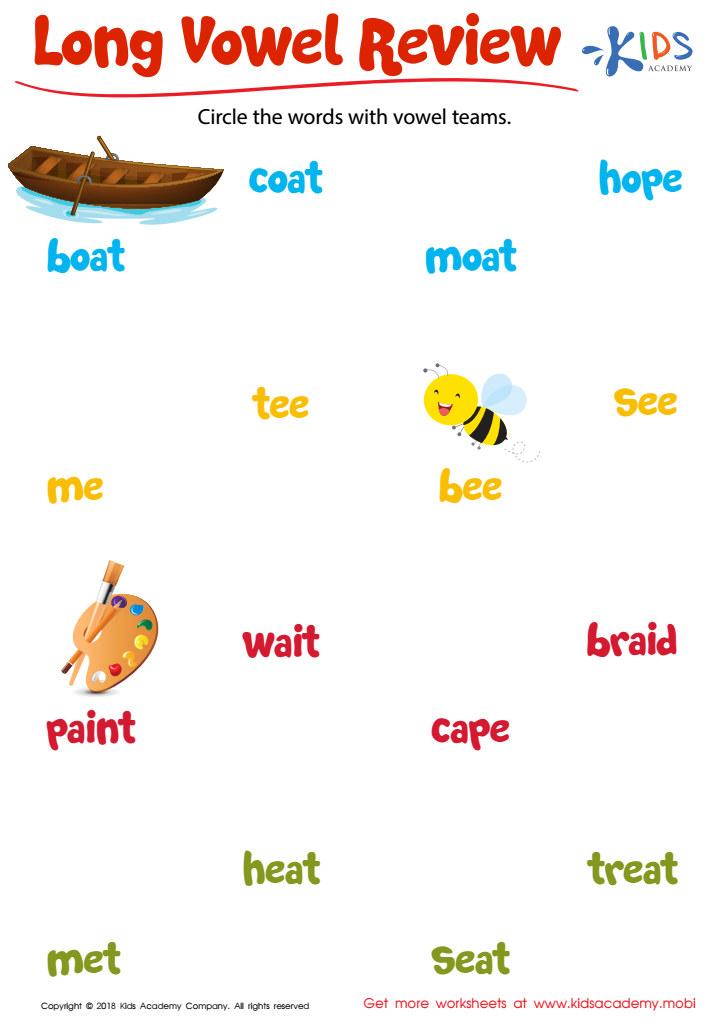
Long Vowel Review Worksheet
 Assign to My Students
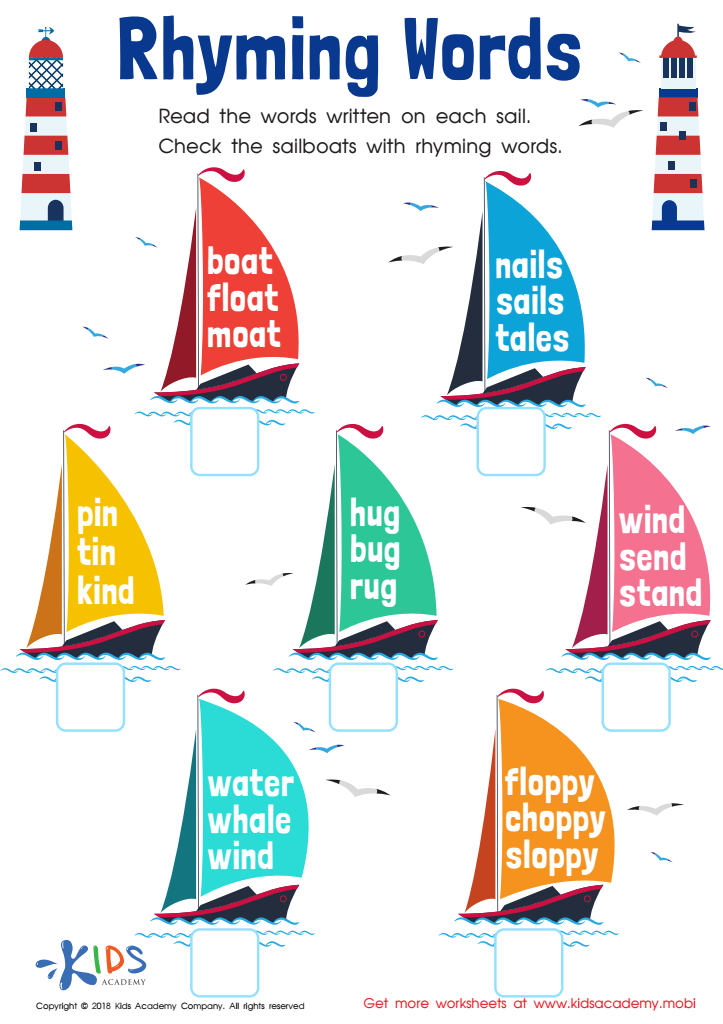
Rhyming Words Worksheet
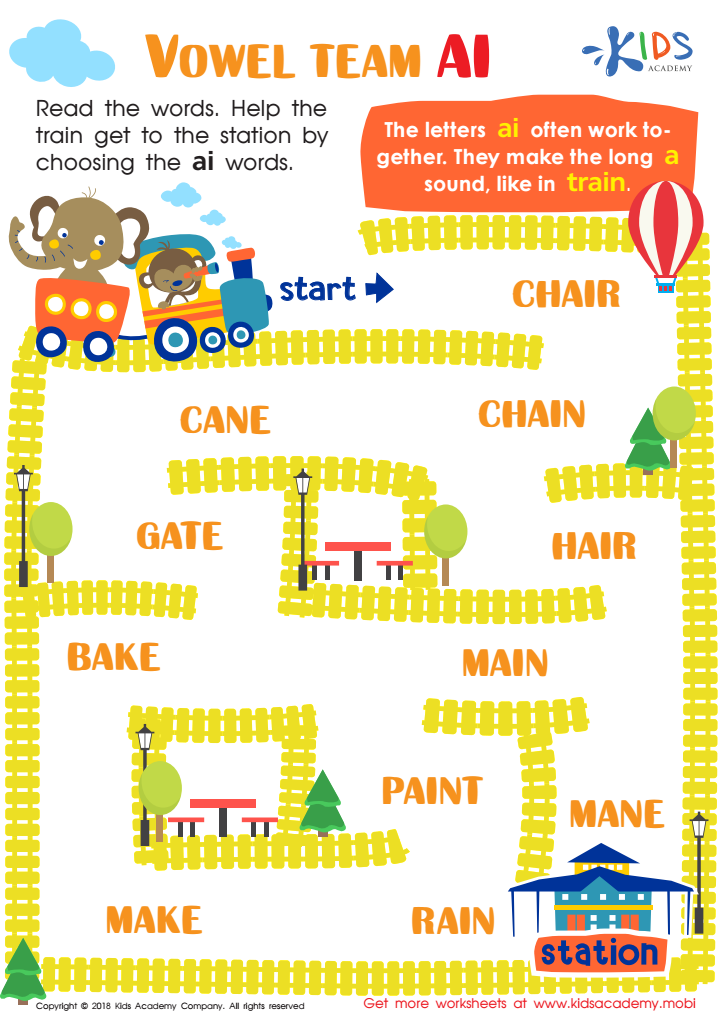
Vowel team ai Worksheet
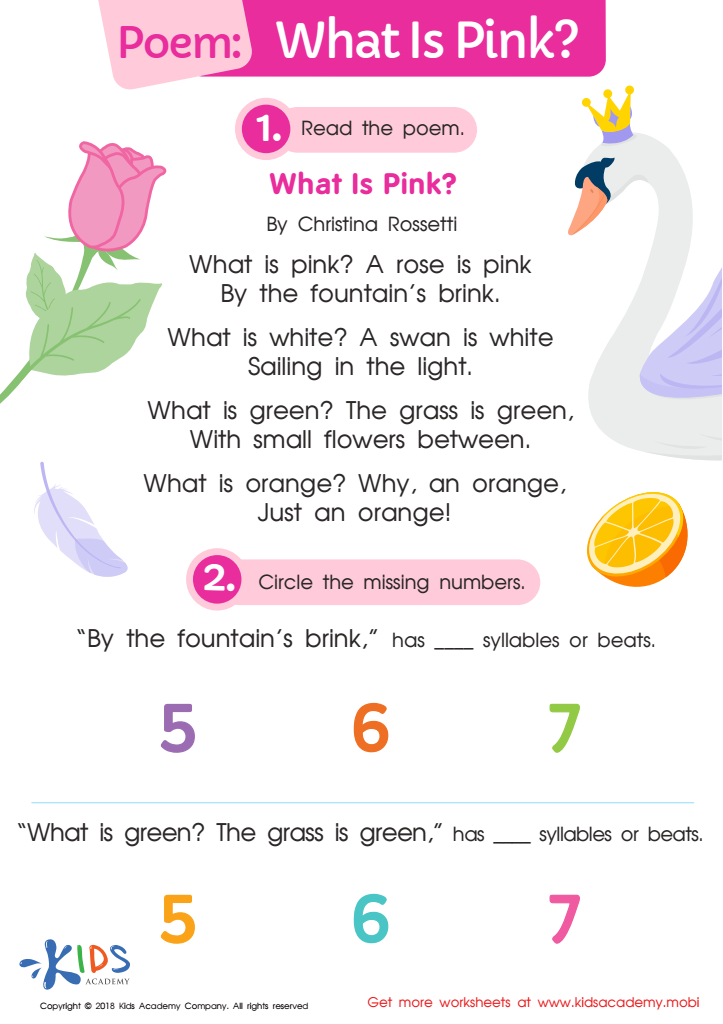
Poem: What Is Pink? Worksheet
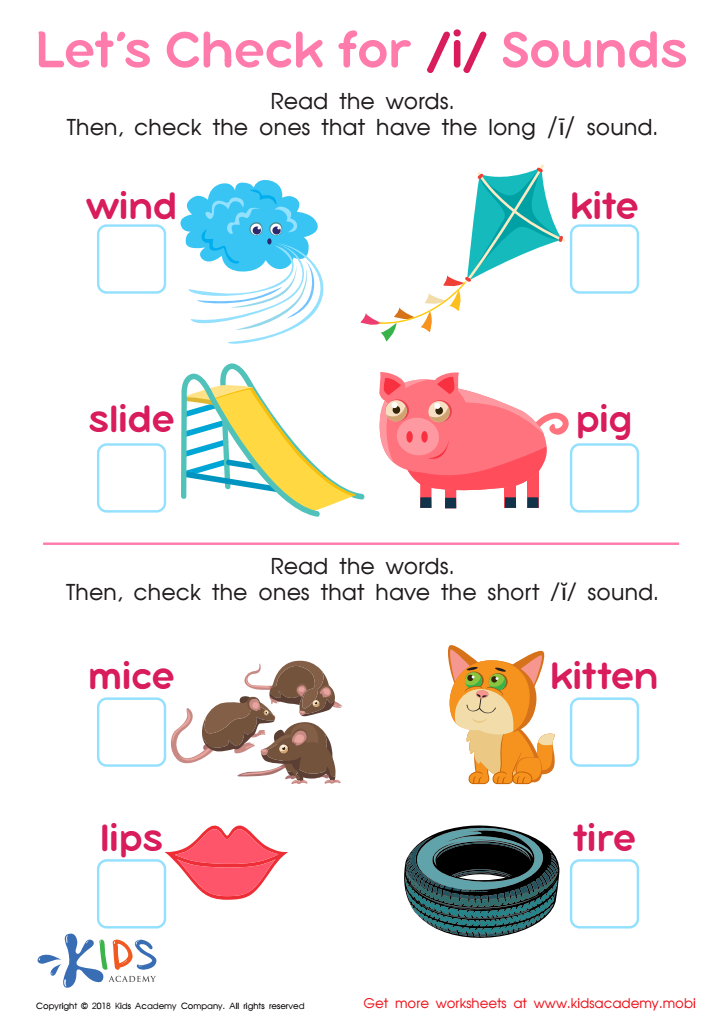
Let's Check for «i» Sounds Worksheet








Parents and teachers should prioritize reading skill improvement for children ages 7-8 because it forms the foundation for academic success across subjects and in life. At this age, children's literacy development accelerates, and strong reading skills directly correlate with better comprehension, communication, and critical thinking abilities.
Enhancing reading skills at this stage not only fosters a love for literature but also allows children to access and engage with a broader range of topics, which can ignite curiosity and facilitate a lifelong learning mindset. When children master the alphabet and phonetic principles, it enables them to decode new words, paving the way for more complex reading materials in the future.
Moreover, children who struggle with reading are often at risk for decreased self-esteem and disengagement from school. By supporting reading skill improvement, parents and teachers can boost children's confidence, motivating them to participate actively in their learning. Additionally, strong reading abilities can enhance social skills as children engage in discussions about books, stories, and ideas, fostering collaboration and communication with peers. Ultimately, focusing on reading skill improvement equips children with essential tools for success, both in the classroom and beyond.







