Reading skills development Phonics Worksheets for Ages 7-8
3 filtered results
-
From - To
Unlock your child's potential with our engaging Phonics Worksheets designed for ages 7-8! These thoughtful resources aim to enhance reading skills through dynamic activities that target phonemic awareness, decoding, and vocabulary development. Featuring a variety of fun exercises, our worksheets encourage children to connect sounds with letters, forming a solid foundation for reading proficiency. Tailored to keep young learners motivated, these worksheets promote exploration and discovery in literacy. Perfect for parents and educators seeking effective tools to foster a love for reading, our phonics resources ensure children become confident readers while enjoying the learning process! Explore the joy of reading today!
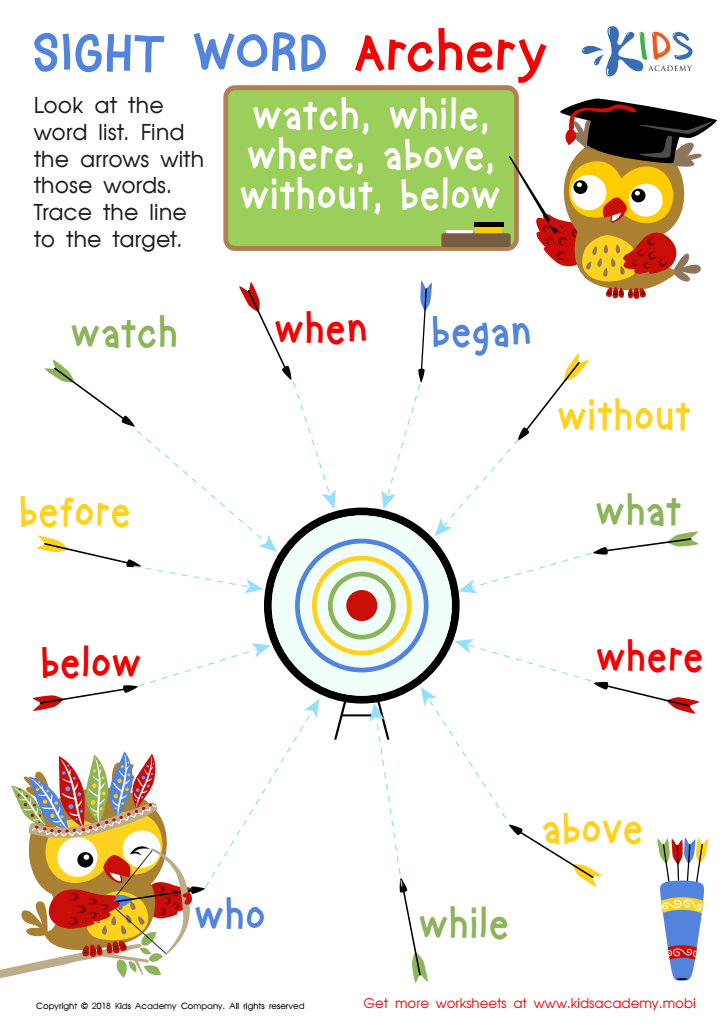
Sight Word Archery Worksheet
 Assign to My Students
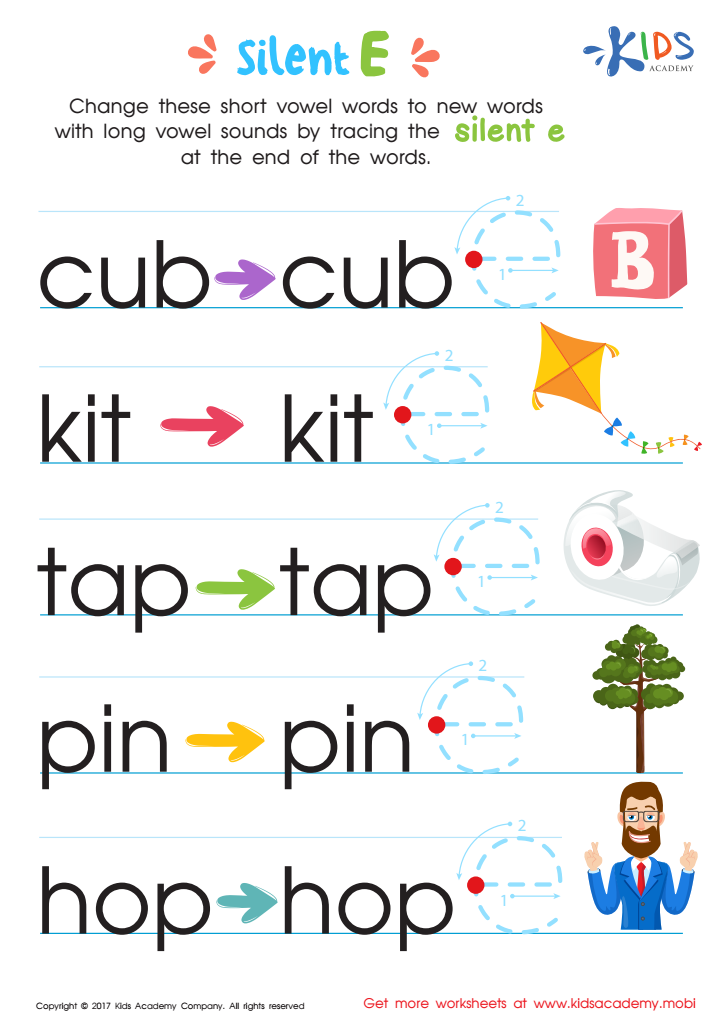
Silent E Words Worksheet
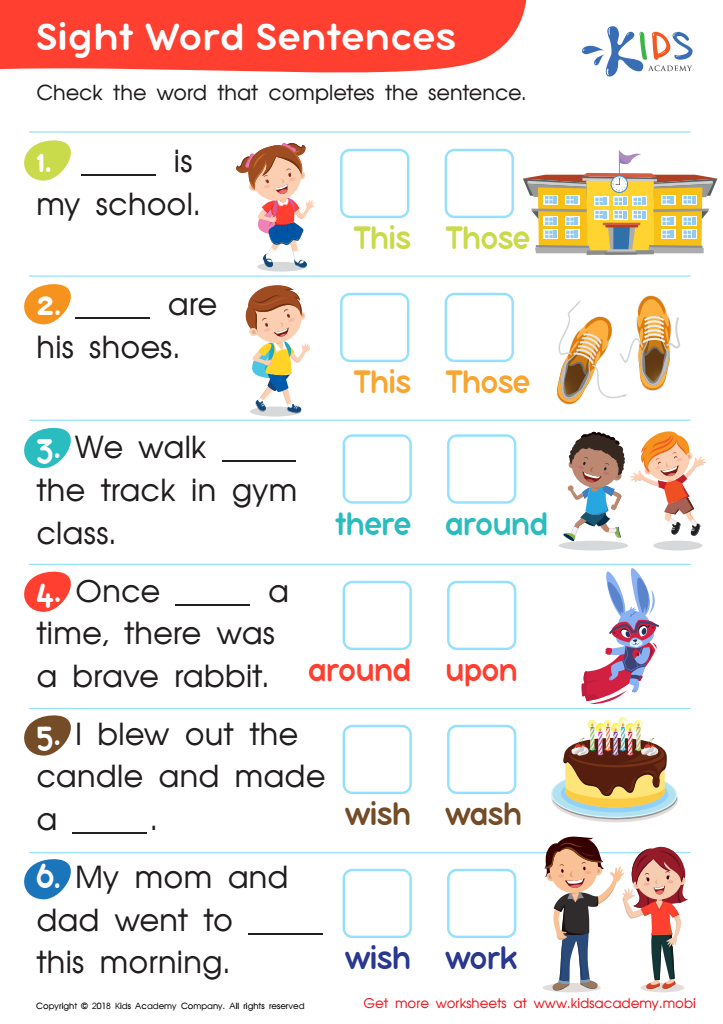
Sight Word Sentences Worksheet








Reading skills development, particularly phonics, is crucial for children aged 7-8 as it lays the foundational block for literacy, academic success, and lifelong learning. At this stage, children are transitioning from learning to read to reading to learn. Phonics instruction helps them connect sounds with letters, enabling them to decode words independently. Mastering phonics enhances their ability to read fluently, comprehend texts, and engage with various subjects, fostering cognitive development.
For parents and teachers, nurturing phonics skills in this age group is vital. Strong readers benefit not only in language arts but also in subjects like math and science, where reading comprehension is essential for understanding concepts and following instructions. Moreover, proficient reading skills boost children's self-esteem and motivation, instilling a love for reading that can last a lifetime.
Additionally, early phonics instruction can help identify and address potential challenges, such as dyslexia, allowing educators and parents to implement timely interventions. By prioritizing phonics development, parents and teachers can support children's overall academic journey, ensuring they are equipped for future challenges and enriching their educational experience. Investing in phonics at this pivotal age cultivates a generation of confident and capable readers.







