Filters

7 filtered results

Clear all filters
Favorites
With answer key
Interactive

7 filtered results

Difficulty Level

Grade


Boost your child's language skills with our Vocabulary Enhancement Rhyming Worksheets tailored for ages 7-8. These engaging printable worksheets are designed to make learning fun and interactive, helping children recognize and create rhyming words. Through a variety of exercises, kids will enhance their vocabulary, improve phonemic awareness, and build a solid foundation for reading and writing. Perfect for classroom use or homeschooling, each worksheet combines education with creativity, ensuring young learners stay motivated and eager to learn. Give your child the tools they need to succeed with our expertly crafted rhyming worksheets.

Check out this FREE Trial Lesson on Rhyming for age 7-8!

Recognize Words that Rhyme

Favorites
With answer key
Interactive
  • 7-8
  • Vocabulary enhancement
  • Rhyming
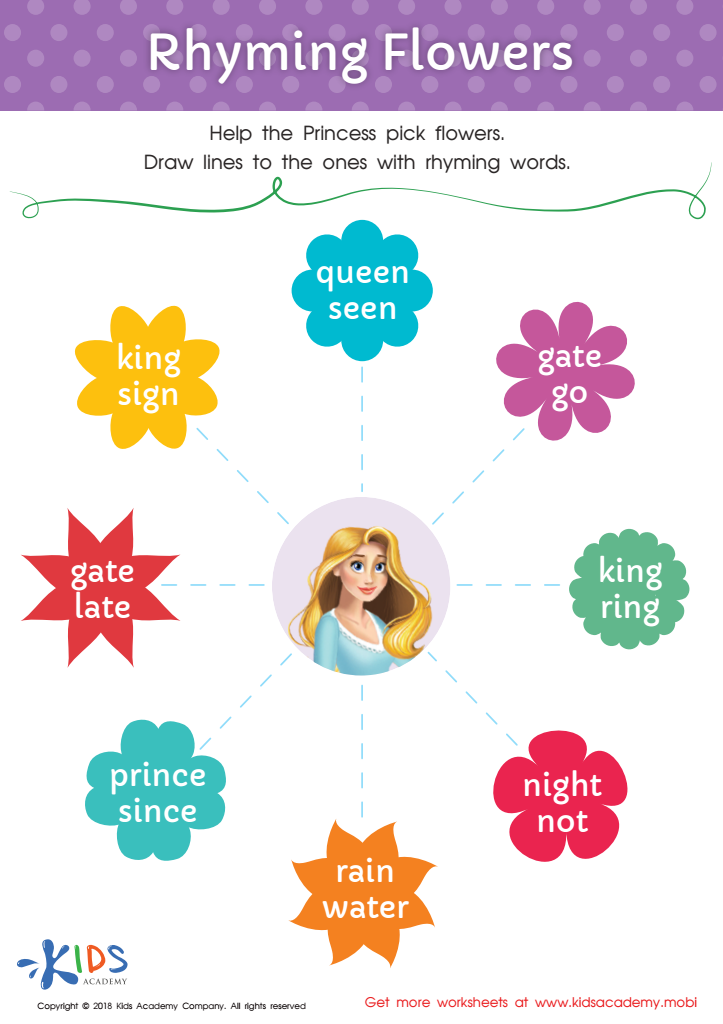
Rhyming Flowers Worksheet

Rhyming Flowers Worksheet

Recognizing rhyming words boosts phonological awareness. With this skill, students can identify similar sounds in words and predict new words more accurately. This worksheet provides practice and is ideal for the reading classroom. Download and find the rhyming words! (80 words)
Rhyming Flowers Worksheet
Worksheet
Rhyming Words Worksheet PDF

Rhyming Words Rhyming Worksheet

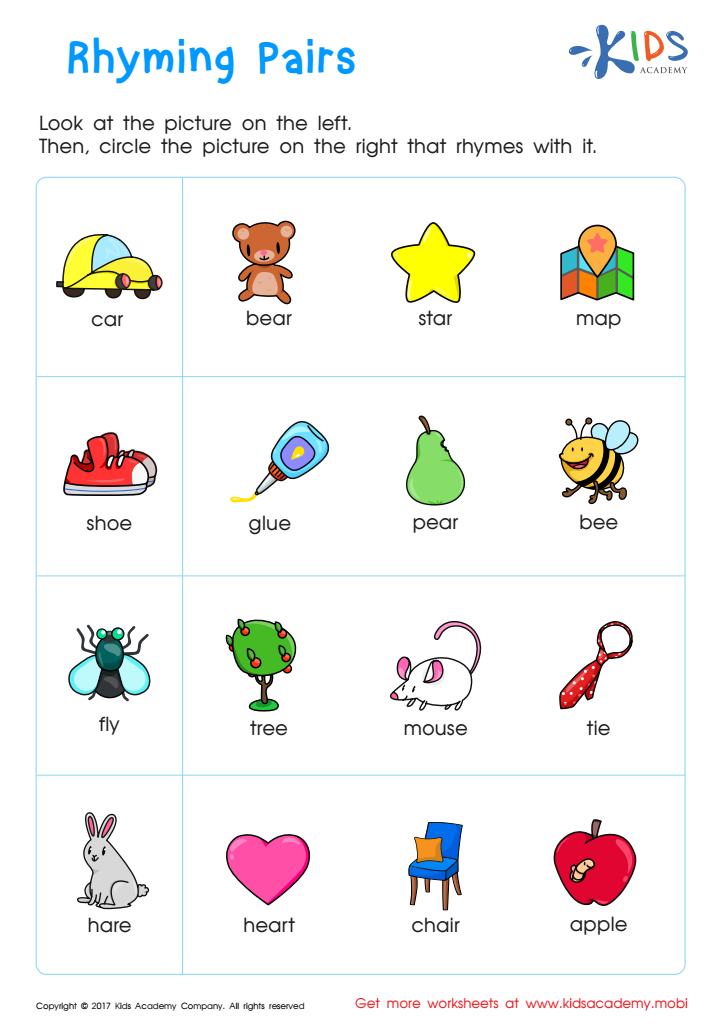
This worksheet is great for honing pre-reading skills. It helps kids make connections between pictures and written words, use problem-solving, and recognize sounds and words that rhyme. Have fun exploring rhyming words with your child, and they'll be rhyming in no time!
Rhyming Words Rhyming Worksheet
Worksheet
Free Rhyming Pairs Worksheet

Rhyming Pairs Worksheet

Rhyming Pairs Worksheet
Worksheet
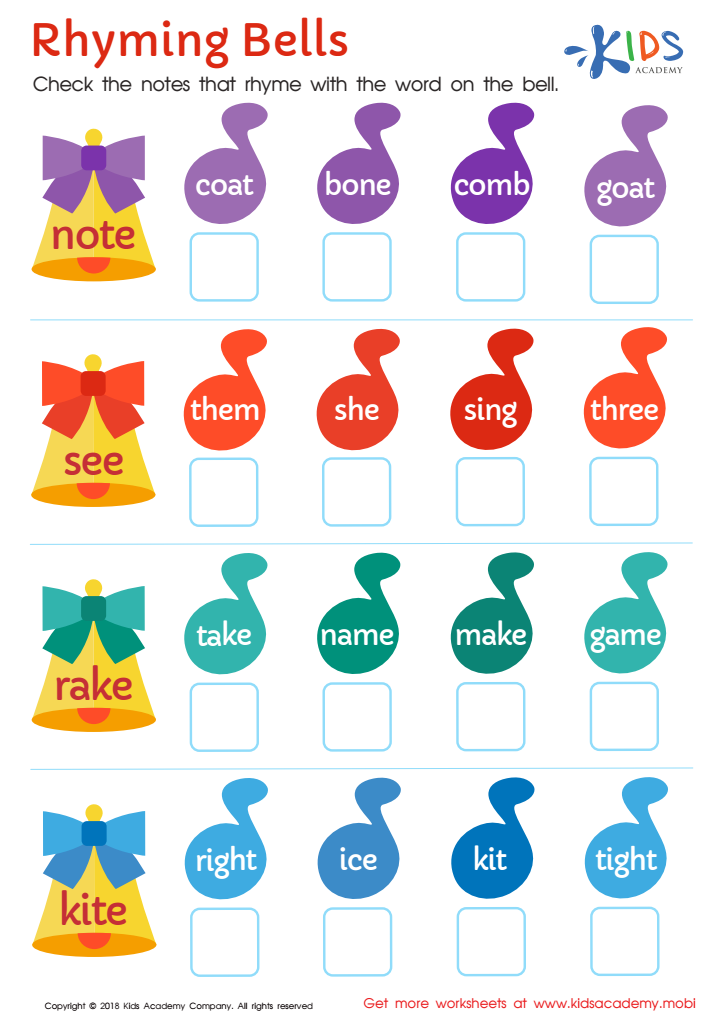
Rhyming Bells Worksheet

Rhyming Bells Worksheet

This printable worksheet helps students recognize rhyming words. Read a word, then pick the 4 words that rhyme. Look out for words with different spellings but same ending sound. It's a great exercise to improve understanding of rhyming words.
Rhyming Bells Worksheet
Worksheet
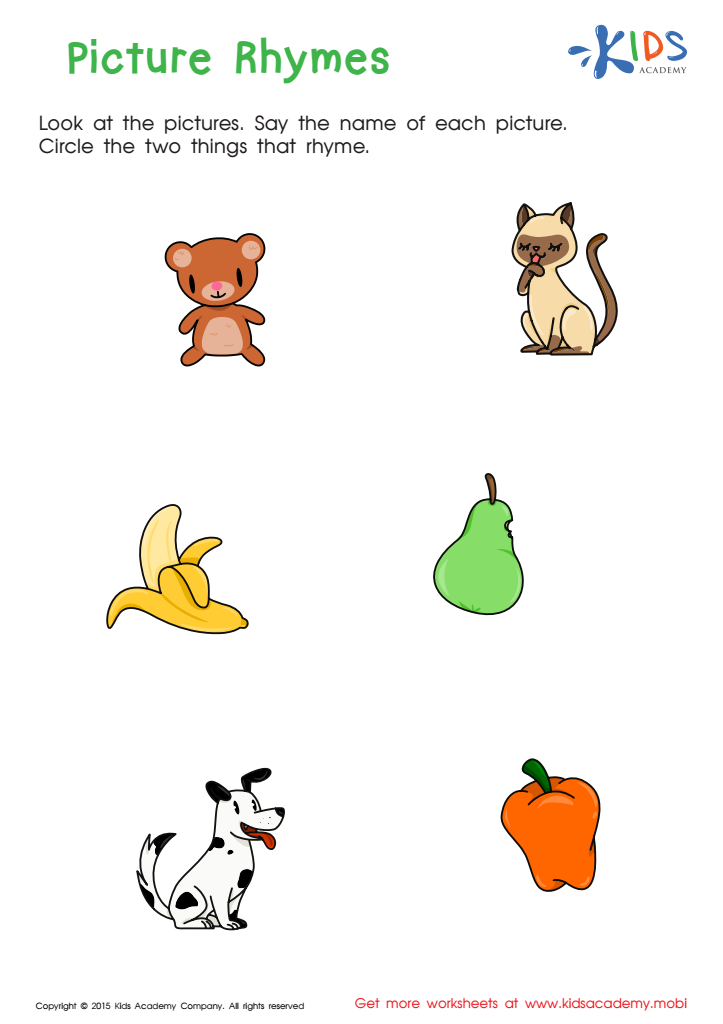
Picture Rhymes Printable

First Words: Picture Rhymes Worksheet
Rhyming helps kids understand language, read and write better. This printable worksheet boosts problem-solving and cognitive skills with vibrant pictures. It teaches kids to identify words, recognize rhymes, complete mental tasks and write words. An extra activity: show them how rhyming words share some of the same letters.
First Words: Picture Rhymes Worksheet
Worksheet
Poem: What Is Pink? Worksheet

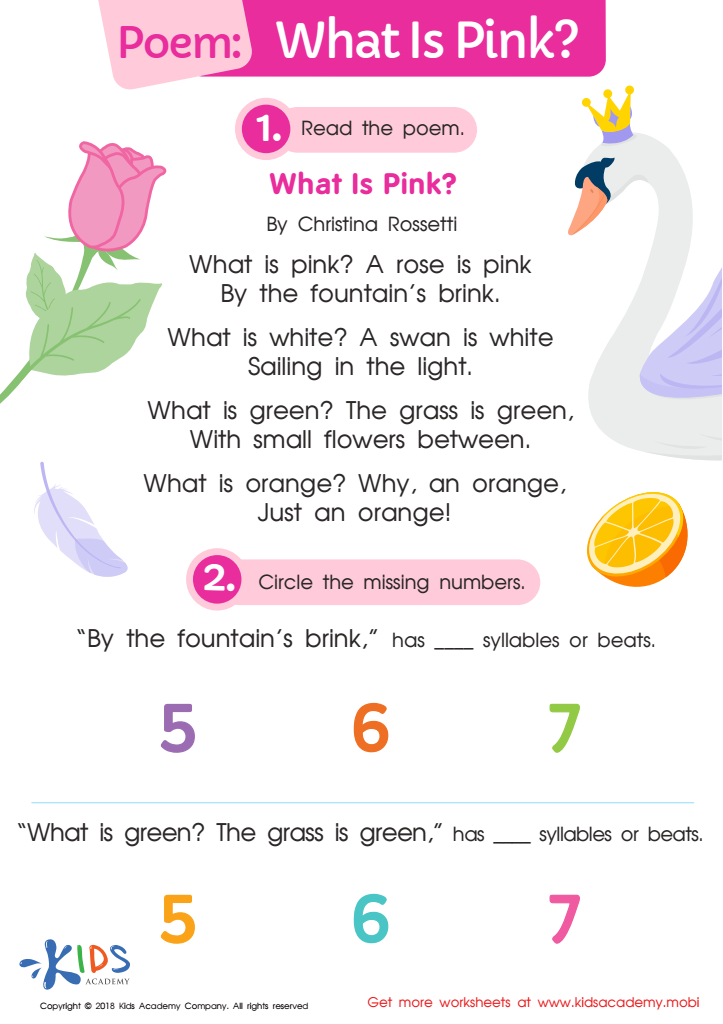
Poem: What Is Pink? Worksheet

Help your kids learn with short, fun, interesting poems! Read it aloud to them and point out the rhyme patterns. Have them circle the missing numbers to answer two questions. Show examples of objects with the colors in the poem. This will help them learn to read, and also understand colors better.
Poem: What Is Pink? Worksheet
Worksheet
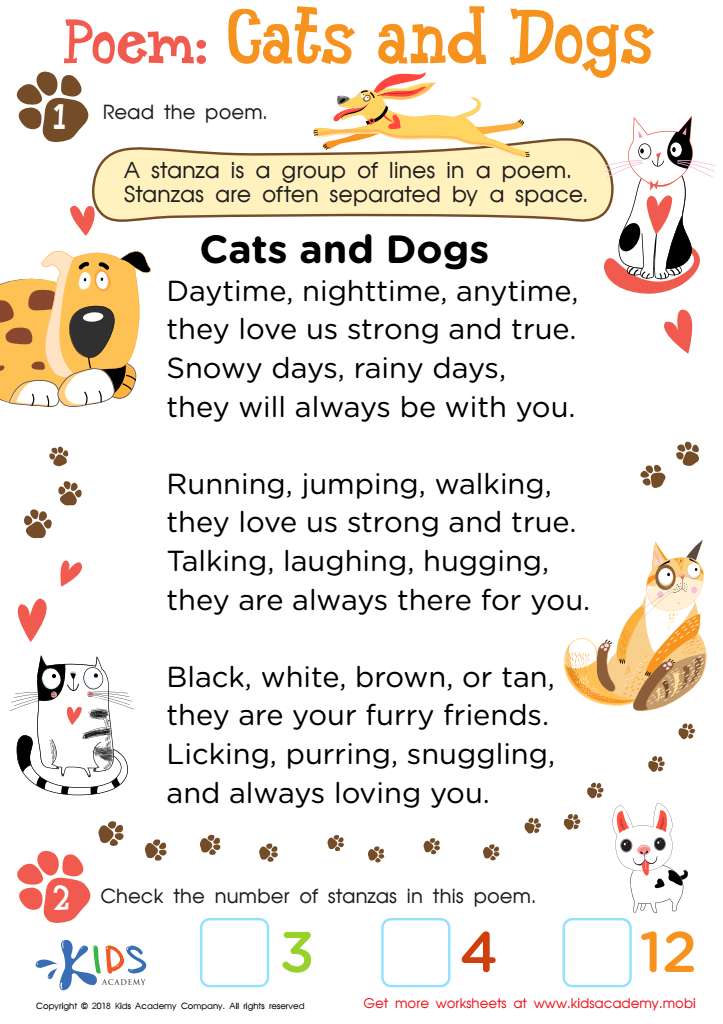
Poem: Cats and Dogs Worksheet


Poem: Cats and Dogs Worksheet

Read the poem to your child and point out where each stanza ends. Ask if they know what a stanza is (if not, explain it's a group of lines in a poem). Help them answer the question at the bottom of the printout. This simple, sweet poem about cats is easy for your child to relate to.
Poem: Cats and Dogs Worksheet
Worksheet


Vocabulary enhancement and rhyming are vital elements of early literacy development. For children aged 7-8, a strong vocabulary forms the foundation for reading comprehension, writing skills, and effective communication. Expanding vocabulary equips children with the words they need to express their thoughts clearly and understand others fully, which enhances both academic performance and social interactions.

Rhyming, on the other hand, is a playful yet powerful tool for language development. When children engage with rhymes, they are not only learning new words but also training their ears to recognize sound patterns. This auditory discrimination is crucial for phonemic awareness, an essential skill for reading. Rhyming helps children predict word patterns, understand spelling conventions, and remember new words.

Moreover, integrating rhyming and vocabulary-building activities can make learning enjoyable. Singing songs, reciting nursery rhymes, or reading rhyming books captivates children's interest and encourages them to experiment with language without the stress of formal education.

In essence, by focusing on vocabulary enhancement and rhyming, parents and teachers provide children with essential tools that support lifelong learning. These activities lay a robust foundation for reading and writing skills, while also making language learning an engaging and enjoyable process.