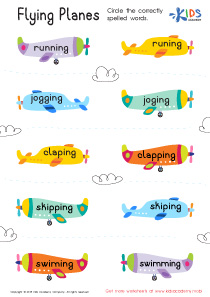
Phonics Skills Vowels and Consonants Worksheets for Ages 7-8
7 filtered results
Difficulty Level
Grade
Age
-
From - To
Subject
Activity
Standards
Boost your child's reading and writing abilities with our expertly designed "Phonics Skills: Vowels and Consonants Worksheets" for ages 7-8. These engaging activities, available at Kids Academy, focus on mastering the fundamental building blocks of language. With vibrant exercises and interactive tasks, children will effortlessly differentiate between vowels and consonants while enhancing their phonics skills. Perfect for both individual practice and classroom use, our worksheets are tailored to make learning fun and effective. Help your child achieve phonics success—explore our collection and watch their confidence soar!
Favorites
With answer key
Interactive
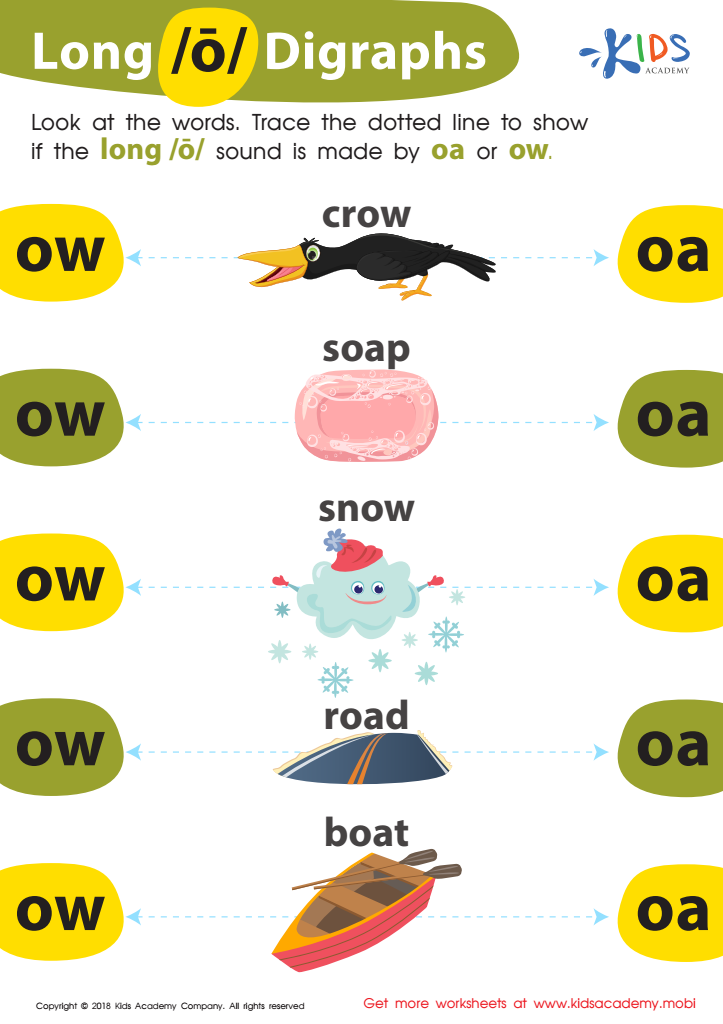
Reading: Long O Digraphs Worksheet
Reading and decoding words can be complex for learners when they start studying digraphs, two letters that make one sound. This worksheet focuses on the long O sound, /oa/ and /ow/. With the understanding of digraphs, students can decode more words and build their reading confidence.
 Assign to My Students
Reading: Long O Digraphs Worksheet
Worksheet
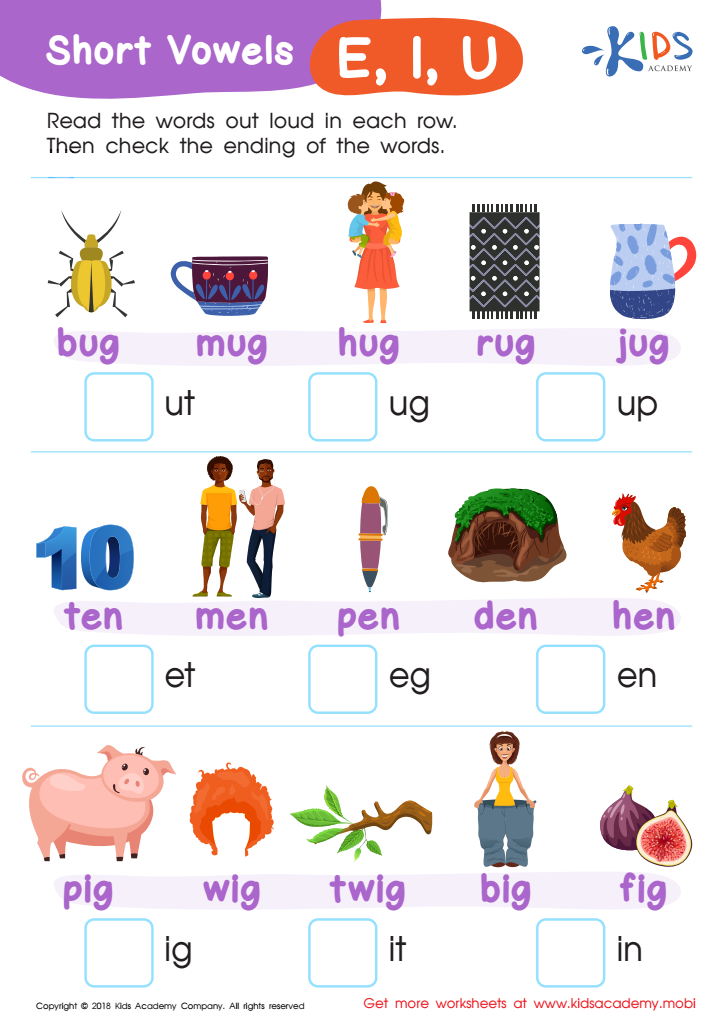
Short Vowels /e/, /i/, and /u/ Worksheet
Your emergent reader can have fun while practicing their short vowel sounds with this free, brightly colored worksheet. They'll identify one-syllable words by their pictures, then match the correct ending for each. They'll gain an understanding of how short vowel sounds vary in closed syllables with different endings, without even realizing it!
Short Vowels /e/, /i/, and /u/ Worksheet
Worksheet
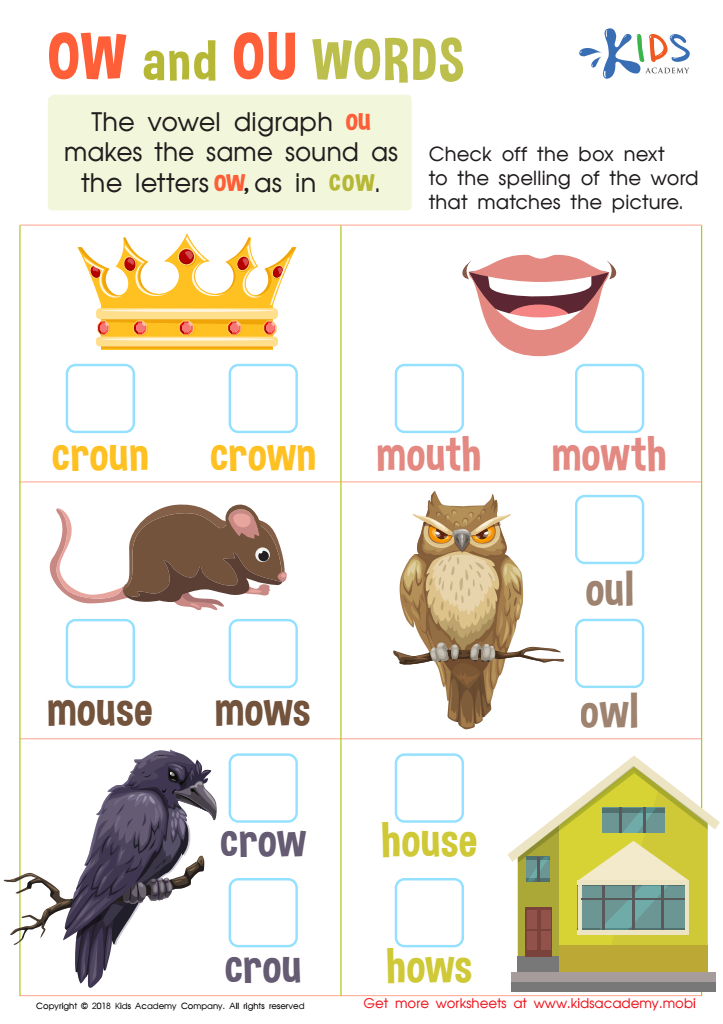
Reading: OW and OU Words Worksheet
Help your kids learn phonetics! Explain the different sounds and long/short variations. Emphasize that some vowel sounds are the same, e.g. ou = ow in cow. For practice, have them read aloud the words in the worksheet and check the box next to the spelling that matches the picture.
Reading: OW and OU Words Worksheet
Worksheet
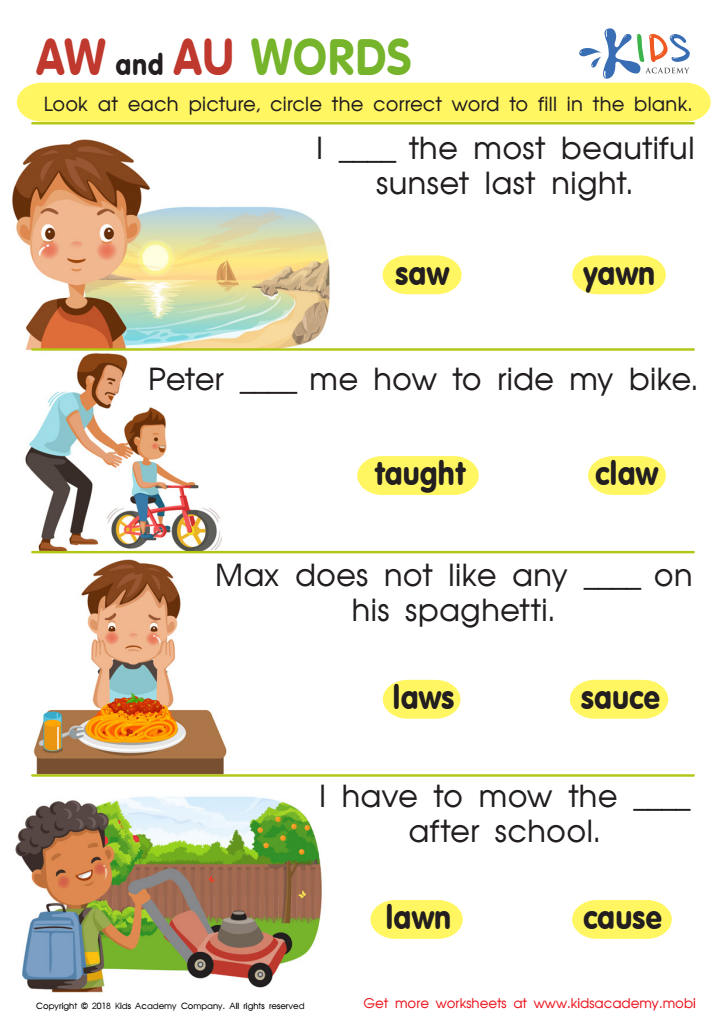
Reading: AW and AU Words Worksheet
This worksheet helps kids recognize that /au/ and /aw/ can make the same sound. Students read sentences and pick the correct word with one of the digraphs. Understanding digraphs improves decoding and reading fluency. Perfect for reading and phonics classes.
Reading: AW and AU Words Worksheet
Worksheet
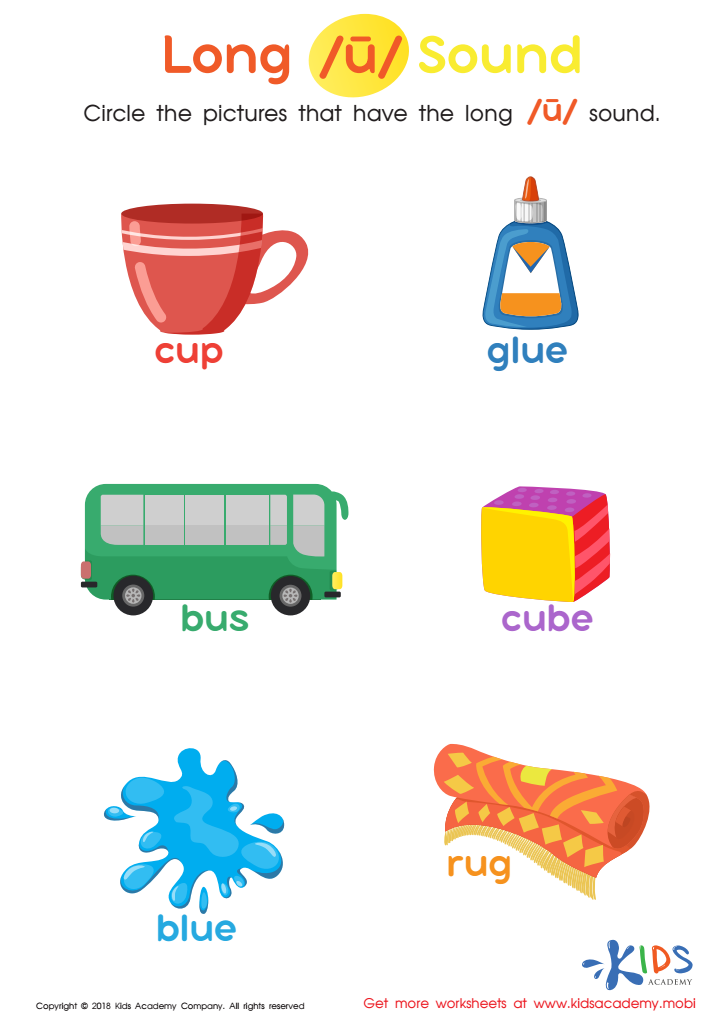
Long «u» Sound Worksheet
This fun and engaging free PDF worksheet teaches kids to differentiate between long and short «u» sounds. Through tracing circles around the correct words, they'll practice their fine motor skills while also recognizing patterns (silent-e for «ū» sound) in closed-syllable words. Bright and cheery pictures make it a great confidence booster for new readers!
Long «u» Sound Worksheet
Worksheet
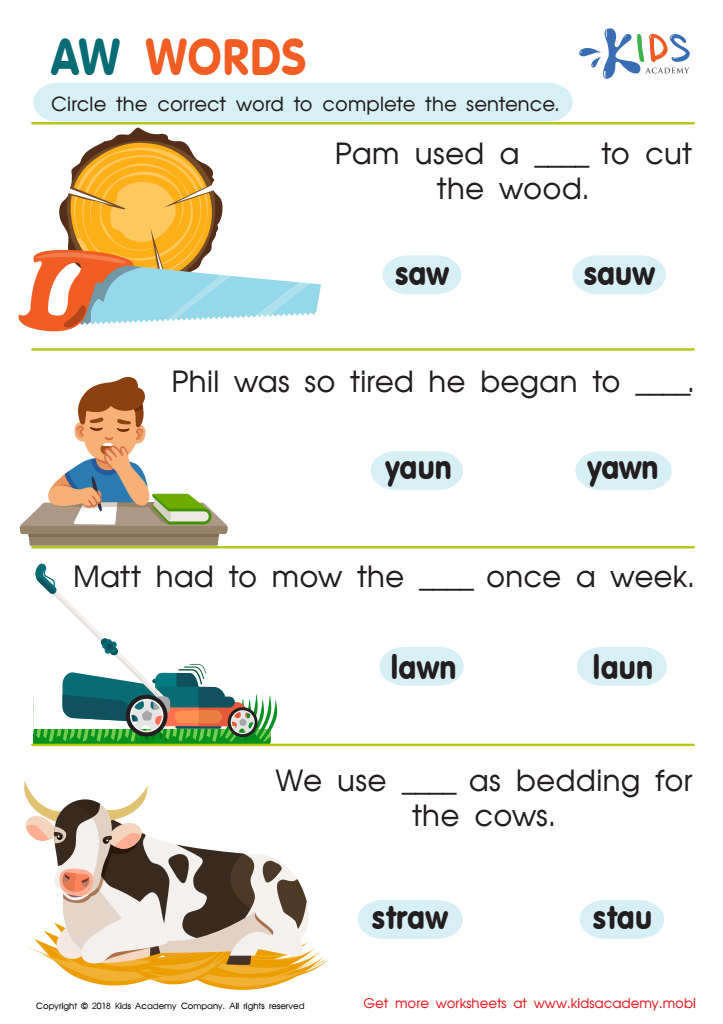
Reading: AW Words Worksheet
Practice decoding the /aw/ digraph with this printable. Students read sentences and select the word with the correct spelling to complete each one. Note, /aw/ is sometimes spelled /au/, so this worksheet helps prevent confusion. Have fun, and practice hard!
Reading: AW Words Worksheet
Worksheet
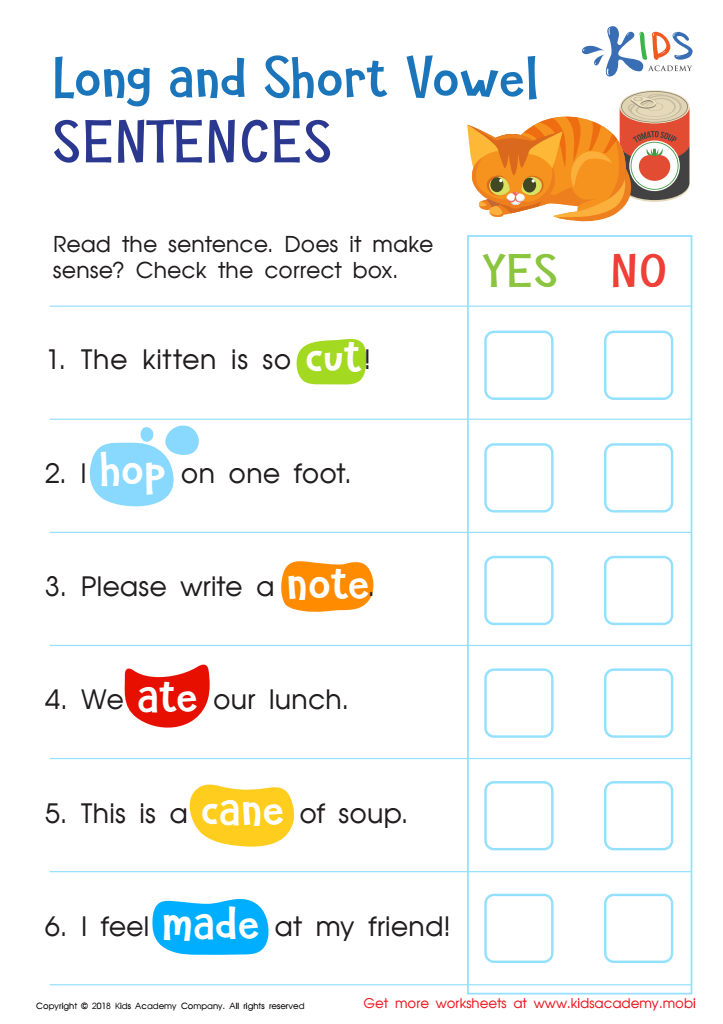
Long and Short Vowel Sentences: Assessment Worksheet
This printable worksheet helps kids practice differentiating between short and long vowel sounds. They'll use context clues to figure out which words make sense in simple sentences. A great way to build reading and writing skills!
Long and Short Vowel Sentences: Assessment Worksheet
Worksheet
Join Kids Academy for Free
Who is primarily going to use this learning content?



Phonics skills are fundamental building blocks in the process of learning to read, making them crucial for children aged 7-8. At this development stage, their ability to decode words, comprehend reading materials, and build a strong literacy foundation primarily hinges on their understanding of vowels and consonants.
Proficiency in phonics—the association between sounds and letters—facilitates smoother and more confident reading. Vowels and consonants are the core components of phonetics; vowels (a, e, i, o, u) often carry the essential sounds required for word pronunciation, while consonants shape the structure of a vast array of words. When children can precisely identify and produce these sounds, they improve their decoding skills, allowing them to tackle new and unfamiliar words more effectively.
Additionally, phonics education nurtures spelling, writing, and oral language skills. Understanding the relationship between letters and sounds enables children to spell words accurately and promotes expressive and receptive language competence.
For parents and teachers, ensuring that children master phonics provides a vital tool not only for literacy but also for overall academic achievement. Poor reading skills can negatively impact all areas of learning. Thus, investing time and resources in developing robust phonics skills in children aged 7-8 can set the stage for their long-term success and boost their confidence across educational domains.