Filters

8 filtered results

Clear all filters
Favorites
With answer key
Interactive

8 filtered results

Difficulty Level

Grade


Subject

    Enhance your child's reading skills with our Reading Comprehension Vowels and Consonants Worksheets designed for ages 7-8. These engaging worksheets help young learners distinguish between vowels and consonants, while also improving their reading comprehension. Through a variety of fun and interactive activities, children will build a strong foundation in phonics and develop critical reading skills that are essential for their academic growth. Perfect for both classroom and home use, these worksheets will make learning enjoyable and effective. Join us at Kids Academy and give your child the head start they need in literacy.

    Check out this FREE Trial Lesson on Vowels and Consonants for age 7-8!

    Short and Long Vowel Sort

    Favorites
    With answer key
    Interactive
    • 7-8
    • Reading comprehension
    • Vowels and Consonants
    Let's Check Long Vowels: Assessment Worksheet
    Let's Check Long Vowels: Assessment Worksheet

    Let's Check Long Vowels: Assessment Worksheet

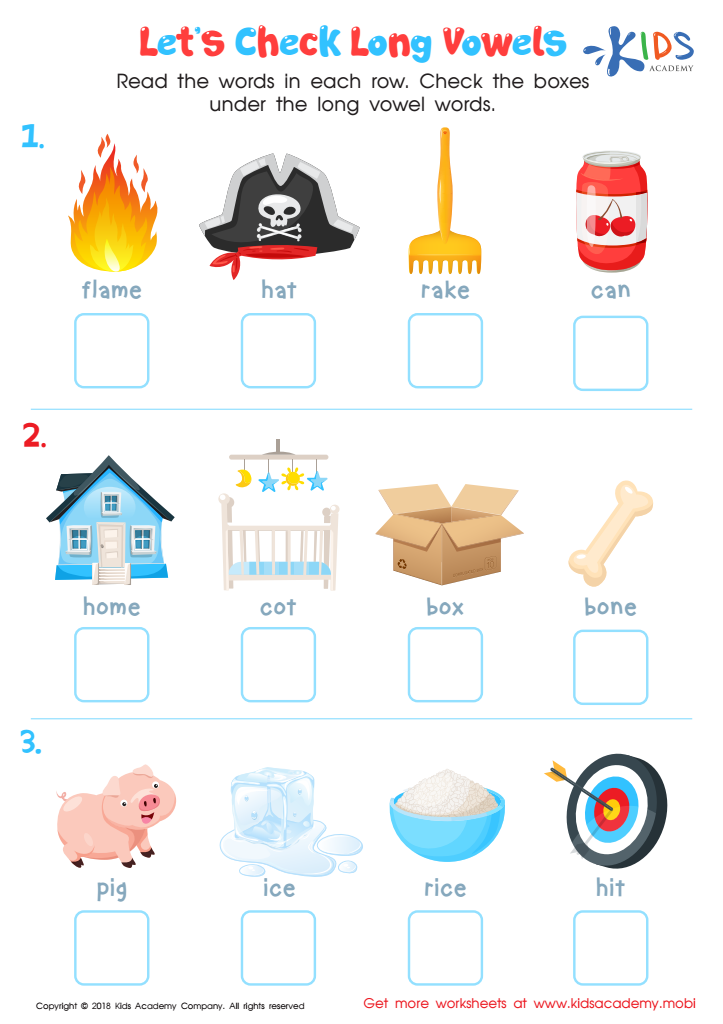
    This worksheet helps your child identify objects and learn long vowel sounds. Ask them to say the names of the four objects in each row. Then, help them check the boxes to confirm they know the long vowel sounds. This will help them develop their reading skills.
    Let's Check Long Vowels: Assessment Worksheet
    Worksheet
    Reading: Long O Digraphs Worksheet
    Reading: Long O Digraphs Worksheet

    Reading: Long O Digraphs Worksheet

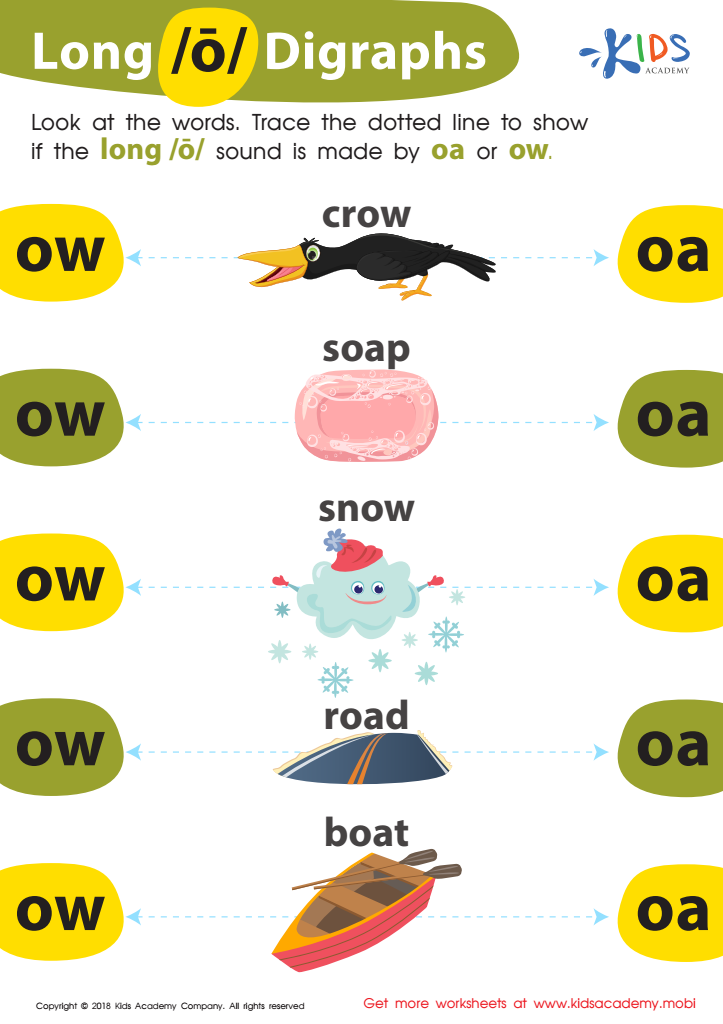
    Reading and decoding words can be complex for learners when they start studying digraphs, two letters that make one sound. This worksheet focuses on the long O sound, /oa/ and /ow/. With the understanding of digraphs, students can decode more words and build their reading confidence.
    Reading: Long O Digraphs Worksheet
    Worksheet
    Short Vowels /e/, /i/, and /u/ Worksheet
    Short Vowels /e/, /i/, and /u/ Worksheet

    Short Vowels /e/, /i/, and /u/ Worksheet

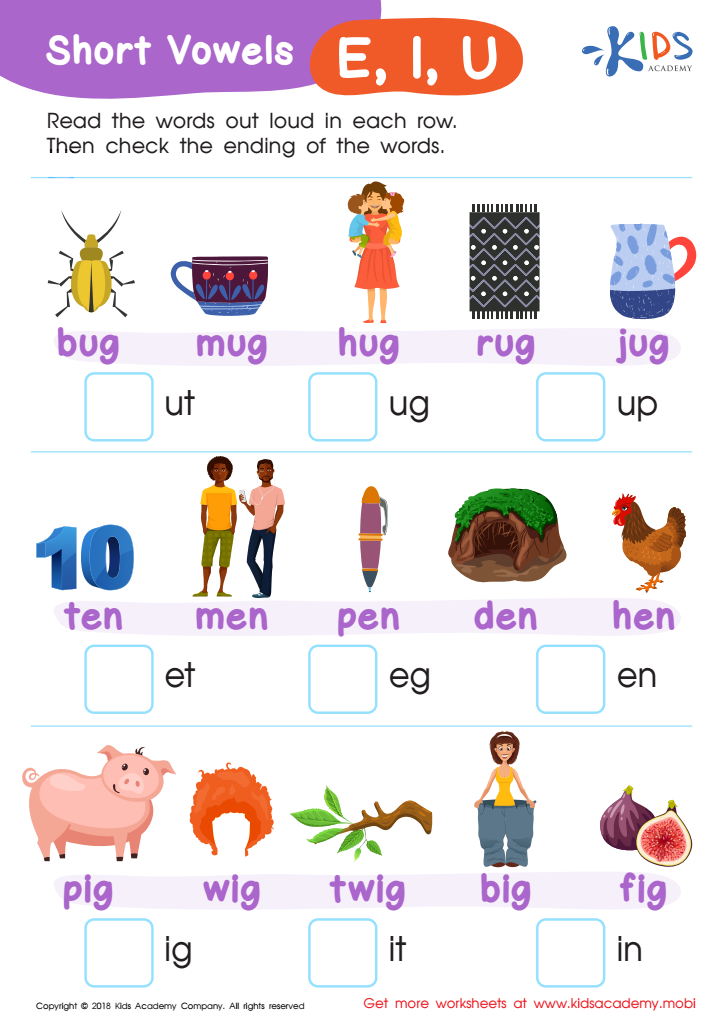
    Your emergent reader can have fun while practicing their short vowel sounds with this free, brightly colored worksheet. They'll identify one-syllable words by their pictures, then match the correct ending for each. They'll gain an understanding of how short vowel sounds vary in closed syllables with different endings, without even realizing it!
    Short Vowels /e/, /i/, and /u/ Worksheet
    Worksheet
    Reading: AW and AU Words Worksheet
    Reading: AW and AU Words Worksheet

    Reading: AW and AU Words Worksheet

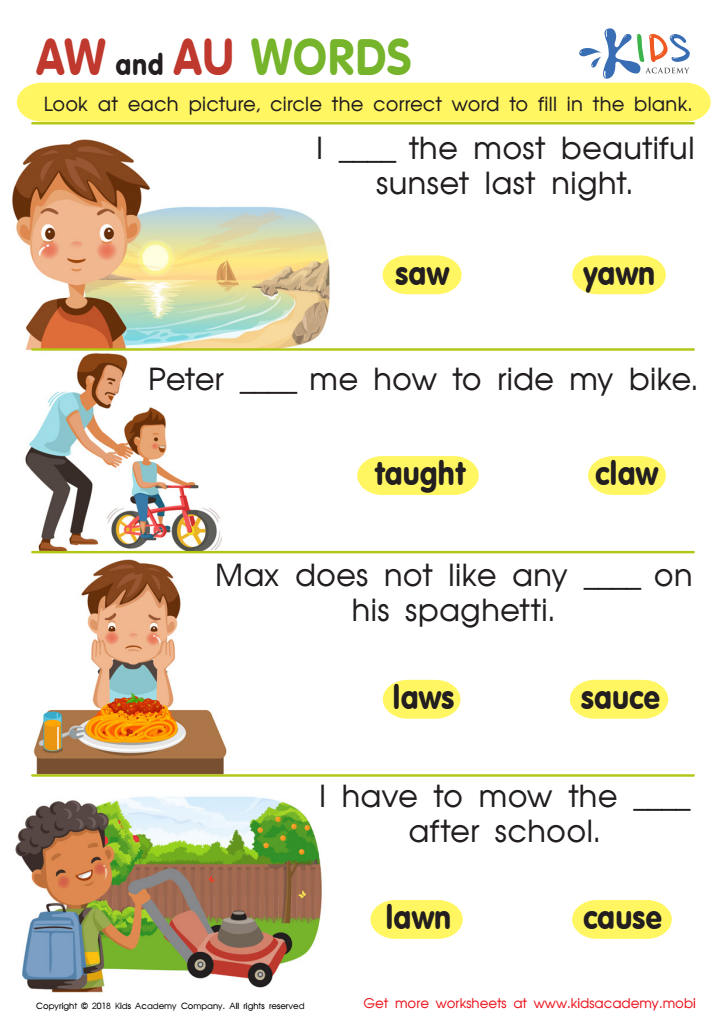
    This worksheet helps kids recognize that /au/ and /aw/ can make the same sound. Students read sentences and pick the correct word with one of the digraphs. Understanding digraphs improves decoding and reading fluency. Perfect for reading and phonics classes.
    Reading: AW and AU Words Worksheet
    Worksheet
    Long «u» Sound Worksheet
    Long «u» Sound Worksheet

    Long «u» Sound Worksheet

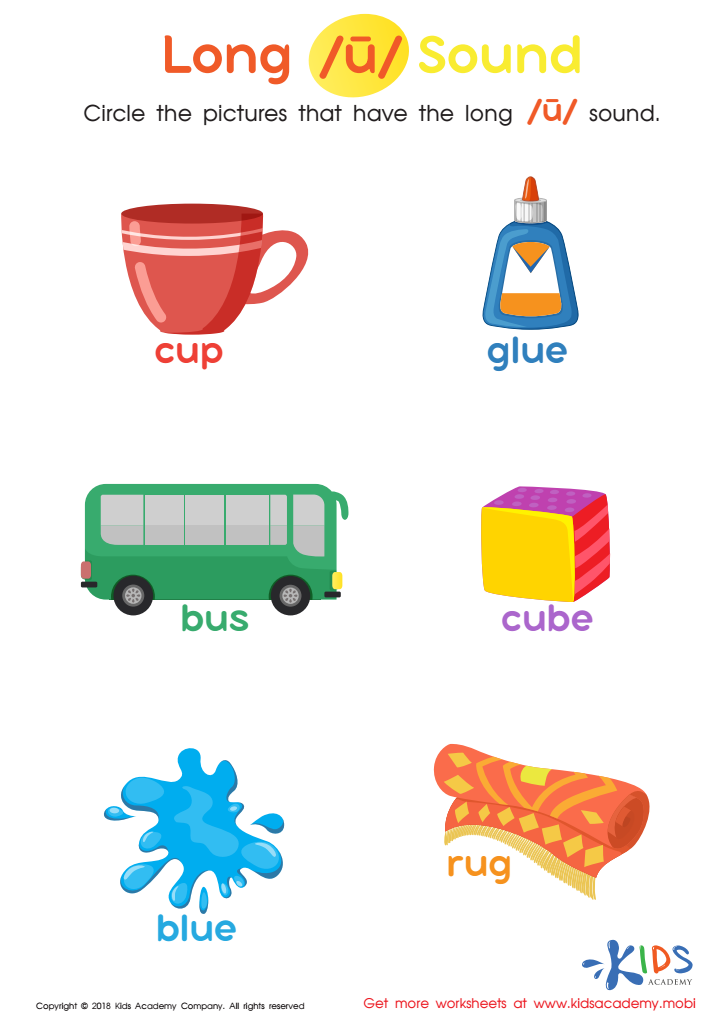
    This fun and engaging free PDF worksheet teaches kids to differentiate between long and short «u» sounds. Through tracing circles around the correct words, they'll practice their fine motor skills while also recognizing patterns (silent-e for «ū» sound) in closed-syllable words. Bright and cheery pictures make it a great confidence booster for new readers!
    Long «u» Sound Worksheet
    Worksheet
    Reading: AW Words Worksheet
    Reading: AW Words Worksheet

    Reading: AW Words Worksheet

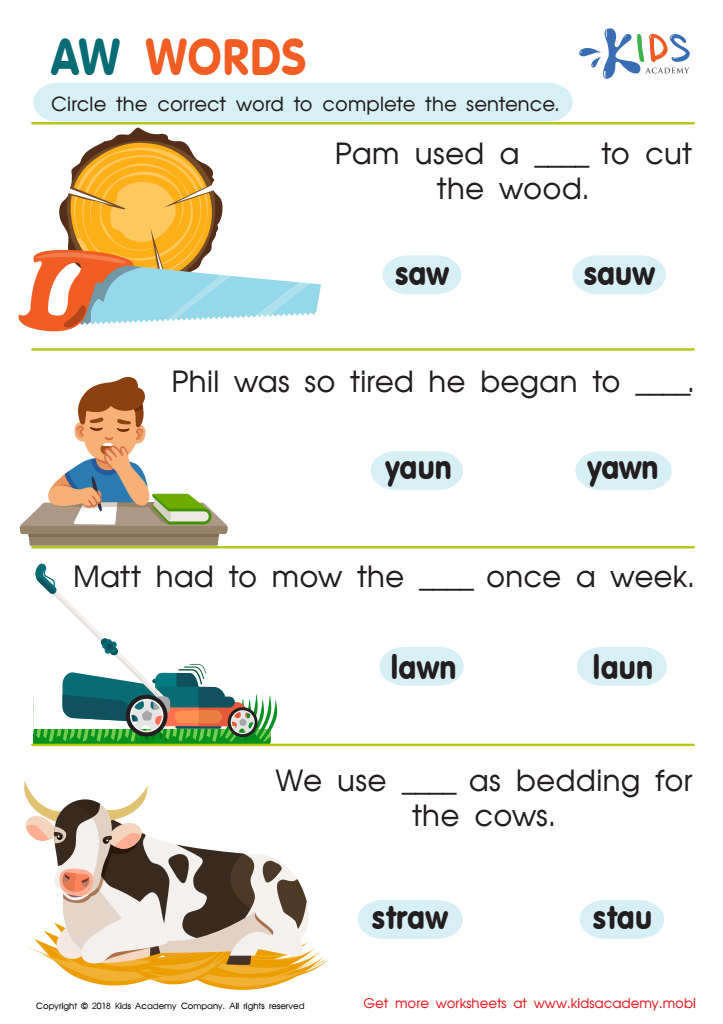
    Practice decoding the /aw/ digraph with this printable. Students read sentences and select the word with the correct spelling to complete each one. Note, /aw/ is sometimes spelled /au/, so this worksheet helps prevent confusion. Have fun, and practice hard!
    Reading: AW Words Worksheet
    Worksheet
    Long and Short Vowel Sentences: Assessment Worksheet
    Long and Short Vowel Sentences: Assessment Worksheet

    Long and Short Vowel Sentences: Assessment Worksheet

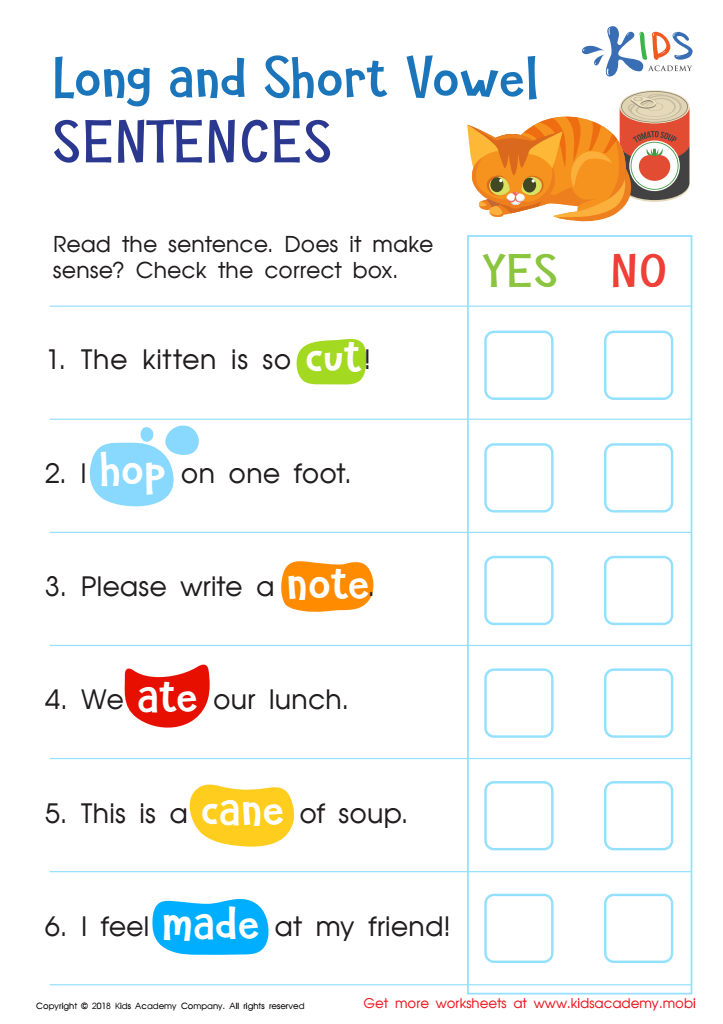
    This printable worksheet helps kids practice differentiating between short and long vowel sounds. They'll use context clues to figure out which words make sense in simple sentences. A great way to build reading and writing skills!
    Long and Short Vowel Sentences: Assessment Worksheet
    Worksheet
    Reading: IGH as Long I Worksheet

    Reading: IGH as Long I Worksheet

    Reading: IGH as Long I Worksheet

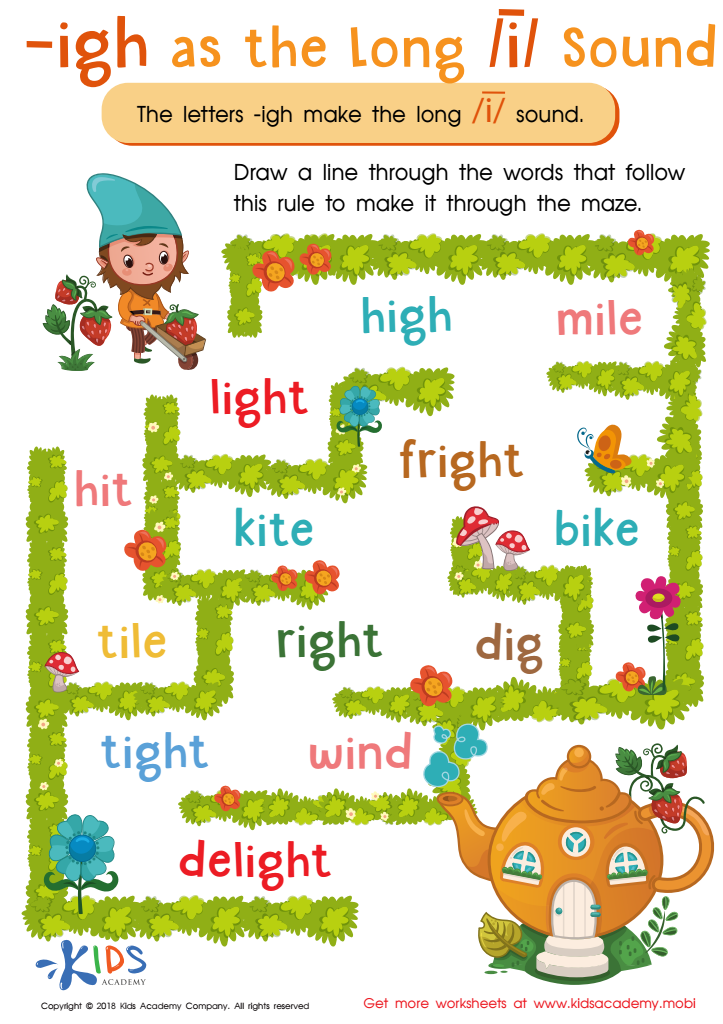
    Kids can have fun and learn with this maze! They'll look for and read words with the 'long I' sound spelled 'igh'. Most words ending with 'T' have this spelling. Decode words while learning about long vowel sounds and their spellings.
    Reading: IGH as Long I Worksheet
    Worksheet


    Reading comprehension for children aged 7-8 lays the foundation for their future academic success. During this critical stage, understanding vowels and consonants is essential. Each one plays a fundamental role in word construction and pronunciation. Mastering these elements enhances phonemic awareness, allowing children to decode unfamiliar words more effectively. This, in turn, influences their ability to comprehend texts.

    When students grasp the different sounds that vowels and consonants make, they become more confident readers. This skill not only helps them in reading smoother but also aids in their writing capabilities. By correctly identifying and employing these sounds, kids can spell words accurately, which is crucial for clear communication.

    Additionally, proficient reading comprehension contributes to an enhanced vocabulary, allowing students to express themselves more precisely and understand instructions better across all subjects. This forms the backbone of their broader educational development, including math, science, and social studies.

    For parents and teachers, investing time in this area ensures children don’t just read words but understand their meanings and context. Thus, focusing on reading comprehension as it relates to vowels and consonants isn’t merely an academic exercise—it's pivotal to shaping a child's lifelong learning trajectory. By ensuring a strong grasp of these basic elements, educators and parents empower children with the tools needed for future success.