Critical Thinking Chess Worksheets for Ages 7-8
4 filtered results
-
From - To
Enhance your child’s cognitive abilities with our Critical Thinking Chess Worksheets designed specifically for ages 7-8. These engaging and interactive worksheets introduce young learners to the essential strategies and concepts of chess, fostering critical thinking and problem-solving skills. Each worksheet encourages children to analyze positions, identify tactics, and develop strategic plans, all while having fun! Perfect for both classroom and home use, our materials help reinforce important themes such as logic, creativity, and decision-making. Give your child the tools they need to think critically on and off the chessboard. Start preparing them for success today with our thoughtfully crafted worksheets!
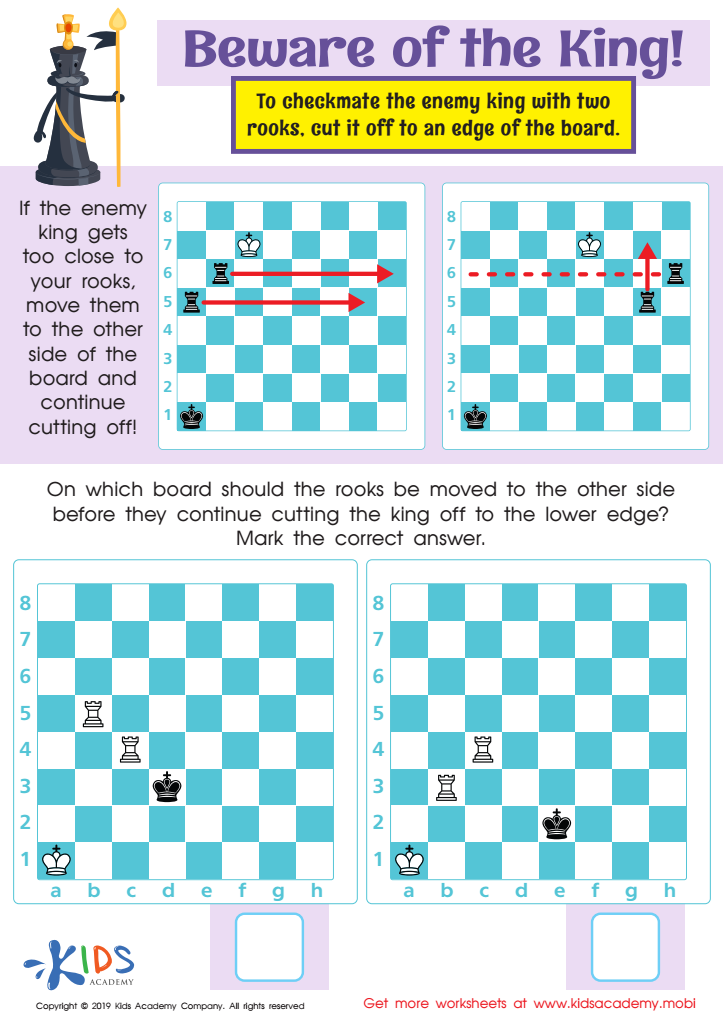
Beware of the King! Worksheet
 Assign to My Students
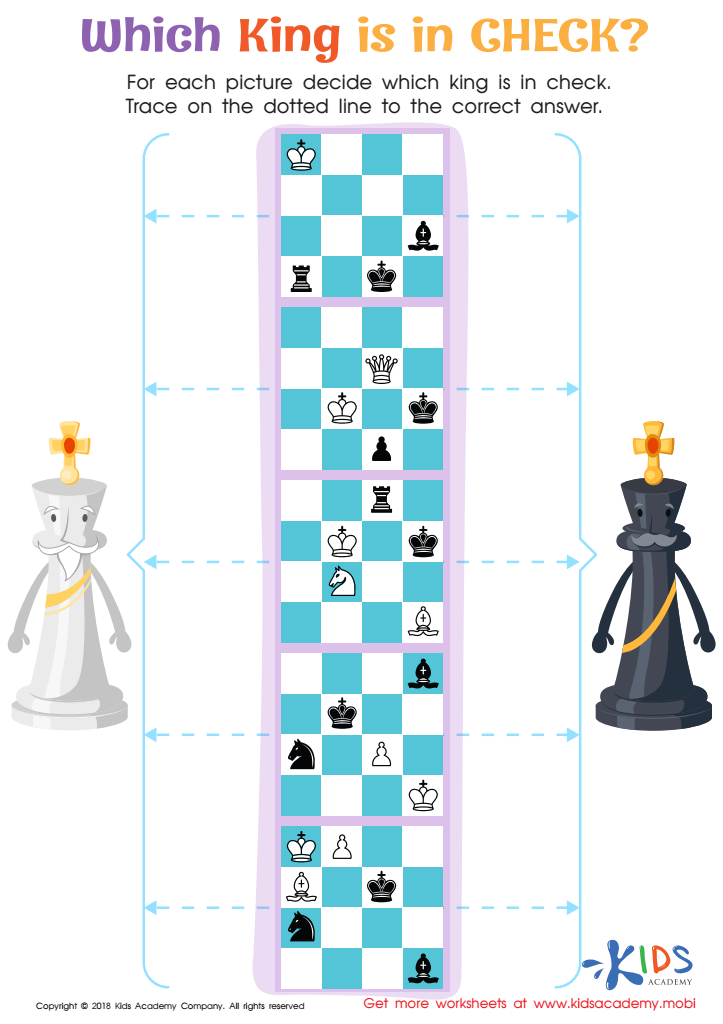
Which King is in Check? Worksheet
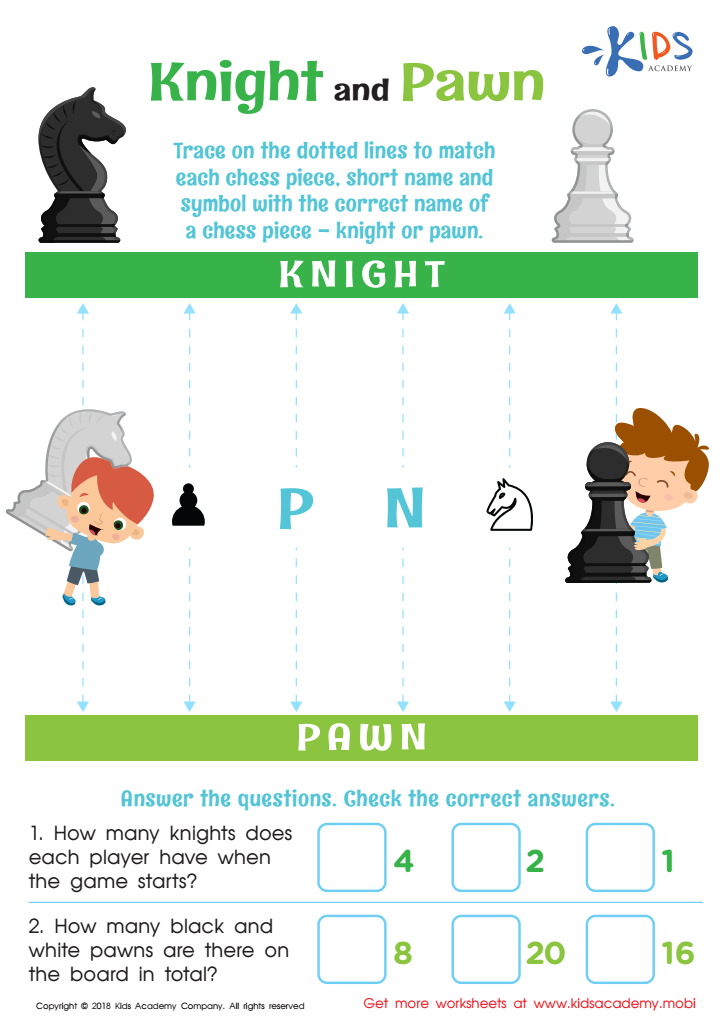
Knight and Pawn Worksheet
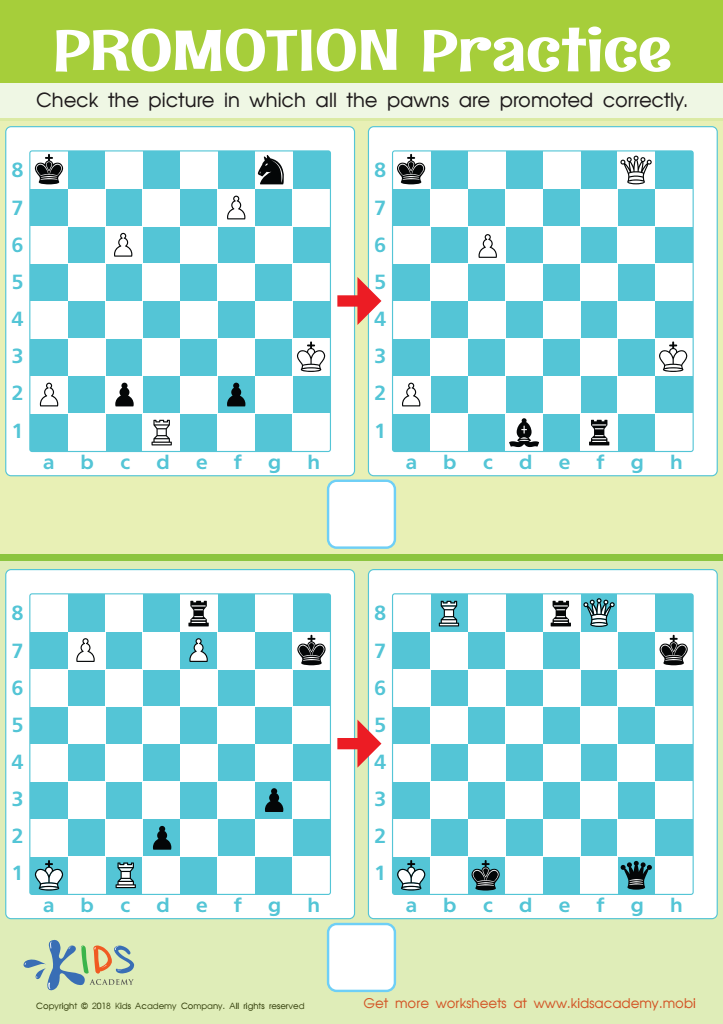
Promotion Practice Worksheet







Critical Thinking Chess for ages 7-8 is a valuable educational tool that fosters essential cognitive and social skills in young learners. Engaging in chess helps children develop critical thinking abilities as they learn to analyze positions, strategize moves, and anticipate their opponent’s actions. This not only boosts their problem-solving skills but also enhances their ability to think logically and make informed decisions.
Furthermore, chess cultivates patience and concentration. In a fast-paced world, children often struggle with focus, but chess requires sustained attention and resilience, qualities that translate well into academic settings and everyday life. Each game becomes a classroom, teaching lessons about consequences, as players grapple with the outcomes of their choices.
Moreover, participating in chess can enhance a child’s interpersonal skills. Whether playing with peers or adults, they learn the nuances of sportsmanship, patience, and respect for opponents. This collaborative environment fosters social interaction, building confidence and empathy.
Ultimately, introducing Critical Thinking Chess to young learners not only enriches their intellectual growth but also equips them with life skills that are essential in navigating an increasingly complex world. Parents and teachers should, therefore, embrace this activity as an experiential learning tool that prepares children for future challenges.