Critical thinking development Chess Worksheets for Ages 7-8
5 filtered results
Difficulty Level
Grade
Age
-
From - To
Subject
Activity
Standards
Enhance your child's critical thinking skills with our specially designed chess worksheets for ages 7-8! These engaging resources introduce young learners to the fundamentals of chess while promoting strategic thinking, problem-solving, and decision-making abilities. Each worksheet features fun activities that challenge children to think critically about their moves, improving cognitive skills crucial for academic success. By integrating play with learning, our worksheets transform chess into an exciting educational experience. Ideal for homeschooling or classroom settings, these printable materials cater to budding chess enthusiasts ready to embark on a journey of logic and creativity. Unlock the power of critical thinking today!
Favorites
With answer key
Interactive
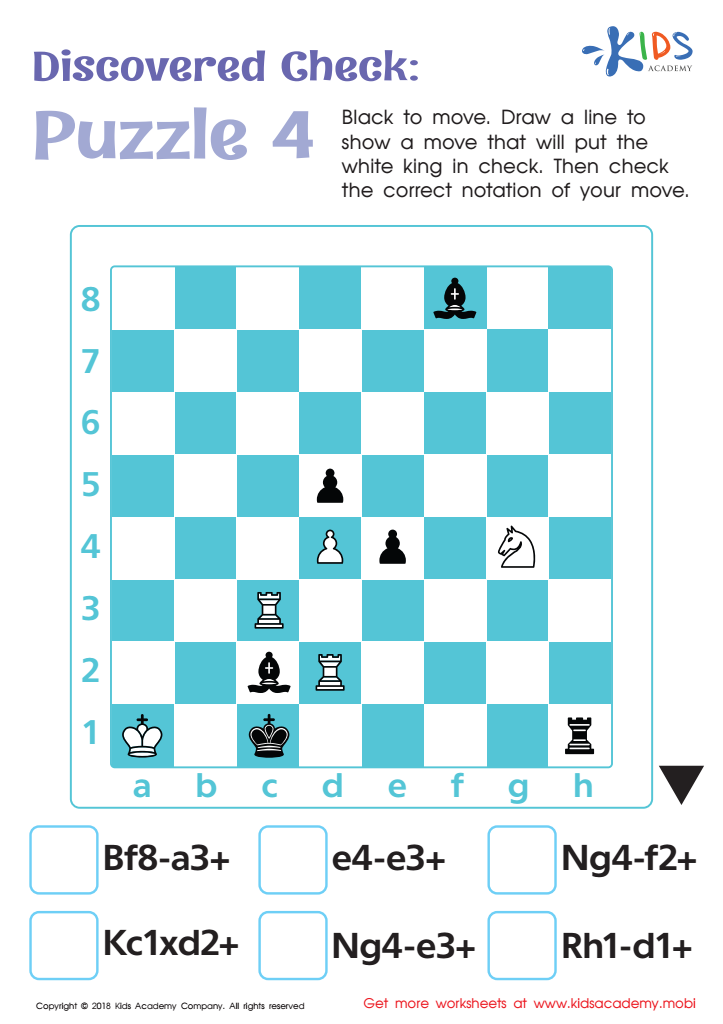
Discovered Check: Puzzle 4 Worksheet
Let your child test their chess skills with this easy worksheet. Have them take control of the black pieces and try to put the white king in checkmate. Ask them to draw a line from their chess piece to the white king, showing the move they'll make, then check the correct answer.
Discovered Check: Puzzle 4 Worksheet
Worksheet
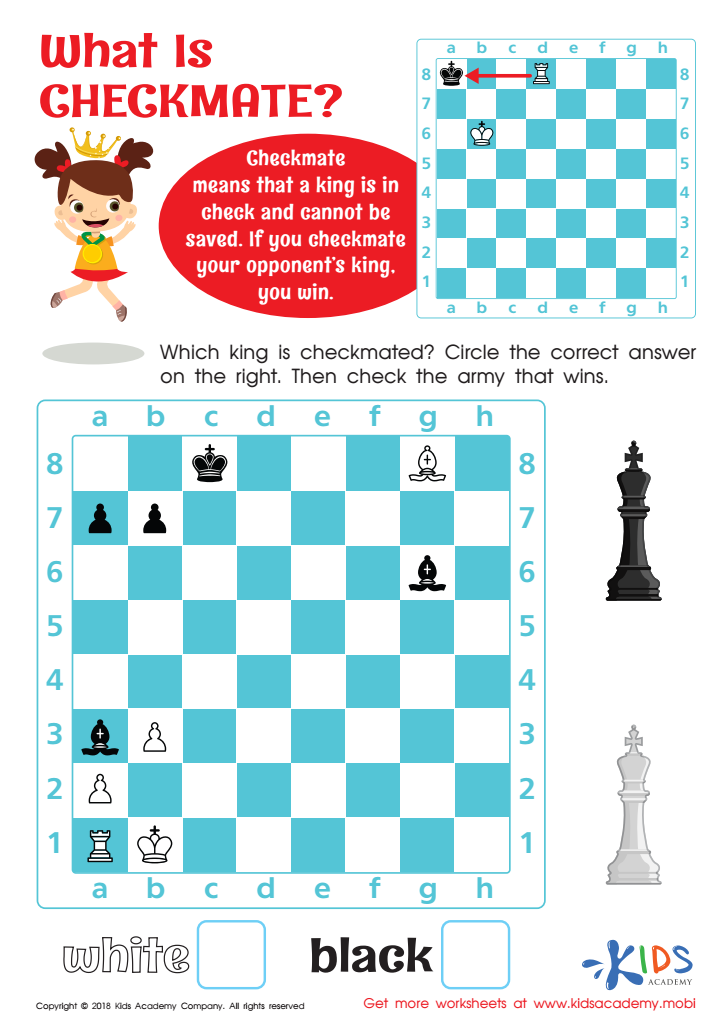
What is Checkmate? Worksheet
This downloadable PDF worksheet lets your child practice identifying when a king is checkmated and how it looks on a chessboard. Checkmate is the best move and with this colorful worksheet, they'll learn that it means their opponent's king is in check and cannot be saved, so they can win!
 Assign to My Students
What is Checkmate? Worksheet
Worksheet
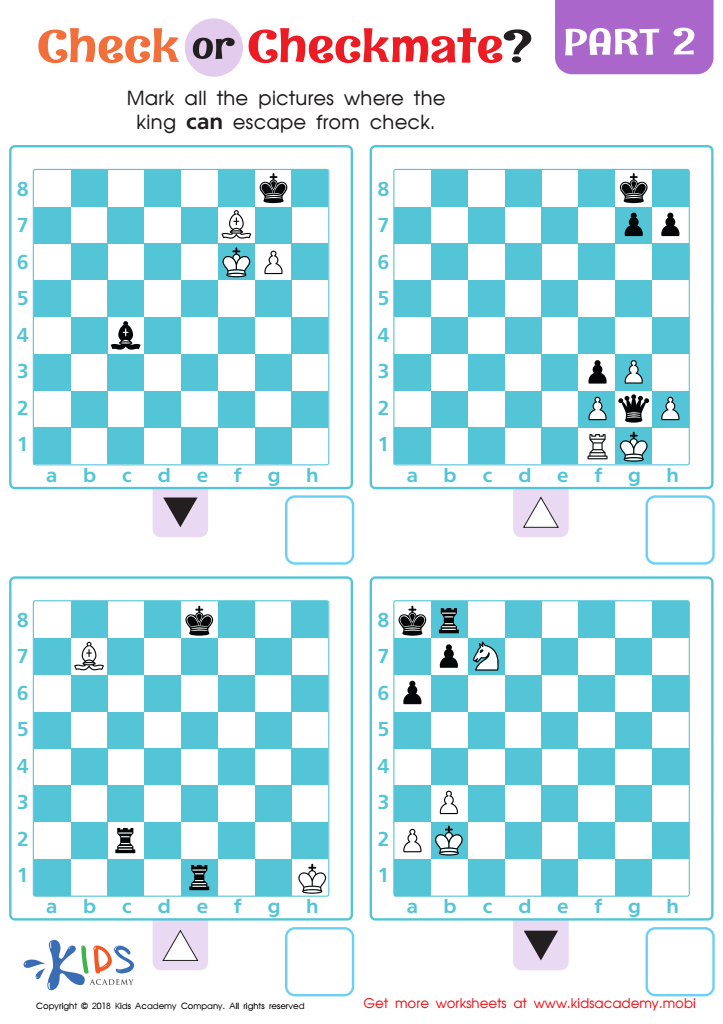
Check or Checkmate: Part 2 Worksheet
Chess is a fun and competitive way for your child to practice strategic thinking, problem-solving and critical reasoning. This free PDF will help them sharpen their skills, by analyzing boards and marking ones where the king can escape check. An invaluable skill when playing on real boards.
Check or Checkmate: Part 2 Worksheet
Worksheet
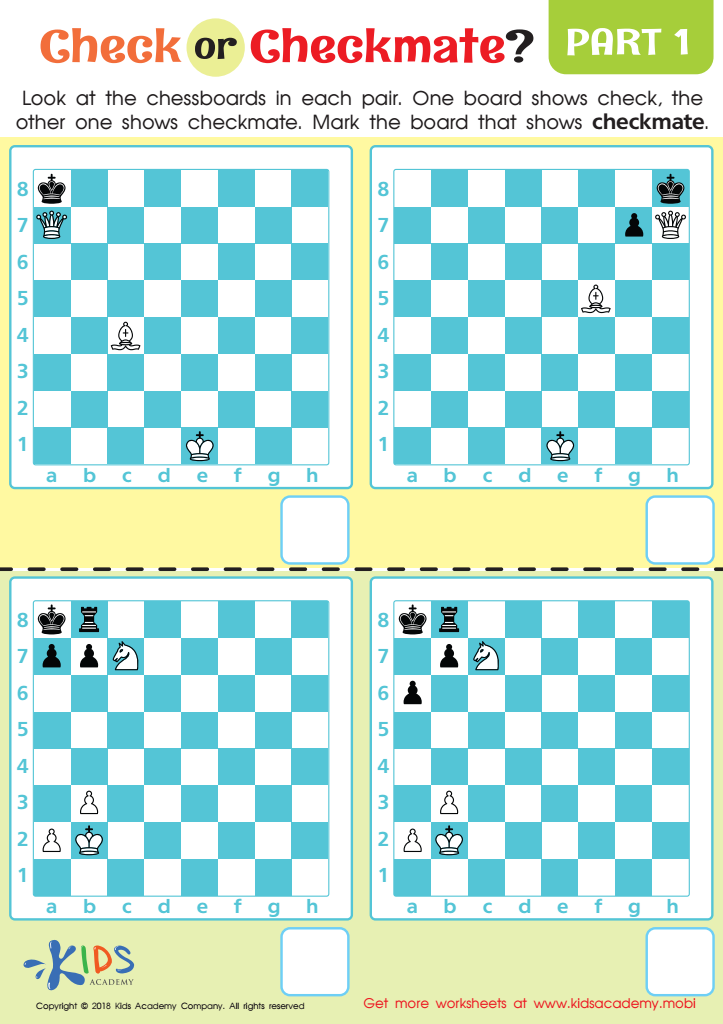
Check or Checkmate: Part 1 Worksheet
Kids can learn and strengthen problem-solving and strategic thinking skills with this free chess worksheet. They'll have fun as they look at the pair of chessboards and decide which is check and which is checkmate. It's the perfect way to get them playing the game and making checkmates without even realising they're exercising their brains!
Check or Checkmate: Part 1 Worksheet
Worksheet
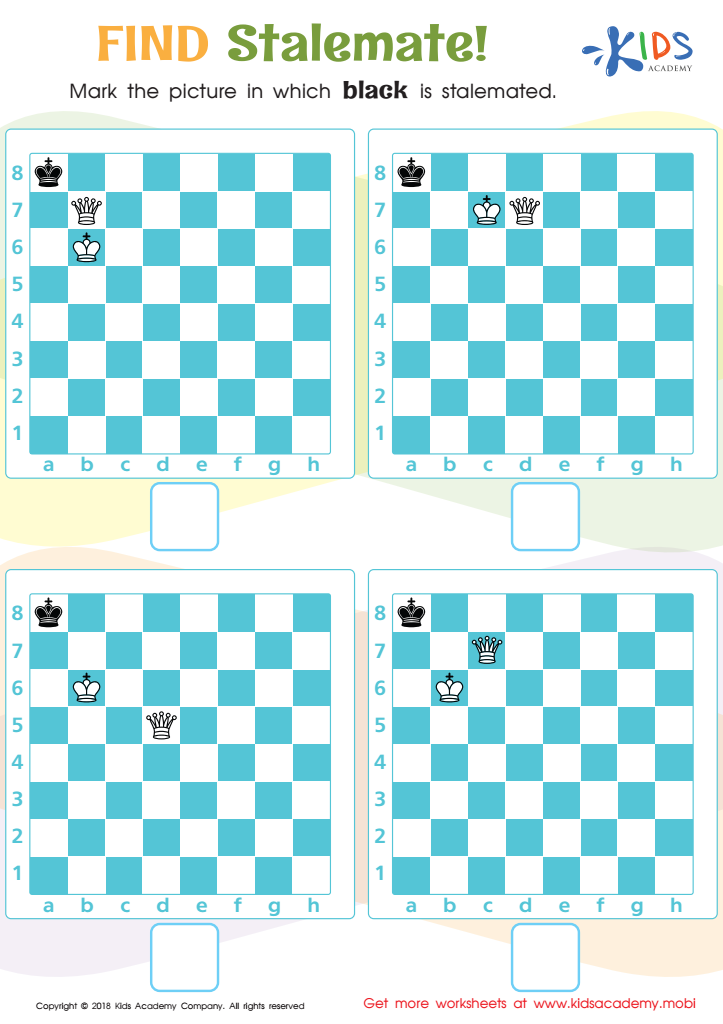
Find Stalemate! Worksheet
Teach your kids Chess and give them more than a hobby - equip them with critical thinking, rationale and problem-solving skills! This free worksheet helps them understand stalemates by examining various sample boards. By providing visual discernment and the joy of the game, your child's logical skills will soar!
Find Stalemate! Worksheet
Worksheet
Join Kids Academy for Free
Who is primarily going to use this learning content?







Critical thinking is a crucial skill that children will carry into all areas of their lives and education. Introducing chess to 7- to 8-year-olds serves as an engaging and effective way to foster these skills. Engaging in chess encourages young learners to analyze situations, anticipate outcomes, and make informed decisions. As they contemplate each move, they develop the ability to evaluate different perspectives and strategize, which are essential components of critical thinking.
Chess also helps enhance problem-solving abilities. Children learn to face challenges head-on and modify their approaches based on successes and failures. This resilience is an important life skill that translates beyond the game board into academic and interpersonal situations.
Moreover, playing chess encourages focus and patience, helping kids learn to control impulses and think ahead—skills which are beneficial not just in academics but in life decisions as well. For parents and teachers, investing in chess development can create opportunities to bond with children over shared learning experiences, enriching their intellectual growth and making the development of critical thinking both fun and impactful. By caring about this foundational skill, parents and teachers equip children with tools they will use throughout their lives.