Logical thinking improvement Chess Worksheets for Ages 7-8
3 filtered results
-
From - To
Enhance your child's logical thinking with our engaging Chess Worksheets designed specifically for ages 7-8! These stimulating activities introduce young learners to the strategic world of chess while reinforcing critical cognitive skills. Each worksheet offers exciting chess puzzles and challenges that foster problem-solving and improve decision-making abilities. Our expertly crafted exercises encourage independent thinking and analytical reasoning, making learning both fun and educational. Perfect for beginners, these worksheets help cultivate a love for chess that boosts academic performance and real-life problem-solving skills. Discover the perfect blend of play and learning today—unlock your child's potential with our Logical Thinking Improvement Chess Worksheets!
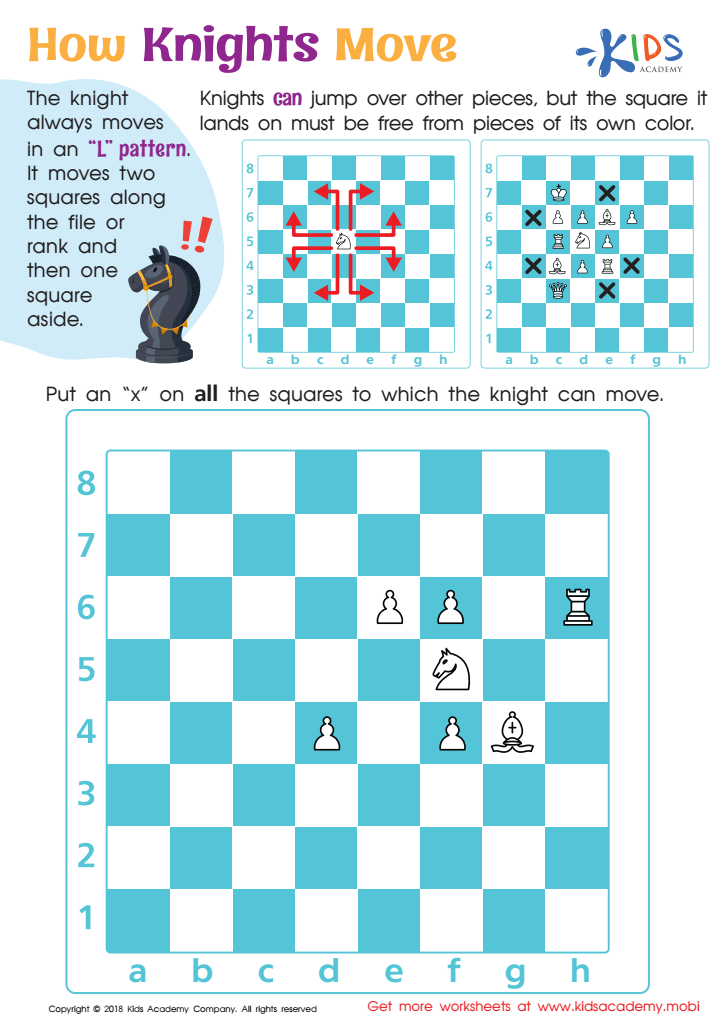
How Knights Move Worksheet
 Assign to My Students
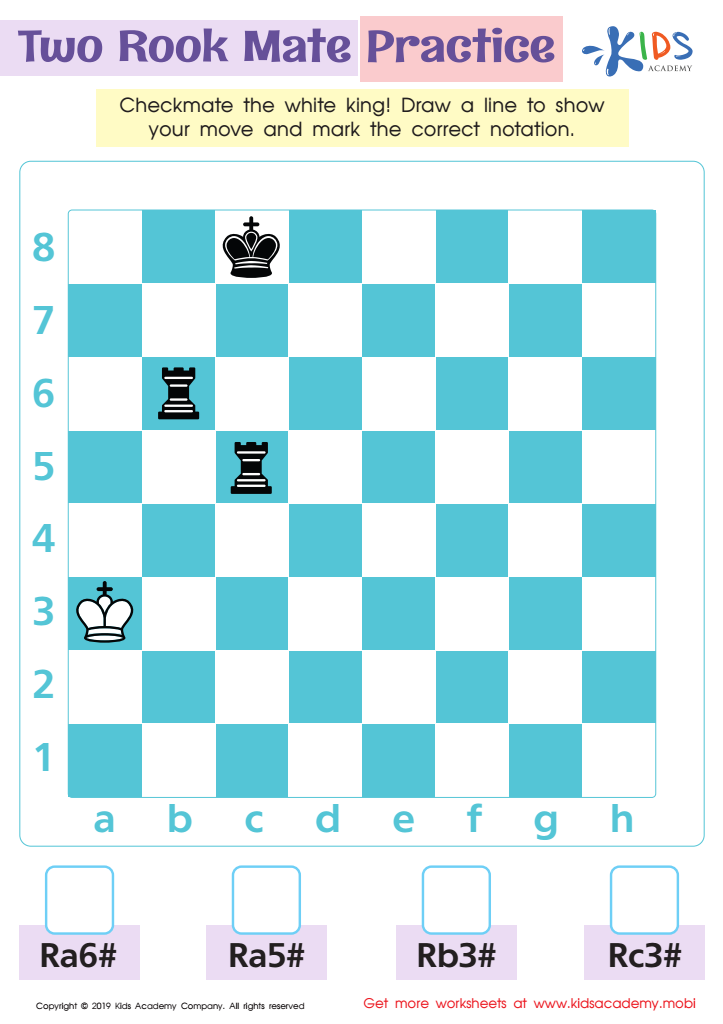
Two Rook Mate Practice Worksheet
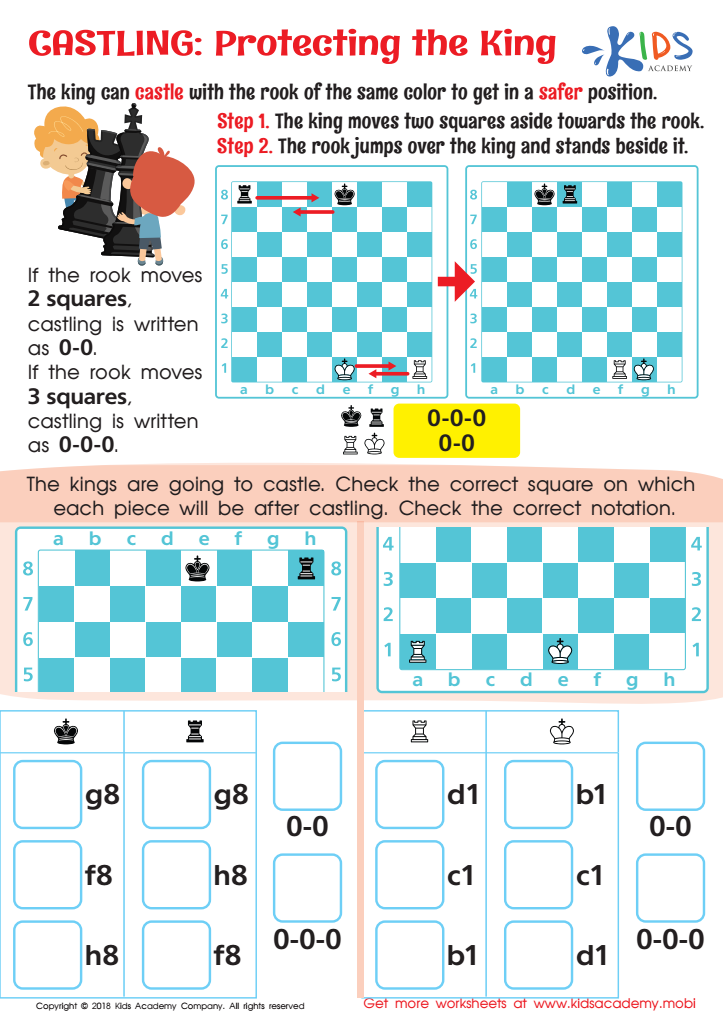
Castling: Protecting the King Worksheet






Chess is more than just a game; it's a powerful educational tool that can significantly benefit children, particularly those in the 7-8 age group. This critical developmental stage is when kids are honing their cognitive skills and beginning to understand complex concepts. Integrating chess into their activities can substantially enhance their logical thinking abilities.
Firstly, chess promotes critical thinking and problem-solving. Each move in chess requires foresight and planning, compelling children to evaluate different scenarios and consider the consequences of their actions. This process of strategic thinking nurtures their ability to make well-thought-out decisions in real life.
Secondly, playing chess improves concentration and patience. Children of this age often have limited attention spans but learning chess requires them to stay focused for longer periods and think several steps ahead. This can translate into better concentration in academic settings.
Moreover, chess encourages resilience and adaptability. Children learn not only to devise strategies but also to adjust their plans in response to an opponent's moves. This flexibility is a crucial life skill.
In addition, chess instills a love for learning and intellectual challenge. As children accomplish small victories and grow through practice, their confidence and enthusiasm for tackling difficult problems increase.
In summary, parents and teachers should champion chess for children aged 7-8 because it cultivates essential cognitive skills, patience, adaptability, and a greater intellectual curiosity, all of which contribute to their overall development.