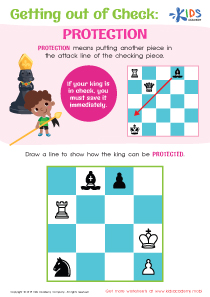
Problem-solving skills development Chess Worksheets for Ages 7-8
3 filtered results
-
From - To
Enhance your child's problem-solving skills with our specially designed Chess Worksheets for Ages 7-8. These engaging and educational worksheets offer a fun way to develop critical thinking and strategic planning skills in young learners. By focusing on various chess scenarios, children practice crucial problem-solving techniques and logical reasoning. Perfect for beginners and budding chess enthusiasts, these worksheets make learning both challenging and exciting. With step-by-step activities and colorful illustrations, your child will quickly grasp the essentials of chess while strengthening cognitive abilities. Unlock their potential and watch them grow with our comprehensive chess problem-solving worksheets!
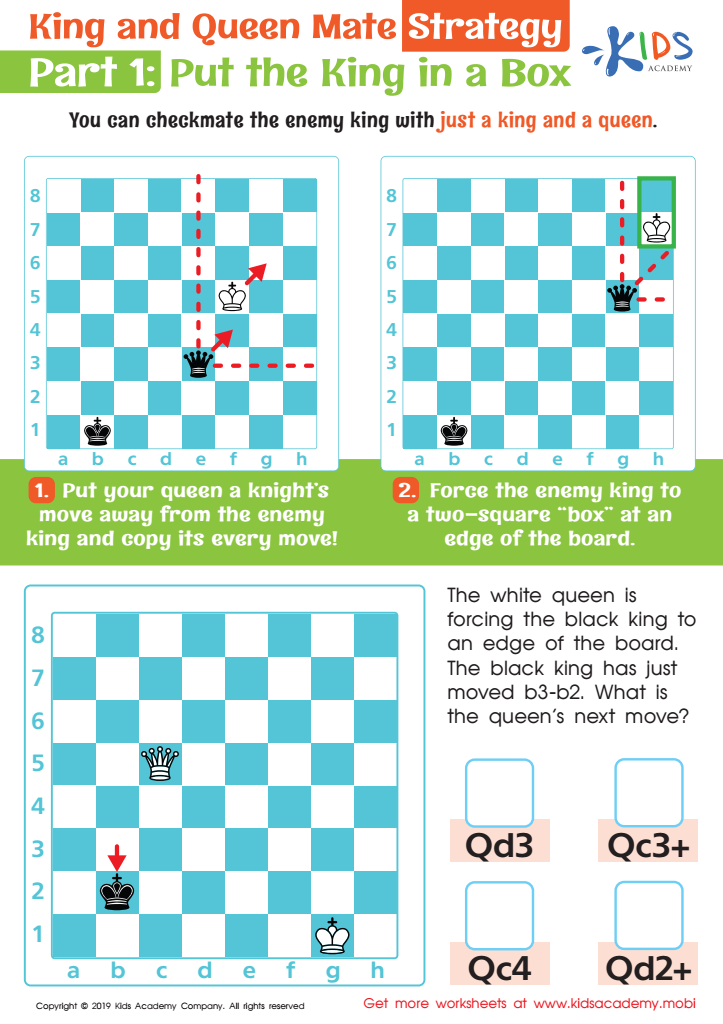
King and Queen Mate Strategy: Part 1 Worksheet
 Assign to My Students
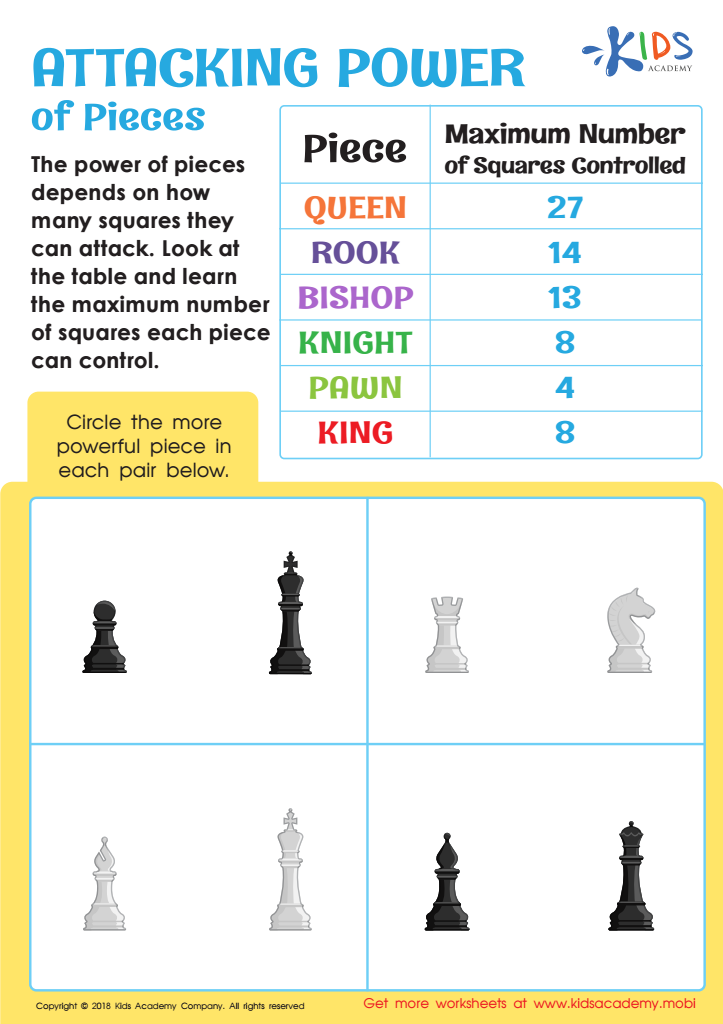
Attacking Power of Chess Pieces Worksheet
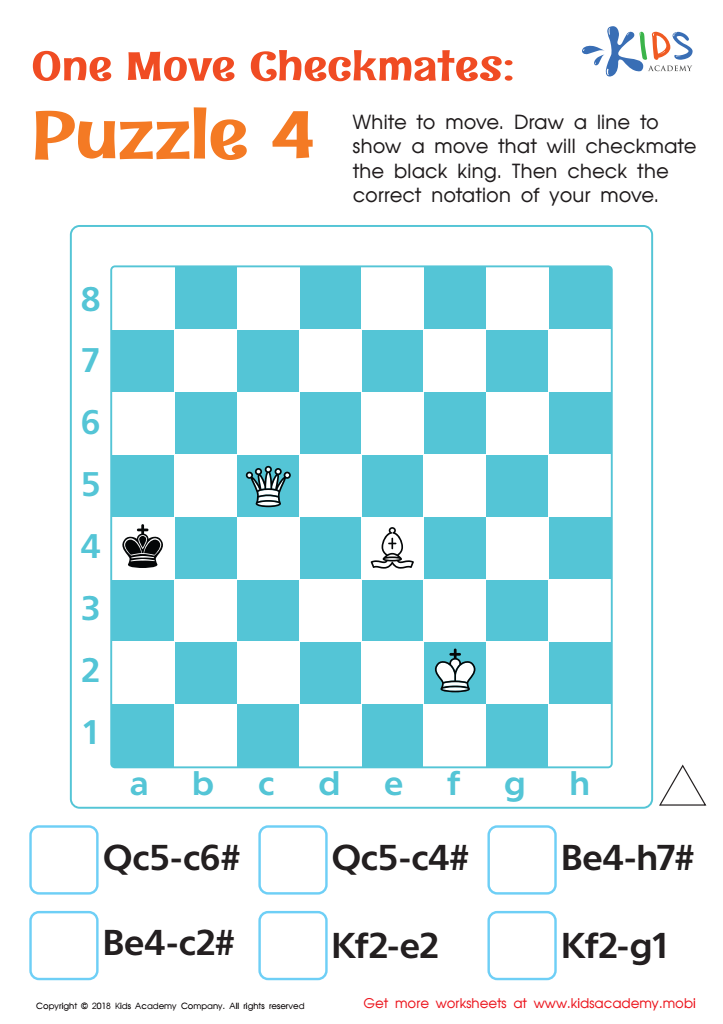
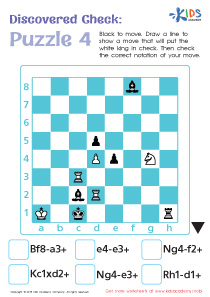
One Move Checkmates: Puzzle 4 Worksheet






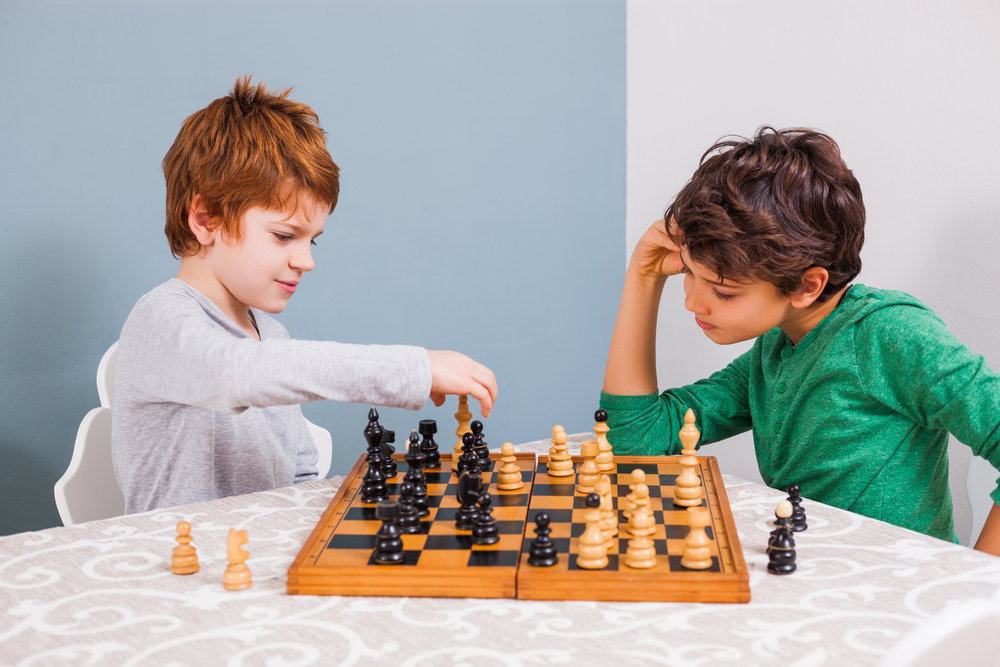
Developing problem-solving skills at the age of 7-8 is crucial for children's cognitive growth, and chess is an excellent tool to foster these abilities. At this formative stage, children's brains are flexible and highly receptive to learning complex concepts. Chess offers a structured yet creative environment where children can develop essential mental skills.
Firstly, chess requires strategic planning and foresight, encouraging young minds to think several steps ahead. This helps them understand the importance of planning and consequences, which is transferable to real-life situations. Secondly, playing chess improves concentration and patience, both vital for academic success. Children learn to focus intensely on the game, enhancing their attention span, which benefits classroom learning.
Additionally, chess nurtures critical thinking and decision-making skills. It presents a series of problems needing swift and effective solutions, helping children become better at analyzing situations and making informed choices. This boosts their confidence in tackling challenges.
Furthermore, chess can improve children's social skills through friendly competition and the sharing of strategies. It's also an engaging way to build resilience, teaching that loss is a step toward improvement, promoting a growth mindset. Parents and teachers should thus incorporate chess into early education to holistically enhance children's problem-solving abilities and life skills.