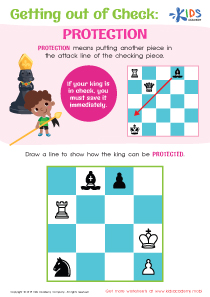
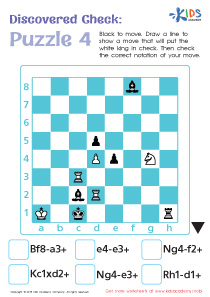
Spatial awareness Chess Worksheets for Ages 7-8
3 filtered results
-
From - To
Enhance your child’s spatial awareness with our engaging Spatial Awareness Chess Worksheets designed for ages 7-8. These carefully crafted worksheets utilize the strategies of chess to help young learners develop crucial skills such as problem-solving, critical thinking, and visual-motor coordination. Through fun activities, children will learn to recognize patterns, understand the orientation of chess pieces, and improve their ability to anticipate moves. Each worksheet is tailored to challenge and stimulate young minds, making learning enjoyable and effective. Perfect for enhancing cognitive growth, our Spatial Awareness Chess Worksheets are a valuable resource for parents and teachers alike. Watch your child thrive through play!
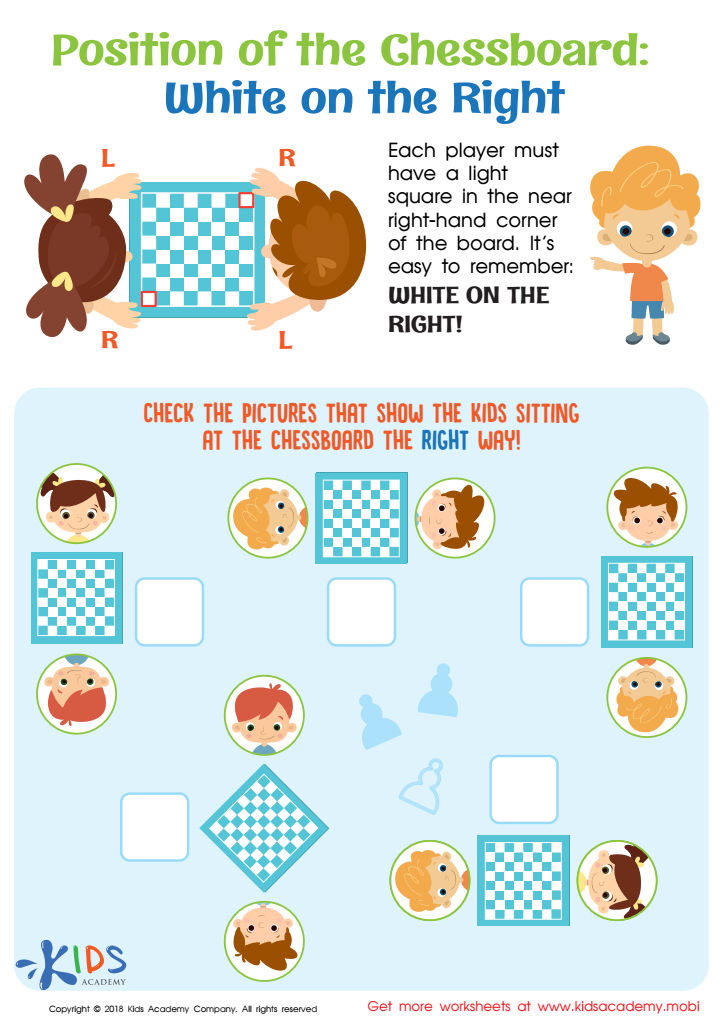
Position of the Chessboard: White on the Right Worksheet
 Assign to My Students
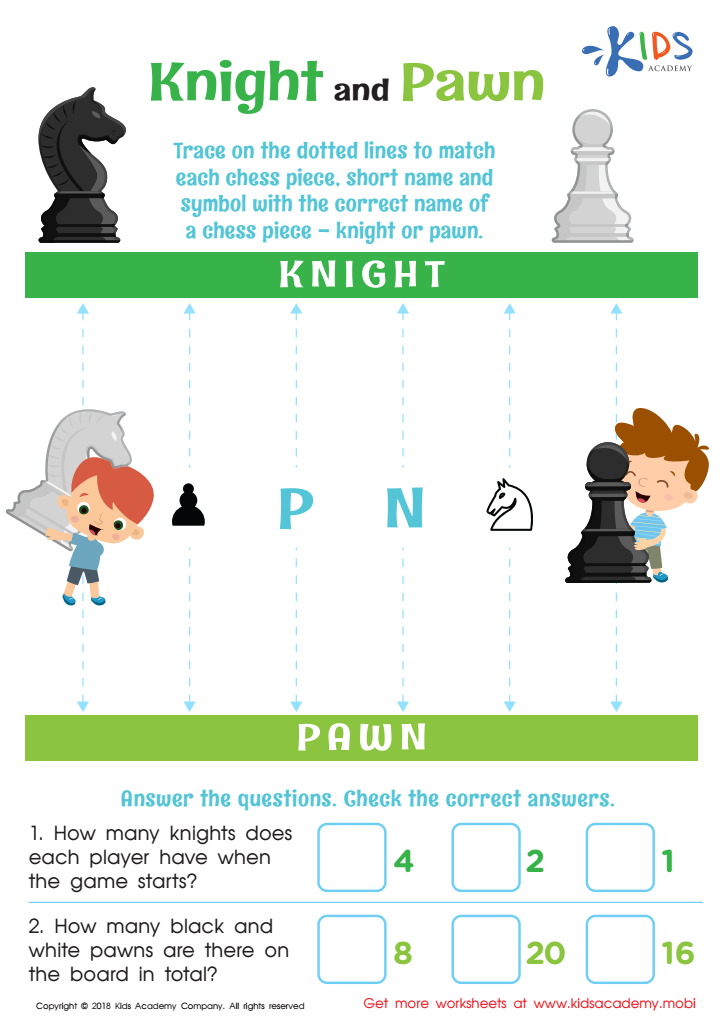
Knight and Pawn Worksheet
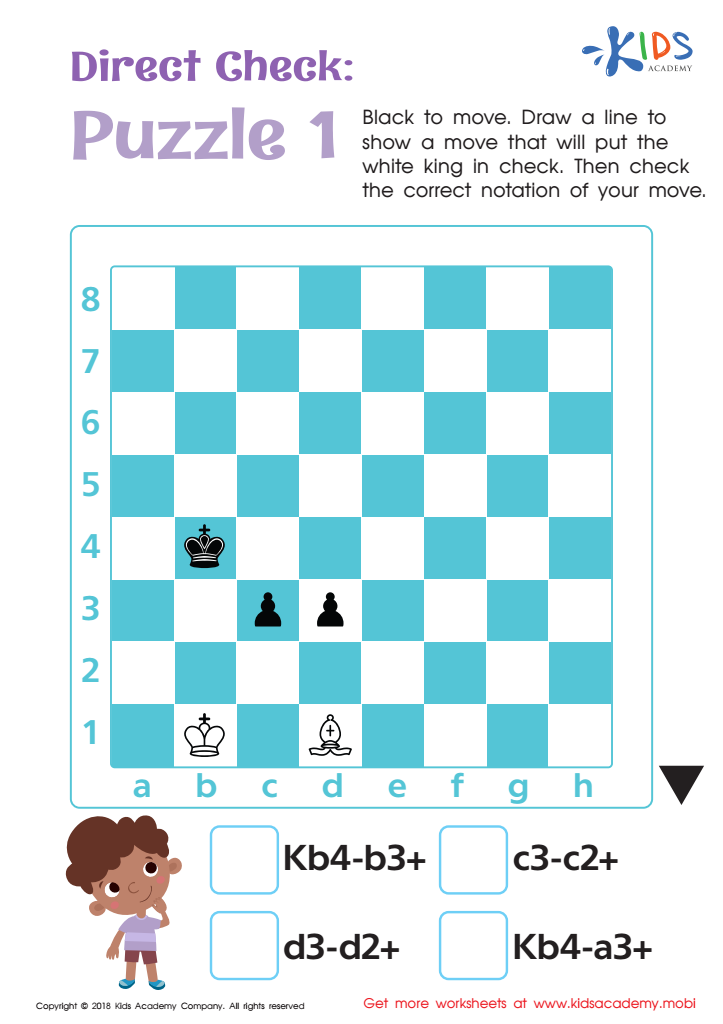
Direct Check: Puzzle 1 Worksheet





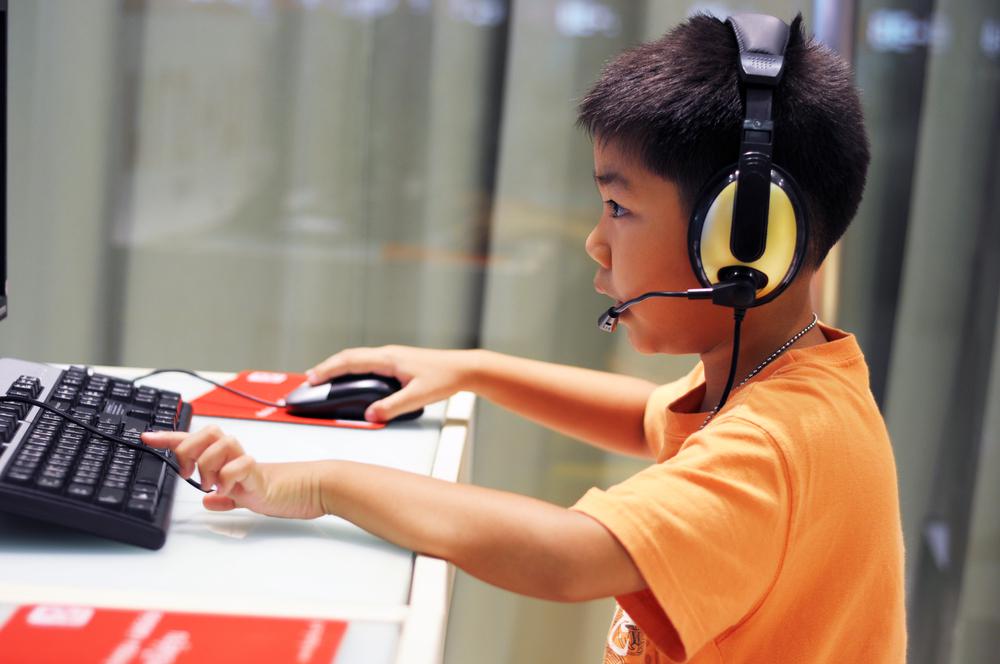

Spatial awareness is a critical cognitive skill that develops an individual's ability to understand and manipulate objects in space. For children aged 7-8, engaging in activities like chess can significantly enhance this vital skill. Therefore, parents and teachers should prioritize spatial awareness chess as a developmental tool.
Chess requires players to visualize potential moves and anticipate their opponent’s strategy, fostering critical thinking and planning abilities. It teaches children to think several steps ahead, improving their foresight and decision-making skills, which are essential in both academic and everyday situations. Moreover, it promotes concentration and patience, as players must remain focused for extended periods.
As children manipulate the chess pieces, they learn to understand geometric concepts and spatial relationships, laying a foundation for success in subjects like mathematics and science. Additionally, through playing chess, children develop problem-solving skills, creativity, and adaptability, which are essential life skills.
Encouraging spatial awareness through chess not only boosts cognitive skills but also fosters social interactions, as children learn to communicate and collaborate with peers during games. By prioritizing chess for early learners, parents and teachers equip children with essential tools for academic success and personal growth.