Analog clock reading Worksheets for Ages 7-8
4 filtered results
-
From - To
Discover our engaging Analog Clock Reading Worksheets designed specifically for children aged 7-8! These worksheets are a fantastic resource for young learners to grasp the fundamentals of telling time on analog clocks. Filled with colorful illustrations and interactive activities, our sheets help kids practice reading hours and minutes in a fun and effective way. Whether it's matching times with visuals, filling in the clock faces, or answering time-related questions, these activities ensure your child will master time-telling skills. Perfect for at-home learning or classroom use, our worksheets make learning about analog clocks enjoyable and accessible!
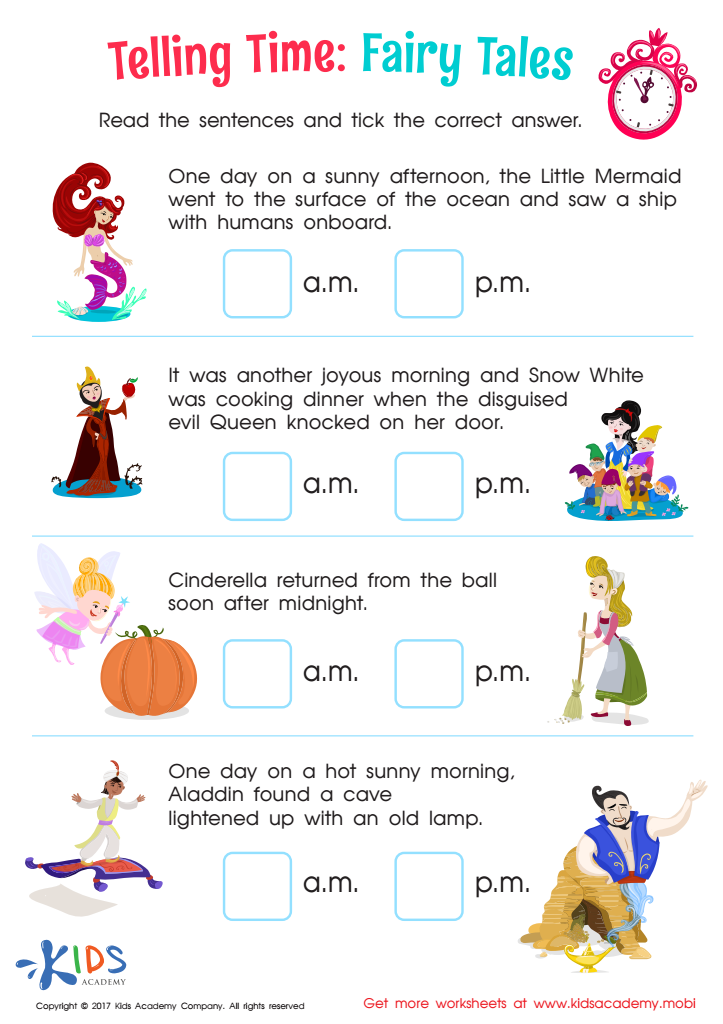
Telling Time: Fairy Tales Worksheet
 Assign to My Students
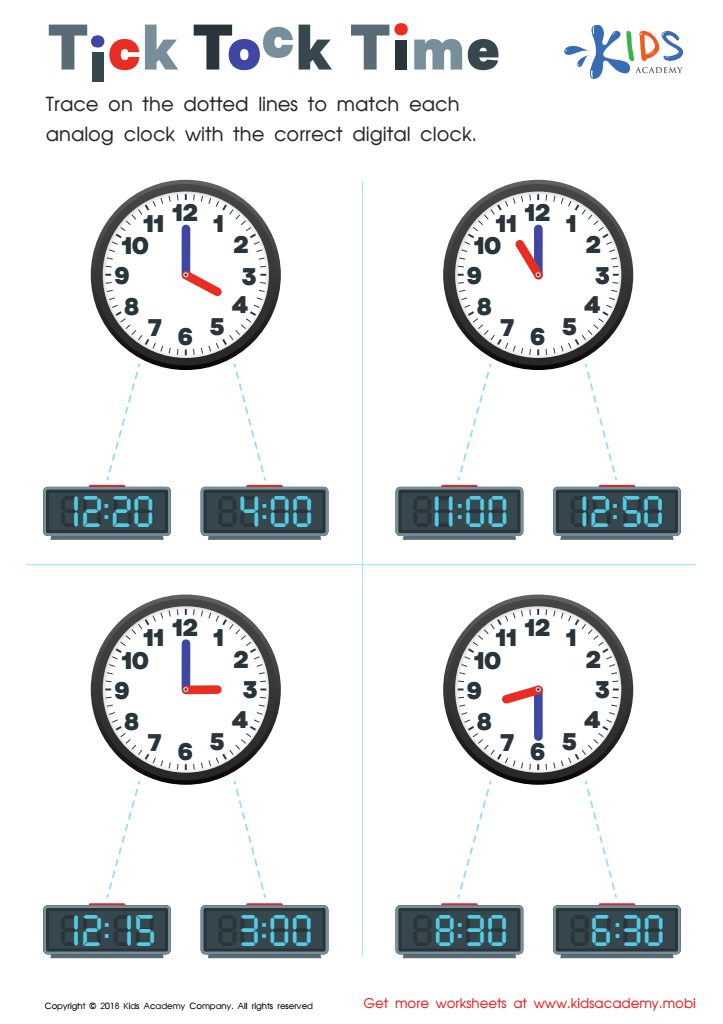
Tick Tock Time Worksheet
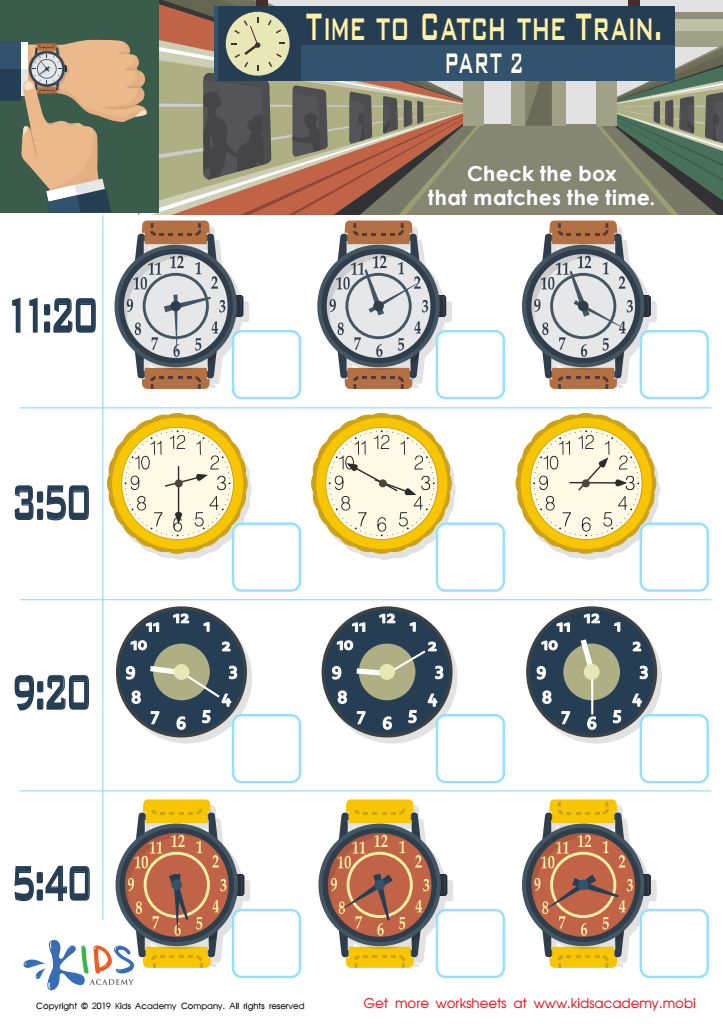
Time to Catch the Train Part 2 Worksheet





.jpg)

Understanding how to read an analog clock is a crucial skill for children aged 7-8 that goes beyond mere time-telling. First and foremost, analog clocks enhance a child’s grasp of time concepts, including hours, minutes, and the passage of time. Knowing the difference between the hour and minute hands fosters a better understanding of fractions, as children learn to divide the clock's face into equal parts, aligning math skills with real-life applications.
Moreover, the experience of reading an analog clock promotes critical thinking and problem-solving abilities. Children must manipulate their understanding of time to interpret various clock scenarios, gradually building cognitive skills necessary for more complex tasks. Additionally, analog clock reading bridges generational gaps; many grandparents,, family members, or community figures may prefer or utilize traditional clocks that encourage connections and conversations, enriching cultural and social ties.
From a practical standpoint, teaching kids to tell time using analog clocks cultivates independence. As they become proficient in time management, they can navigate their daily schedules, whether for school, chores, or leisure, fostering responsibility. Thus, investing effort in this skill is beneficial not only for academic growth but for personal development and social connections as well.








