Boost critical thinking Worksheets for Ages 7-8
4 filtered results
-
From - To
Discover our fun and engaging "Boost Critical Thinking Worksheets" for ages 7-8, designed to inspire creativity and analytical skills in young learners. These worksheets focus on fostering cognitive development through interactive exercises and thought-provoking questions. Children will solve puzzles, engage in reasoning tasks, and tackle various challenges that hone their critical thinking abilities. Our thoughtfully crafted activities not only support academic growth but also encourage curiosity and exploration. Ideal for classrooms or at-home learning, these worksheets are a perfect way to supplement your child's education while making learning enjoyable. Start building essential problem-solving skills today!
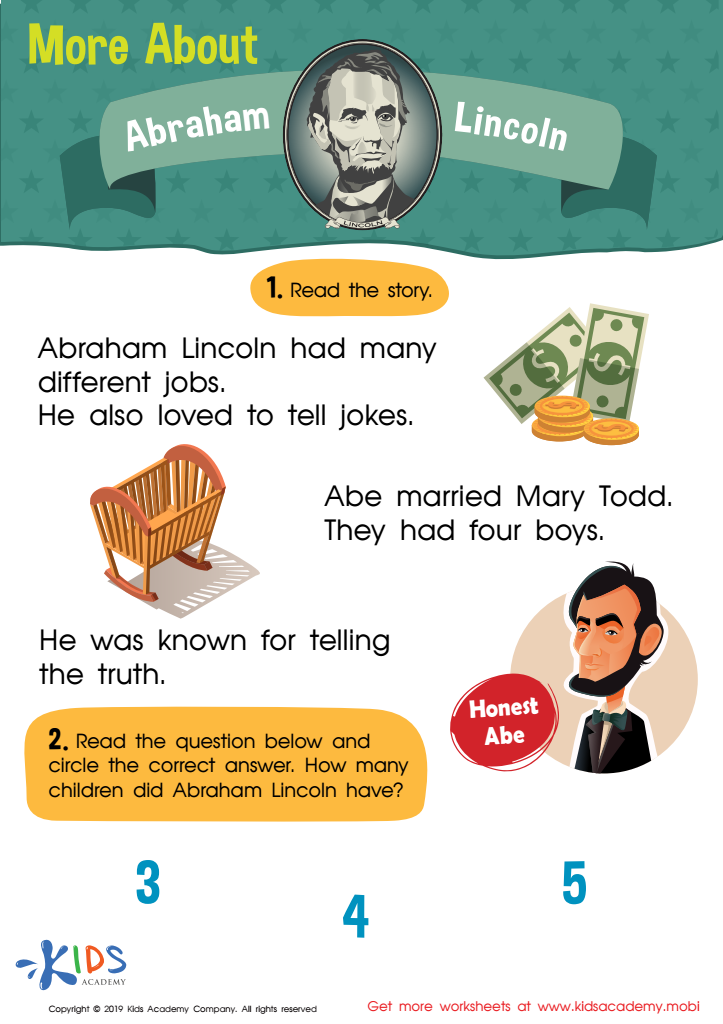
More About Abraham Lincoln Worksheet
 Assign to My Students





.jpg)


Boosting critical thinking skills in children aged 7-8 is essential for their academic and personal development. At this age, children are beginning to develop their reasoning abilities, which allows them to analyze information, solve problems, and make decisions effectively. Encouraging critical thinking fosters curiosity and empowers children to ask questions, discover solutions, and think independently.
Parents and teachers play a crucial role in this development. By integrating critical thinking activities into daily routines and lessons, they can help students learn to evaluate evidence, recognize biases, and synthesize information from different sources. This promotes a deeper understanding of concepts beyond rote memorization, facilitating better comprehension and retention of knowledge.
Moreover, critical thinking skills are transferable; they contribute to success in various subjects like math, science, and language arts while also preparing children for real-life situations. In an ever-changing world that demands adaptability and technology-wise perspective, critical thinking equips children with the tools needed for future challenges.
Ultimately, investing in critical thinking now lays a strong foundation for lifelong learning. It helps cultivate informed, thoughtful, and engaged individuals who can contribute positively to society. Thus, enhancing these skills should be a priority for every parent and teacher.








