
Constellation identification Worksheets for Ages 7-8
3 filtered results
Difficulty Level
Grade
Age
-
From - To
Subject
Activity
Standards
Introduce young stargazers to the wonders of the night sky with our "Constellation Identification Worksheets for Ages 7-8". These engaging printable worksheets are designed to develop astronomy skills and spark curiosity in children. Each worksheet features easy-to-follow activities that help kids identify, name, and learn fun facts about constellations. Perfect for both classroom and home use, our constellation identification worksheets support STEM learning and improve observation and critical-thinking skills. Make learning fun and inspiring with activities tailored specifically for curious minds, fostering a lifelong interest in astronomy and the natural world. Ready to explore the stars? Dive in now!
Favorites
With answer key
Interactive
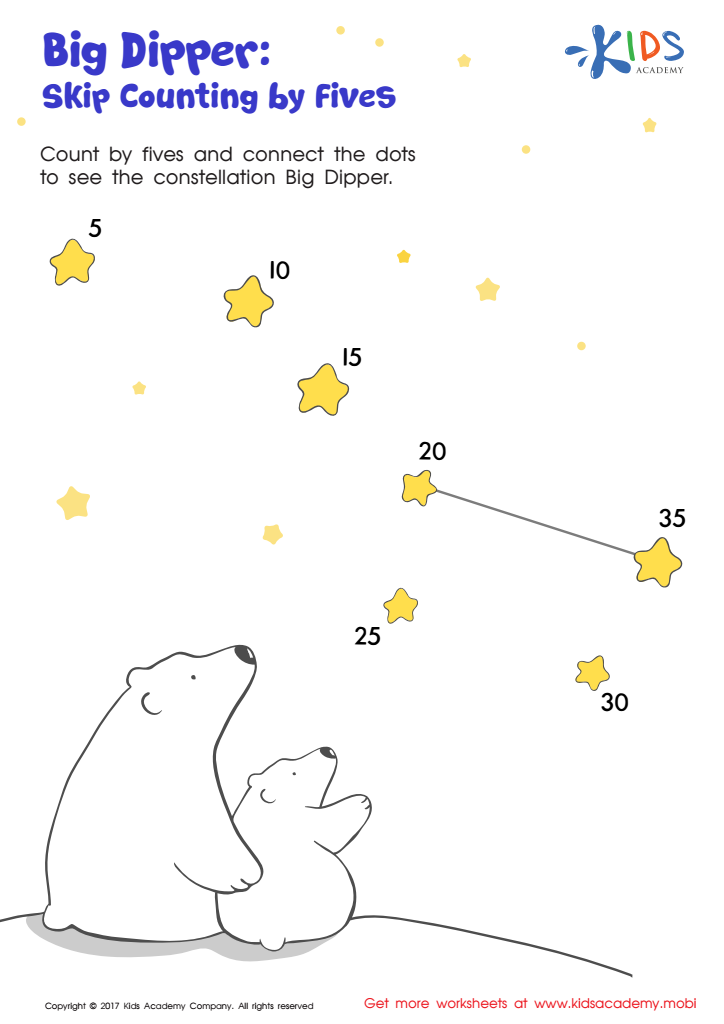
 Assign to My Students
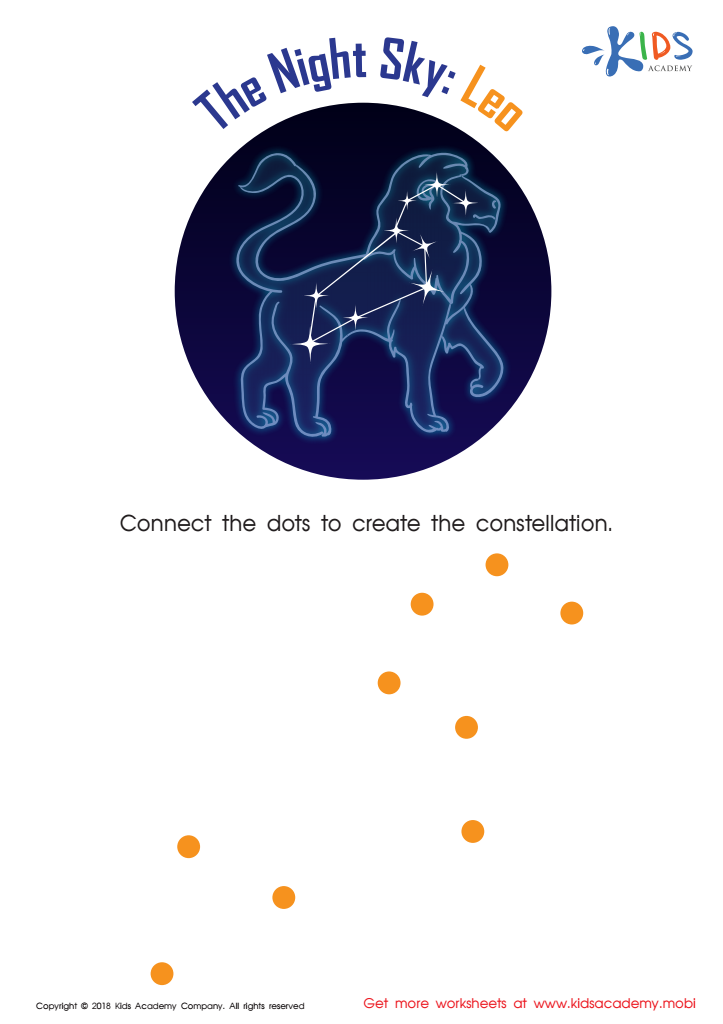
The Night Sky: Leo Worksheet
Let your kids explore the wonders of the stars with this fun worksheet! They'll connect the dots to create the constellation Leo. Night gazing instruments, a telescope or this printout can help your kids learn about constellations and horoscopes. Download the worksheet and let the star watching begin!
The Night Sky: Leo Worksheet
Worksheet
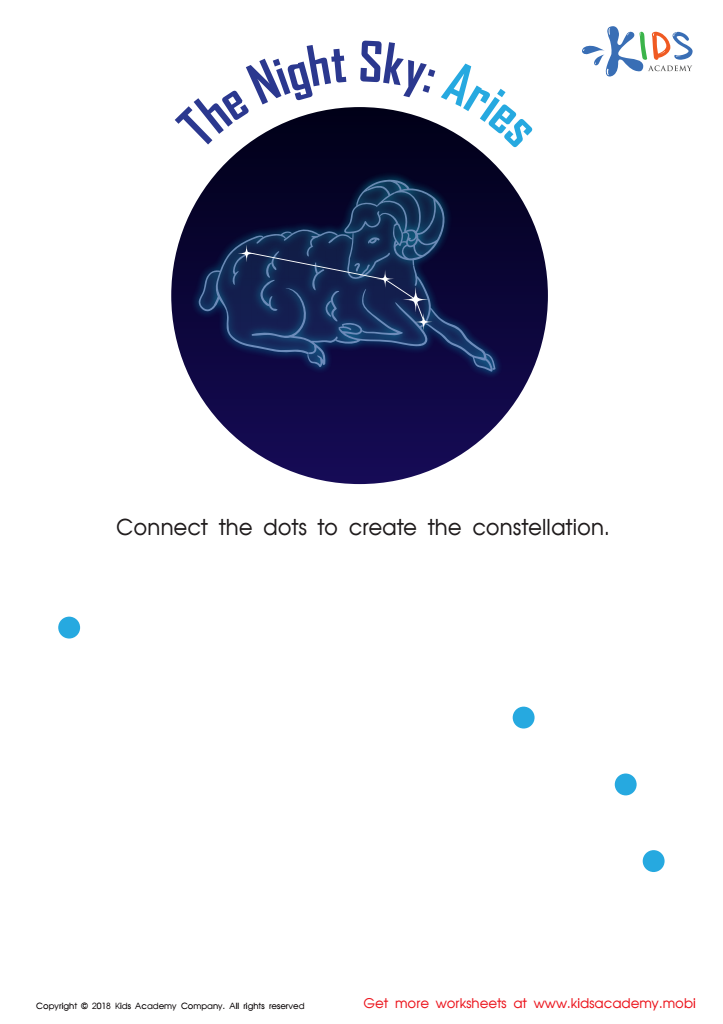
The Night Sky: Aries Worksheet
Does your child know constellations and horoscope? If you've got them interested in horoscope readings and star gazing, the Aries constellation in the pdf should be familiar. Have them look at the picture and identify it. If they can't, tell them it's Aries. Then, help them connect the dots to form the constellation.
The Night Sky: Aries Worksheet
Worksheet
Join Kids Academy for Free
Who is primarily going to use this learning content?








Understanding constellations can be remarkably beneficial for children aged 7-8, fostering both educational and emotional growth. First, teaching kids about constellations enhances their awareness and curiosity about the night sky and the natural world. It integrates fun storytelling with science, making astronomical concepts more relatable and captivating. This age group is at a developmental stage where imagination thrives, and constellations with their mythological backgrounds can further excite their interest in learning.
Moreover, recognizing constellations helps strengthen cognitive skills such as memory, spatial understanding, and pattern recognition by associating star patterns with familiar shapes and stories. These skills are the foundational blocks for problem-solving and critical-thinking abilities. Furthermore, discussing constellations with loved ones can be a bonding experience, creating lasting memories through shared activities like stargazing.
Educationally, introducing constellations aligns with interdisciplinary learning, bridging subjects like science, history, language arts, and even art. This supports a well-rounded education, engaging different learning styles whether through storytelling, visual learning, or hands-on activities like drawing the night sky.
Lastly, early exposure to astronomy can pave the way for future interest in STEM (Science, technology, engineering, and mathematics) fields, inspiring the next generation of scientists, engineers, and explorers. Ultimately, fostering an early curiosity about the universe instills a sense of wonder and respect for the natural world that can last a lifetime.








