
Counting objects Worksheets for Ages 7-8
11 filtered results
Difficulty Level
Grade
Age
-
From - To
Subject
Activity
Standards
Welcome to our Counting Objects Worksheets for Ages 7-8! Our engaging, interactive worksheets are designed to help young learners develop essential counting skills through fun activities. Each worksheet encourages students to recognize, count, and group various objects, reinforcing foundational math concepts. Perfect for home or classroom use, these resources meet educational standards while promoting problem-solving and critical thinking. Easily printable, our worksheets provide a variety of challenging exercises that cater to different learning styles. Explore our collection today and watch your child's confidence in math grow as they master counting through delightful and meaningful experiences!
Favorites
With answer key
Interactive
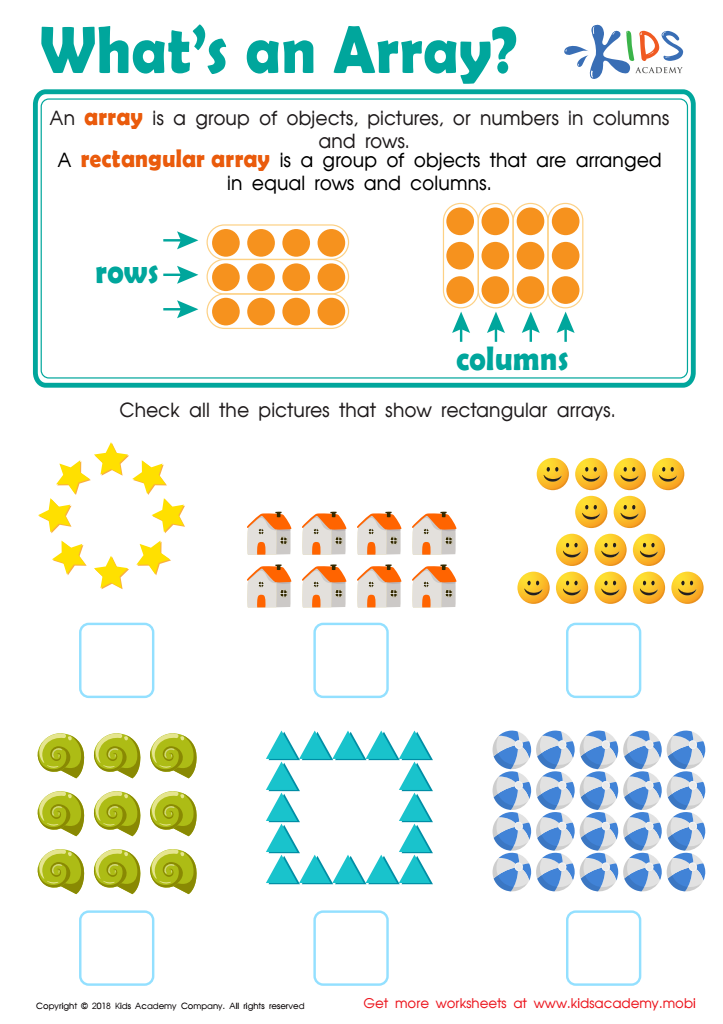
What's an Array? Worksheet
Explain to your child that an array is a group of objects, pictures, or numbers in columns and rows. Show them a rectangular array is a group of objects in equal rows and columns. Guide them to check the pictures in the worksheet to spot any rectangular arrays. Help them remember this concept.
 Assign to My Students
What's an Array? Worksheet
Worksheet
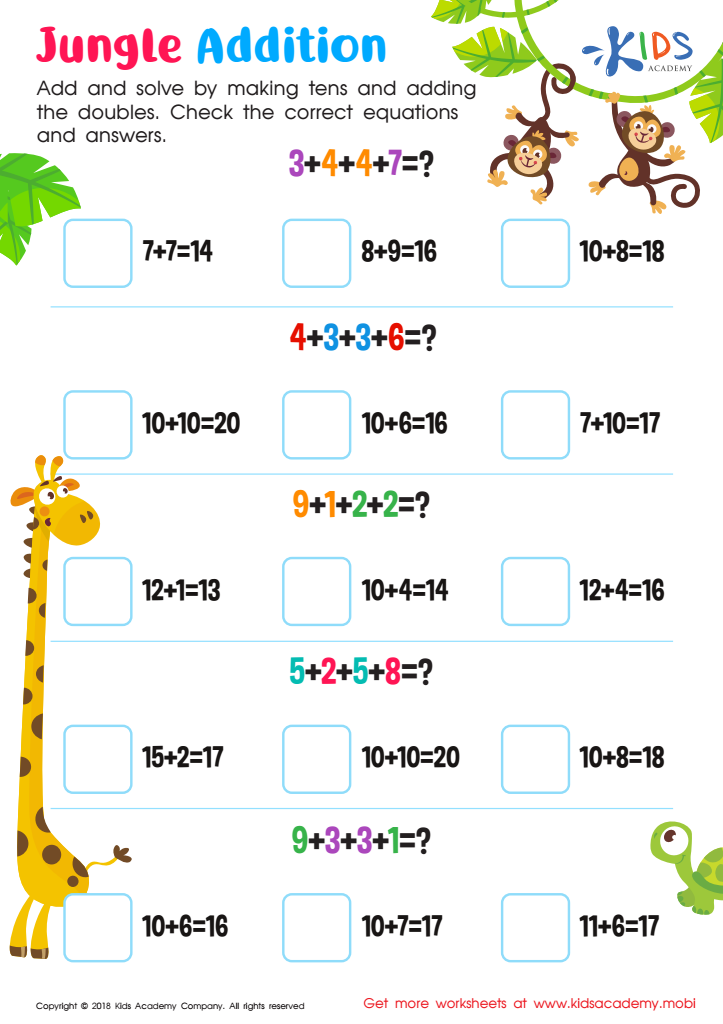
Jungle Addition Worksheet
With this worksheet, kids can use the strategies of making tens and adding doubles to add numbers with more than three addends. They'll practice choosing the right method and become more confident in their calculations, enabling quicker, more efficient computation.
Jungle Addition Worksheet
Worksheet
Join Kids Academy for Free
Who is primarily going to use this learning content?




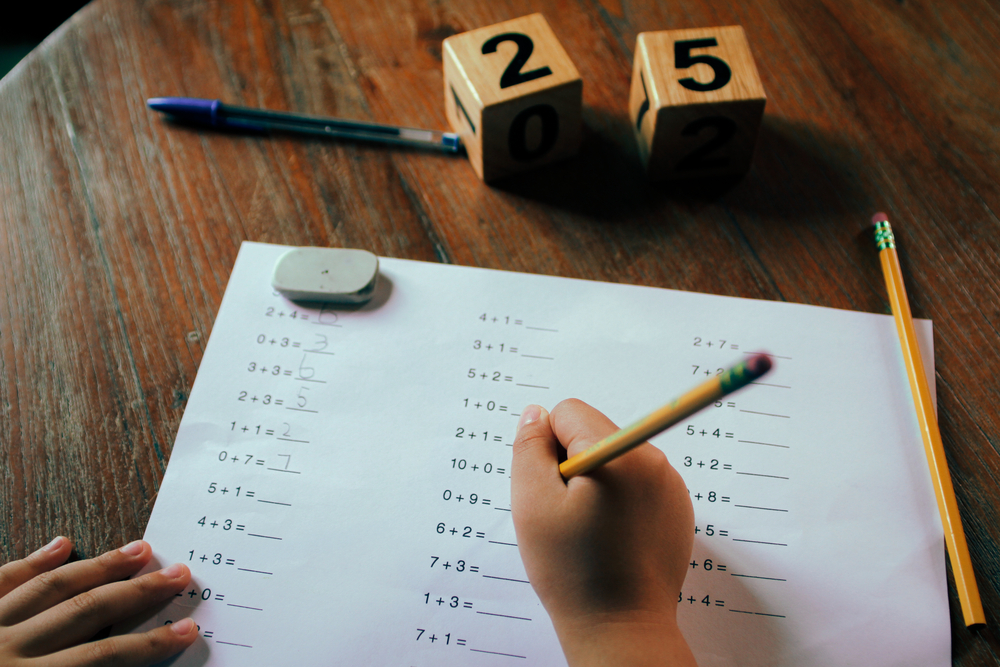

Counting objects is a foundational skill that plays a crucial role in the development of mathematical understanding for children ages 7-8. At this age, children are transitioning from concrete operations to more abstract thinking, making it essential to reinforce counting skills. Understanding how to count objects helps children grasp concepts like addition and subtraction, as they begin to explore more complex mathematical operations.
Supporting counting through tangible objects fosters not only numerical literacy but also aids in the development of critical thinking and problem-solving skills. Parents and teachers should provide opportunities for children to count everyday items, which makes learning interactive and relatable.
Moreover, counting enhances language development as children learn to articulate numbers and quantities, reinforcing their communication skills. It also supports cognitive growth, as children employ memory and attention to keep track of what they are counting.
Lastly, consistent practice with counting builds confidence in math abilities, reducing anxiety when faced with advanced topics in later grades. Engaging in counting activities is not just about learning numbers; it’s a comprehensive approach to nurturing a skill set that underpins future academic success and logical reasoning.








