Cursive handwriting practice Worksheets for Ages 7-8
4 filtered results
-
From - To
Enhance your child's cursive handwriting skills with our engaging worksheets designed specifically for ages 7-8! These thoughtfully crafted exercises focus on letter formation, connecting letters, and improving fluidity in writing. With a variety of fun activities, including tracing, writing practice, and creative prompts, your child will enjoy developing their cursive handwriting while building confidence. Our worksheets are perfect for both classroom settings and at-home practice. Foster your child's love for writing and help them master the art of cursive with our user-friendly and visually appealing resources. Explore our collection today and watch them flourish in their writing journey!
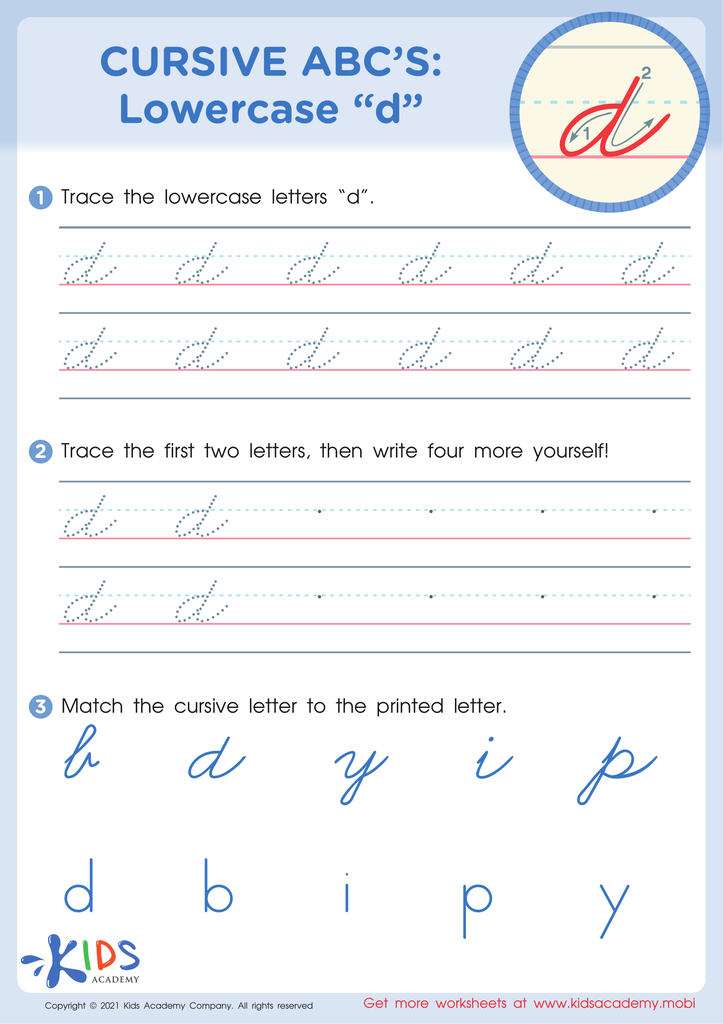
Cursive ABCs: Lowercase d
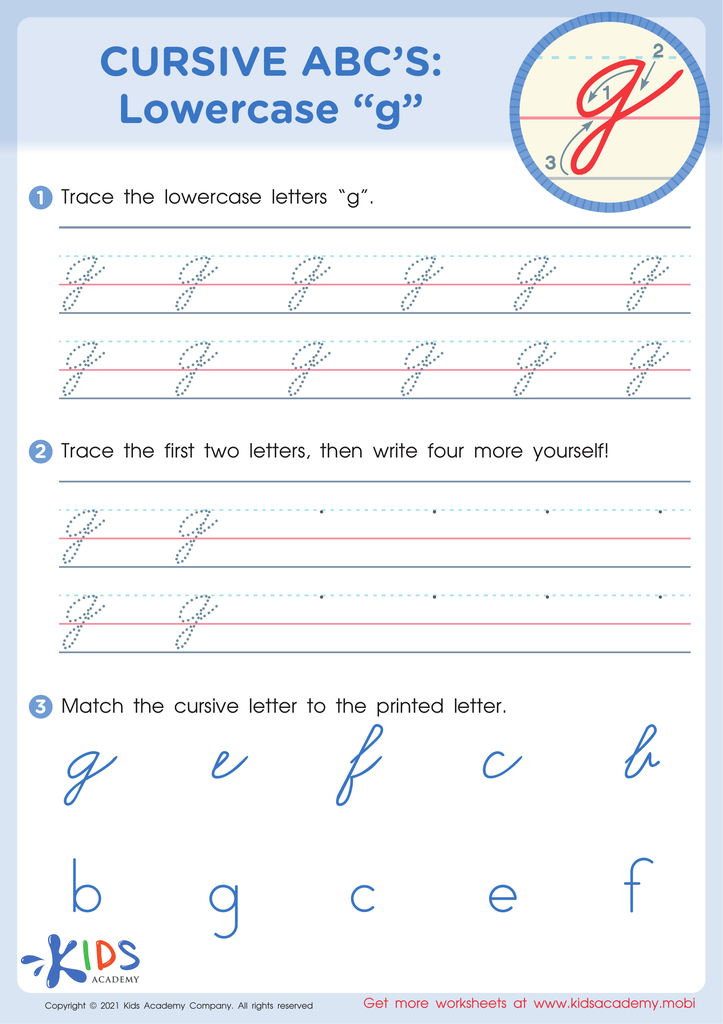
Cursive ABCs: Lowercase g
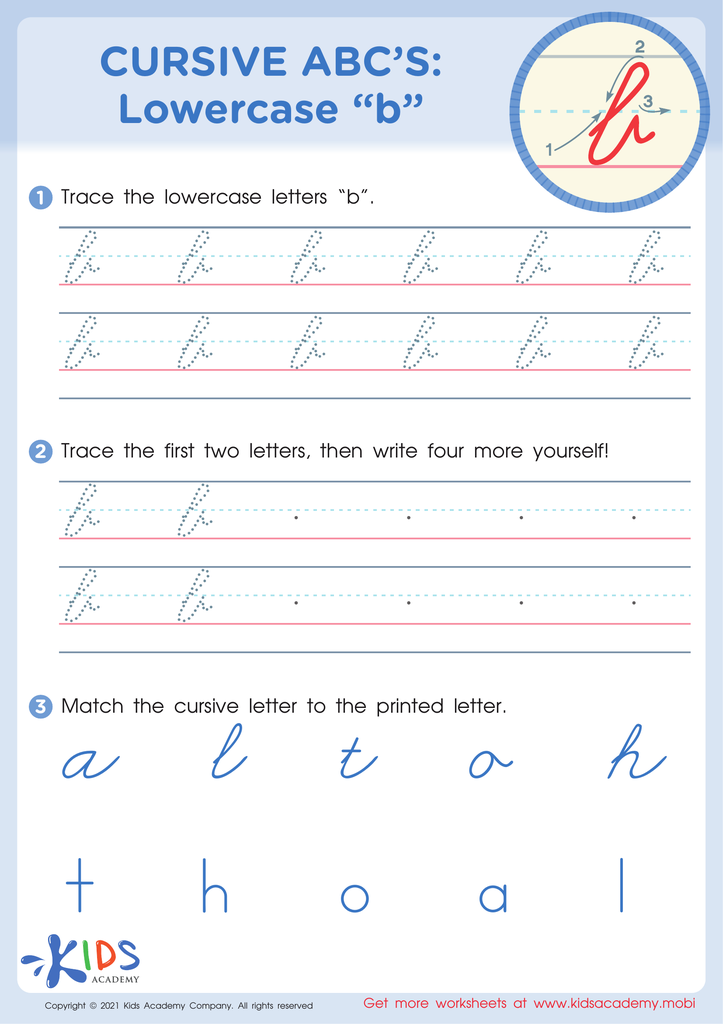
Cursive ABCs: Lowercase b
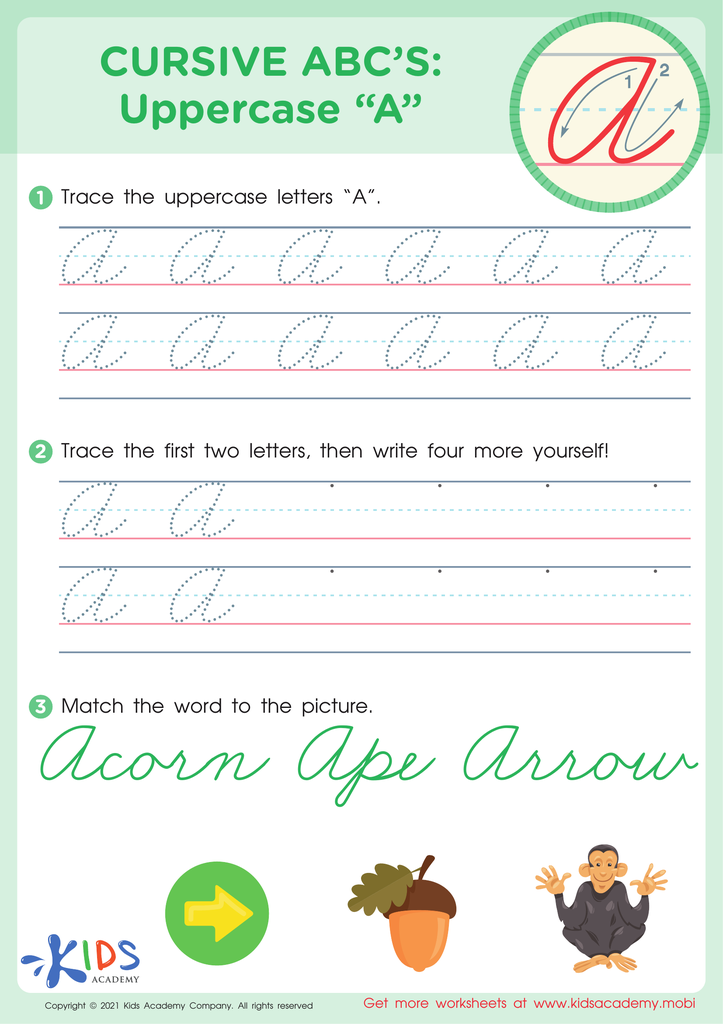
Cursive ABCs: Uppercase A







Cursive handwriting practice is essential for children aged 7-8 for several reasons. Firstly, it enhances fine motor skills, as the fluid motion of cursive writing helps strengthen the muscles in the hand and fingers. This muscle development is critical for overall coordination and control, which are important not only for writing but also for various daily tasks.
Secondly, cursive writing can improve cognitive development. The process of forming letters in a connected style requires different mental engagement than printing, promoting better neural pathways and aiding memory retention. This connection is beneficial for learning as children progress in their literacy skills.
Moreover, cursive writing fosters a sense of identity and creativity. As children develop their distinctive cursive writing styles, they gain confidence in their self-expression. This personal touch can reinforce their sense of ownership over their work and encourage them to take pride in their writing.
Additionally, cursive writing helps with reading fluency. Familiarity with cursive can enhance students' ability to read historical documents, literature, and other materials written in cursive, expanding their comprehension skills.
In summary, supporting cursive handwriting practice offers multi-faceted benefits that extend beyond writing alone, positively impacting children’s development and academic success.








