Event sequencing Worksheets for Ages 7-8
3 filtered results
-
From - To
Explore our curated collection of event sequencing worksheets designed specifically for children aged 7-8. These engaging and educational resources help young learners develop critical thinking and comprehension skills as they practice arranging events in the correct order. Each worksheet features age-appropriate scenarios that inspire creativity and enhance narrative understanding. Perfect for classroom use, homework, or homeschooling, our event sequencing worksheets enable students to strengthen their ability to recognize time-related words and improve their storytelling skills. Make learning fun and interactive—download these valuable tools and watch your child’s confidence and understanding grow!
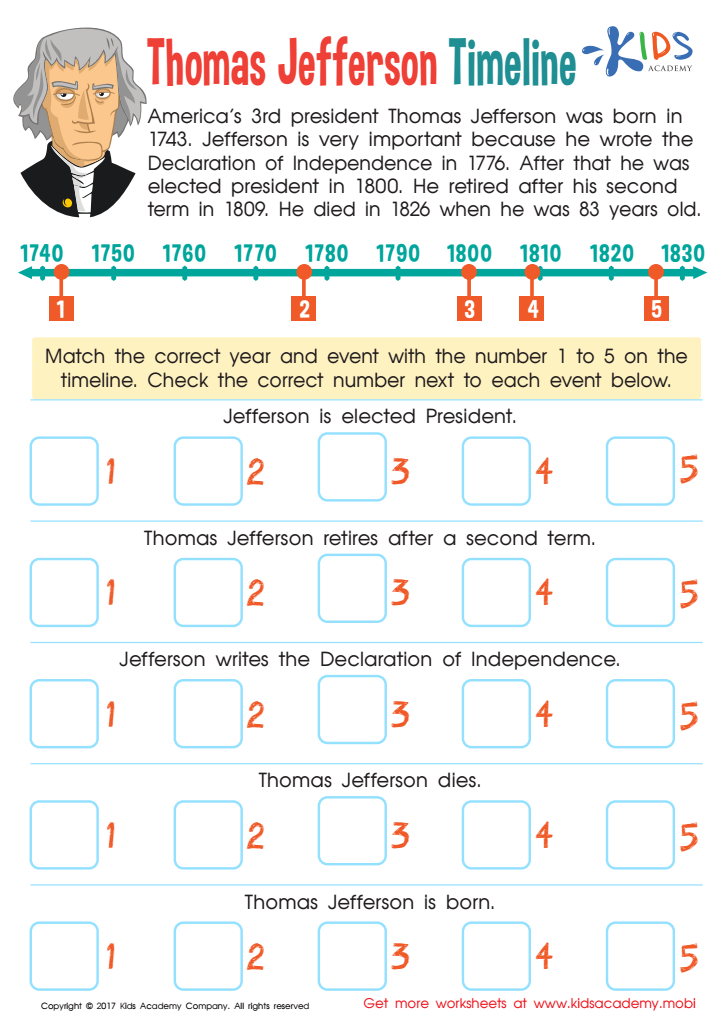
Thomas Jefferson Timeline Worksheet
 Assign to My Students
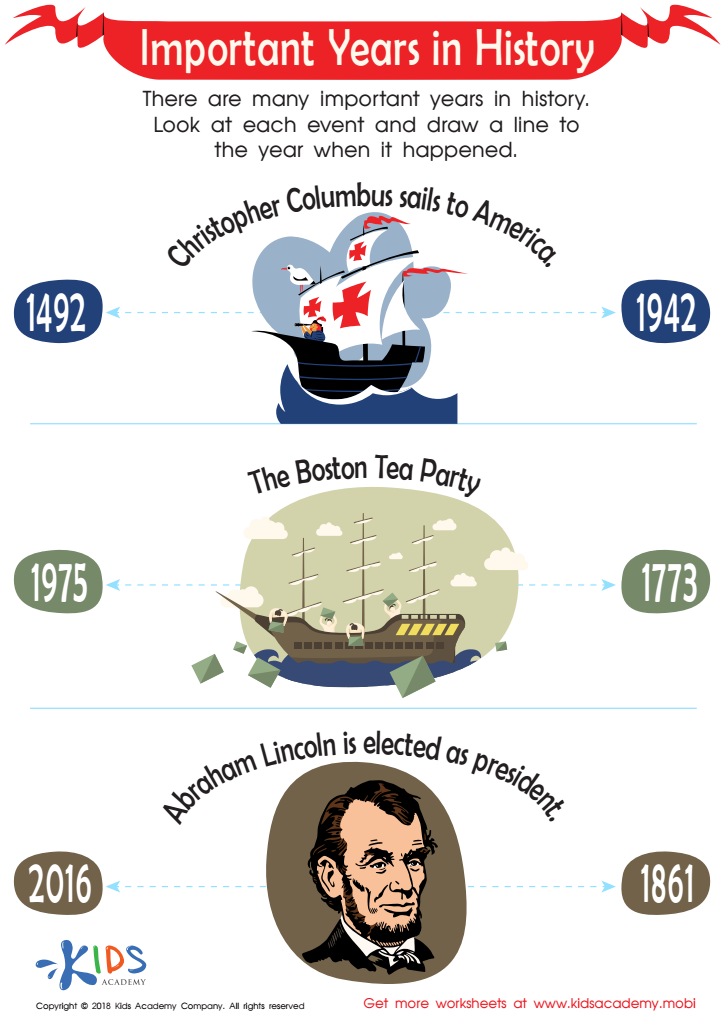
Important Years in History Worksheet
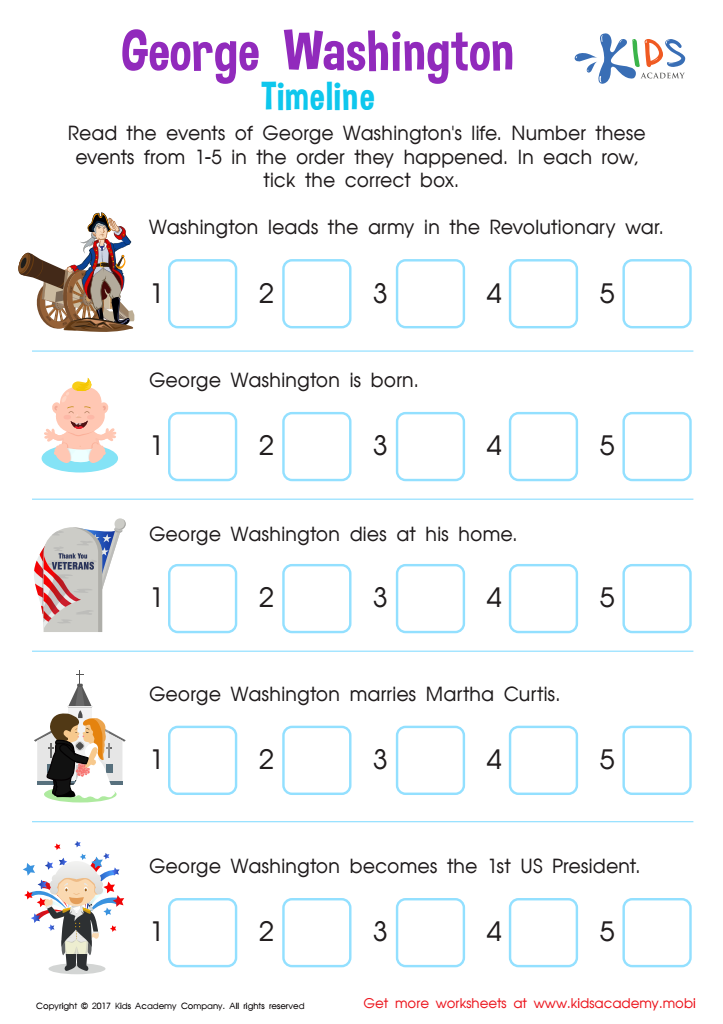
George Washington Timeline Worksheet







Event sequencing is a crucial skill for children aged 7-8 as it plays a vital role in developing their comprehension, critical thinking, and communication abilities. At this age, children are learning to narrate stories, summarize information, and share experiences. Mastering sequencing helps them understand the logical order of events, which is essential for effective storytelling and delivering clear messages.
Parents and teachers should care about event sequencing because it enhances academic performance across subjects. In reading, comprehending a story's sequence aids in grasping the plot and characters, ultimately improving literacy skills. In writing, children can craft coherent narratives by employing correct sequencing, leading to clearer and more engaging stories.
Moreover, with strong sequencing skills, students can better follow multi-step instructions in math and science, making complex concepts more manageable and promoting problem-solving abilities.
Beyond academics, event sequencing fosters their social skills. When children accurately recount events in their daily lives, they enhance their communication, pragmatics, and understanding of social interactions. By focusing on event sequencing, parents and teachers lay a solid foundation for successful learning journeys, supporting overall cognitive and emotional development. Emphasizing this skill cultivates essential lifelong learning and critical thinking abilities.








