
Fraction Addition Worksheets for Ages 7-8
19 filtered results
Difficulty Level
Grade
Age
-
From - To
Subject
Activity
Standards
Discover engaging "Fraction Addition Worksheets for Ages 7-8" specially designed to make learning fractions fun and effective. These worksheets offer a variety of exercises, from simple fraction problems to more complex sums, helping young learners understand and master adding fractions. Perfect for classroom use or home practice, these resources align with educational standards and provide a strong foundation in math. Bright, appealing visuals and step-by-step instructions ensure that children stay motivated and achieve success. Start strengthening your child's math skills with our expertly crafted fraction addition worksheets today!
Favorites
With answer key
Interactive
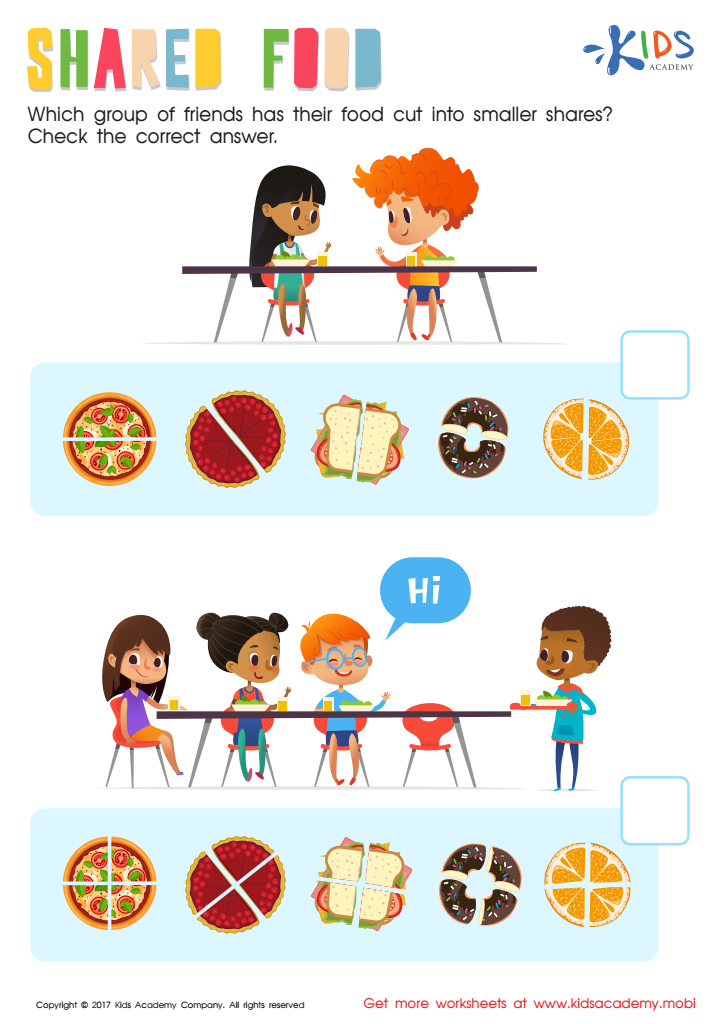
Shared Food Worksheet
In this worksheet, kids learn about sharing and cutting shapes into equal parts. There are two groups of friends: one with two, the other with four. Ask your child which group has their food cut into smaller shares, and help them find the right answer.
 Assign to My Students
Shared Food Worksheet
Worksheet
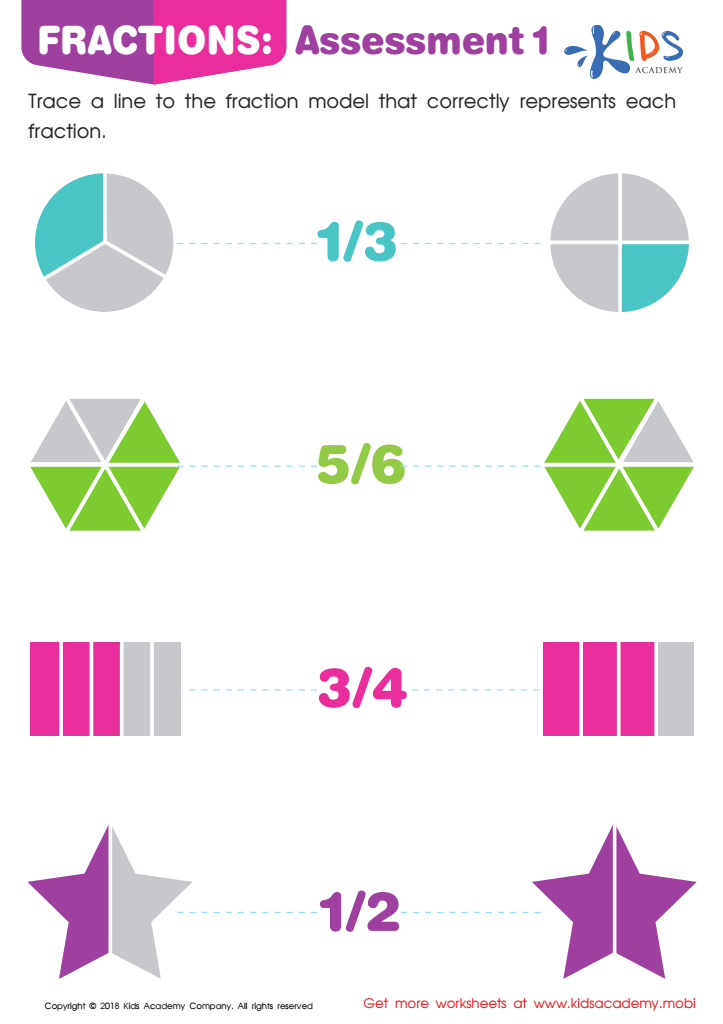
Fractions: Assessment 1 Worksheet
Master fractions easily with this worksheet! It has four sets of fraction models and fraction equations with two models each. Guide your kids to trace a line to the correct fraction model for each equation.
Fractions: Assessment 1 Worksheet
Worksheet
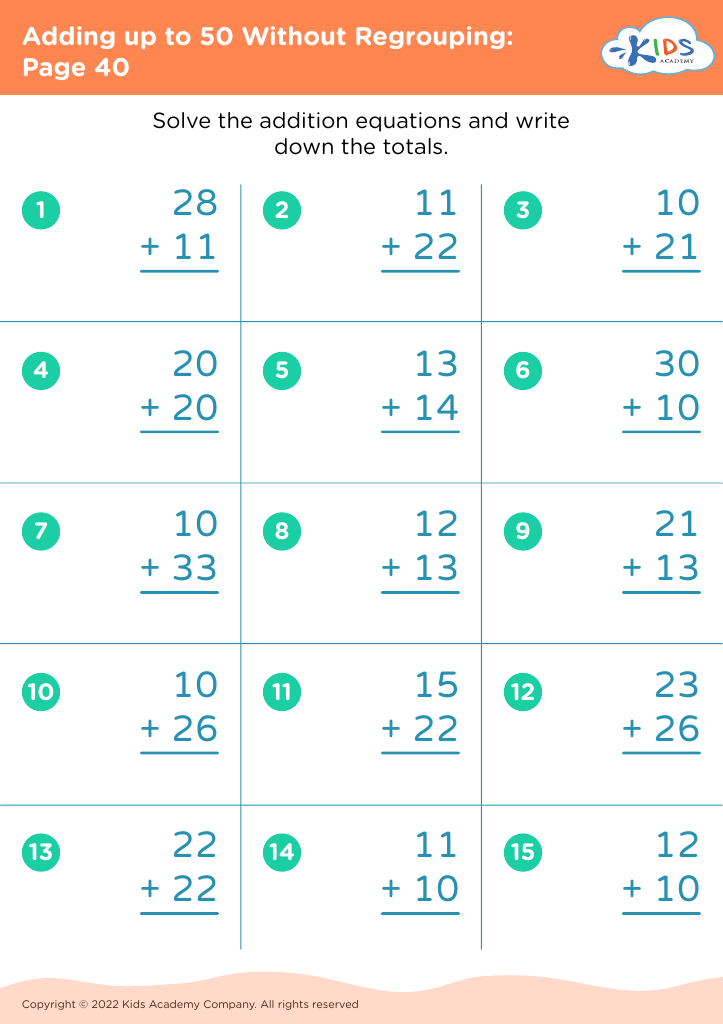
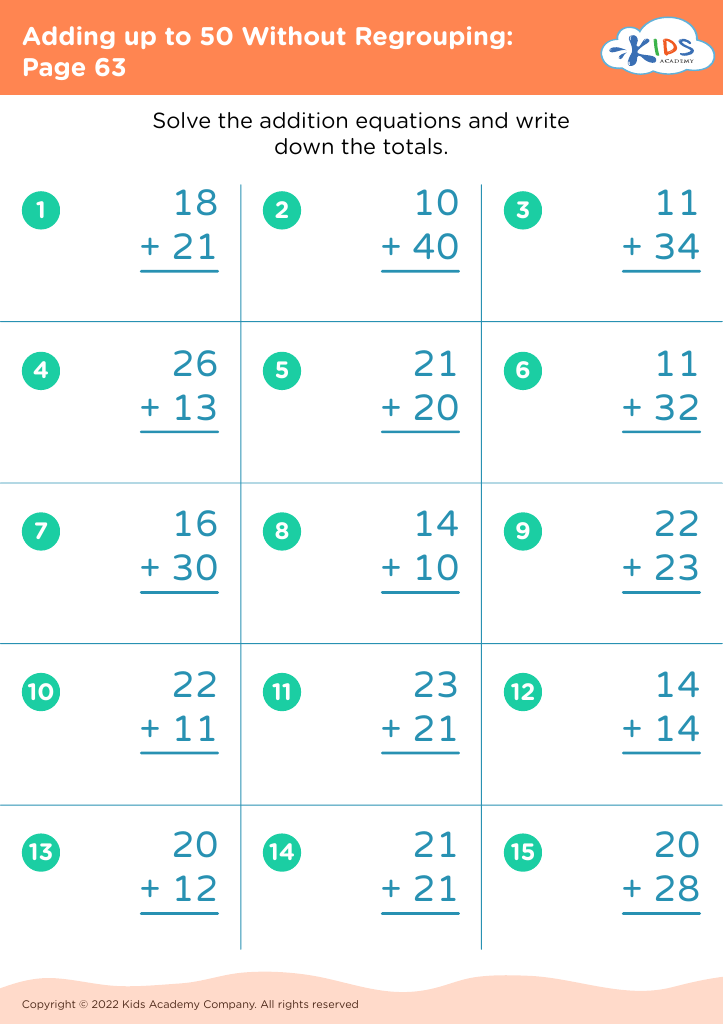
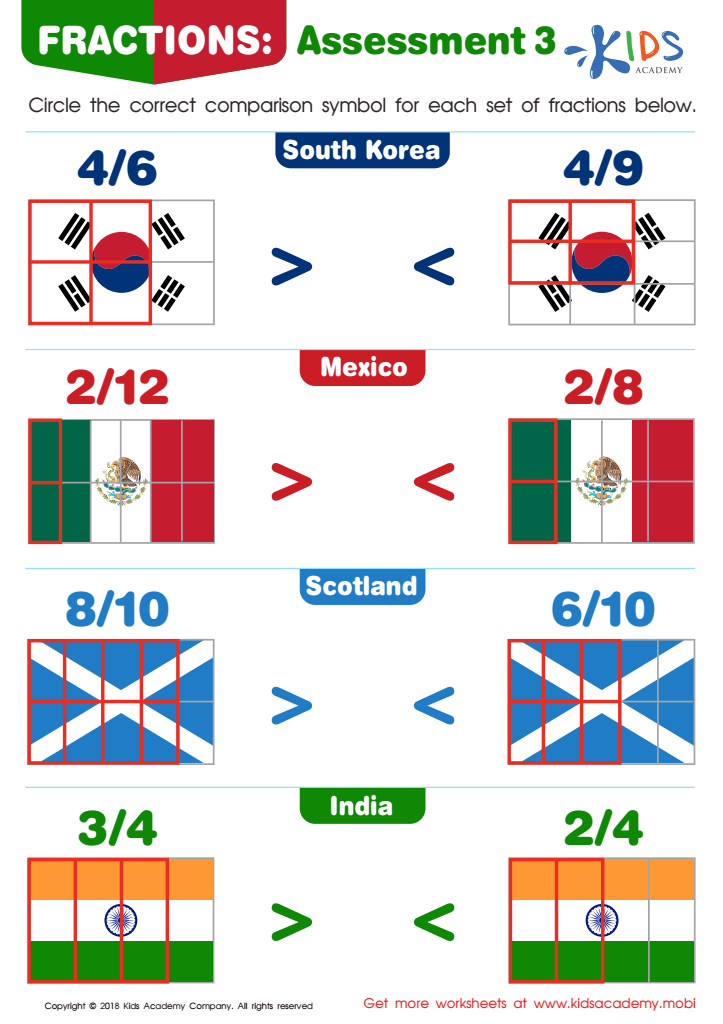
Fractions: Assessment 3 Worksheet
This worksheet helps teach kids about fractions and introduces them to countries and their flags. Have them read the country names and point to the flags. Then help them assess the fractions, and ask them to circle the symbol that shows their values.
Fractions: Assessment 3 Worksheet
Worksheet
Join Kids Academy for Free
Who is primarily going to use this learning content?





.jpg)
Understanding fraction addition is crucial for children aged 7-8 as it lays the foundation for advanced mathematical concepts and daily life skills. Introducing fraction addition at an early age helps children develop a better grasp of mathematical operations, enhancing their numerical fluency and problem-solving abilities. This foundational knowledge supports their future success in more complex math topics, thereby building their confidence and interest in STEM fields.
Fractions also have practical applications in everyday life. Parents and teachers must recognize that skills like cooking, sharing, and measuring often involve the use of fractions. By mastering fraction addition, children can better understand how to divide a pizza, share candies, or measure ingredients. This practical application bridges the gap between theoretical knowledge and real-world skills, making learning more relevant and engaging.
Furthermore, learning to add fractions at this age promotes critical thinking and enhances analytical skills. It encourages children to comprehend equality and proportion, setting the stage for geometry and algebra in later grades. Teachers and parents play a pivotal role in making this learning process fun and intuitive by using visual aids, interactive activities, and relatable examples, thus ensuring that children build a solid mathematical foundation that will benefit them throughout their academic journey and beyond.








