Identifying story elements Worksheets for Ages 7-8
3 filtered results
-
From - To
Enhance your child's reading comprehension skills with our "Identifying Story Elements Worksheets for Ages 7-8." These engaging worksheets are designed to help young learners recognize and analyze essential story elements like characters, setting, plot, and more. Each exercise combines fun activities and colorful illustrations to maintain interest, making it easier for children to grasp complex concepts. Created by educational experts, this collection aligns with school curricula, ensuring that kids build a solid foundation in literacy. Perfect for both classroom and home use, these worksheets will inspire a lifelong love of reading and storytelling in your child.
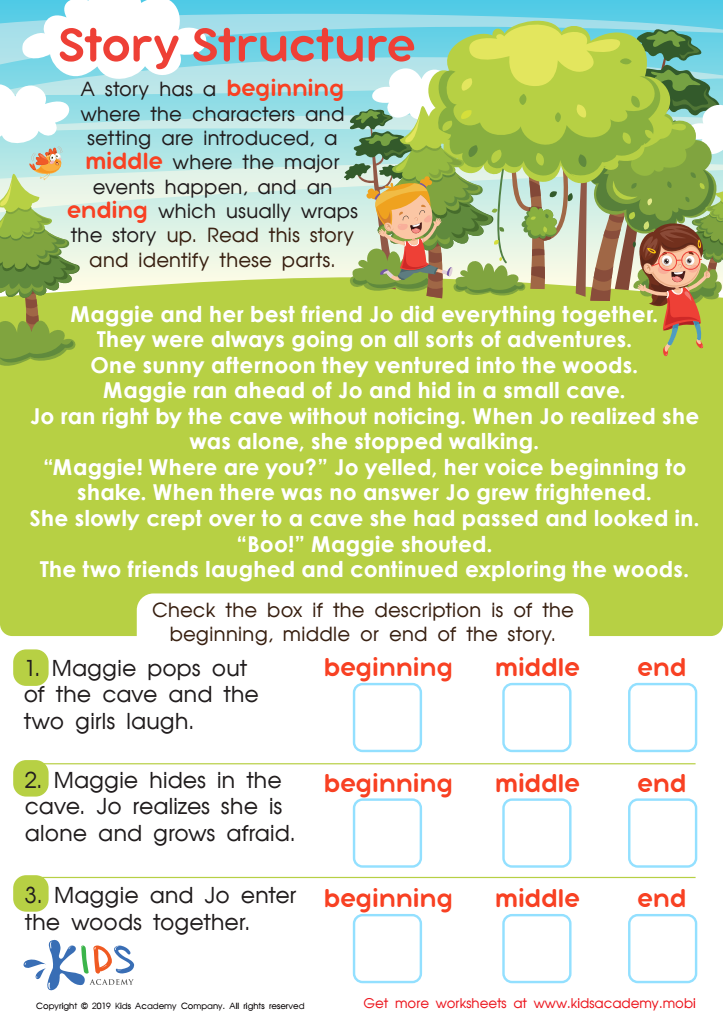
Story Structure Worksheet
 Assign to My Students
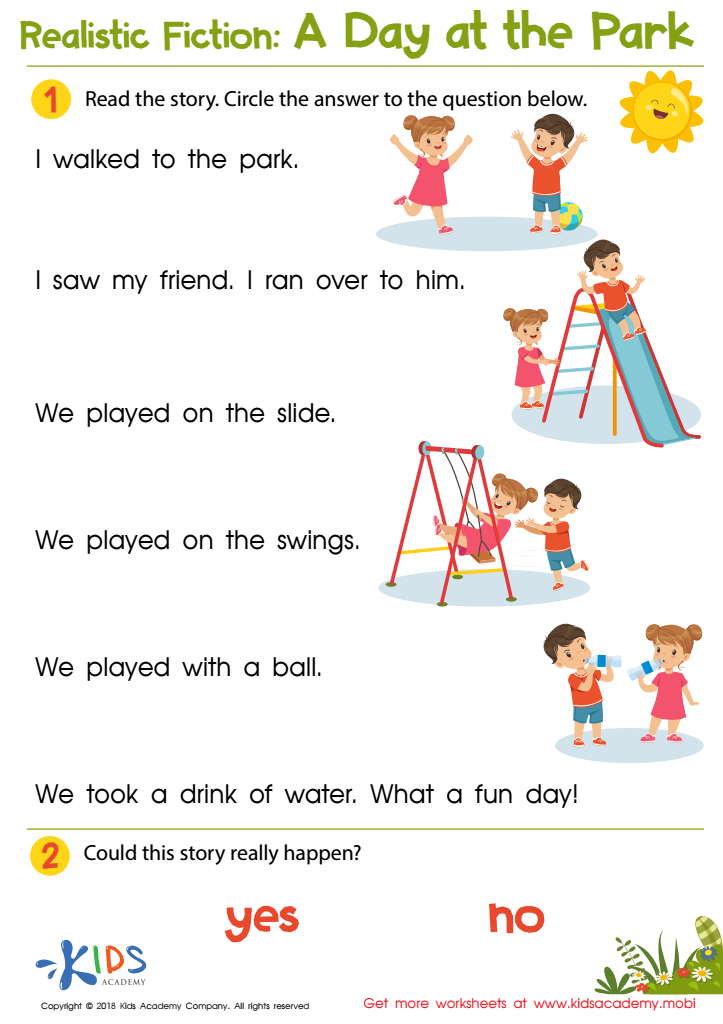
A Day at the Park Worksheet
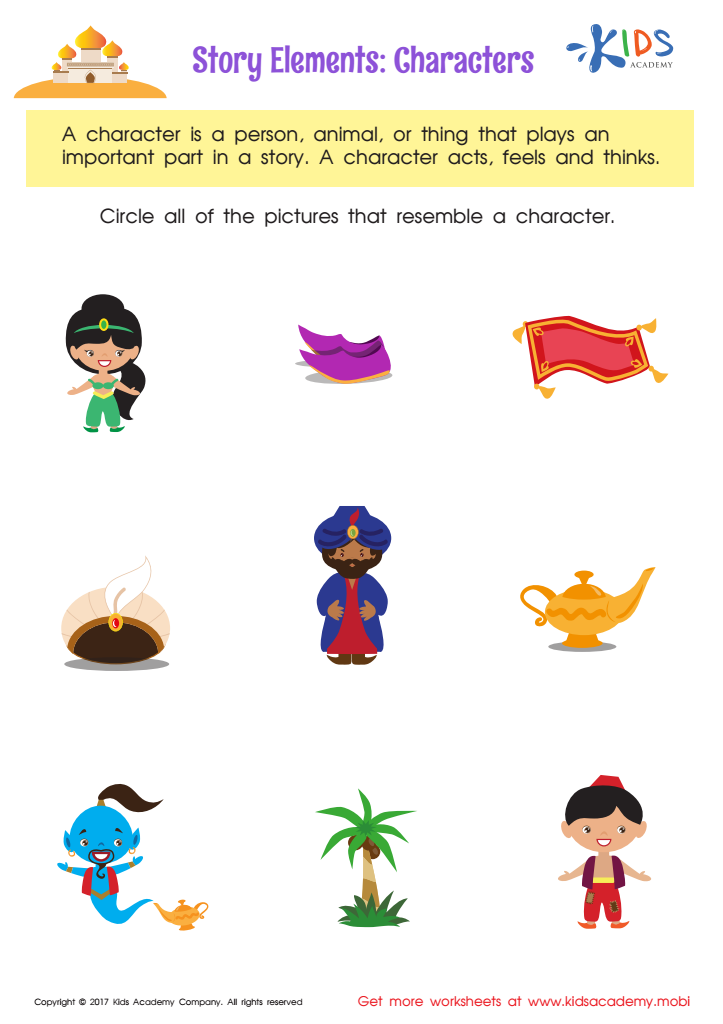
Story Elements Printable







Identifying story elements like characters, setting, plot, conflict, and resolution is crucial for children ages 7-8 because it lays the groundwork for strong reading comprehension skills. At this age, children transition from learning to read to reading to learn. Understanding story elements helps them grasp the essential components of a narrative, enabling them to follow along more easily and engage with the material.
Moreover, recognizing these elements enhances their ability to anticipate actions and make predictions, fostering critical thinking. It also aids in organized thought, encouraging youngsters to articulate their ideas more clearly and logically both verbally and in writing. For example, being able to distinguish the main characters and their motivations helps children understand why events unfold the way they do, cultivating empathy and deeper insights into human behavior.
Furthermore, these skills contribute to a love for reading, making literature more accessible and enjoyable. If parents and teachers focus on these foundational aspects, children are more likely to develop into proficient readers, capable of enjoying a wide range of books independently. Identifying story elements also supports other academic areas, as narrative skills transfer to subjects like history and science, where understanding cause and effect or sequencing events is essential. Thus, investing in this area can yield significant educational dividends.








