
Improve spelling skills Worksheets for Ages 7-8
3 filtered results
Difficulty Level
Grade
Age
-
From - To
Subject
Activity
Standards
Enhance your child's spelling abilities with our engaging worksheets designed for ages 7-8! Our carefully crafted spelling skills worksheets provide a fun and interactive way for young learners to improve their vocabulary and spelling confidence. Featuring various exercises, including fill-in-the-blank activities, word searches, and spelling games, these resources cater to different learning styles. Each worksheet promotes practice and reinforcement, making spelling enjoyable while helping children master essential words. Perfect for both classroom use and at-home learning, our printable worksheets turn mastering spelling into an exciting adventure. Explore our collection today and watch your child's spelling skills flourish!
Favorites
With answer key
Interactive
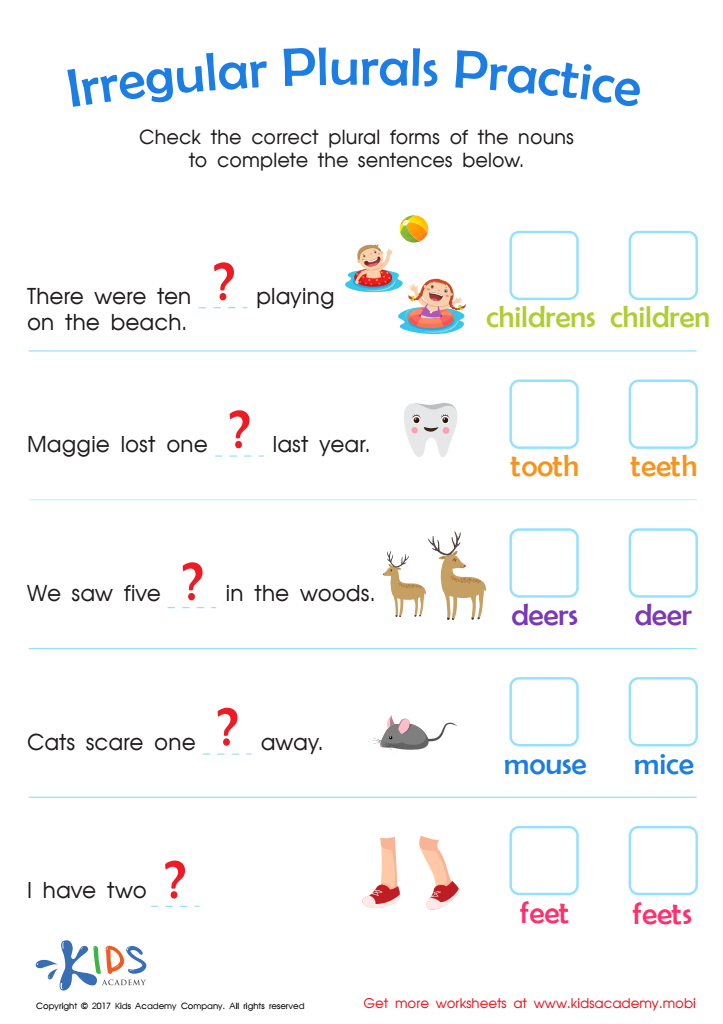
Irregular Plural Nouns Worksheet
This worksheet for 2nd graders offers an engaging activity for practicing irregular nouns by choosing the right option. It covers the most common irregular plurals, making it a quick, easy, and effective way to learn.
Irregular Plural Nouns Worksheet
Worksheet
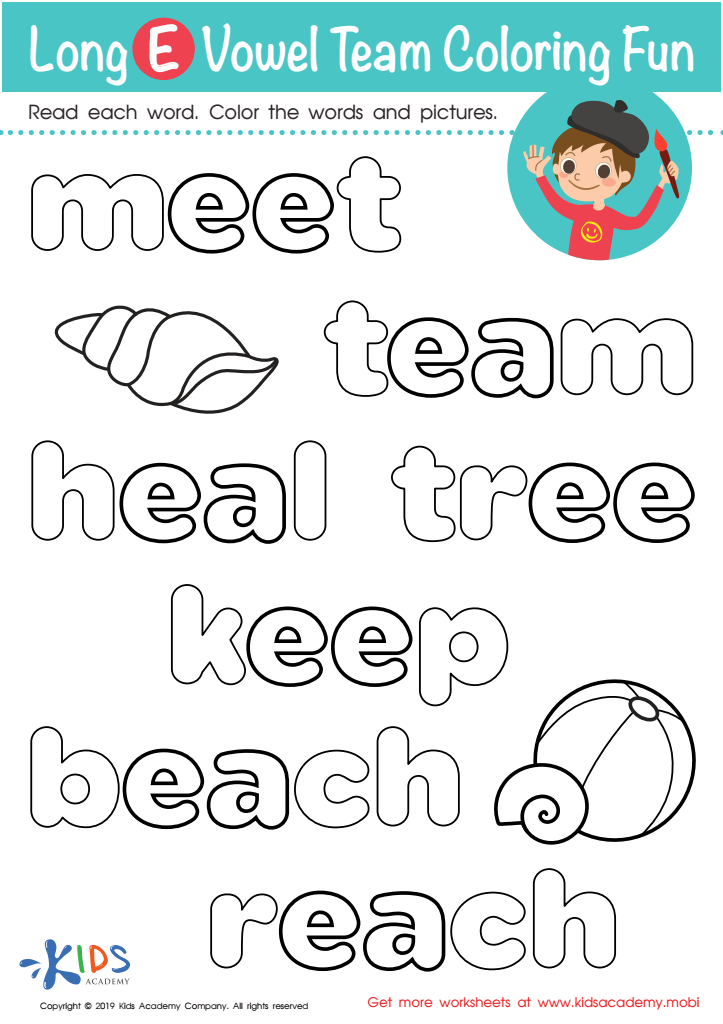
Long E Vowel Team Coloring Worksheet
Divide your students into teams and have them read words with long E sounds, such as "meet" and "team." Let them recognize that the sound can be created with either "ee" or "ea" letter pairings. Then, have the teams color words and pictures with the appropriate letters. This will make your phonics lesson fun and effective.
Download (PDF)
 Assign to My Students
Assign to My Students
Long E Vowel Team Coloring Worksheet
Worksheet
Join Kids Academy for Free
Who is primarily going to use this learning content?








Improving spelling skills for children aged 7-8 is critical for several reasons. At this age, children are transitioning from learning to read to reading to learn. Strong spelling abilities enhance their reading fluency, comprehension, and overall literacy development. When children can spell words accurately, they become more confident readers and writers, allowing them to express their thoughts clearly and effectively.
Furthermore, mastering spelling during these formative years lays the groundwork for more advanced language skills. Children at this age are also developing their vocabulary; good spelling supports this growth by helping them understand the structure of words and their meanings. This understanding can enrich their communication skills and foster a love for language.
Parents and teachers play a vital role in this process by providing engaging and supportive environments for learning. Encouraging spelling practice through games, writing exercises, and reading activities can make the learning process enjoyable. Additionally, good spelling is essential for academic success; poor spelling can hinder children’s ability to convey their understanding in schoolwork, affecting grades and self-esteem.
In summary, prioritizing spelling development in ages 7-8 cultivates essential literacy skills and boosts confidence, setting the foundation for lifelong learning.








