Improving addition skills Worksheets for Ages 7-8
3 filtered results
-
From - To
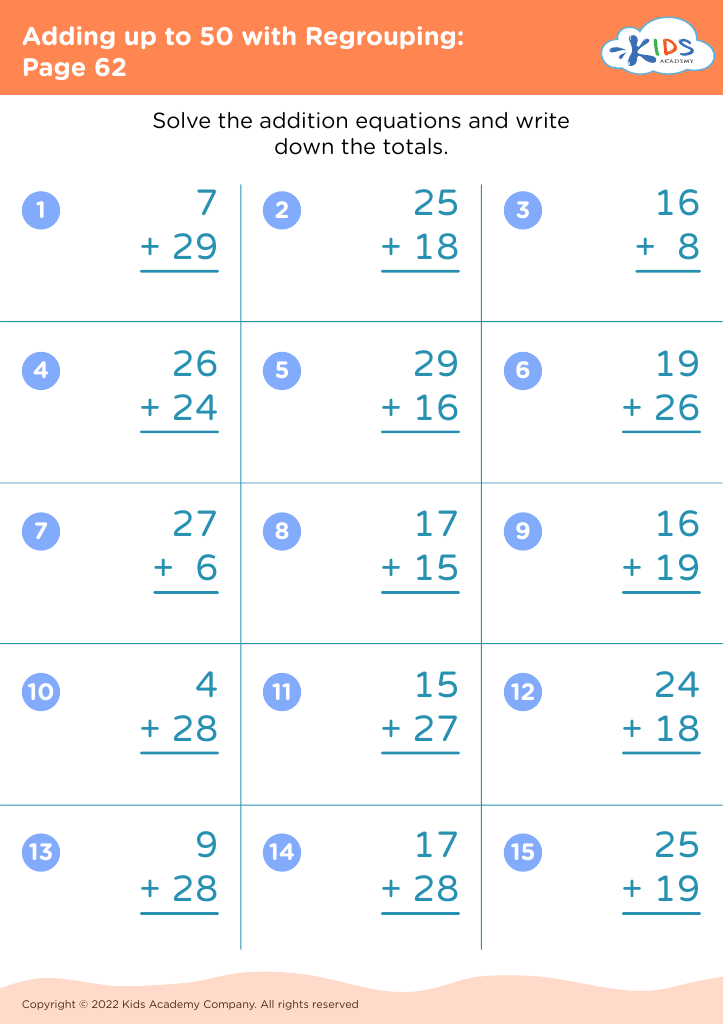
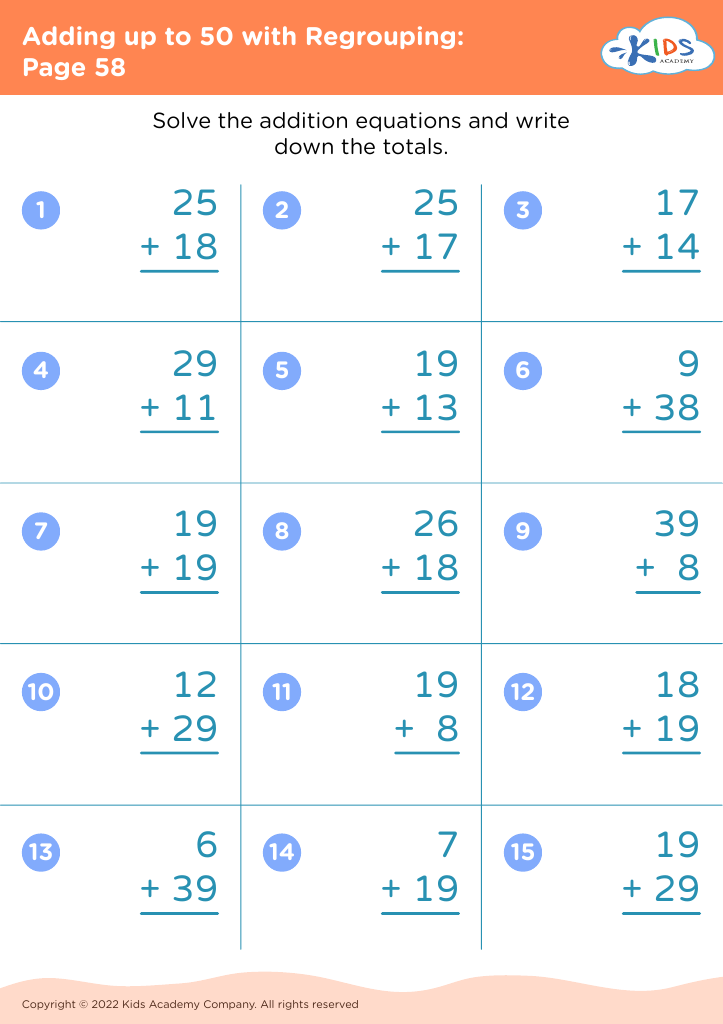
Enhance your child's addition skills with our comprehensive worksheets designed for ages 7-8. Tailored to foster a love for math, these engaging activities provide essential practice in mastering addition concepts. Featuring a variety of interactive exercises, from simple sums to more challenging addition problems, these worksheets cater to diverse learning styles. As children work through fun problems, they build confidence and improve their math fluency. Discover the joy of learning as your child develops critical skills that lay the foundation for future academic success. Perfect for home or classroom use, our worksheets are a valuable resource for young learners eager to excel in math!
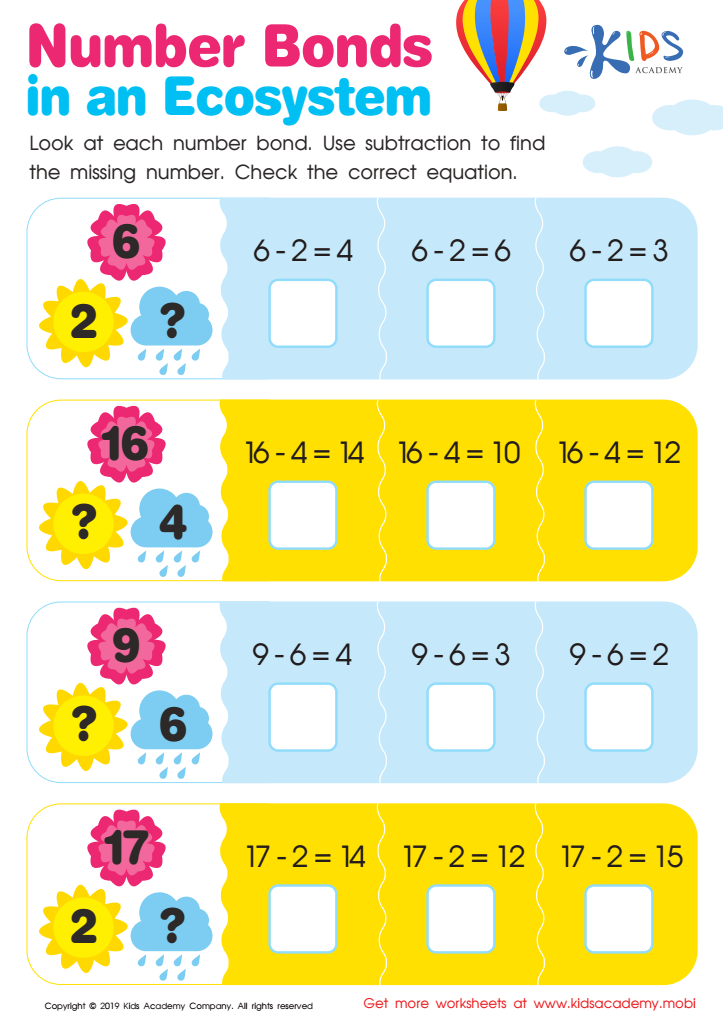
Number Bonds in an Ecosystem Worksheet
 Assign to My Students






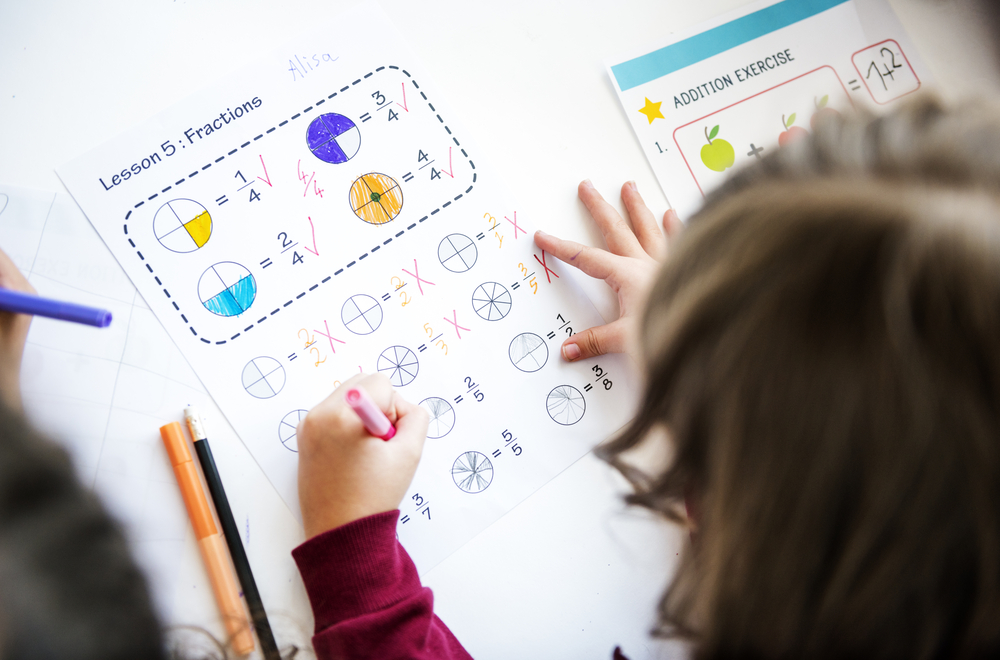

Improving addition skills in children aged 7-8 is crucial for their overall academic development and confidence in mathematics. At this age, students are building foundational skills that will support their learning in more complex mathematical concepts later on. Strong addition skills enhance problem-solving abilities, foster critical thinking, and prepare students for future assessments.
Parents and teachers should care because mastering basic addition helps children with everyday tasks, like handling money or understanding time, contributing to their independence. Moreover, students who struggle with basic math often face increased anxiety and frustration, which can affect their attitudes towards school and learning. By focusing on addition skills, educators and parents can cultivate a positive learning environment that encourages exploration and curiosity in mathematics.
Additionally, effective addition skills pave the way for students to engage in collaborative activities, boosting their social skills. Families and educators can support this growth through engaging games, interactive lessons, and real-life applications of math. Attention to addition skills at this early stage helps children become proficient, confident, and enthusiastic learners, setting the stage for long-term academic success and enjoyment of mathematics throughout their lives.








