
Knowledge reinforcement Worksheets for Ages 7-8
3 filtered results
Difficulty Level
Grade
Age
-
From - To
Subject
Activity
Standards
Enhance your child's learning with our Knowledge Reinforcement Worksheets designed for ages 7-8. These engaging worksheets cover essential topics, including math, reading, and critical thinking, helping to solidify foundational knowledge. Tailored to fit their developmental stage, our colorful and interactive activities make learning fun while boosting confidence and skills. Whether at home or in the classroom, these worksheets serve as an excellent resource for reinforcing concepts and promoting independent learning. Encourage your young learner to explore, practice, and master important skills with our comprehensive, age-appropriate materials. Download our Knowledge Reinforcement Worksheets today and watch your child's understanding flourish!
Favorites
With answer key
Interactive
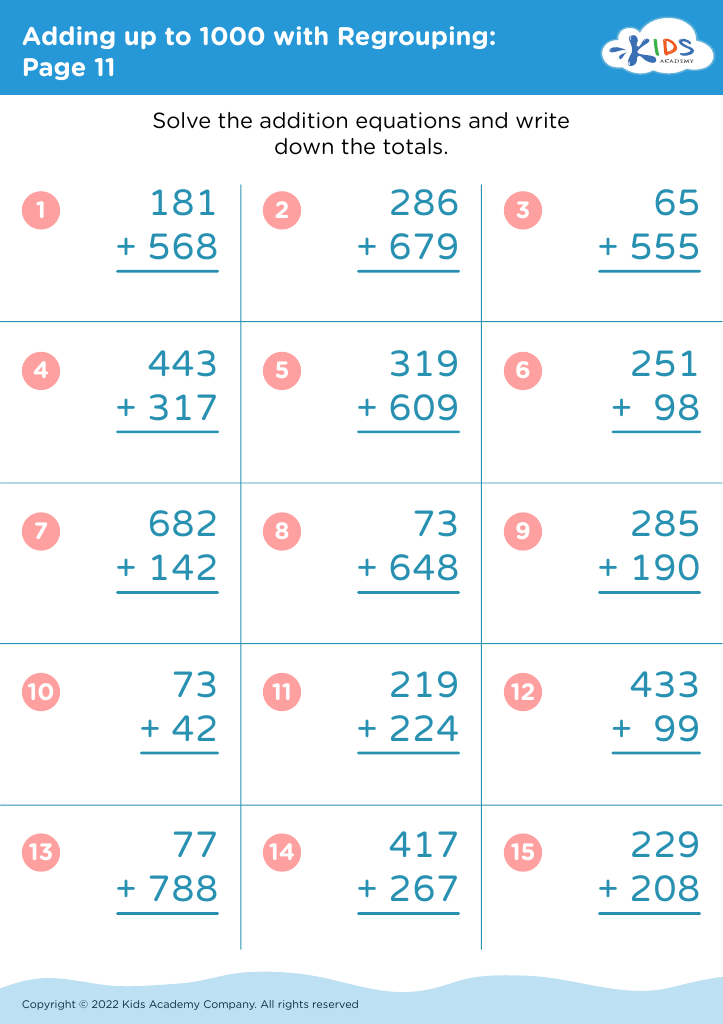
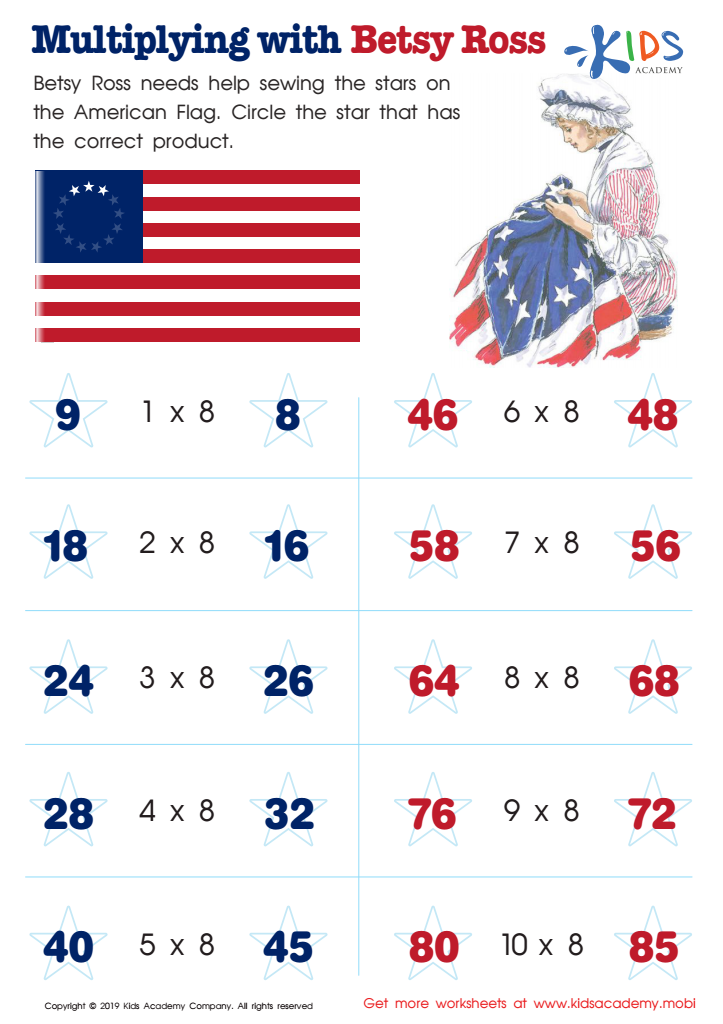
Multiplying with Betsy Ross Worksheet
Before getting into the worksheet, have your students take a quick history lesson on Betsy Ross. Ask them if they know her role in American history. On the printout, ask your kids to identify what Betsy Ross is doing - sewing the stars on the American Flag. Have them circle the star that has the correct pattern.
 Assign to My Students
Multiplying with Betsy Ross Worksheet
Worksheet
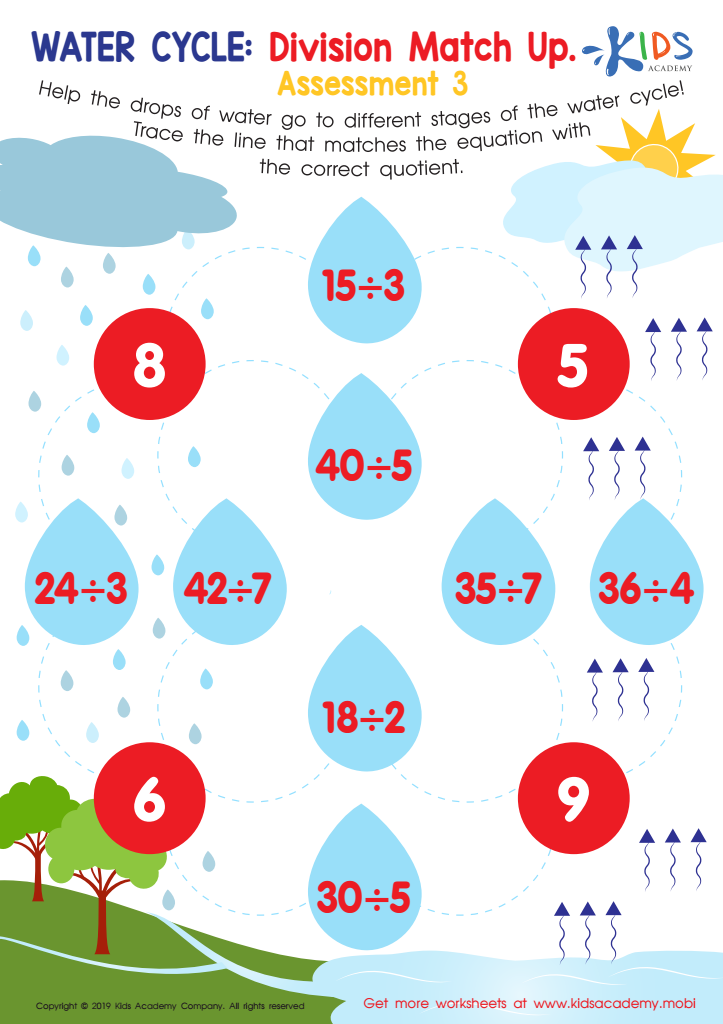
Water Cycle Division Match Up Assessment 3 Worksheet
Division is more fun than schoolwork with this assessment! Traceable lines let kids match equations to quotients, helping them build automaticity and giving you an easy way to see their progress.
Water Cycle Division Match Up Assessment 3 Worksheet
Worksheet
Join Kids Academy for Free
Who is primarily going to use this learning content?







Knowledge reinforcement for ages 7-8 is crucial for several reasons. First, this stage represents a significant period of cognitive development. Children are transitioning from basic foundational learning to more complex concepts. Reinforcing knowledge during this critical phase helps solidify their understanding, ensuring concepts learned are retained and can be applied in various contexts.
Second, reinforcement encourages a positive attitude toward learning. When parents and teachers regularly revisit and build upon previously learned material, children gain confidence in their abilities, fostering a lifelong love for learning. It also helps to identify gaps in knowledge early on, allowing for timely intervention.
Moreover, engaged reinforcement practices—like games, discussions, and hands-on activities—provide opportunities for children to apply their knowledge practically. This not only enhances retention but also promotes critical thinking and problem-solving skills.
Finally, creating a collaborative approach between home and school in reinforcing knowledge helps build a supportive learning environment. When children see consistency in messages from parents and teachers, they feel more secure, motivated, and eager to explore and learn, paving the way for future academic success. Thus, knowledge reinforcement is essential for nurturing well-rounded, confident, and capable learners.








