Learn addition Worksheets for Ages 7-8
4 filtered results
-
From - To
Welcome to our "Learn Addition Worksheets for Ages 7-8" page, where young learners can master the basics of addition in a fun and engaging way! Our carefully crafted worksheets are designed to enhance mathematical skills through interactive exercises, helping children build confidence and proficiency in addition. Featuring colorful illustrations and varied activities, these worksheets cater to diverse learning styles, ensuring that each child can practice at their own pace. Whether at home or in the classroom, our resources provide essential practice that aligns with educational standards, making math enjoyable and approachable. Start your child's math journey today!
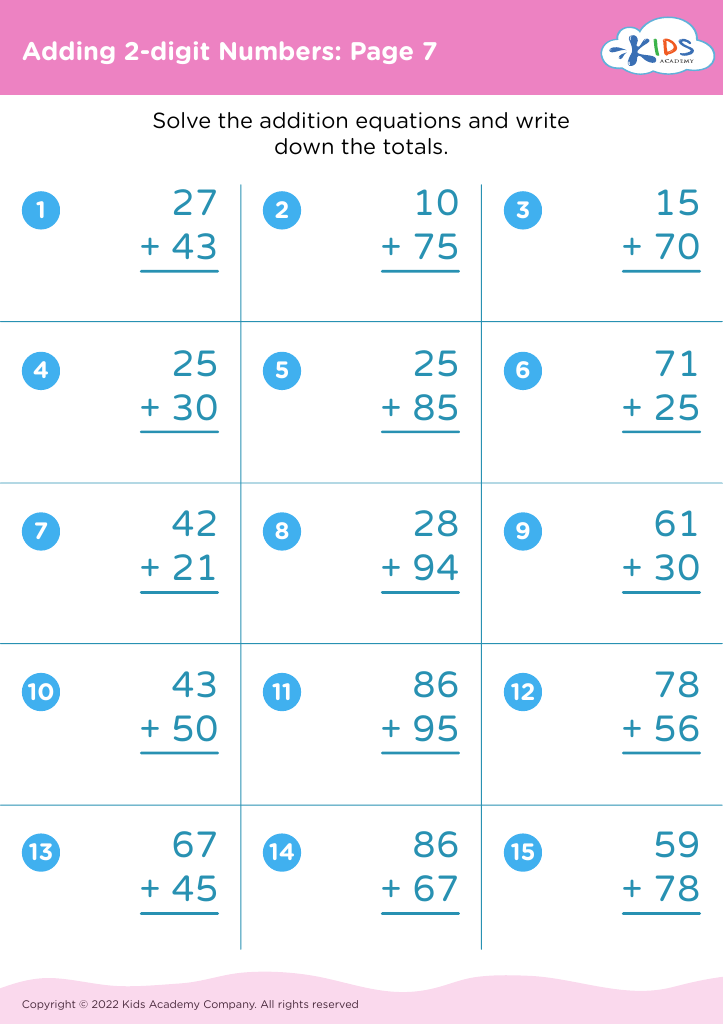
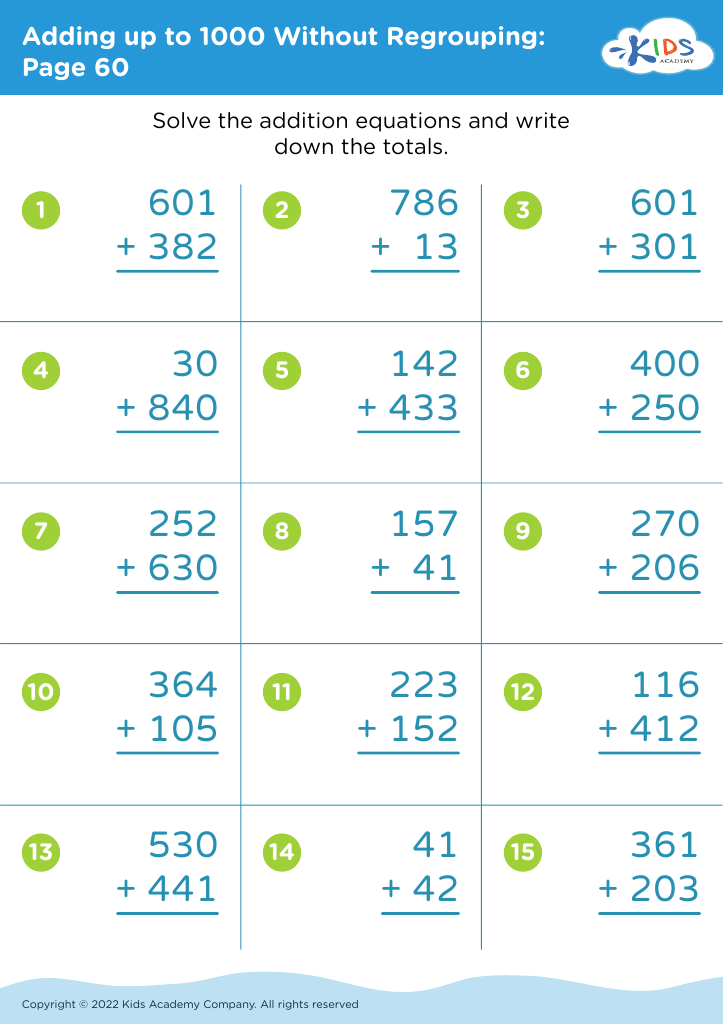
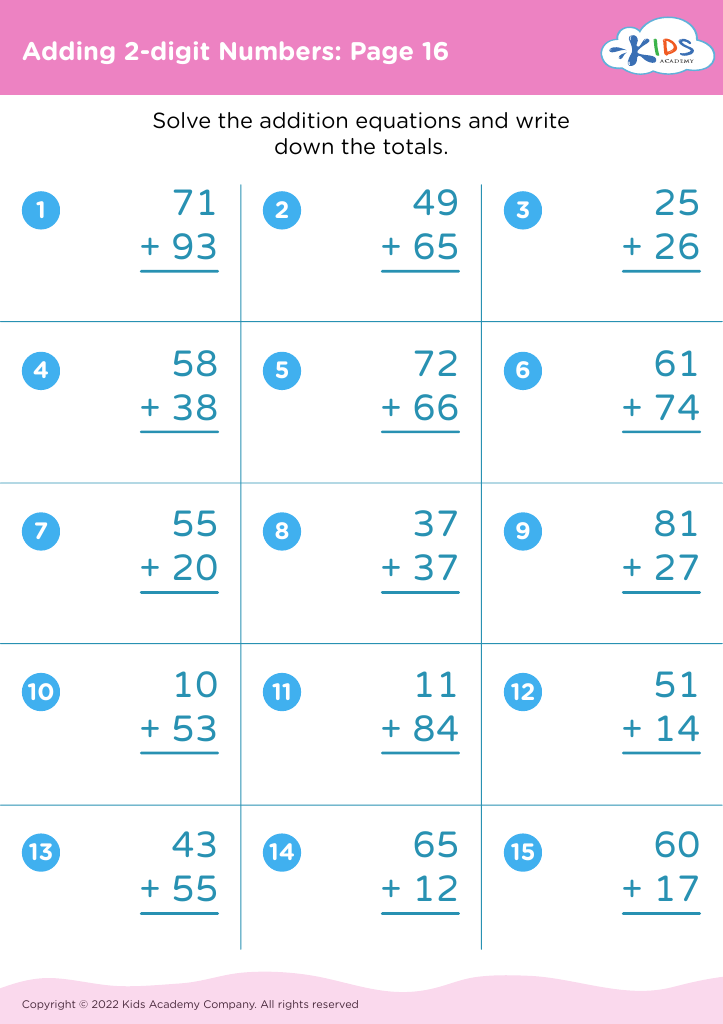








Learning addition for children aged 7-8 is crucial, as it lays a strong mathematical foundation that will support their academic journey. At this age, students transition from concrete counting methods to more abstract numerical concepts. Effective addition skills not only develop arithmetic proficiency, but they also enhance critical thinking abilities. Mastery of addition helps children solve real-world problems, from budgeting their allowance to understanding complex mathematical operations in higher grades.
Furthermore, competency in addition boosts children's confidence in their mathematical abilities. Struggling with basic addition can lead to anxiety towards math, hindering their overall academic performance. By reinforcing addition practice at home or in the classroom, caregivers can enable children to view math as a fun and manageable subject.
Additionally, learning addition aids in cognitive development, encouraging logical reasoning and pattern recognition. It forms the basis for more complex operations like subtraction, multiplication, and division, ultimately supporting their journey through comprehensive math education. Teachers and parents play a vital role in fostering an engaging and supportive learning environment, motivating children to embrace math skills early on, which cultivates lifelong positive attitudes towards learning and problem-solving.








