
Letter identification Worksheets for Ages 7-8
3 filtered results
Difficulty Level
Grade
Age
-
From - To
Subject
Activity
Standards
Enhance your child's literacy skills with our engaging Letter Identification Worksheets designed specifically for ages 7-8. These worksheets provide a fun and interactive way for young learners to recognize and differentiate between letters, reinforcing their alphabet knowledge. With a variety of exercises, including tracing, matching, and coloring, your child will develop essential skills with ease. Tailored to align with early grade learning standards, our resources ensure a comprehensive approach to letter recognition. Join us in helping your child master letter identification through enjoyable activities that foster a love for learning. Explore our printable worksheets and watch their confidence grow!
Favorites
With answer key
Interactive
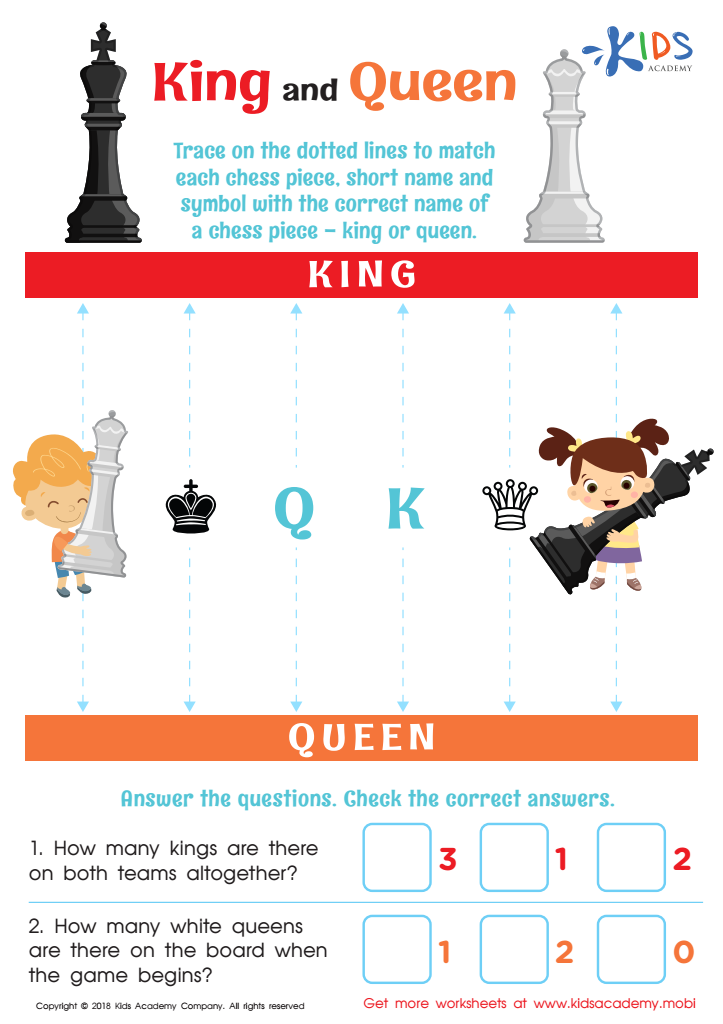
King and Queen Worksheet
Instruct your kids to trace the dotted lines to match each chess piece, short name, and symbol with either king or queen.Answer the questions at the bottom and check the answers. This exercise will help your children to differentiate between a king and queen chess piece and know their symbols.
 Assign to My Students
King and Queen Worksheet
Worksheet
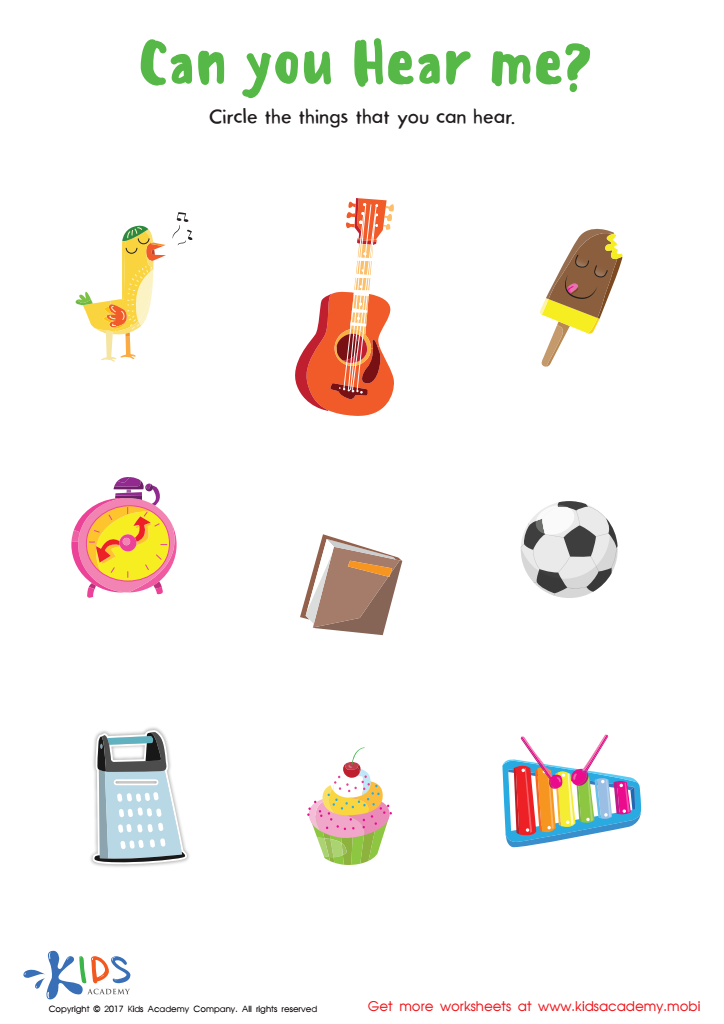
Can You Hear Me Worksheet
Challenge your child's thinking and help them learn by using this cute "Can You Hear Me?" worksheet. It encourages use of prior knowledge to identify objects that make sounds, developing critical thinking skills. As they imagine balls and cupcakes making sounds, your child will have plenty of laughs. Extend learning by talking about the sounds and why certain objects make them.
Can You Hear Me Worksheet
Worksheet
Join Kids Academy for Free
Who is primarily going to use this learning content?






Letter identification is a crucial skill for children aged 7-8, as it underpins their reading and writing abilities. At this age, students transition from learning to read to reading to learn. Mastery of letter recognition supports their ability to decode words, understand phonics, and develop vocabulary. This sets the foundation for more complex literacy skills.
For parents and teachers, fostering letter identification is essential for several reasons. Firstly, children who struggle with recognizing letters may encounter difficulties in reading fluency, which can lead to decreased academic performance and lower confidence. Early intervention is key, as it can mitigate potential learning disabilities.
Moreover, letter identification is linked to overall language development. Supporting children in this area can enhance their communication skills, enabling them to express thoughts and ideas effectively. Engaging activities, such as games and interactive reading, can make learning enjoyable and promote positive attitudes towards literacy.
In summary, prioritizing letter identification for 7-8-year-olds is vital for their educational success and self-esteem. By collaborating, parents and teachers can create a nurturing environment that cultivates a love for reading and learning, ultimately equipping children with essential skills for their academic journey.








