Math application Worksheets for Ages 7-8
3 filtered results
-
From - To
Discover our comprehensive collection of Math Application Worksheets designed specifically for ages 7-8. These engaging, education-rich activities help young learners enhance their mathematical problem-solving skills beyond basic arithmetic. Each worksheet provides real-world scenarios, encouraging children to apply math concepts in imaginative and practical ways. Topics include measuring, data interpretation, fraction basics, and more. Whether at school or home, these worksheets make learning both fun and effective. Equip your child with the critical thinking skills they need to succeed, all while fostering a love for mathematics. Visit [website link] to start exploring today!
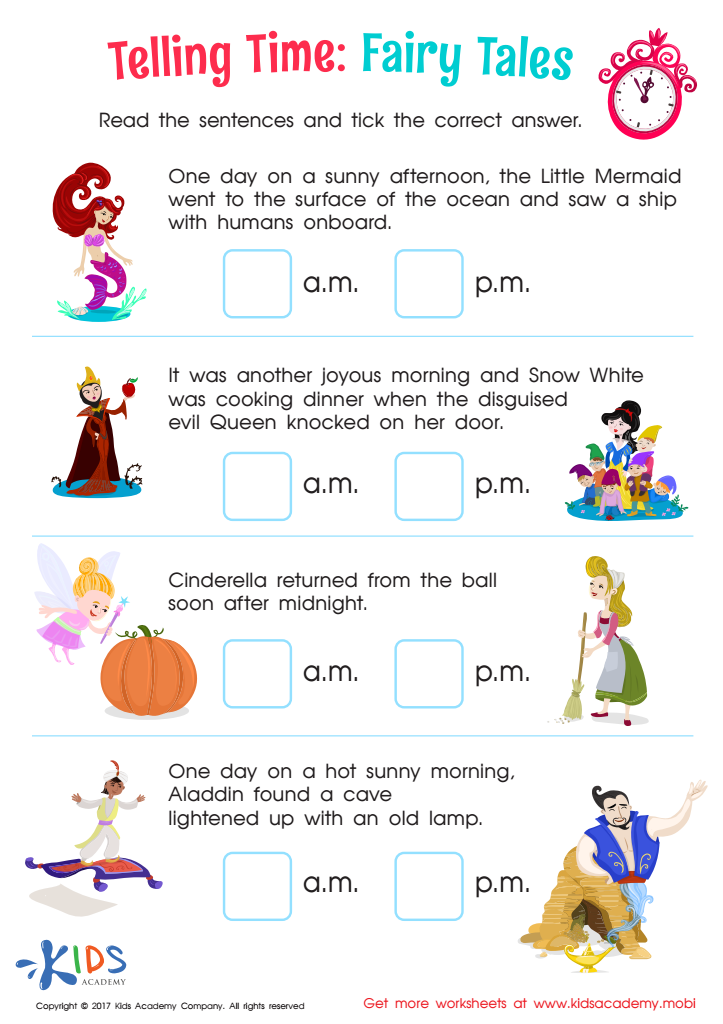
Telling Time: Fairy Tales Worksheet
 Assign to My Students
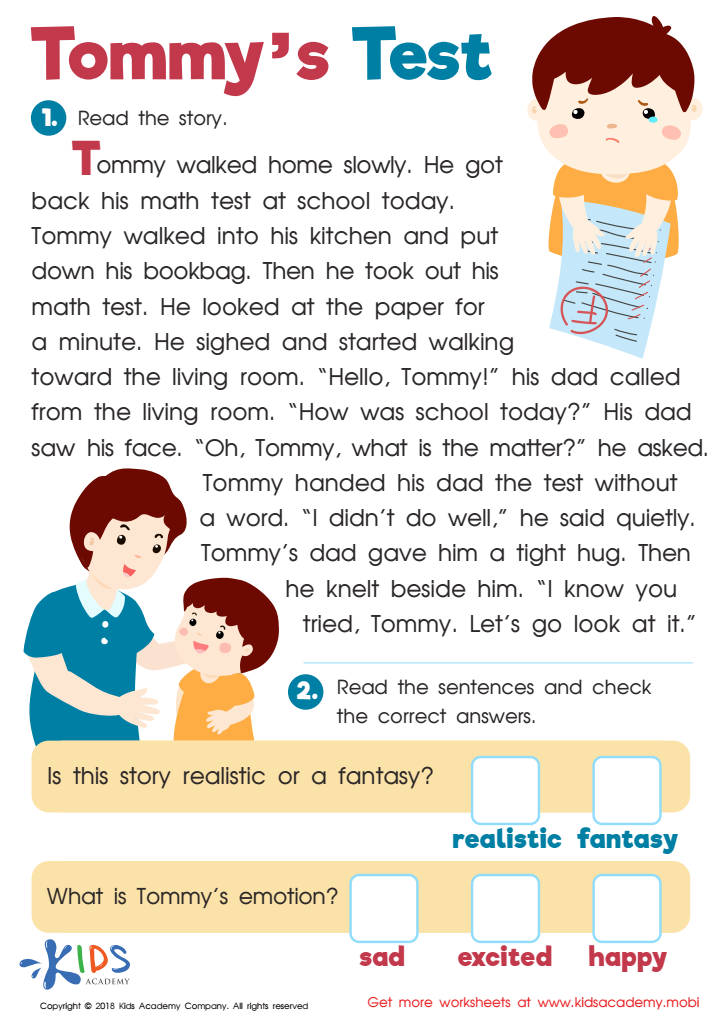
Tommys Test Worksheet
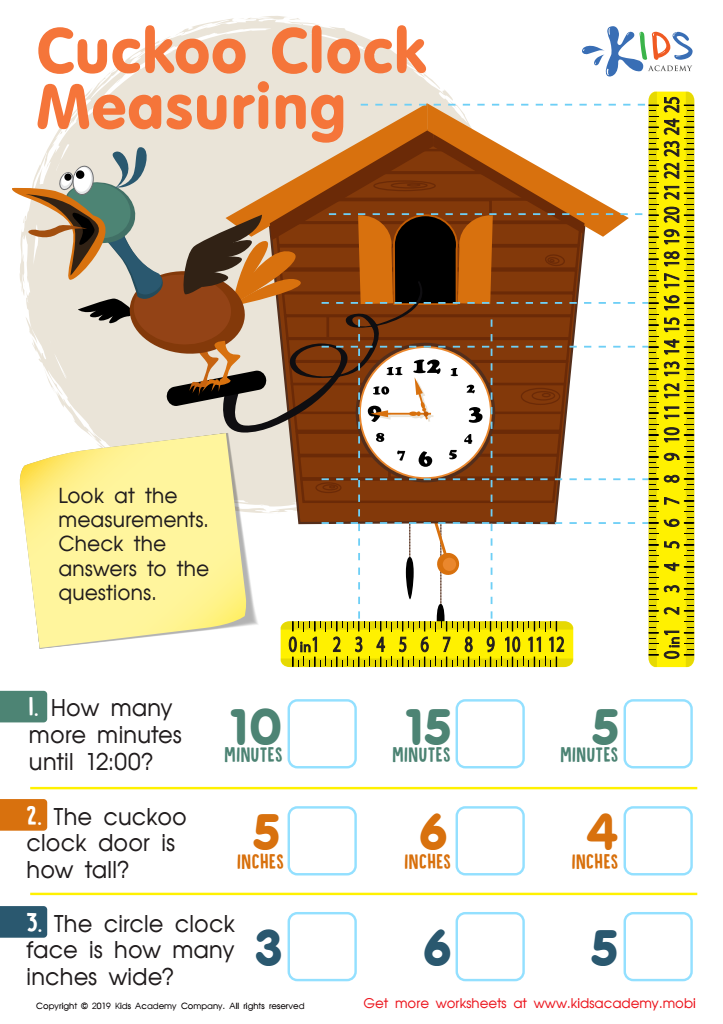
Cuckoo Clock Measuring Worksheet








Understanding and applying mathematics at an early age, specifically between 7 and 8, is crucial for several reasons. Firstly, it establishes a solid foundation for future mathematical concepts. Basic arithmetic skills like addition, subtraction, multiplication, and division learned at this age serve as building blocks for more complex mathematical problems encountered later in school.
Secondly, early math application helps develop critical thinking and problem-solving skills. When children engage with math, they learn to approach problems methodically and logically, skills that are invaluable both academically and in everyday life.
Thirdly, early proficiency in math enhances confidence and enthusiasm for the subject. Children who grasp math concepts early on are more likely to view the subject positively, reducing math anxiety and promoting a ‘can-do’ attitude that is beneficial across all learning areas.
Moreover, math has practical applications in day-to-day situations. Parents and teachers who emphasize its use in real-world settings—like measuring ingredients while cooking or counting change—help children understand the relevance and importance of math outside the classroom.
Lastly, fostering a strong mathematical foundation early can identify and support students who might struggle with the subject, providing targeted interventions before gaps widen, thus ensuring all children have the opportunity to succeed. Therefore, parents and teachers play a vital role in igniting an early interest and competence in math.








