Mathematics skills Worksheets for Ages 7-8
3 filtered results
-
From - To
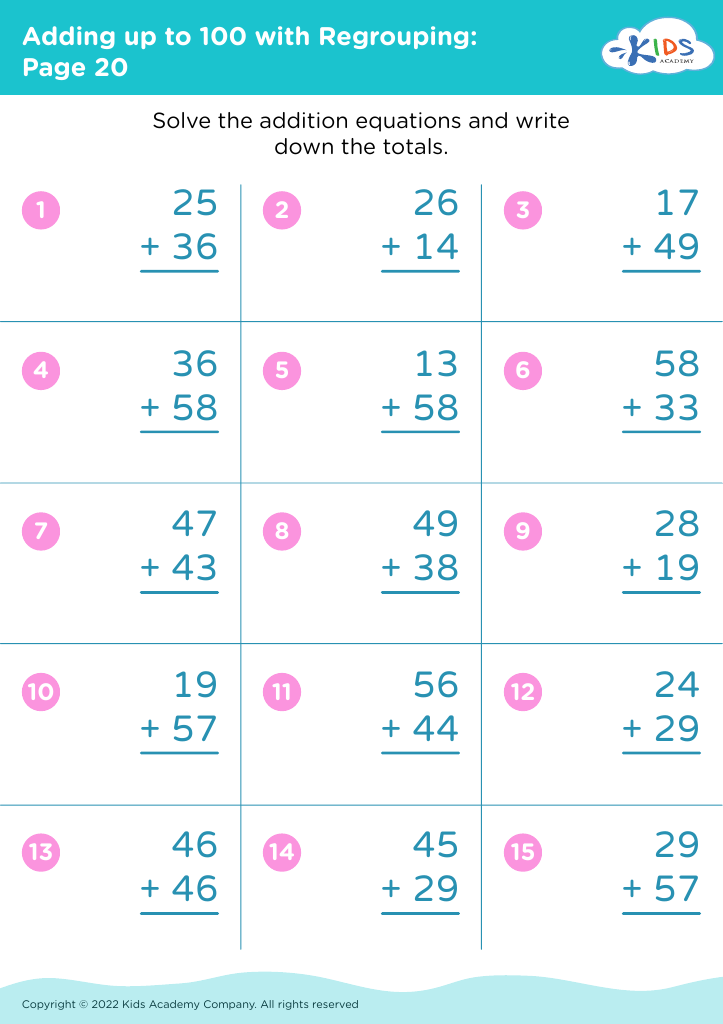
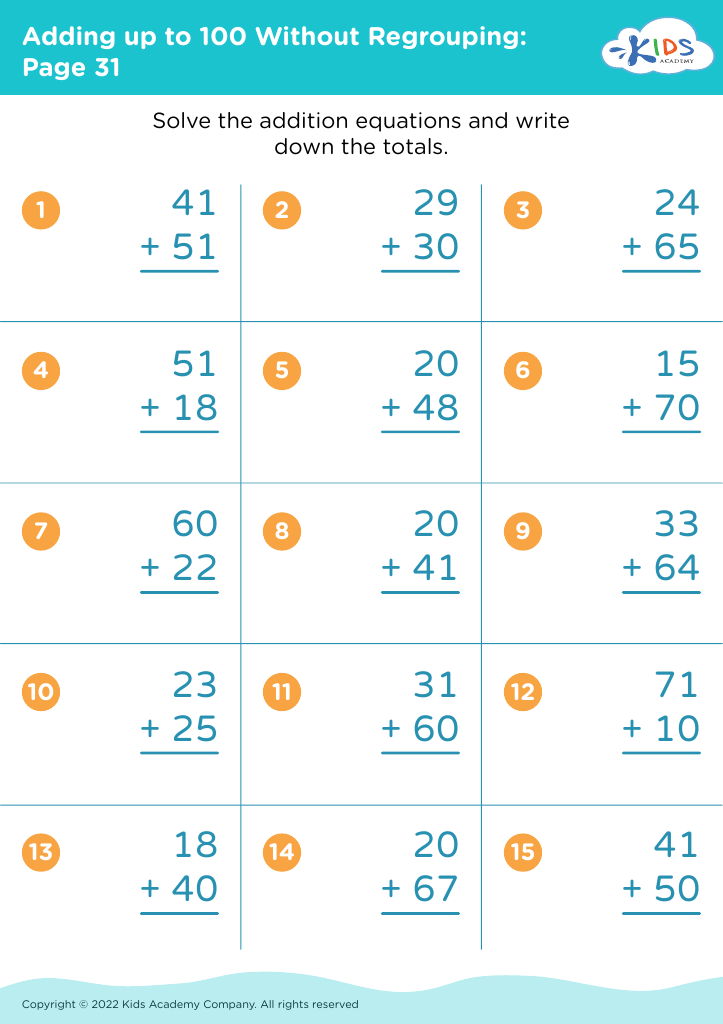
Welcome to our Mathematics Skills Worksheets for Ages 7-8! Our comprehensive collection is designed to enhance your child's mathematical understanding and problem-solving abilities through engaging and educational activities. Each worksheet integrates fun puzzles, exercises, and challenges that cover essential topics such as addition, subtraction, multiplication, division, and fractions. These worksheets are carefully crafted to ensure that young learners build a strong foundation while enjoying the process. Perfect for classroom settings or at-home learning, our resources are tailored to meet the developmental needs of children aged 7-8. Start your child's mathematical journey with us today!
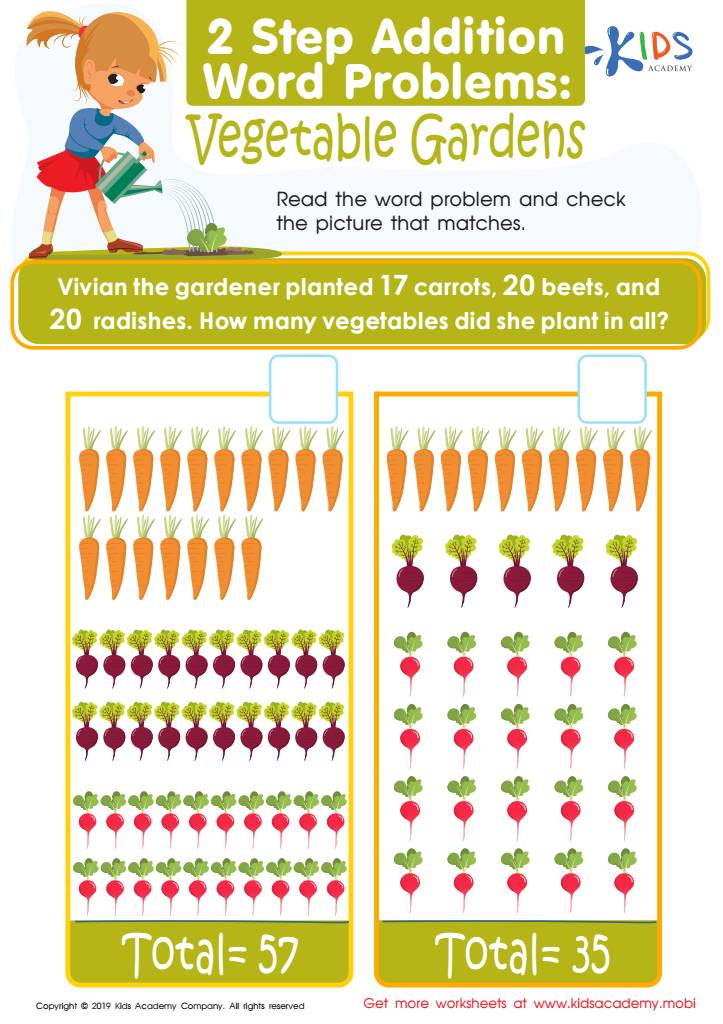
Vegetable Gardens Worksheet
 Assign to My Students







Parents and teachers should prioritize the development of mathematics skills in children ages 7-8 because these formative years lay the foundation for critical cognitive and practical life skills.
Firstly, during these early years, children's brains are exceptionally receptive to learning patterns, numbers, and logical thinking. Building a strong mathematical foundation enhances problem-solving abilities, which are essential not only in academic settings but also in everyday life. Math teaches children how to approach complex problems systematically, fostering patience and persistence.
Moreover, mathematics skills are fundamental to future success in STEM (Science, Technology, Engineering, and Mathematics) fields. By exposing children to math early on, parents and teachers can ignite an interest in these areas, ultimately opening doors to varied career opportunities.
Additionally, early proficiency in math has been linked to better performance across other subjects. For instance, understanding math concepts can improve a child’s ability to grasp scientific principles and enhance linguistic abilities through their exposure to logical structures.
Finally, math also promotes confidence and independence. A child who can solve math problems is likely to feel more competent and self-assured, nurturing a positive mindset towards learning and academic challenges.
In conclusion, emphasizing math skills for children ages 7-8 equips them with essential tools for intellectual development, academic success, and everyday life management, setting them on a path toward a secure and confident future.








