Pattern identification Worksheets for Ages 7-8
7 filtered results
-
From - To
Discover our engaging Pattern Identification Worksheets designed specifically for children aged 7-8. These worksheets promote critical thinking and enhance mathematical skills by encouraging kids to recognize, create, and extend patterns in a fun and interactive way. Tailored to meet learning objectives for this age group, our resources help develop important cognitive skills while keeping students entertained. Each worksheet features colorful visuals and varied activities to maintain interest and promote independent learning. Ideal for both classroom use and at-home practice, these worksheets are perfect for aspiring young learners. Spark curiosity and make learning enjoyable with our comprehensive pattern identification resources!
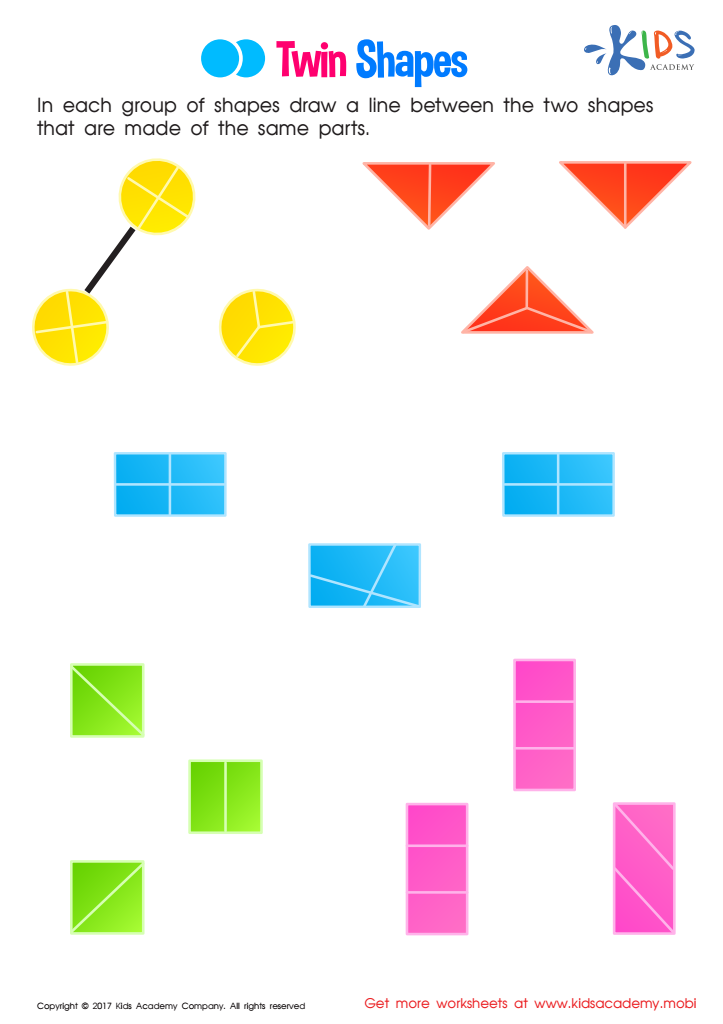
Twin Shapes Worksheet
 Assign to My Students
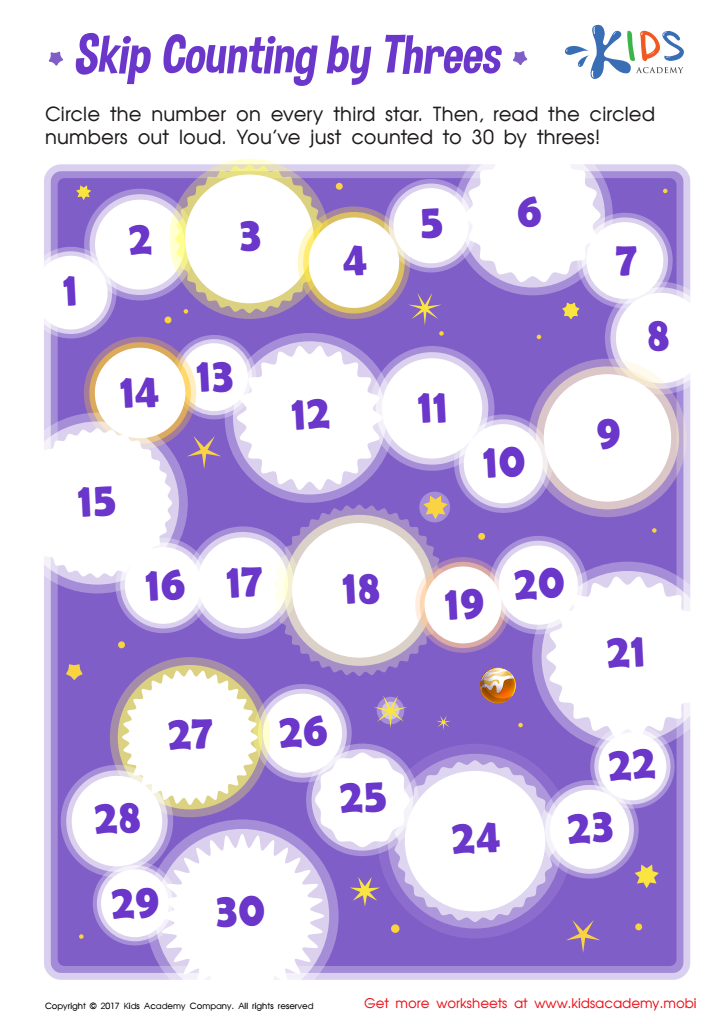
Skip Counting By Three Printable
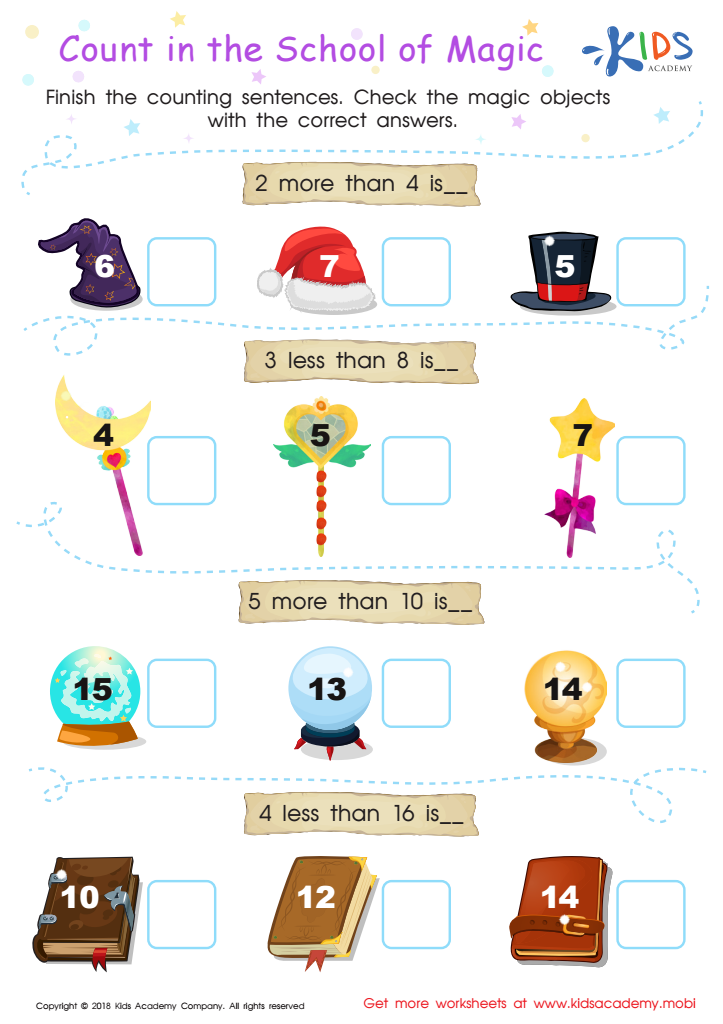
Count in the School of Magic Worksheet
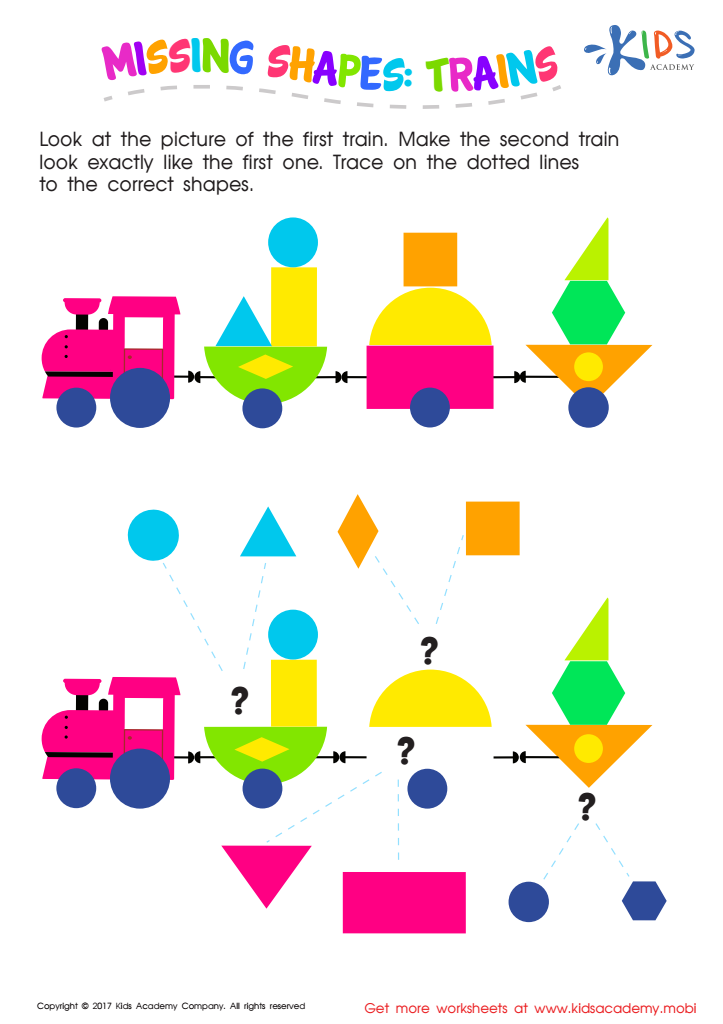
Missing Shapes: Trains Worksheet
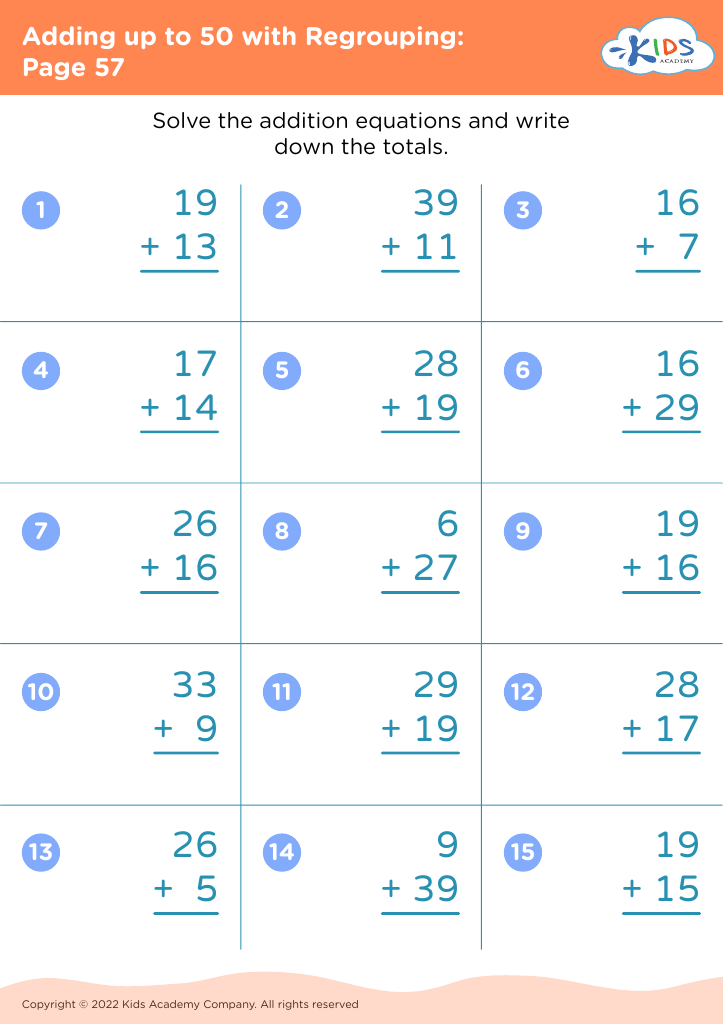
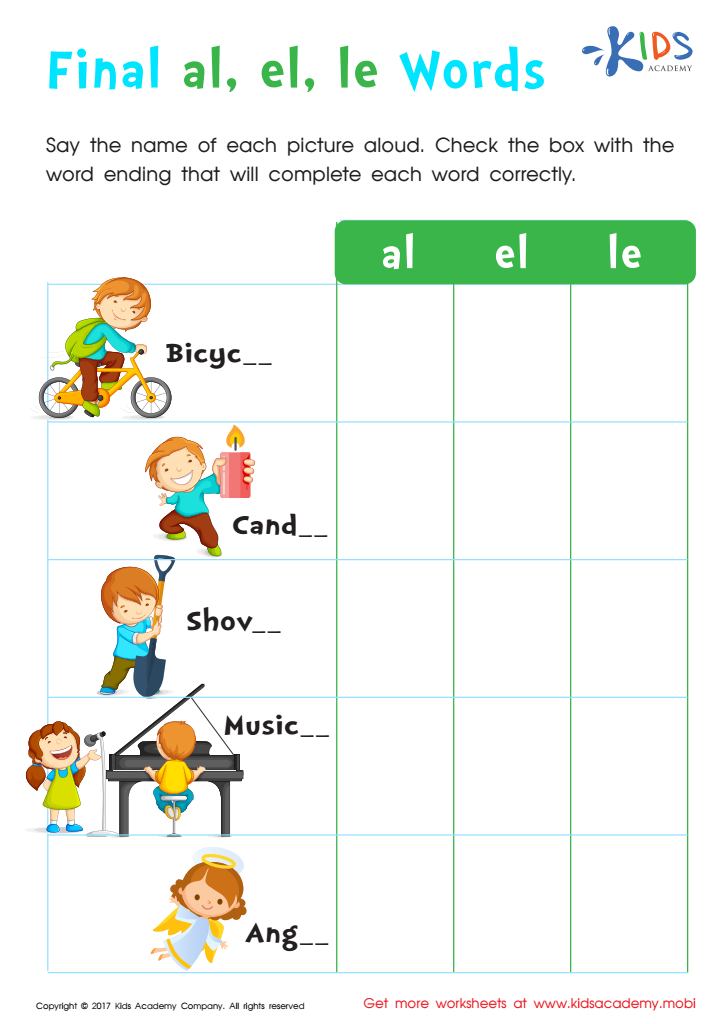
Spelling Words Ending with –le, –el and –al Worksheet








Pattern identification is a vital skill for children aged 7-8, serving as a foundational element in their cognitive development and understanding of the world. At this age, children are beginning to make sense of relationships and structures, which help them excel in subjects like mathematics, language arts, and the sciences. Recognizing patterns fosters critical thinking and problem-solving skills. For instance, identifying number sequences or rhymes in texts enhances computation and reading fluency.
Moreover, understanding patterns allows children to predict outcomes, develop logical reasoning skills, and create connections between different concepts. This skill is not only academic but is also essential in daily life, helping children recognize routines, follow instructions, and enhance their social interactions.
For parents and teachers, nurturing pattern identification can lead to greater confidence in students as they tackle complex problems. It equips them with the tools needed for higher-order thinking, making learning more engaging and fun. By integrating pattern activities into home and classroom environments, educators can cultivate a love for learning that extends beyond traditional subjects, preparing children for future academic challenges and fostering lifelong skills. In summary, prioritizing pattern identification in early education lays a solid foundation for holistic development in children.








