
Prefix understanding Worksheets for Ages 7-8
3 filtered results
Difficulty Level
Grade
Age
-
From - To
Subject
Activity
Standards
Enhance your child's language skills with our "Prefix Understanding Worksheets for Ages 7-8." These worksheets are expertly designed to help young learners grasp the concept of prefixes and how they change the meanings of words. Ideal for both home and classroom use, each worksheet provides engaging activities that make learning fun and interactive. Through a variety of exercises, children will become proficient in identifying and using common prefixes, boosting their vocabulary and reading comprehension. Suitable for 2nd and 3rd graders, these printable worksheets are perfect for building a strong foundation in language arts. Download now and watch their confidence soar!
Favorites
With answer key
Interactive
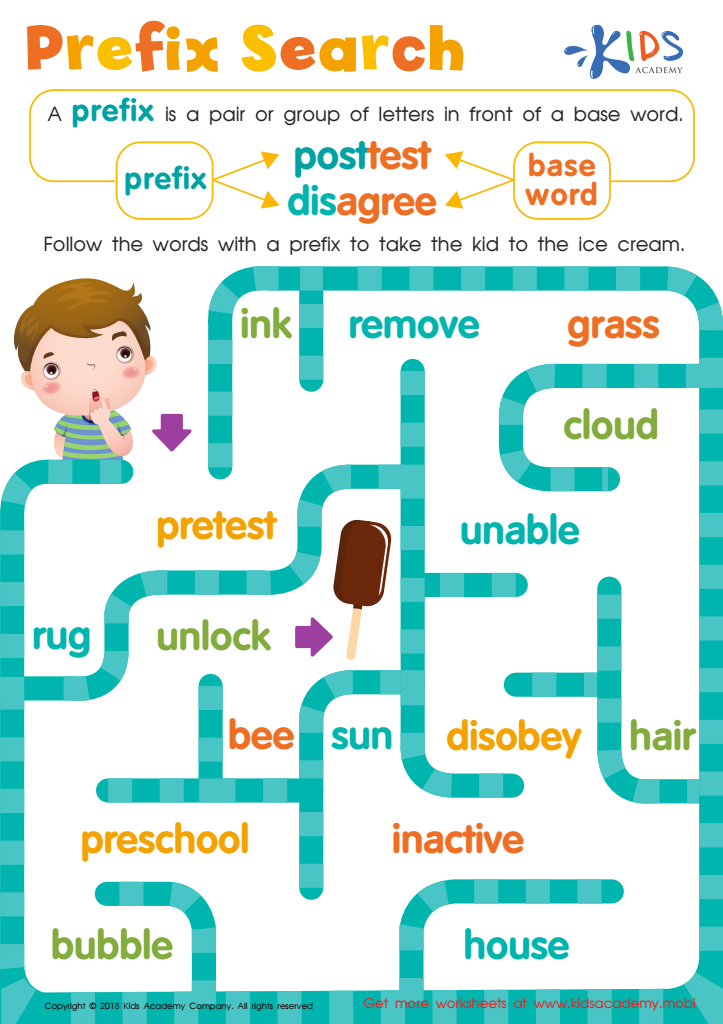
Reading: Prefix Search Worksheet
Maze your way through prefixes! This worksheet helps students practice reading new words with a prefix and figuring out the base word. An understanding of prefixes gives students the skills to comprehend new words. A fun and useful activity for the reading classroom!
 Assign to My Students
Reading: Prefix Search Worksheet
Worksheet
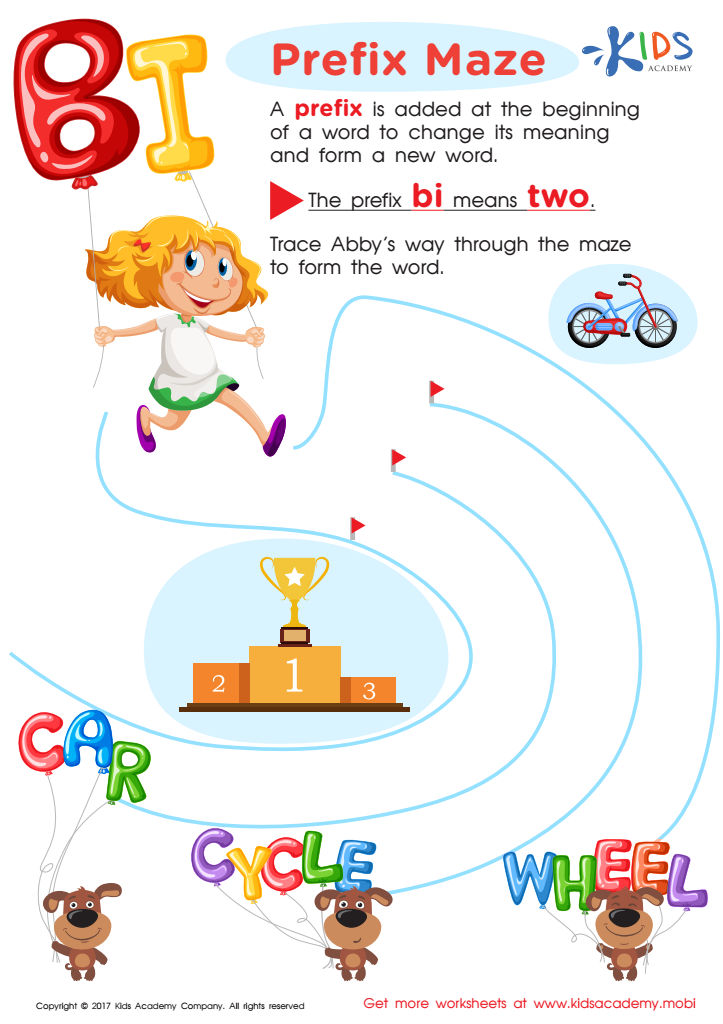
Prefix Bi Words Worksheet
Help "bi" find its root word in this fun and colorful prefix worksheet! Your child will learn how words are built while having a great time!
Prefix Bi Words Worksheet
Worksheet
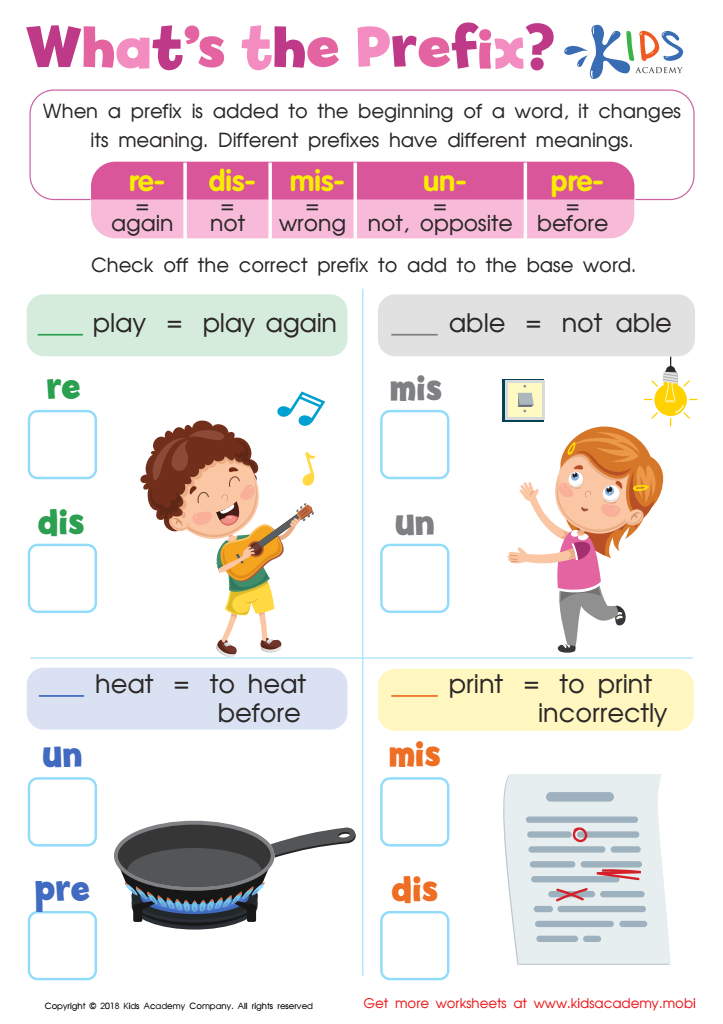
Reading: What Is the Prefix Worksheet
This worksheet helps children learn about prefixes by matching pictures and base words with the correct prefix. Learning these prefixes and their meanings is essential for reading and vocabulary comprehension. Use this free download to check your students' understanding.
Reading: What Is the Prefix Worksheet
Worksheet
Join Kids Academy for Free
Who is primarily going to use this learning content?







Understanding prefixes is crucial for children aged 7-8, as it significantly enhances their vocabulary and reading comprehension skills. At this developmental stage, students are beginning to encounter more complex texts, and knowing common prefixes helps them decode unfamiliar words. For instance, if a child understands that the prefix "un-" means "not," they can infer the meaning of words like "unhappy" or "uncertain" without needing a dictionary. This boosts their confidence and motivation to read more independently.
Moreover, a solid grasp of prefixes contributes to better spelling and writing skills. When children recognize that adding a prefix to a root word alters its meaning, they can manipulate language more effectively, leading to improved written communication. This foundational skill is also a stepping stone to understanding more advanced language concepts, such as suffixes and root words, which will be essential in later grades.
For parents and teachers, fostering an environment where prefix understanding is emphasized can also have long-term academic benefits, setting the stage for successful learning in subjects like science and social studies, where specialized vocabulary becomes increasingly important. It cultivates a proactive approach to learning, helping children become adept problem-solvers and critical thinkers.








