Recognizing equal parts Worksheets for Ages 7-8
3 filtered results
-
From - To
Help your 7-8 year old grasp foundational math concepts with our "Recognizing Equal Parts" worksheets. These engaging and educational printables are designed to enhance understanding of fractions and equal division. Through fun activities and exercises, kids will learn to identify, color, and compare equal parts of shapes and objects. Aligned with curriculum standards, our worksheets support parents and teachers in providing key skills necessary for future math success. Perfect for both classroom and home use, these resources make learning fractions an enjoyable experience. Boost your child's confidence in math with our expertly crafted worksheet collection.
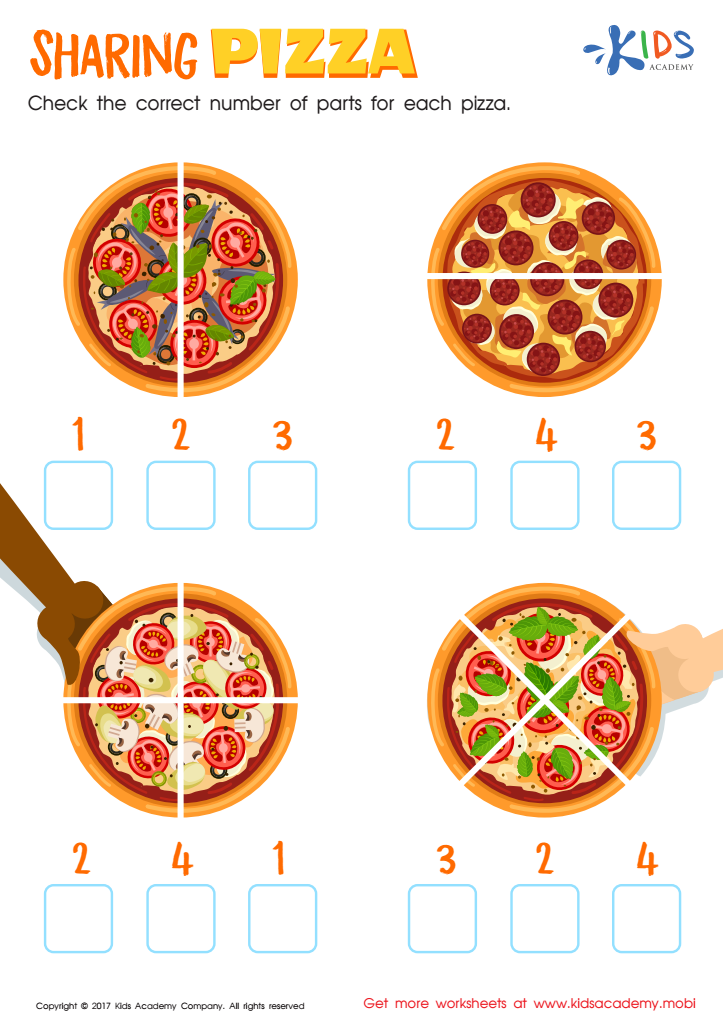
Sharing Pizza Worksheet
 Assign to My Students
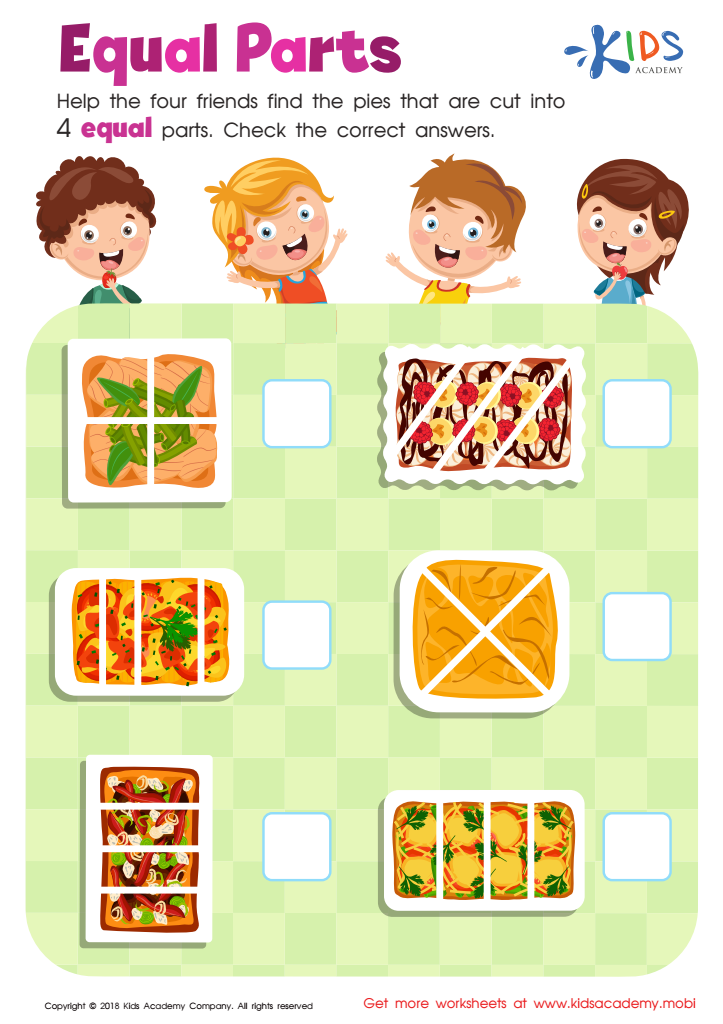
Equal Parts: Food Worksheet




.jpg)
Recognizing equal parts is a foundational math skill that sets the stage for a child's understanding of fractions, geometry, and other mathematical concepts. For children aged 7-8, mastering this skill has several critical benefits.
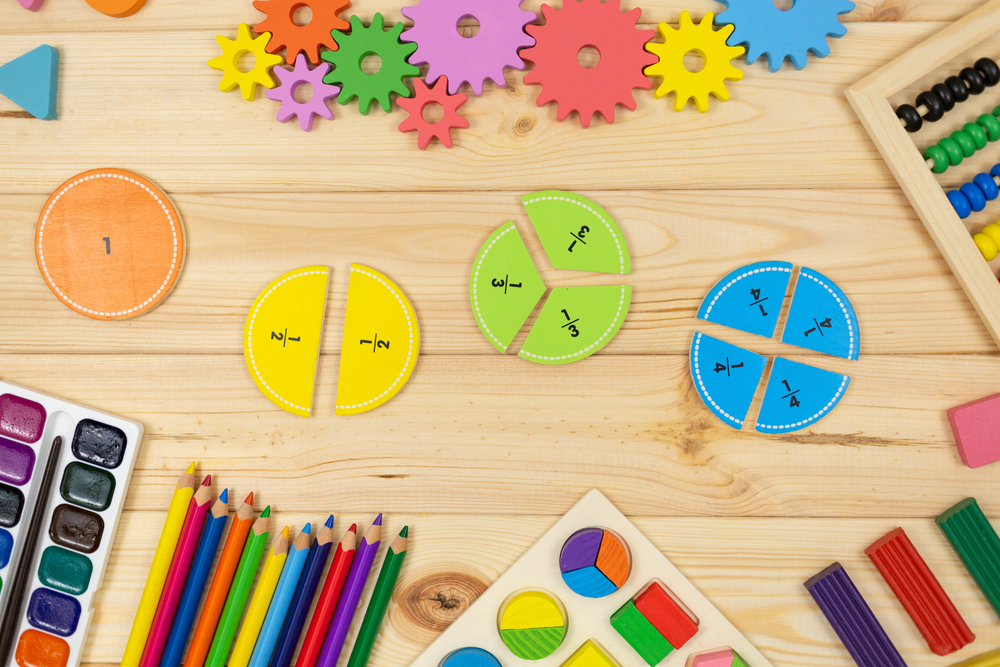
First, it promotes mathematical literacy by helping children understand that dividing objects or sets into equal parts means each part has the same value. This concept is essential when they encounter fractions, such as understanding that 1/2 is dividing something into two equal portions.
Second, it builds problem-solving skills. Recognizing and creating equal parts requires a child to think critically and spatially, developing their ability to analyze, visualize, and approach tasks methodically. These are vital skills not just in math, but across all subjects and everyday life.
Third, it links to real-world applications. Children frequently encounter situations where they need to divide things equally, like sharing toys, food, or space. Being proficient in recognizing equal parts aids in fair and effective distribution, fostering cooperation and fairness in social interactions.
Lastly, early recognition and understanding of equal parts can boost a child’s confidence in math, creating a solid base for future topics. When parents and teachers emphasize the importance of this skill, they pave the way for the child’s ongoing success in mathematics and beyond.








