
Sound differentiation Worksheets for Ages 7-8
3 filtered results
Difficulty Level
Grade
Age
-
From - To
Subject
Activity
Standards
Boost your child's auditory skills with our engaging Sound Differentiation Worksheets designed for ages 7-8! These worksheets are crafted to enhance listening abilities and phonemic awareness through fun exercises that challenge young learners. With a variety of activities, including sound identification, matching, and categorization, your child will practice discerning different sounds in a playful way. Perfect for both independent practice and classroom use, these worksheets provide valuable reinforcement of essential literacy skills. Watch as your child gains confidence in their listening and discrimination abilities, setting a strong foundation for future reading success. Explore the joy of learning with our engaging resources today!
Favorites
With answer key
Interactive
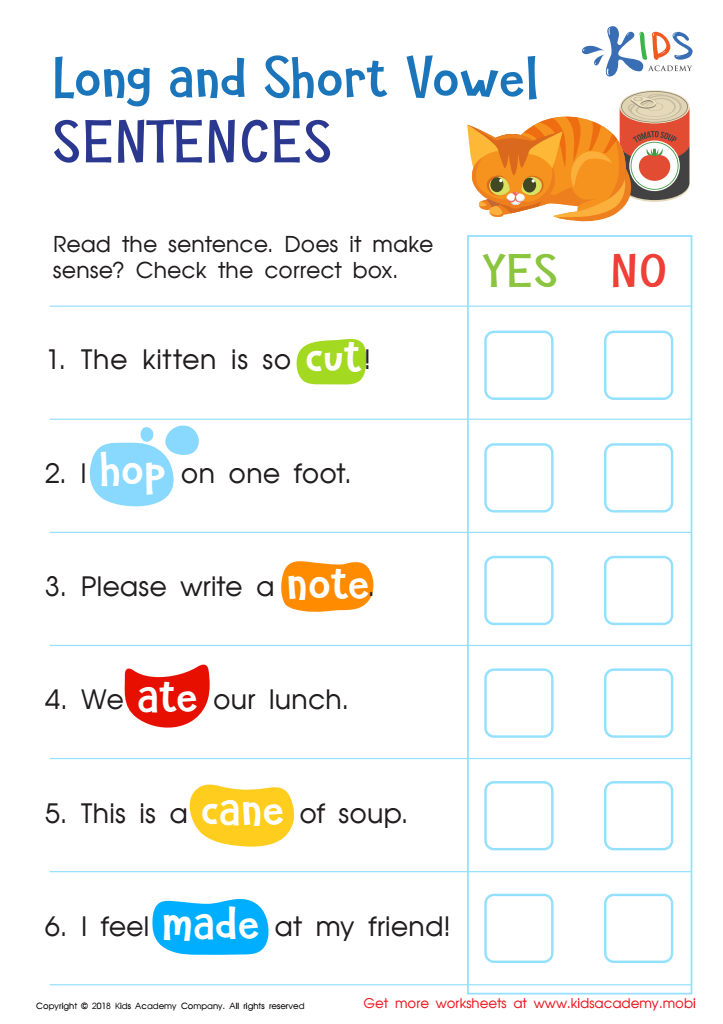
Long and Short Vowel Sentences: Assessment Worksheet
This printable worksheet helps kids practice differentiating between short and long vowel sounds. They'll use context clues to figure out which words make sense in simple sentences. A great way to build reading and writing skills!
 Assign to My Students
Long and Short Vowel Sentences: Assessment Worksheet
Worksheet
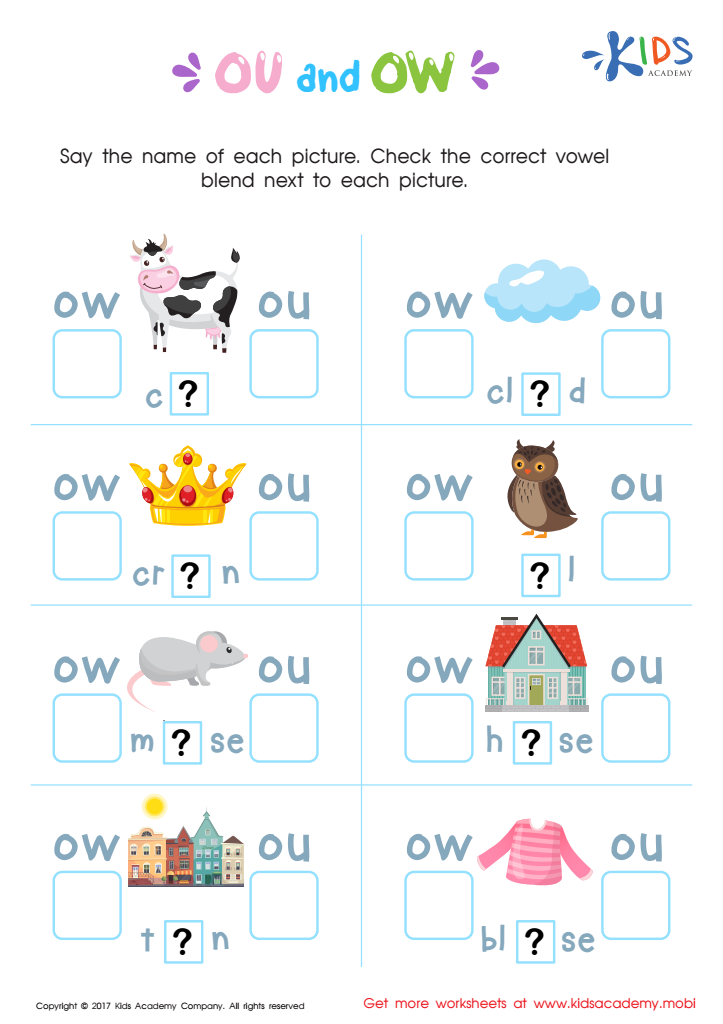
OU and OW Words Worksheet
Enhance your child's reading and spelling with this ou and ow words worksheet! Fun pictures and common words make mastering the diphthongs ou and ow easy and enjoyable.
OU and OW Words Worksheet
Worksheet
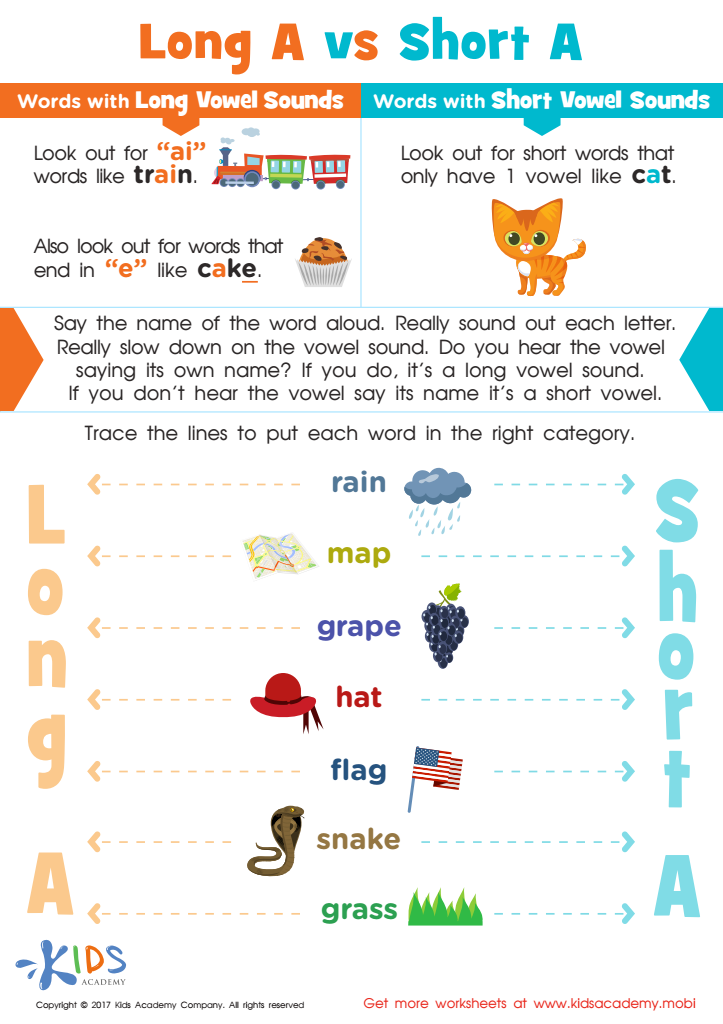
Long and Short Vowel A Spelling Worksheet
Help your child learn tricky spellings by focusing on vowel sounds. Read about each one, see examples and work through the long and short vowel A worksheet. Your child will be able to sound out words to determine if the vowel is long or short.
Long and Short Vowel A Spelling Worksheet
Worksheet
Join Kids Academy for Free
Who is primarily going to use this learning content?








Sound differentiation, or the ability to recognize and distinguish between different sounds, is crucial for children aged 7-8 as it lays the foundation for critical literacy skills. At this age, children are often transitioning from learning to read to reading to learn, making sound differentiation essential for phonemic awareness, which significantly impacts their reading ability. Understanding sounds helps children decode words more effectively, improving their reading fluency and comprehension.
Moreover, addressing sound differentiation fosters better spelling skills. By recognizing distinct sounds in words, children can better understand patterns and rules, aiding them in spelling correctly. This skill is also vital for oral communication, enhancing listening skills, vocabulary acquisition, and pronunciation.
Equipping children with sound differentiation skills can bolster their self-esteem and enjoyment of learning, thereby cultivating a lifelong appreciation for reading and communication. For parents and teachers, recognizing the significance of sound differentiation means investing in their child's educational journey, leading to greater academic success and improved literacy outcomes. By actively engaging in sound differentiation activities, they can support children in developing these essential skills, ensuring a solid foundation for future learning. Ultimately, this will empower children to thrive in their educational experiences and beyond.








