Spatial Orientation Worksheets for Ages 7-8
5 filtered results
-
From - To
Unlock the world of Spatial Orientation for 7-8 year-olds with our expertly crafted worksheets. Kids Academy provides fun, engaging exercises designed to enhance your child's spatial reasoning skills, crucial for geometry and everyday problem-solving. Our printable worksheets offer a variety of puzzles and activities that sharpen directional awareness and spatial visualization. Each task is tailored to inspire learning through play, making it perfect for home or classroom use. Start boosting your child's cognitive abilities and confidence in math with our Spatial Orientation Worksheets, and watch them excel in their educational journey!
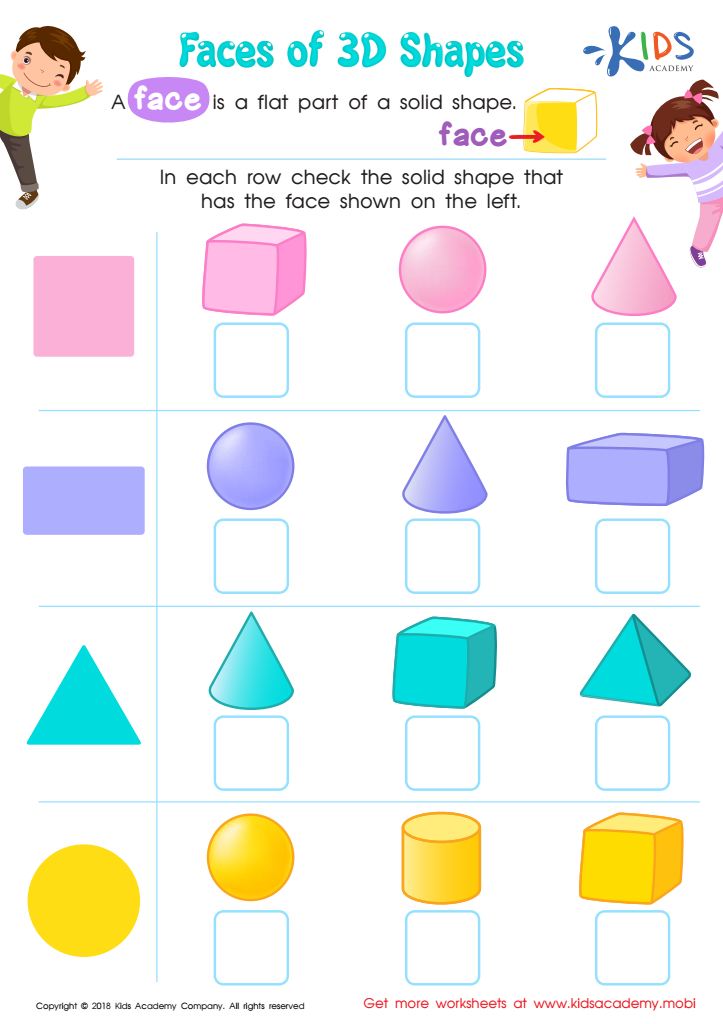
Faces of 3D Shapes Worksheet
 Assign to My Students
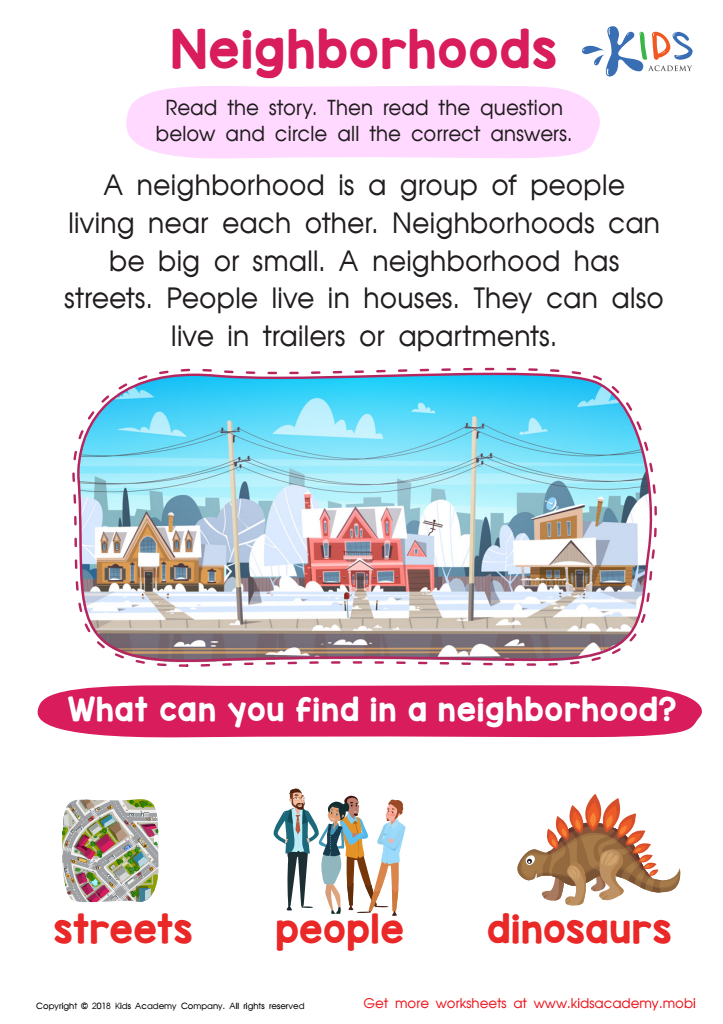
Neighborhoods Worksheet
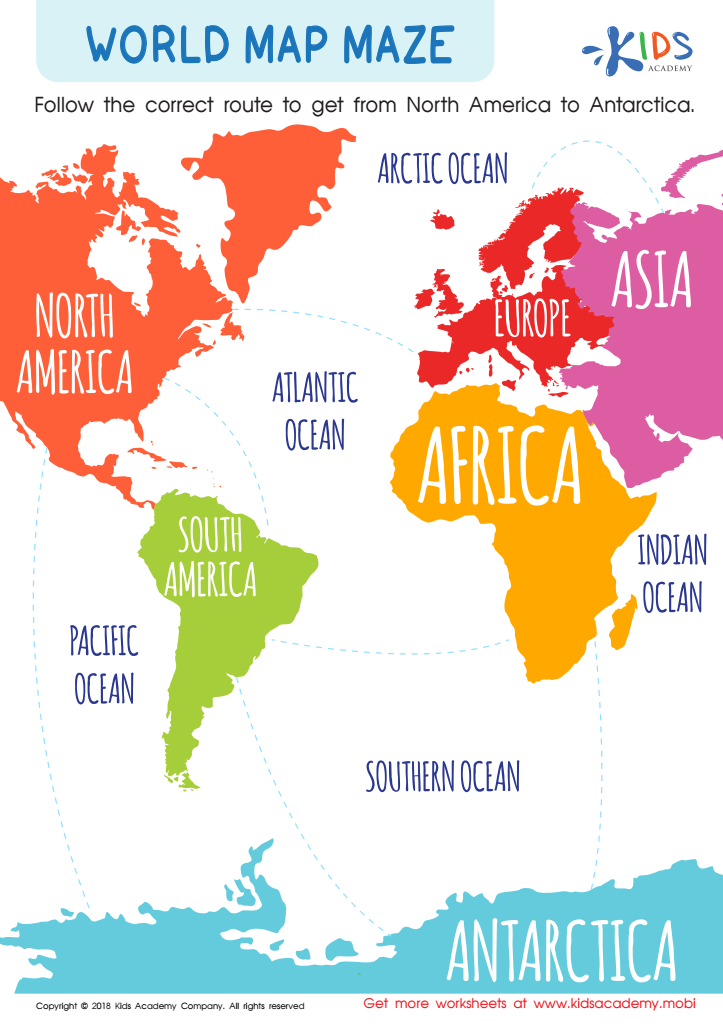
World Map Maze Worksheet
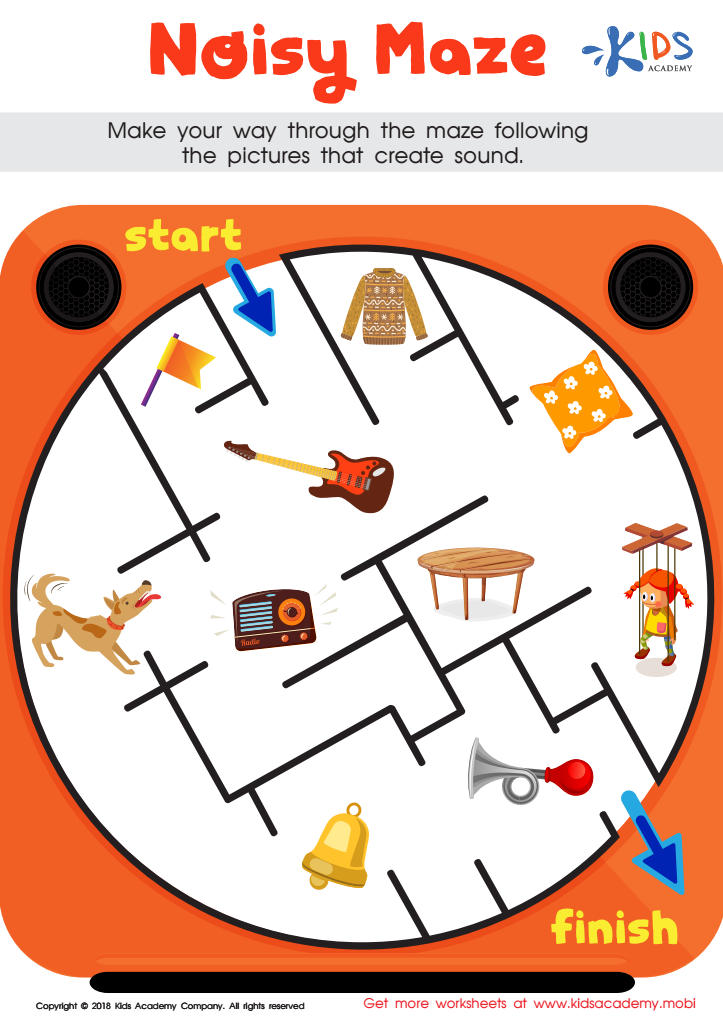
Noisy Maze Worksheet








Spatial orientation is crucial for the cognitive development of children aged 7-8, and it’s important for parents and teachers to support this aspect of learning. At this developmental stage, children are refining their understanding of how objects and spaces relate to one another, which is foundational for math, science, reading, and other subjects.
Firstly, strong spatial orientation skills help children grasp mathematical concepts like geometry and measurement. Understanding shapes, sizes, and how objects fit together develops their problem-solving abilities. For example, being able to visualize how pieces fit into a puzzle enhances their spatial reasoning and can improve performance in subjects requiring logical analysis.
Additionally, spatial skills are critical for understanding and interpreting maps, directions, and even in everyday tasks like organizing their schoolwork or room. Contextual awareness enables children to follow complex instructions and improves their ability to navigate their environment confidently.
Moreover, spatial orientation supports fine motor skills and handwriting. Manipulating objects with precision, such as arranging blocks or drawing shapes, directly translates to better hand-eye coordination.
Teachers and parents who encourage activities like building with blocks, drawing maps, or playing spatially oriented games contribute significantly to a child's mental agility and creativity. These skills not only assist academic achievement but also lay the groundwork for future success in various fields like engineering, architecture, and the arts. Nurturing spatial orientation at this age equips children with essential tools for lifelong learning.








