Story analysis Worksheets for Ages 7-8
3 filtered results
-
From - To
Unlock the world of imagination and critical thinking for your 7-8 year olds with our Story Analysis Worksheets. Designed specifically for young learners, these worksheets help children dissect narrative elements, understand character motivations, and identify key story components. Our engaging activities promote comprehension and analytical skills essential for budding readers and writers. Perfect for both classroom use and at-home learning, these printable sheets make story analysis interactive and fun. Help your child excel in reading proficiency and foster a love for literature with our expertly crafted resources. Experience the joy of insightful learning today!
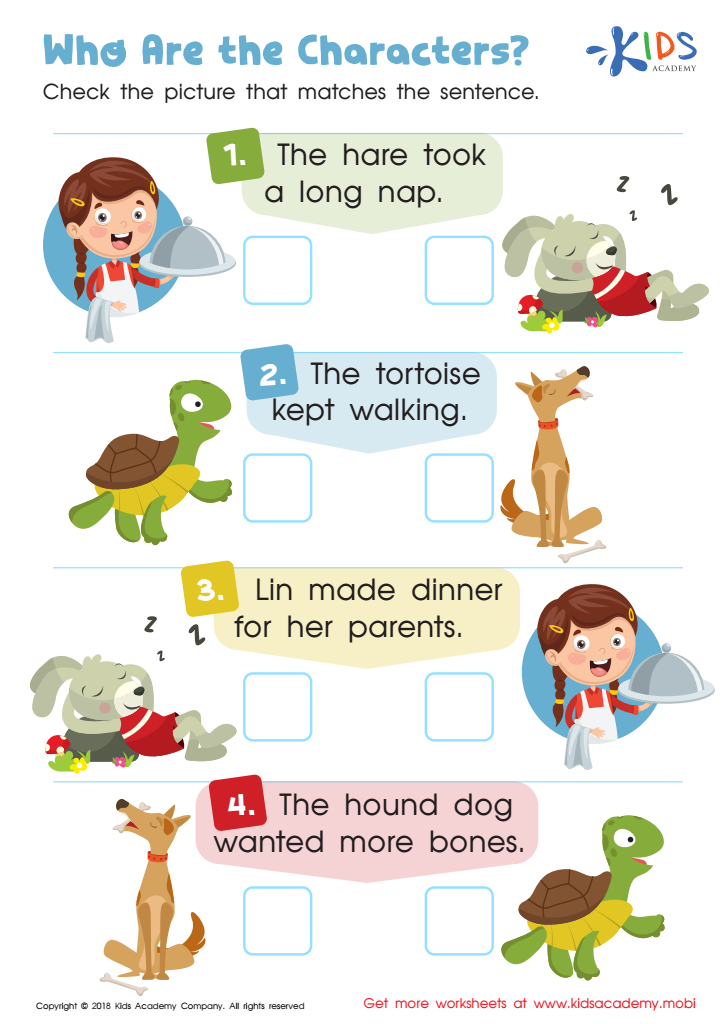
Who Are The Characters Worksheet
 Assign to My Students
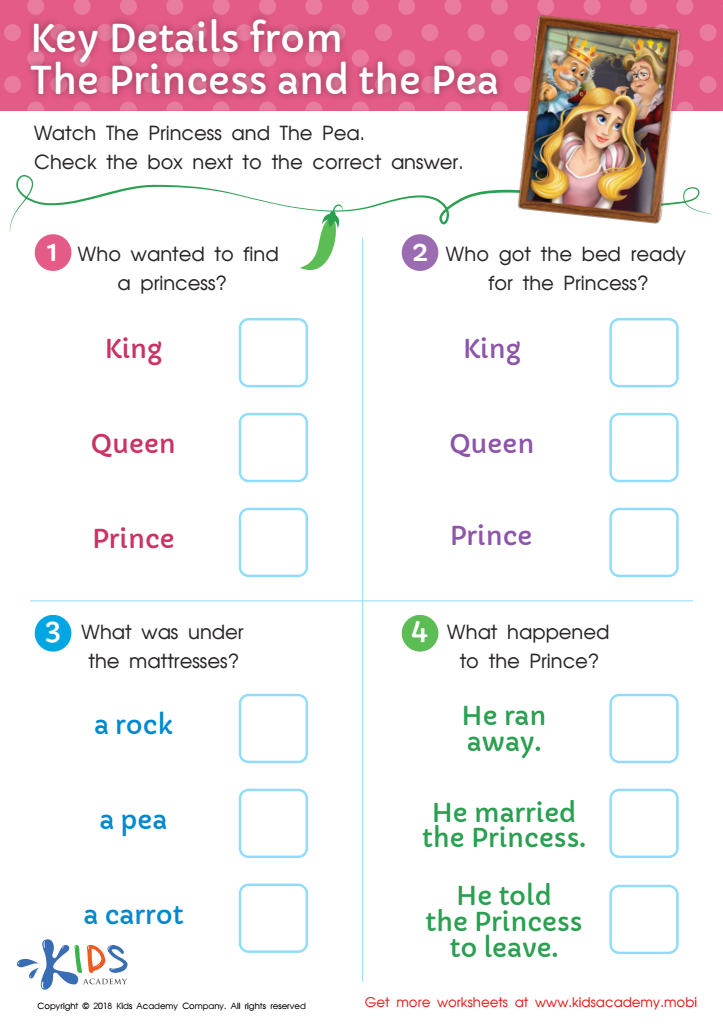
Key Details from the Princess and the Pea Worksheet
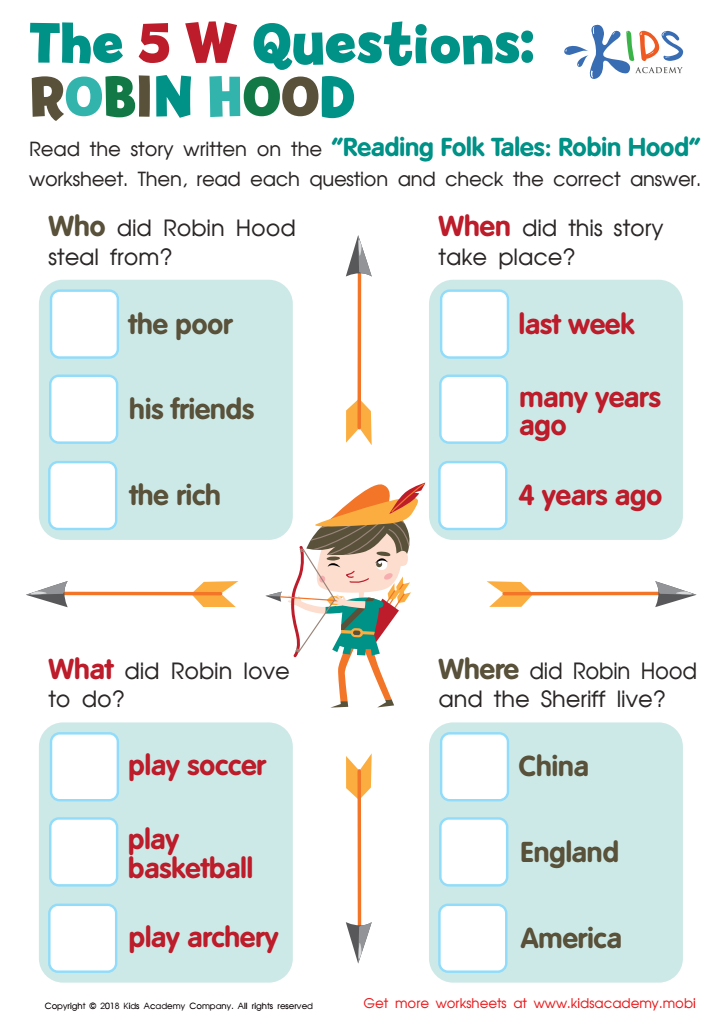
The 5 W Questions: Robin Hood Worksheet







Story analysis is pivotal for children aged 7-8 because it fosters critical thinking and comprehension skills that are foundational to lifelong learning. At this age, children transition from 'learning to read' to 'reading to learn', and engaging them in story analysis nurtures their ability to grasp deeper meanings, make inferences, and identify narrative structures.
Firstly, analyzing stories helps children expand their vocabulary and improve language skills. Discussing character traits, settings, and plots introduces them to new words in context, which can enhance their understanding and usage of language.
Secondly, story analysis cultivates empathy and emotional intelligence. By examining characters' actions, feelings, and motivations, children learn to identify and appreciate perspectives different from their own. This can lead to better social interactions and relationships as they grow.
Thirdly, this exercise aids in developing cognitive skills such as sequencing, identifying cause and effect, and recognizing themes. These skills are essential for academic success across all subjects.
For parents and teachers, encouraging story analysis is a gateway to engaging children in meaningful conversations, honing their reasoning abilities, and stimulating their imagination. Ultimately, it prepares children for complex thinking and problem-solving, making it a crucial element in their educational development.








