Subtraction skills Worksheets for Ages 7-8 - Page 2
26 filtered results
-
From - To
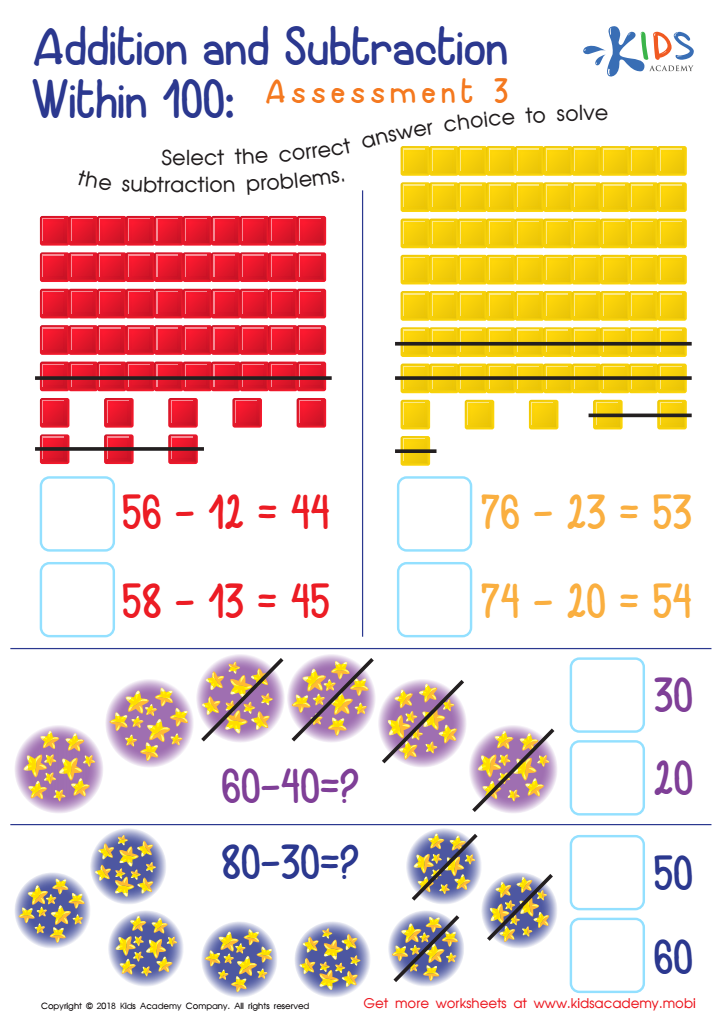
Addition and Subtraction Within 1: Assessment 3 Worksheet
 Assign to My Students
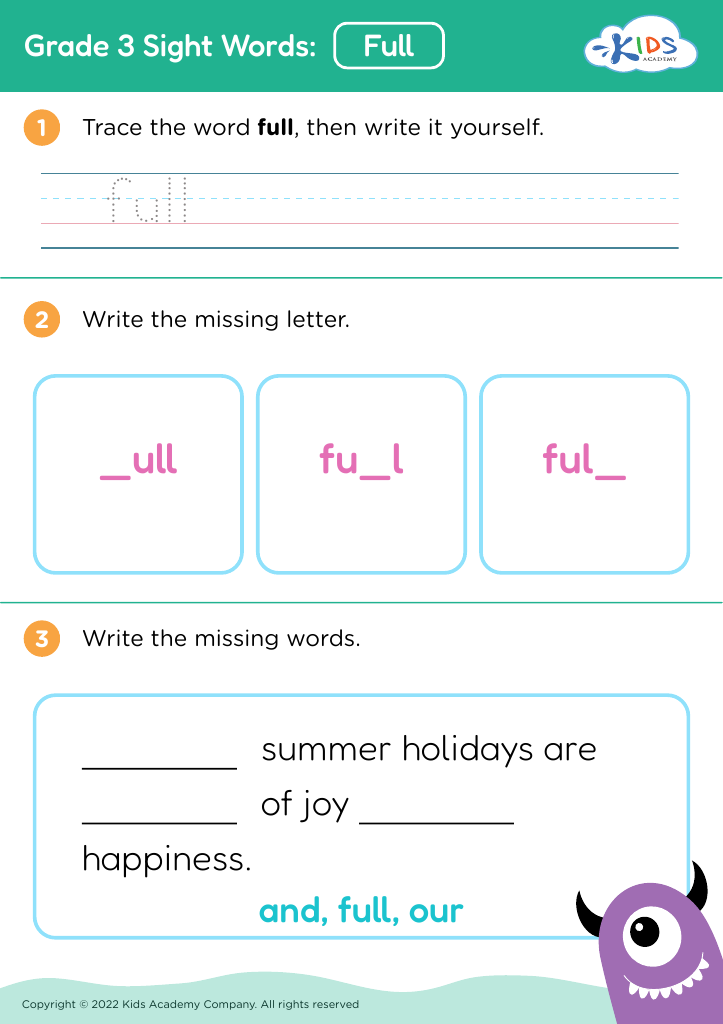








Subtraction skills are fundamental for children aged 7-8 as they form the backbone for various aspects of learning both in academics and everyday life. At this age, kids are transitioning from basic arithmetic to more complex mathematical concepts. Understanding subtraction not only aids fluency in math but also fosters essential problem-solving skills. For instance, subtraction is crucial for understanding the relationships between numbers, grasping place value, and performing more advanced operations such as multiplication and division.
Moreover, proficiency in subtraction enhances a child’s ability to manage real-life situations that involve taking away, comparing quantities, or understanding deficits. This could be as simple as determining change while shopping, figuring out how many more days until a significant event, or sharing things fairly with friends and family.
From a developmental perspective, early mastery of subtraction leads to better confidence in math, reducing anxiety and creating a positive attitude towards the subject. It also underpins logical thinking and cognitive flexibility, which are useful across various subjects and in everyday decision-making. Given its wide applicability and foundational nature, parents and teachers should prioritize boosting subtraction skills to prepare children for future academic challenges and practical life scenarios.








