Time calculation skills Worksheets for Ages 7-8
3 filtered results
-
From - To
Enhance your child's understanding of time with our engaging Time Calculation Skills Worksheets designed for ages 7-8. These interactive worksheets help young learners master essential time-related concepts, including reading clocks, understanding time intervals, and solving real-world problems involving time. With colorful illustrations and age-appropriate activities, kids will find these worksheets enjoyable and educational. Our resources promote critical thinking and boost confidence in time management skills, laying a strong foundation for future math concepts. Perfect for both classroom and home learning, our Time Calculation Skills Worksheets will make time-telling a fun and exciting adventure for your little ones. Explore now!
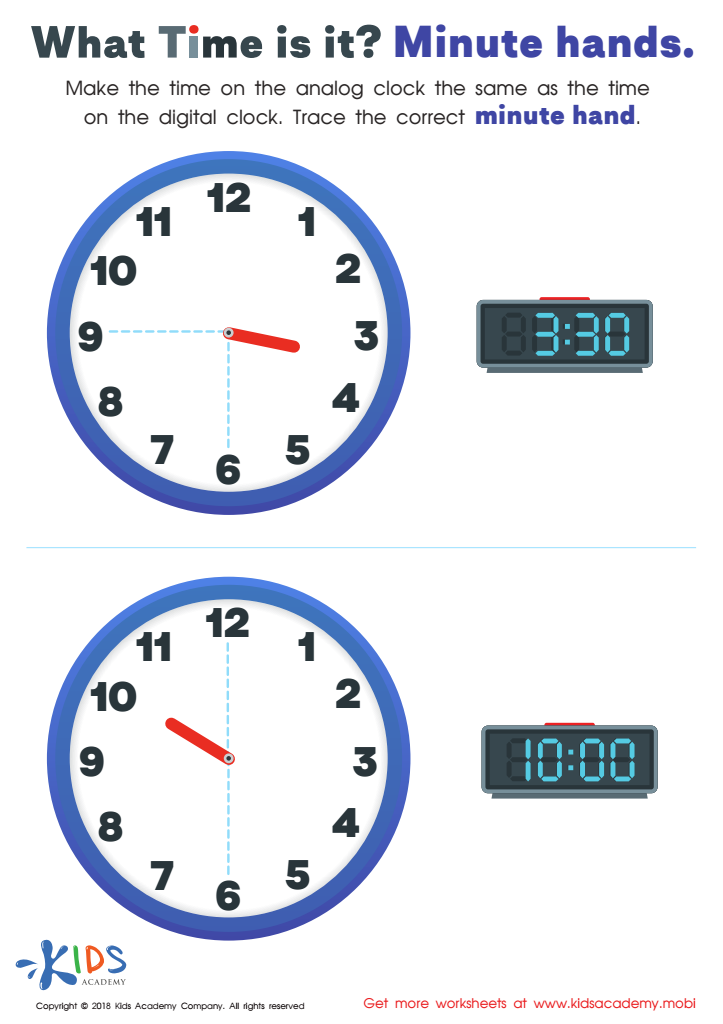
What Time Is it? Minute Hands Worksheet
 Assign to My Students
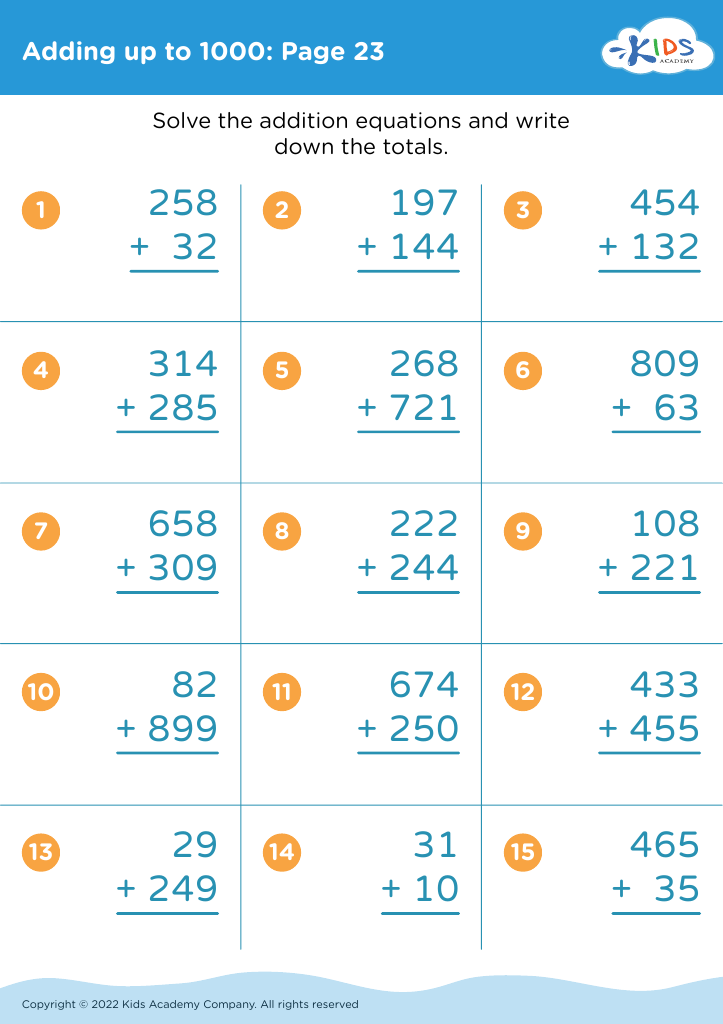
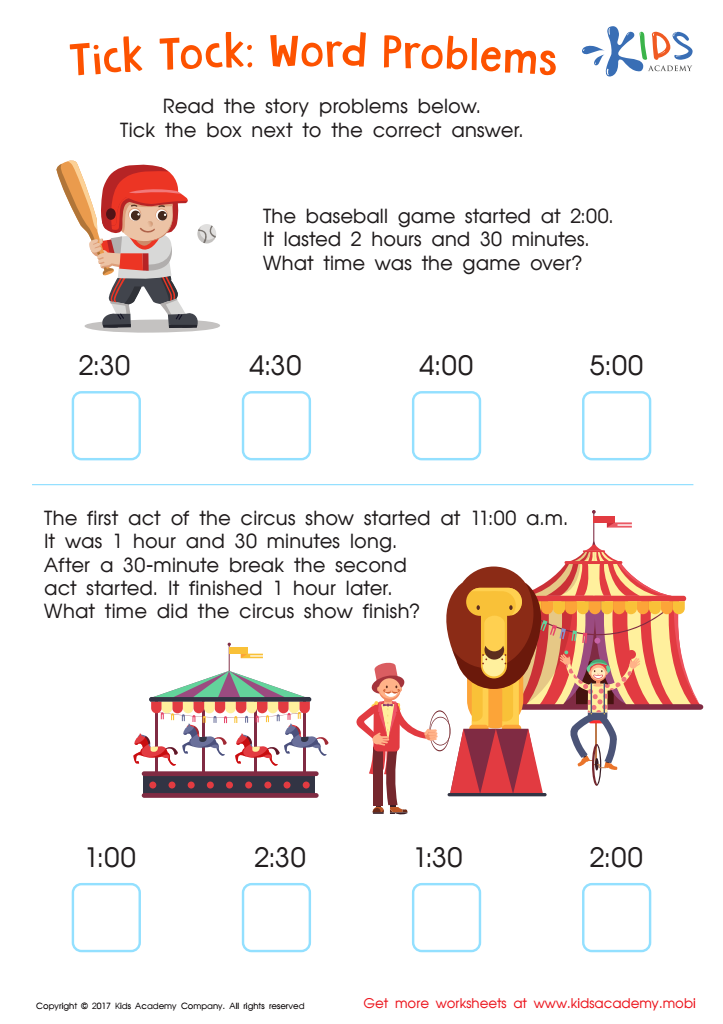
Tick Tock Word Problems Time Worksheet








Time calculation skills are essential for children aged 7-8 as they form a foundational component of daily life and academic success. At this age, children are increasingly learning to read clocks, understand the concept of time, and manage their daily routines. These skills not only enhance their ability to be punctual but also encourage responsibility and independence.
Moreover, proficiency in time calculation intersects with various subject areas, including math, reading, and science. Understanding how to tell time helps reinforce addition and subtraction as they calculate durations and intervals. By mastering these skills, children foster critical thinking and problem-solving abilities.
Time management also plays a significant role in developing social skills. Being aware of time encourages children to consider others' schedules and adhere to commitments, such as arriving at school or participating in community activities. For parents and teachers, nurturing these skills helps promote a child's cognitive development, self-esteem, and social interaction, maintaining an effective approach to learning.
In conclusion, time calculation skills equip children with essential tools for both academic proficiency and life skills, making it vital for educators and parents to prioritize their development.








