Time recognition Worksheets for Ages 7-8
6 filtered results
-
From - To
Our Time Recognition Worksheets for Ages 7-8 are designed to make learning to tell time fun and engaging. These worksheets help children master reading clocks, understanding AM and PM, and solving time-related problems through colorful and interactive activities. With a variety of exercises, your child can practice and reinforce their time-telling skills both in digital and analog formats. These worksheets are perfect for both classroom and home use, offering an excellent balance of challenge and enjoyment. Equip your child with the essential skills to confidently read time and manage their daily schedules!
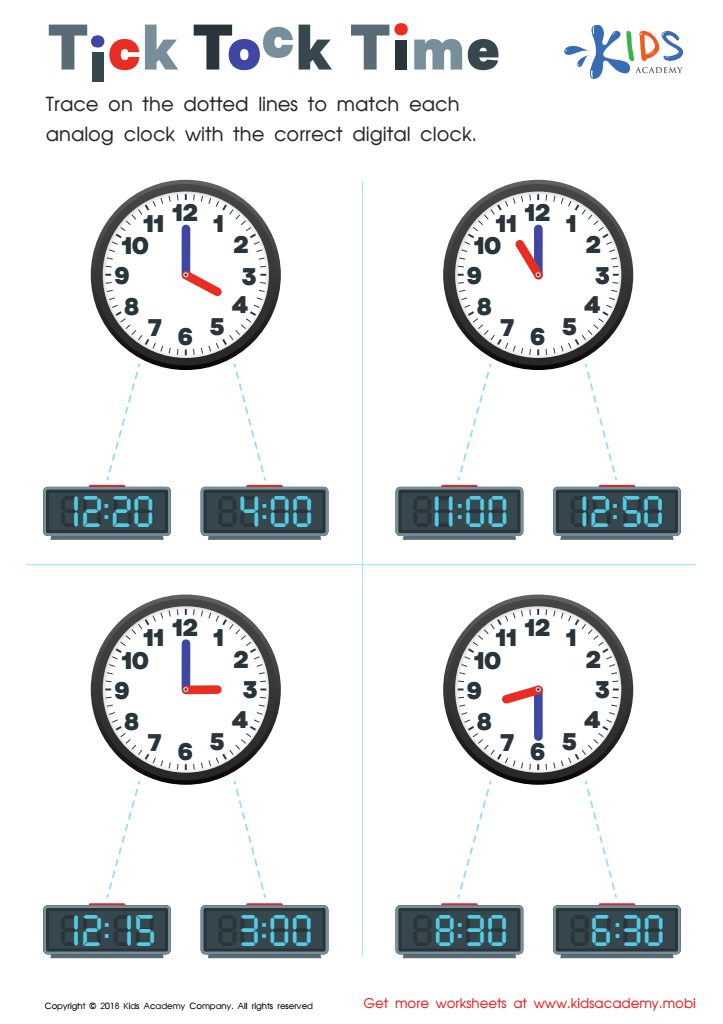
Tick Tock Time Worksheet
 Assign to My Students
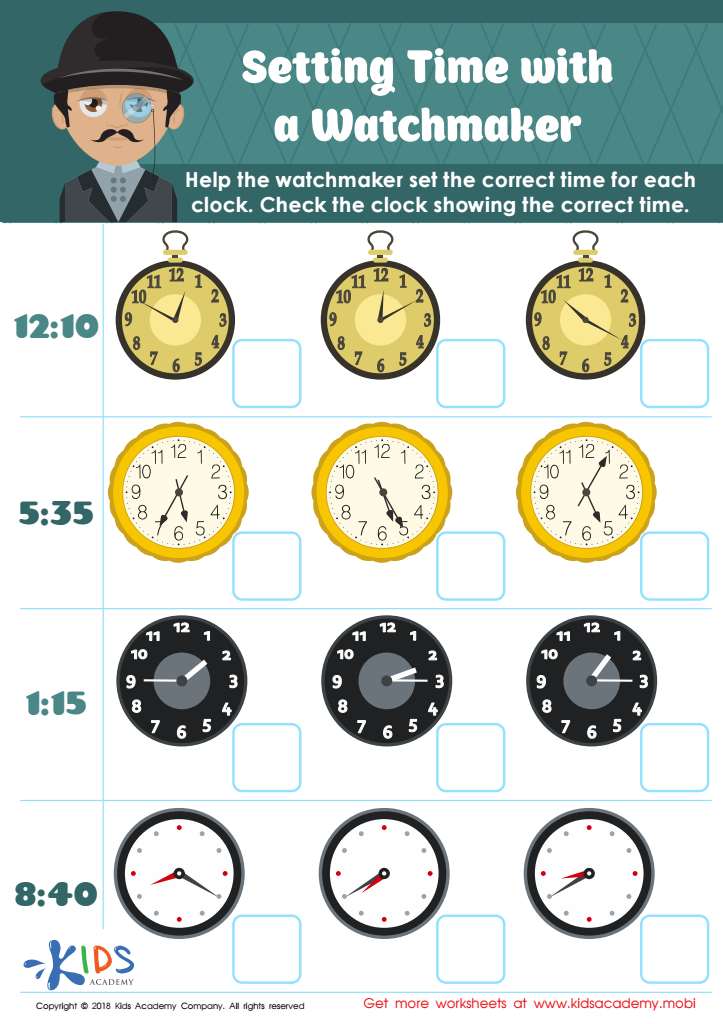
Setting Time with Watchmaker Worksheet
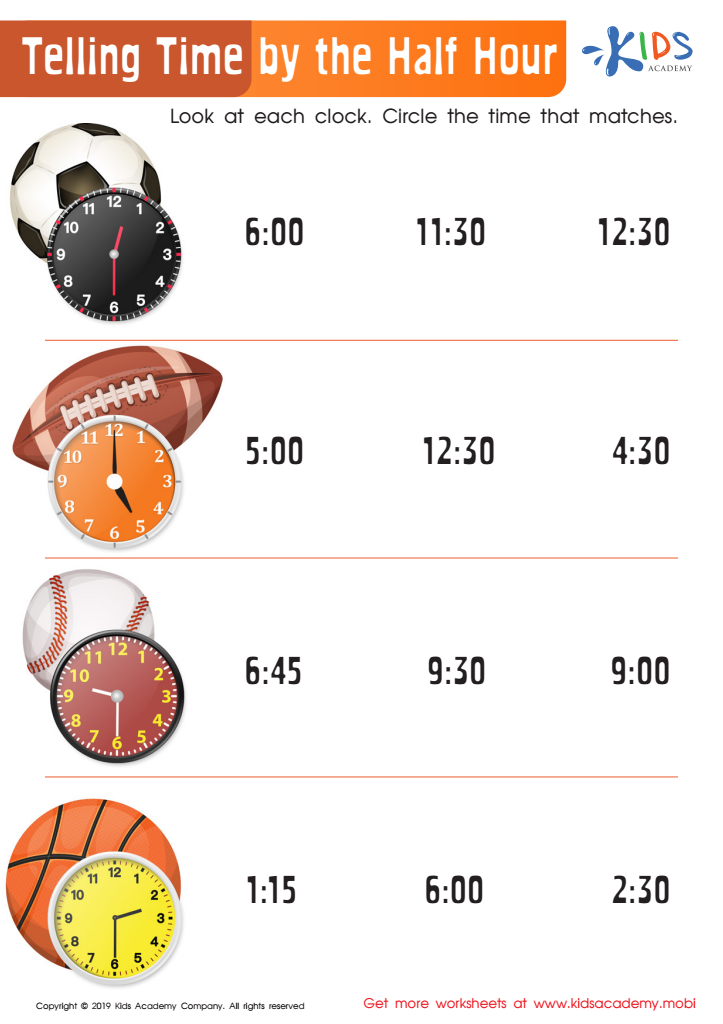
Telling Time by the Half Hour Worksheet
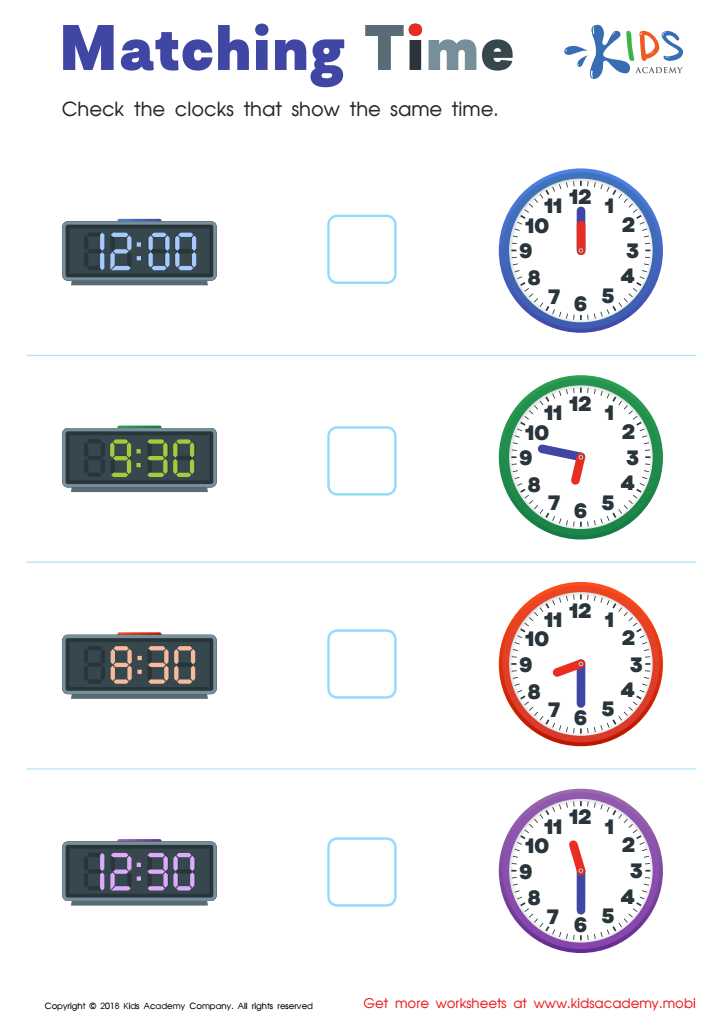
Matching Time Worksheet
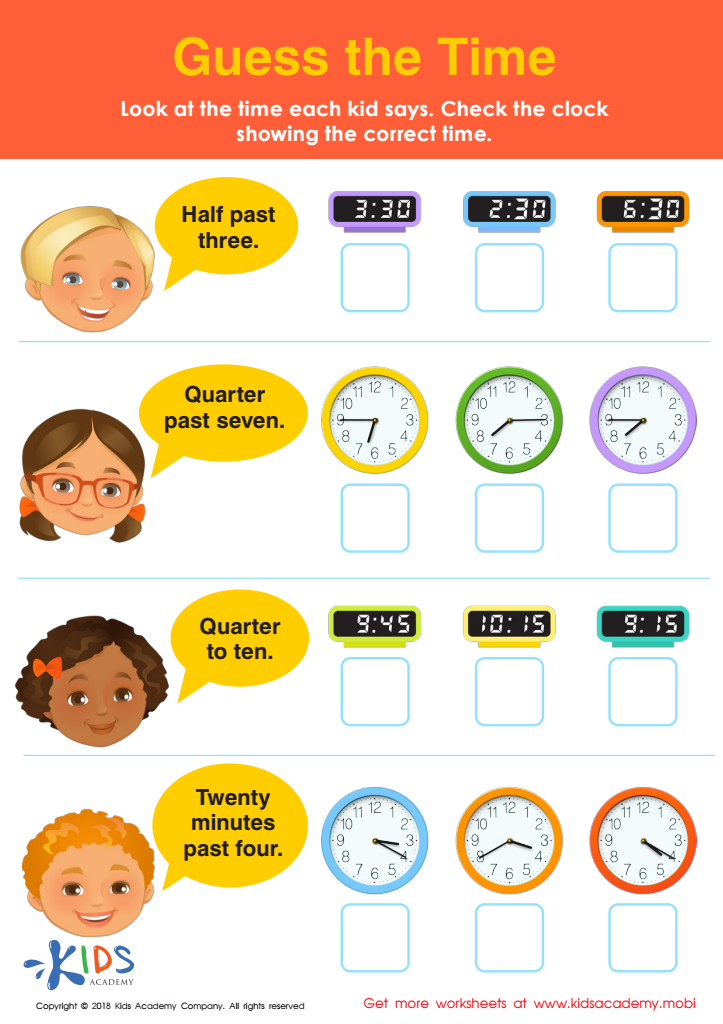
Guess the Time Worksheet
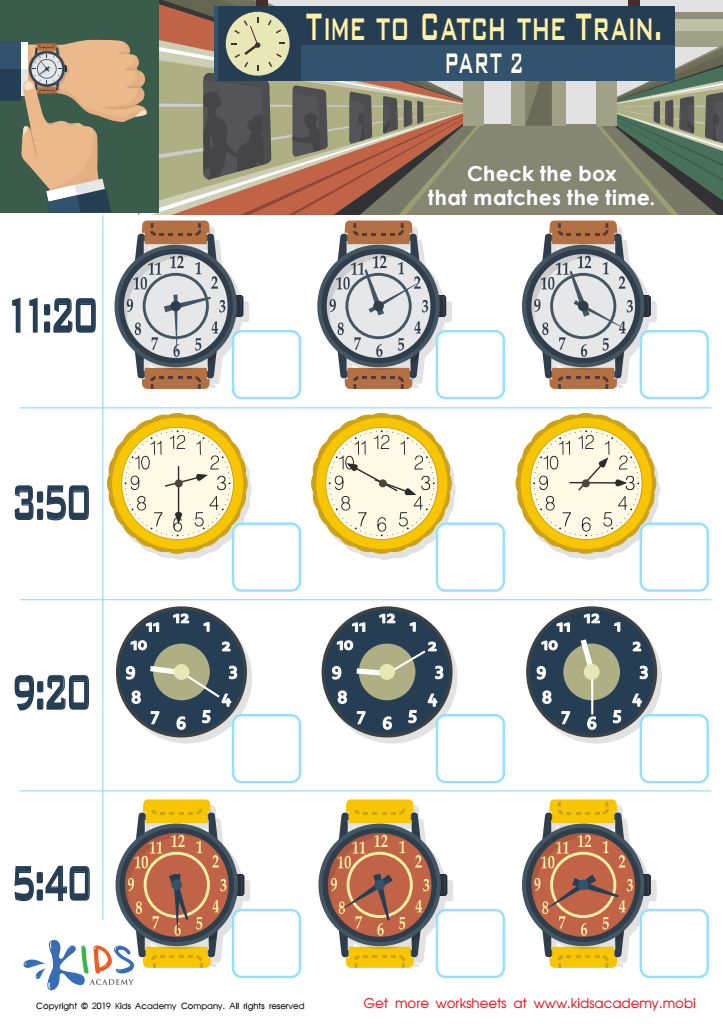
Time to Catch the Train Part 2 Worksheet







Time recognition for children aged 7-8 is an essential skill that parents and teachers should prioritize for several important reasons. At this developmental stage, children start to develop their understanding of routines, sequencing, and the concept of past, present, and future which enhances their cognitive development. Being able to read and understand time helps children manage their daily schedule more effectively, promoting a sense of responsibility and independence. For instance, they gain awareness of the duration of activities like homework, play, and chores, assisting them in balancing their time efficiently.
Moreover, time recognition fosters punctuality, an integral life skill. Children learn the importance of being on time for school, extracurricular activities, and other commitments. This awareness not only is crucial for academic success but also instills discipline and respect for others' time, promoting positive social interaction.
Lastly, understanding time supports mathematical skills. When children grasp concepts of hours, minutes, and seconds, they indirectly enhance their ability with numbers and mathematical reasoning. Engaging in activities like scheduling and time-telling incorporates practical use of math, reinforcing school learning. Therefore, focusing on time recognition for 7-8-year-olds lays a foundation for successful academic performance and essential life skills, making it a critical area of focus for parents and teachers.








