Understanding communities Worksheets for Ages 7-8
3 filtered results
-
From - To
Explore "Understanding Communities Worksheets" designed for children aged 7-8, where young learners embark on an exciting journey to discover the relationships and roles within their communities. These engaging worksheets promote critical thinking and enhance social awareness as students identify community helpers, explore different neighborhoods, and understand the importance of cooperation and teamwork. With a variety of fun activities, including coloring, matching, and reasoning exercises, these resources foster an interactive learning environment. Ideal for teachers and parents, our worksheets encourage children to appreciate the diverse elements that make up their communities while developing essential problem-solving and communication skills.
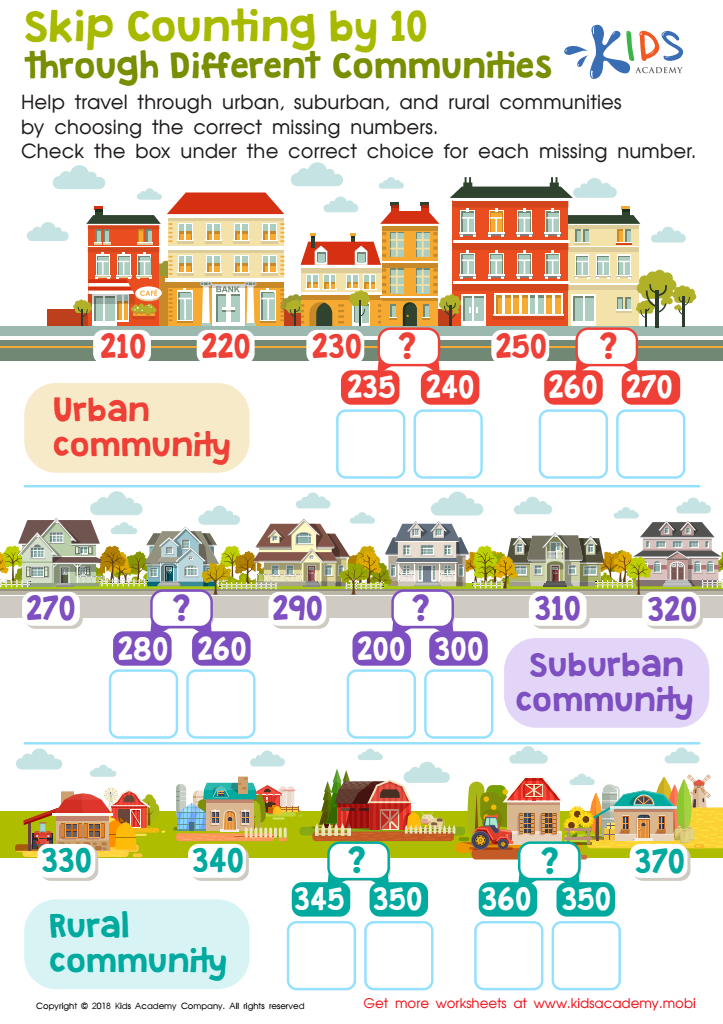
Skip Counting by 10 through Different Communities Worksheet
 Assign to My Students
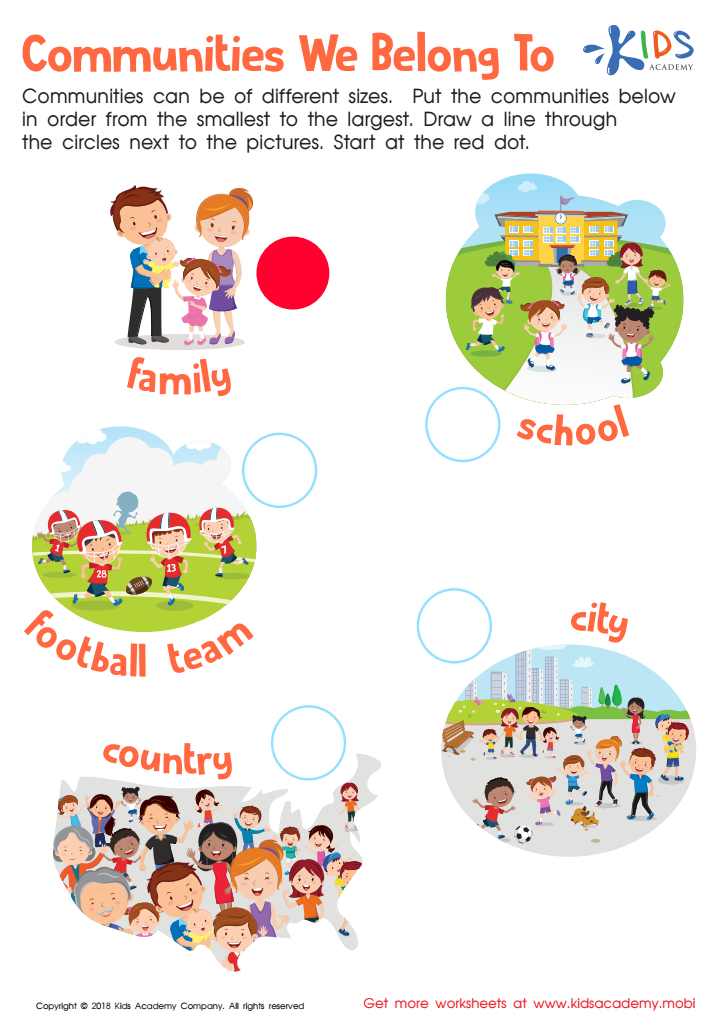
Communities We Belong to Worksheet
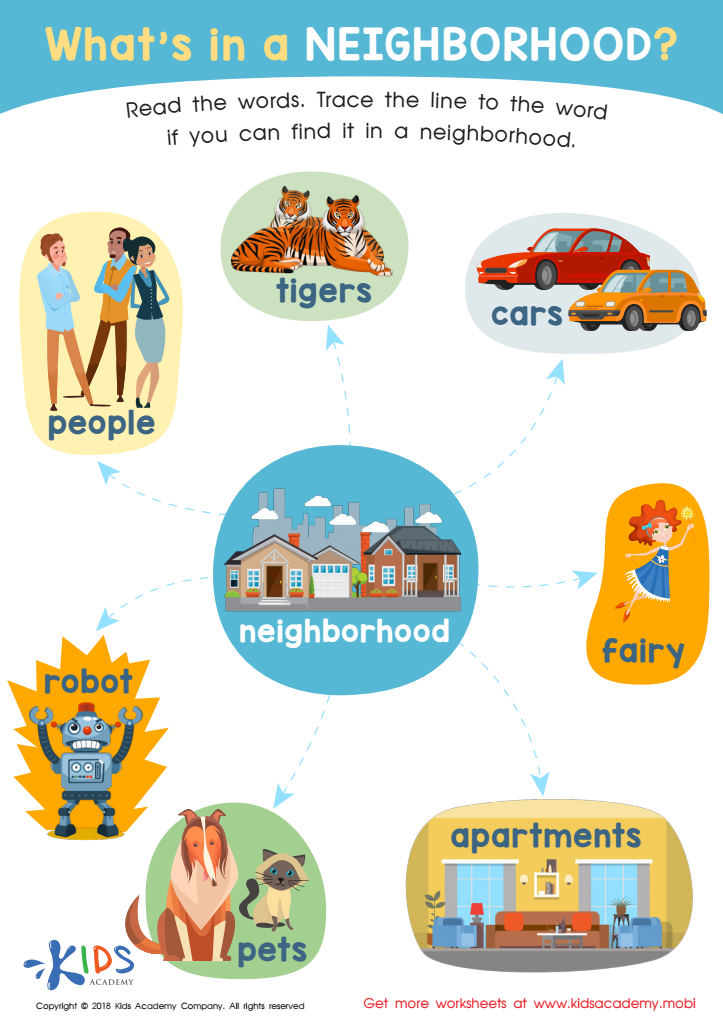
What's in a Neighborhood? Worksheet







Understanding communities is crucial for children aged 7-8 as it lays the foundation for their social awareness and sense of belonging. At this developmental stage, children are beginning to navigate their roles within various groups, including families, schools, and neighborhoods. By exploring the concept of community, children learn about diversity, acceptance, and empathy toward others, which are essential life skills.
For parents and teachers, fostering an understanding of communities promotes civic sense and responsibility in children. It encourages them to appreciate different cultures, traditions, and perspectives, enabling them to grow into individuals who contribute positively to society. School projects, discussions, or activities that emphasize community involvement can reinforce these concepts, allowing children to connect with their surroundings meaningfully.
Moreover, understanding communities can enhance children's problem-solving skills as they recognize communal challenges and brainstorm solutions together. This collaborative learning strengthens teamwork skills that are vital for their personal and academic growth.
In summary, prioritizing community understanding at this age helps cultivate empathetic, informed, and engaged individuals who value cooperation and respect for diverse backgrounds, making it important for both parents and teachers to integrate these lessons into everyday learning.








