Check out this FREE "Understanding fractions" Trial Lesson for age 7-8!

H

Favorites
With answer key
Interactive
  • 7-8
  • Understanding fractions
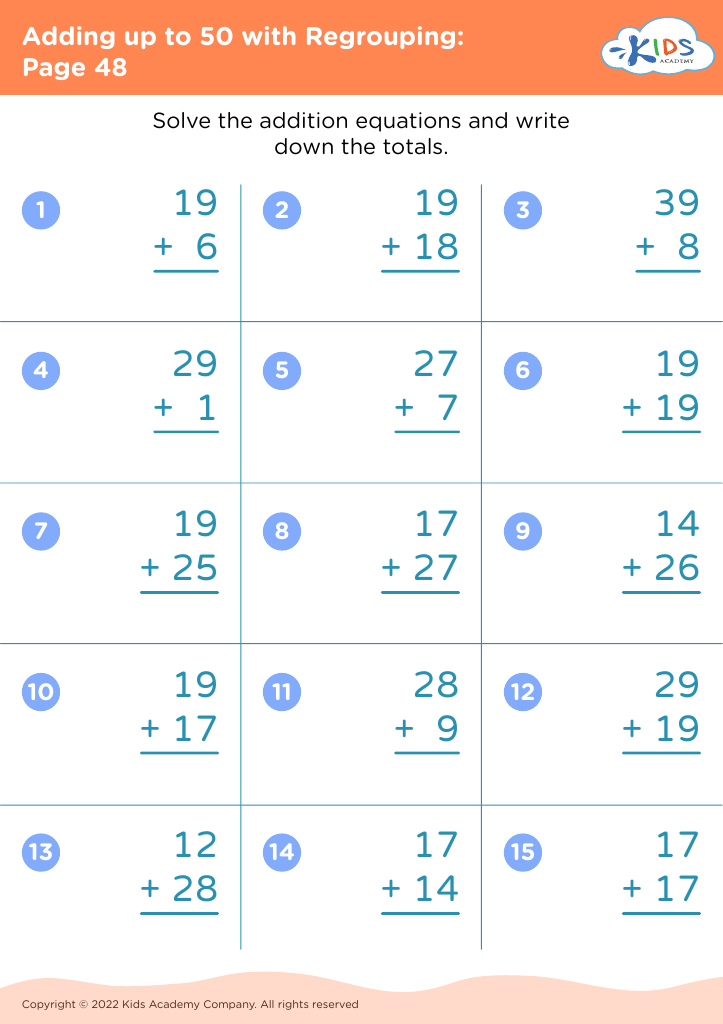
Adding up to 50 with Regrouping: Page 48
Worksheet
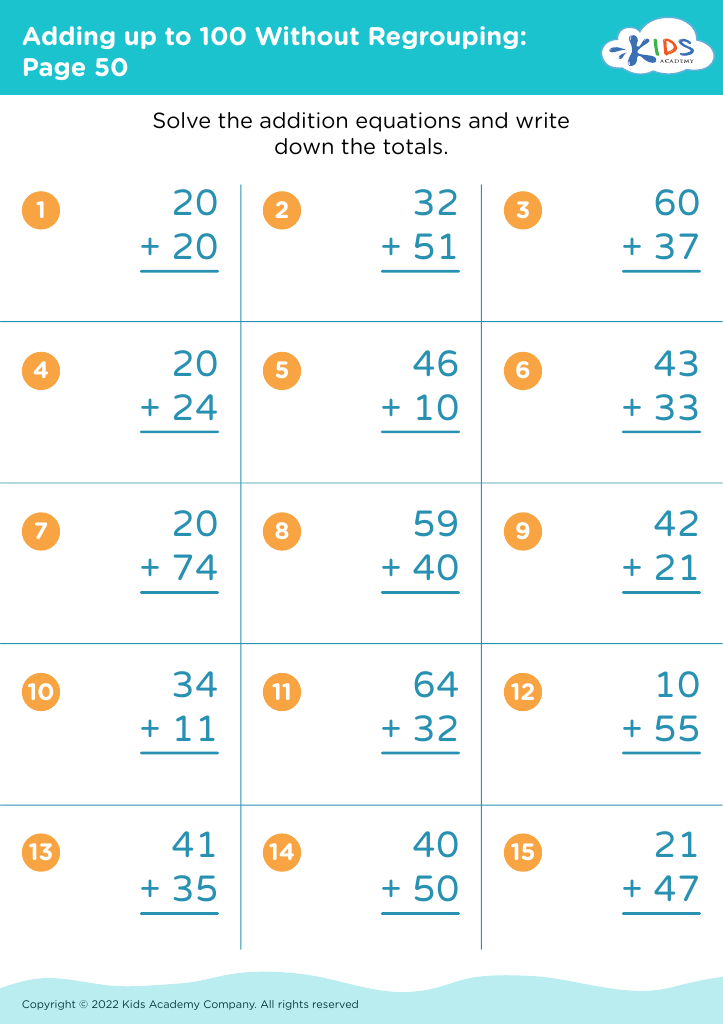
Adding up to 100 Without Regrouping: Page 50
Worksheet
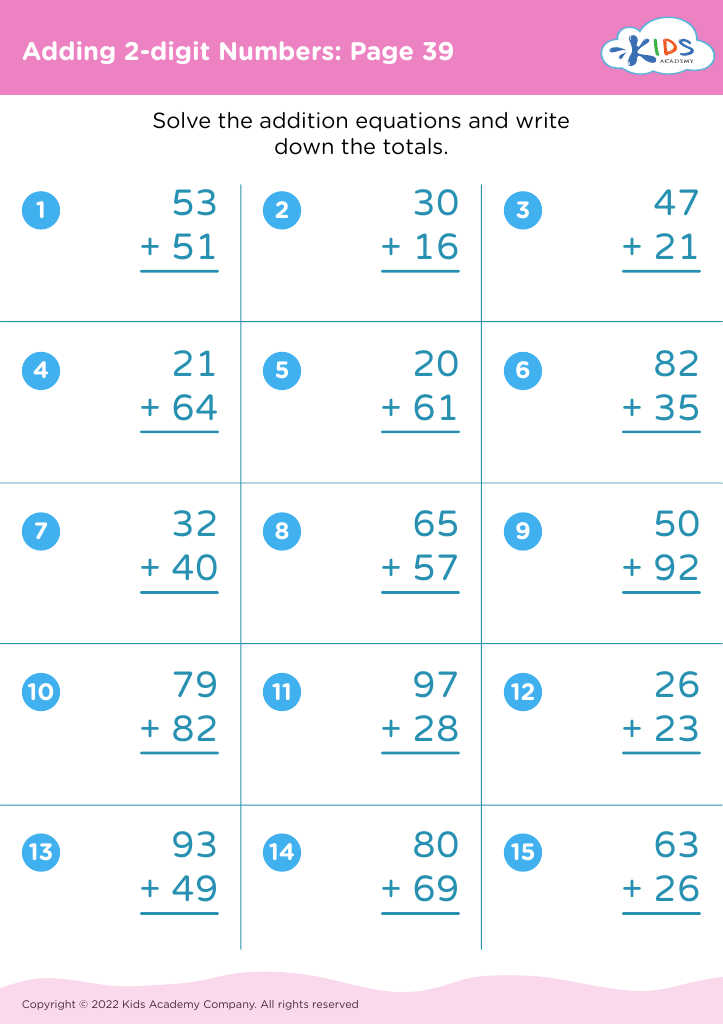
Adding 2-digit Numbers: Page 39

Adding 2-digit Numbers: Page 39

Adding 2-digit Numbers: Page 39
Worksheet
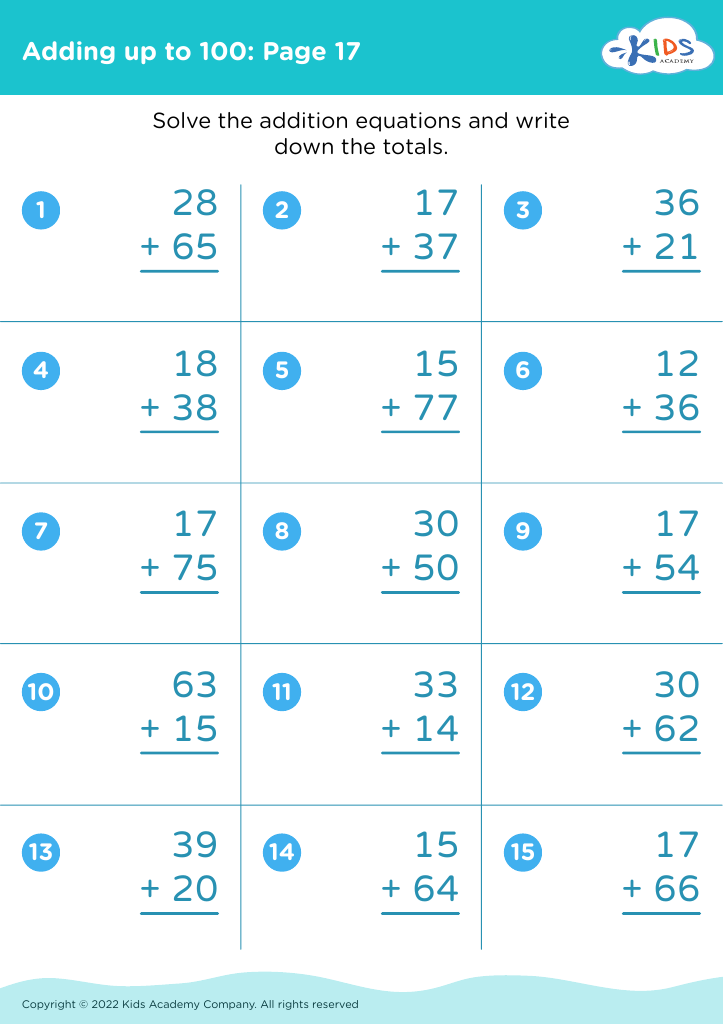
Adding up to 100: Page 17

Adding up to 100: Page 17

Adding up to 100: Page 17
Worksheet
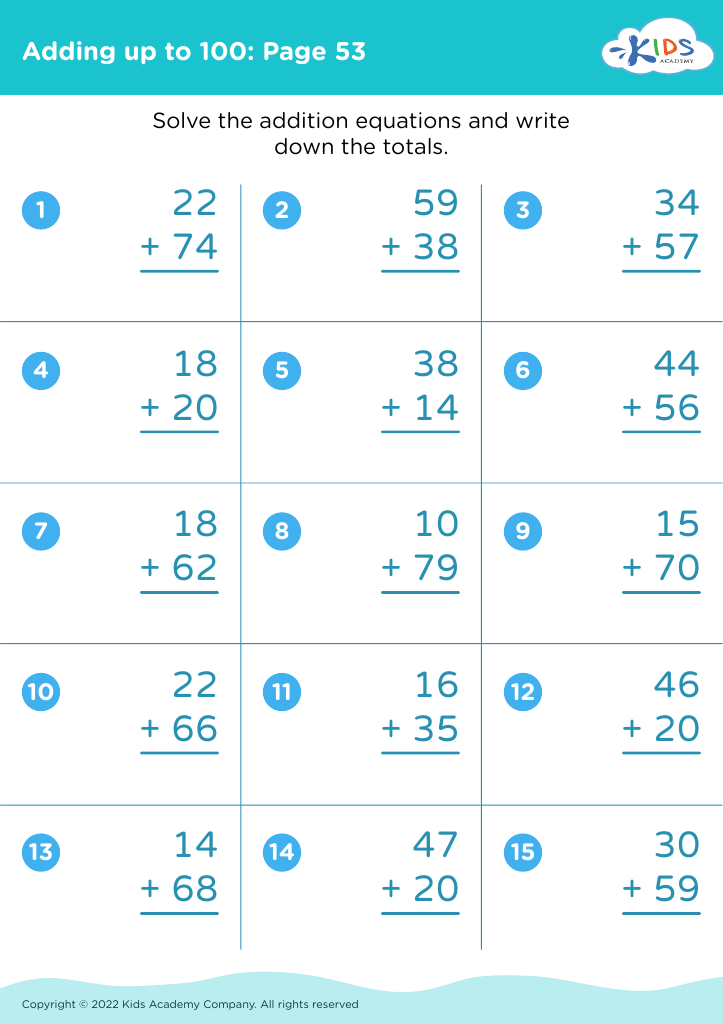
Adding up to 100: Page 53

Adding up to 100: Page 53

Adding up to 100: Page 53
Worksheet
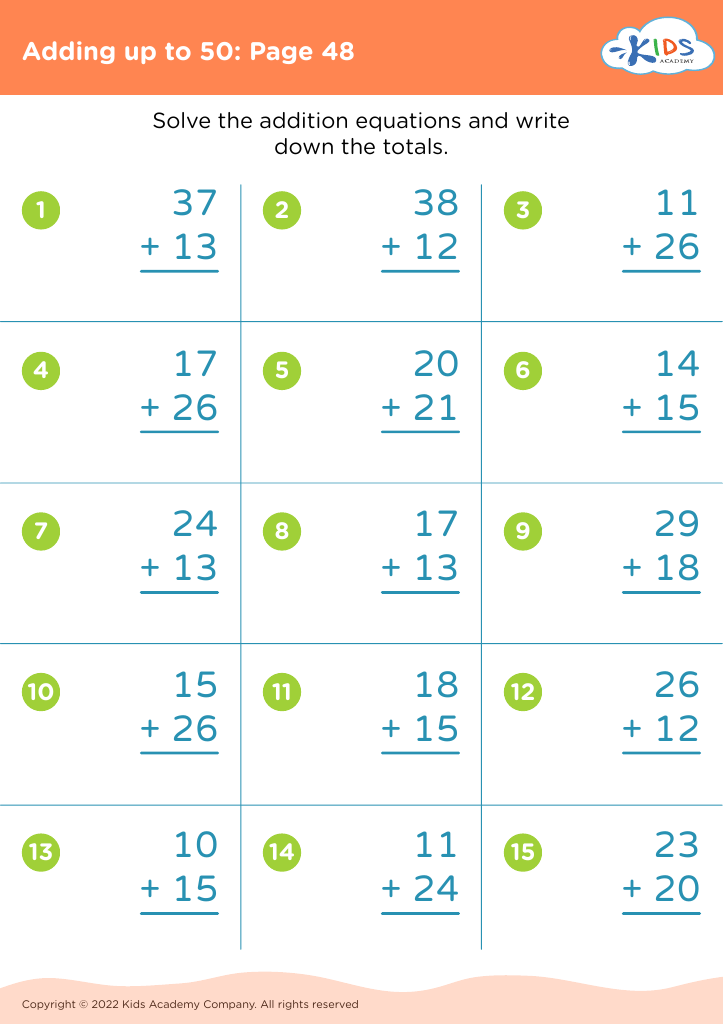
Adding up to 50: Page 48

Adding up to 50: Page 48

Adding up to 50: Page 48
Worksheet
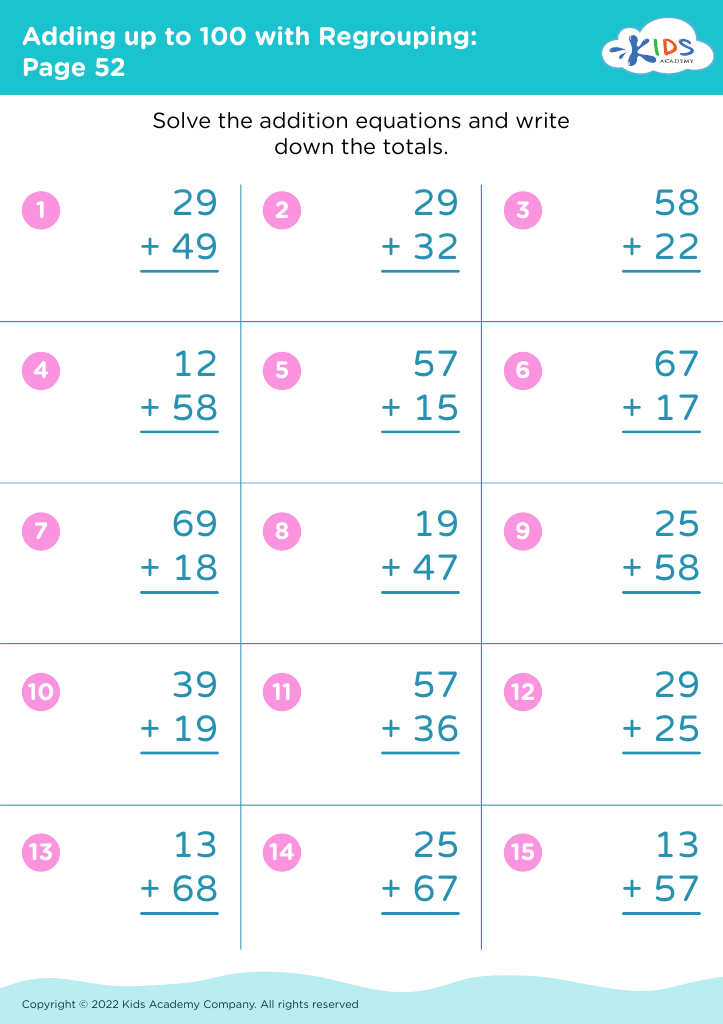
Adding up to 100 with Regrouping: Page 52
Worksheet
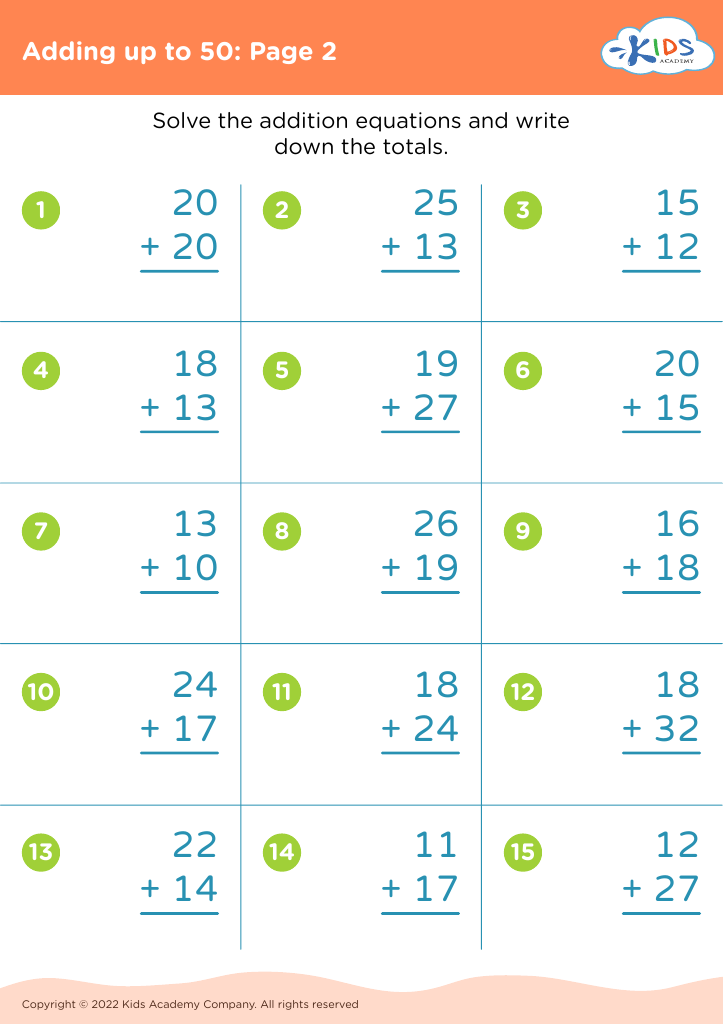
Adding up to 50: Page 2

Adding up to 50: Page 2

Adding up to 50: Page 2
Worksheet
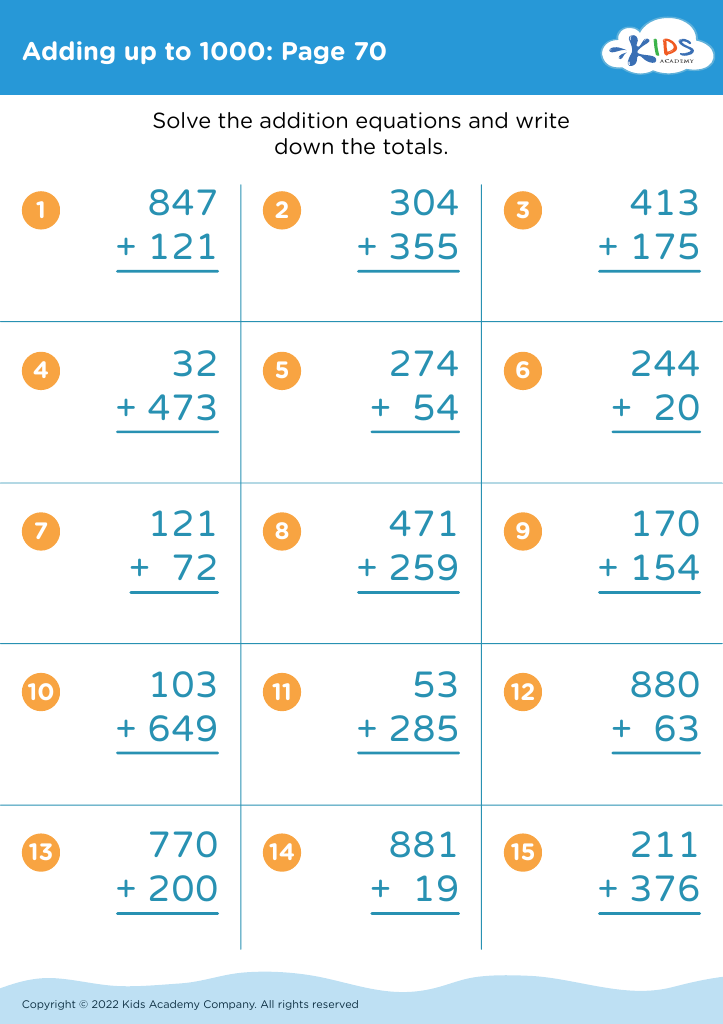
Adding up to 1000: Page 70

Adding up to 1000: Page 70

Adding up to 1000: Page 70
Worksheet
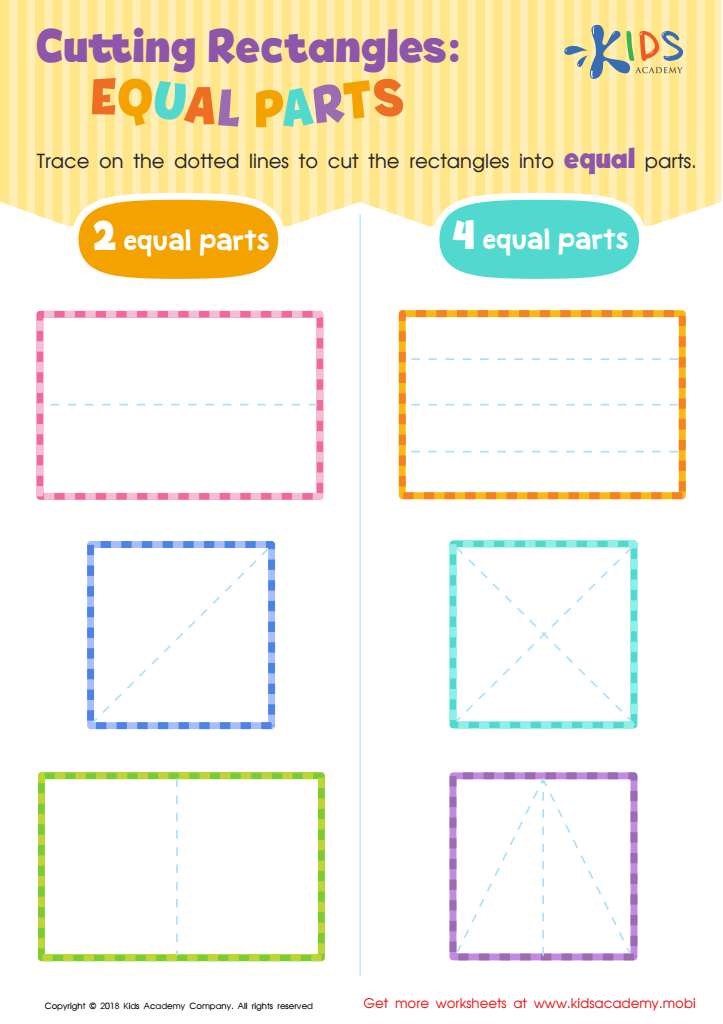
Cutting Rectangles: Equal Parts Worksheet

Cutting Rectangles: Equal Parts Worksheet

Help your child learn to divide shapes into two or four equal parts with this worksheet. It has six rectangles that need to be cut up as directed, following the dotted lines. Show it to your child and watch them gain confidence in mastering this skill.
Cutting Rectangles: Equal Parts Worksheet
Worksheet
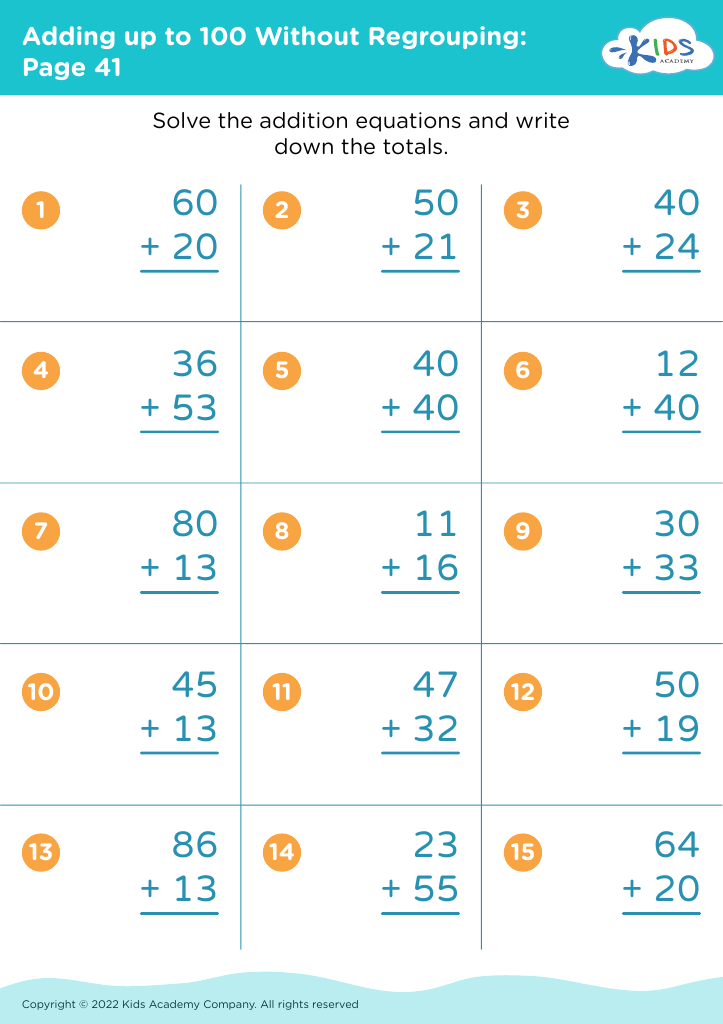
Adding up to 100 Without Regrouping: Page 41
Worksheet
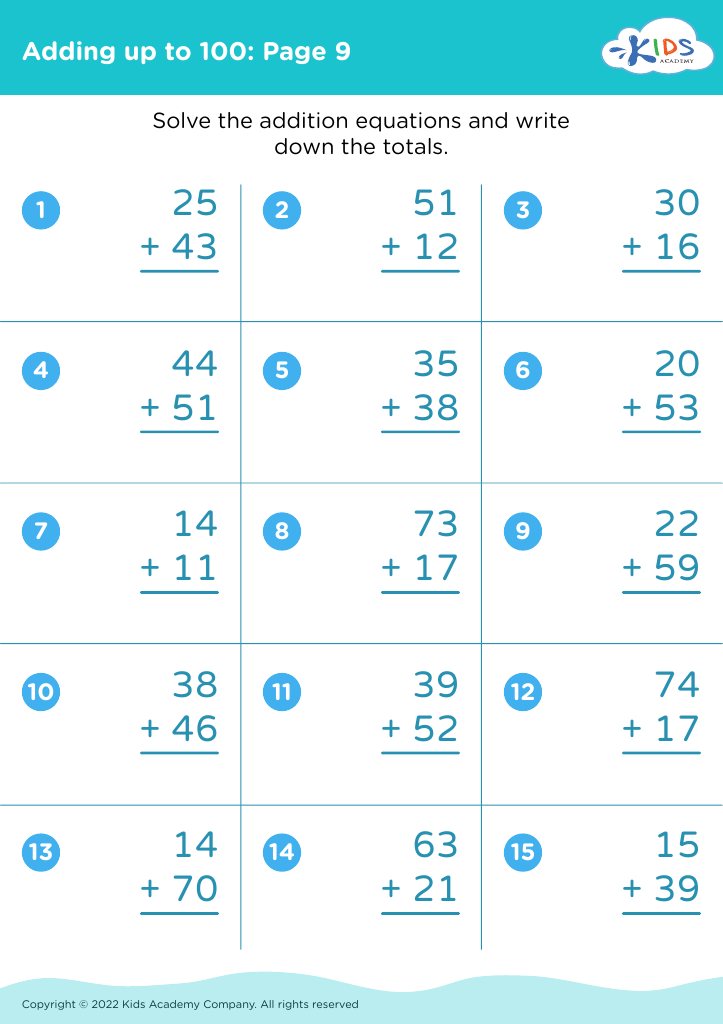
Adding up to 100: Page 9

Adding up to 100: Page 9

Adding up to 100: Page 9
Worksheet
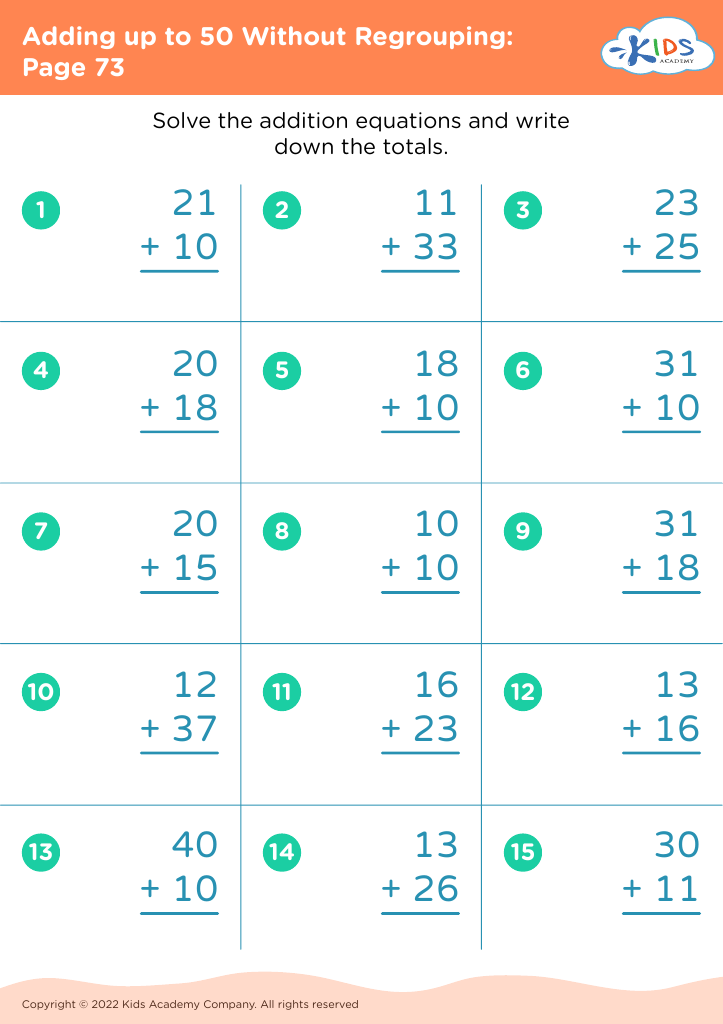
Adding up to 50 Without Regrouping: Page 73
Worksheet
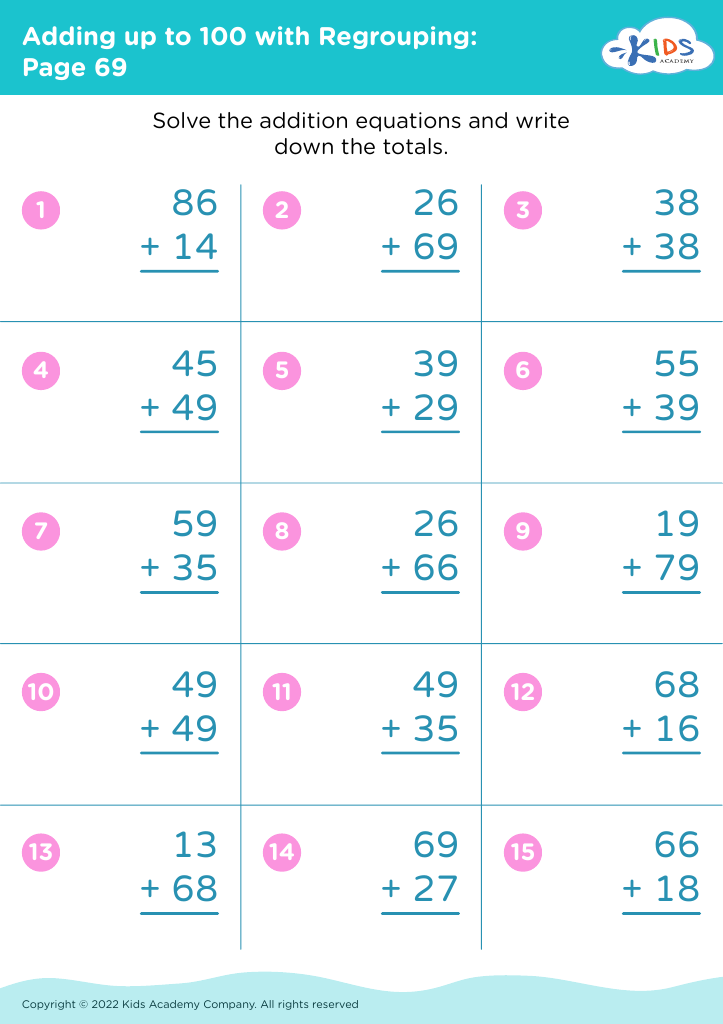
Adding up to 100 with Regrouping: Page 69
Worksheet
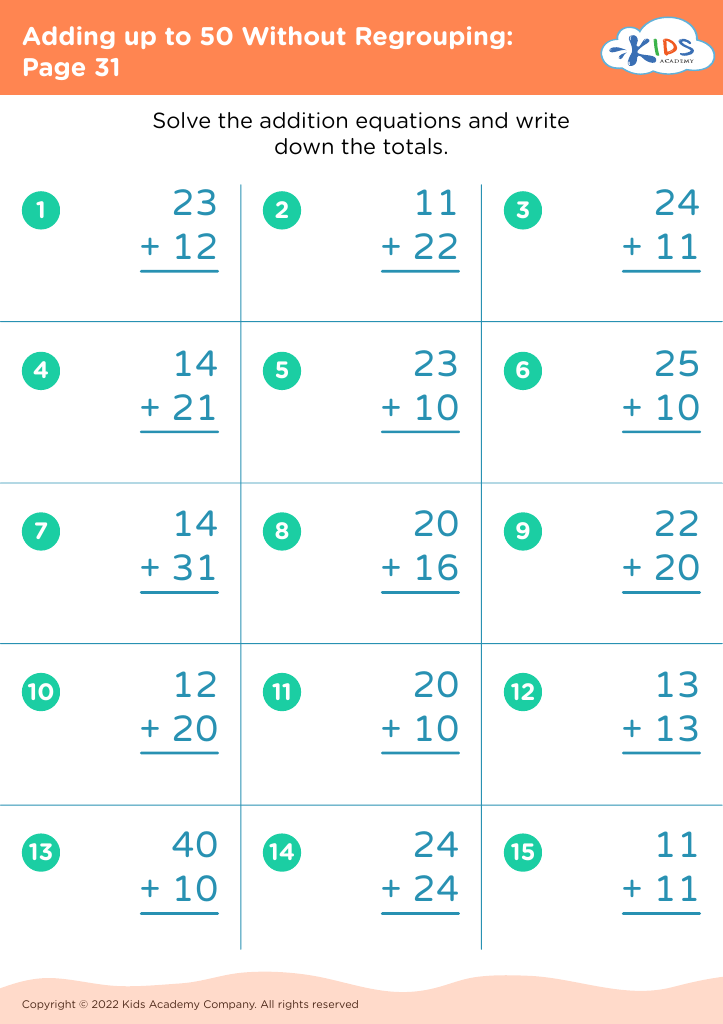
Adding up to 50 Without Regrouping: Page 31
Worksheet
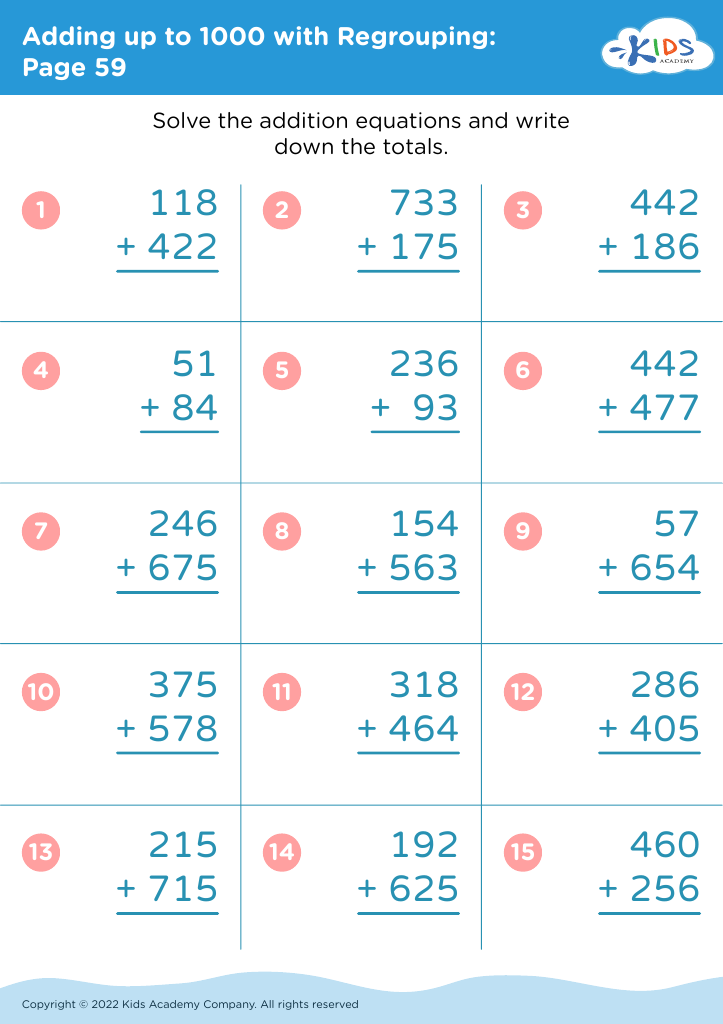
Adding up to 1000 with Regrouping: Page 59
Worksheet
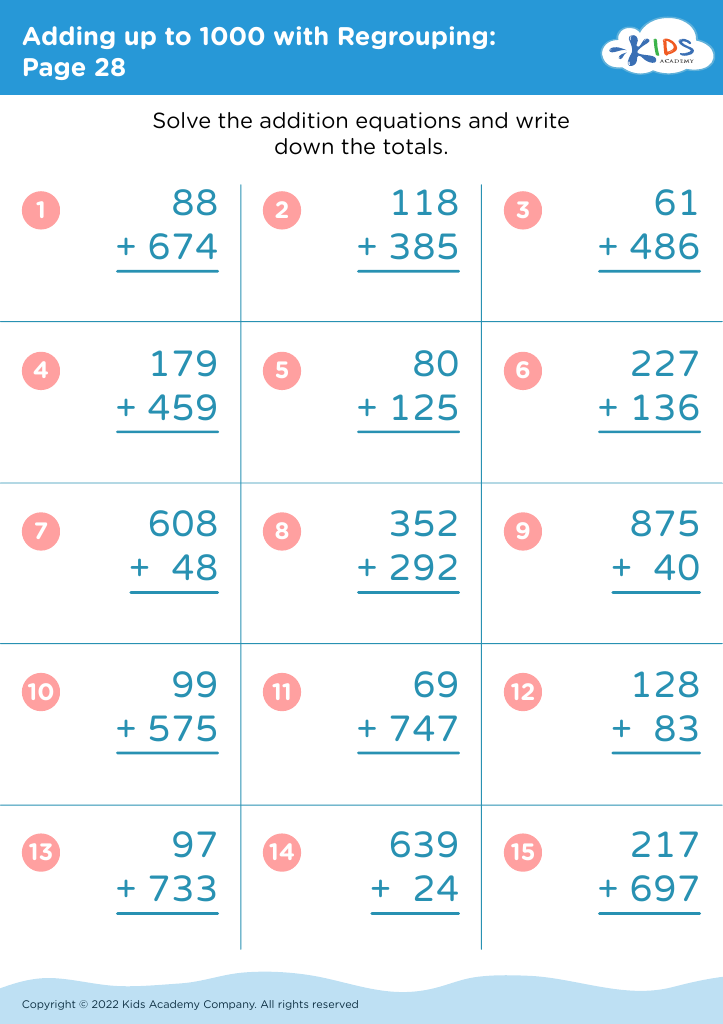
Adding up to 1000 with Regrouping: Page 28
Worksheet
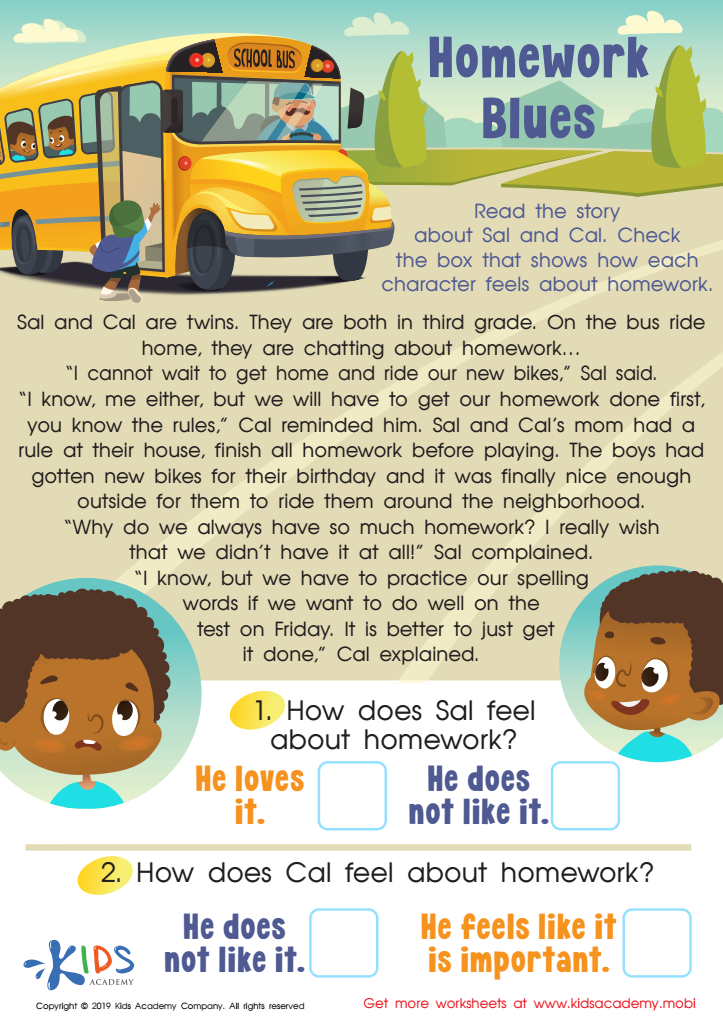
Homework Blues Worksheet


Homework Blues Worksheet

Cal and Sal don't love doing homework, just like your kids. Use this worksheet to help your children understand why homework is important. Read the passage together and then answer the questions at the bottom of the page. It's a fun way to learn together!
Homework Blues Worksheet
Worksheet
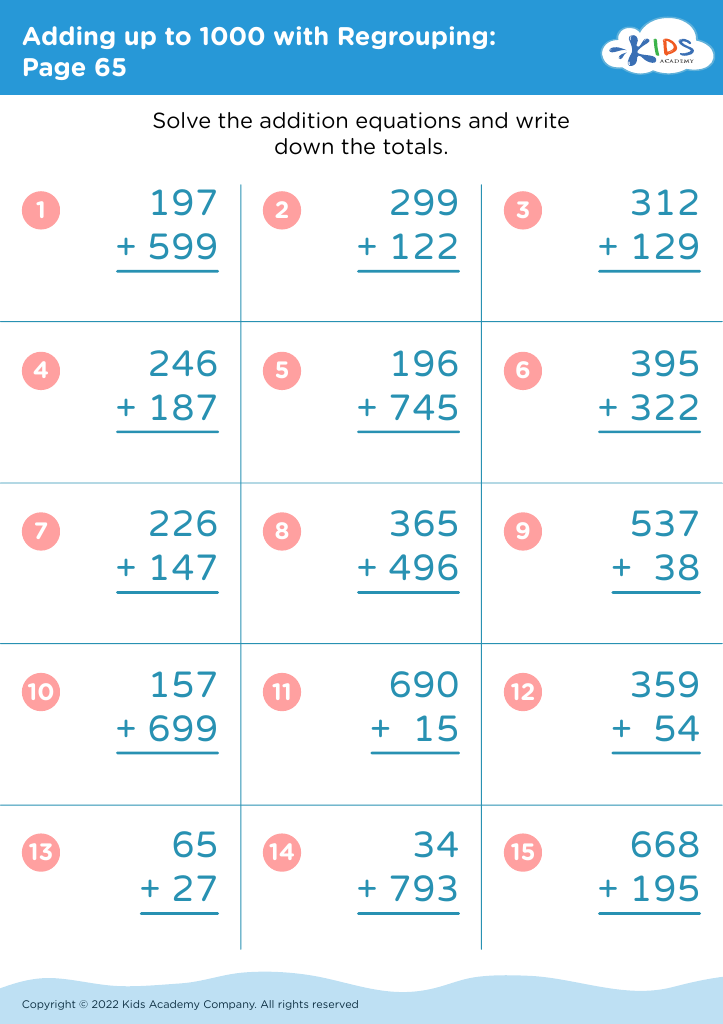
Adding up to 1000 with Regrouping: Page 65
Worksheet
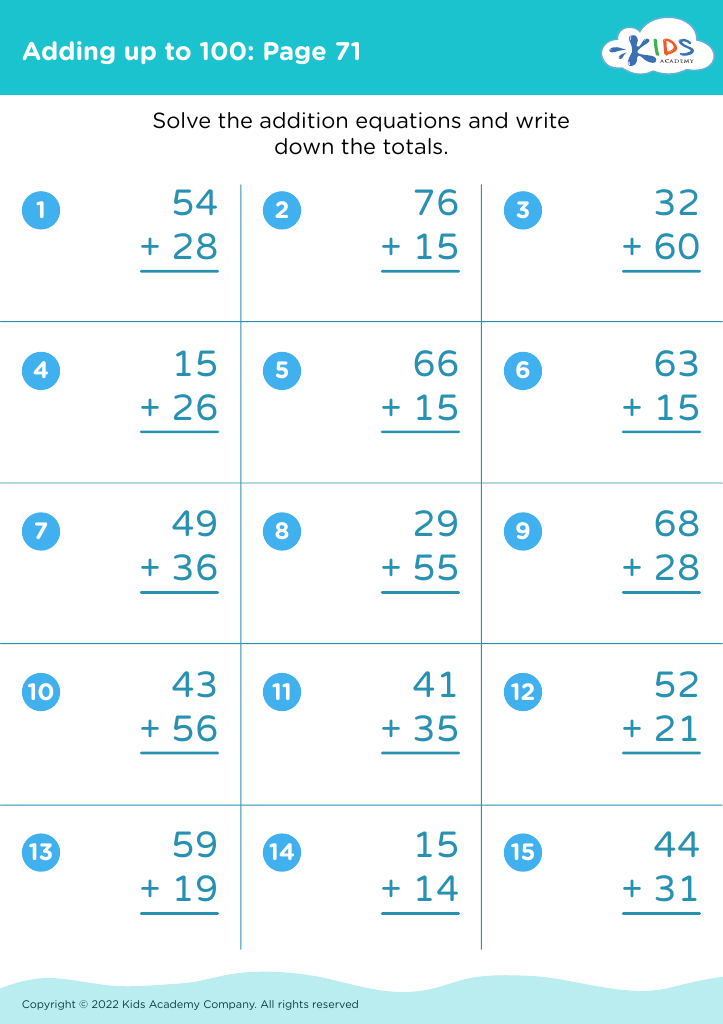
Adding up to 100: Page 71

Adding up to 100: Page 71

Adding up to 100: Page 71
Worksheet
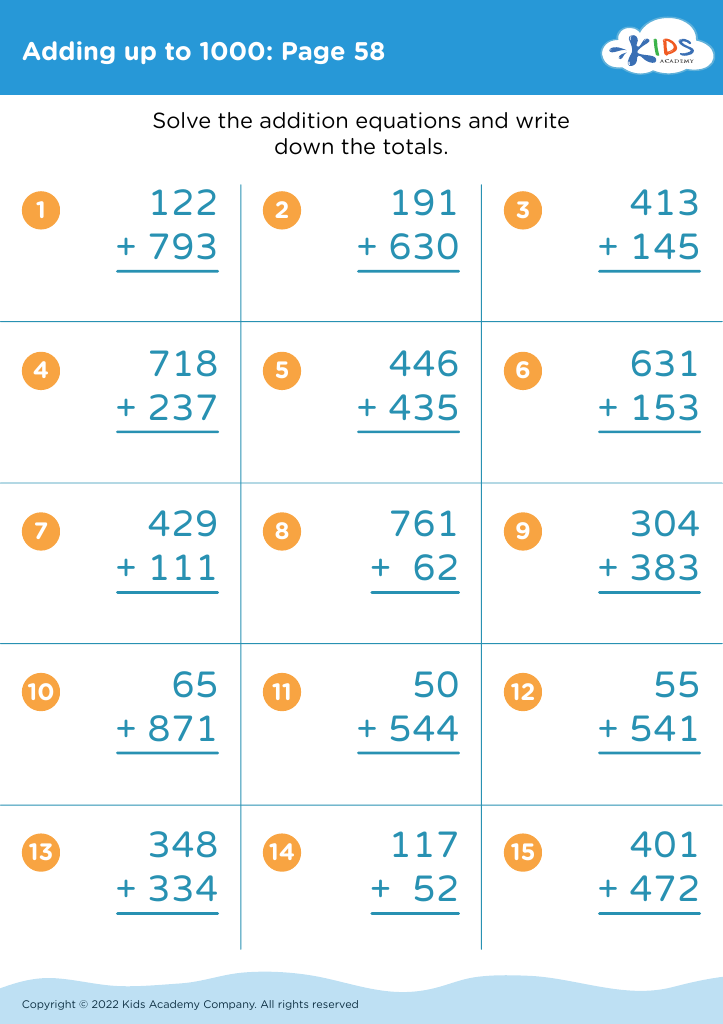
Adding up to 1000: Page 58

Adding up to 1000: Page 58

Adding up to 1000: Page 58
Worksheet
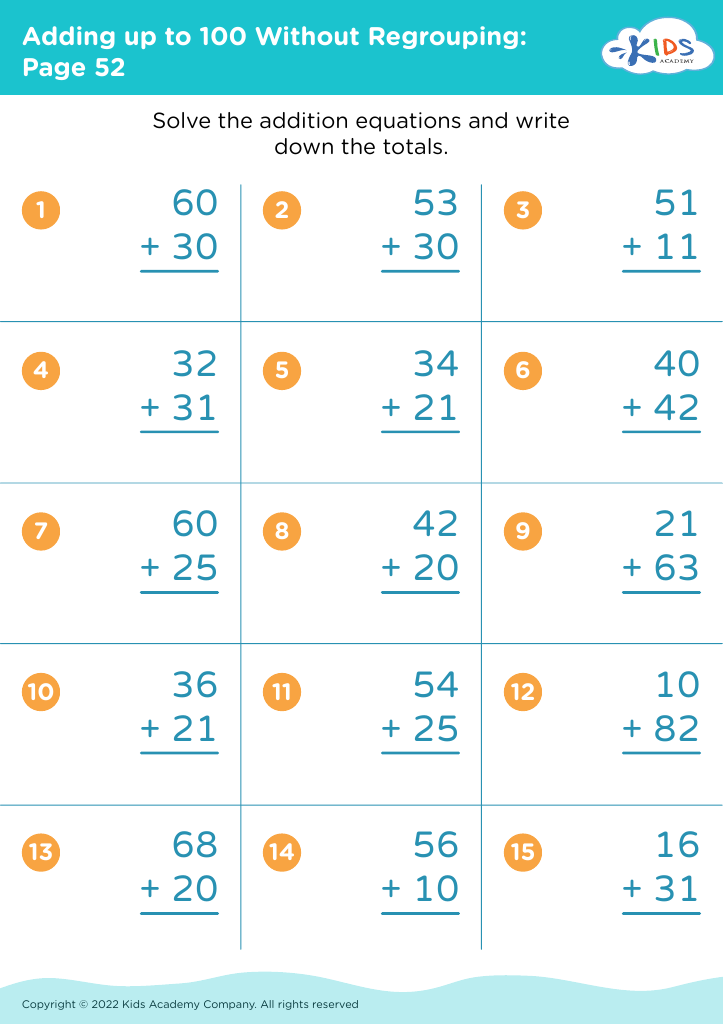
Adding up to 100 Without Regrouping: Page 52
Worksheet
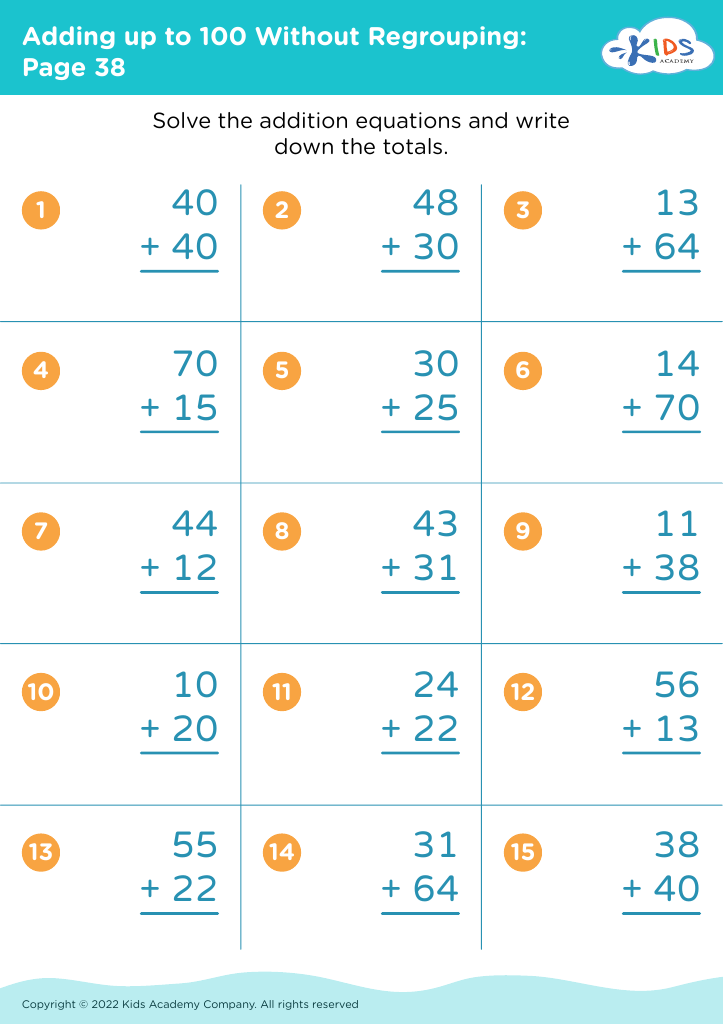
Adding up to 100 Without Regrouping: Page 38
Worksheet
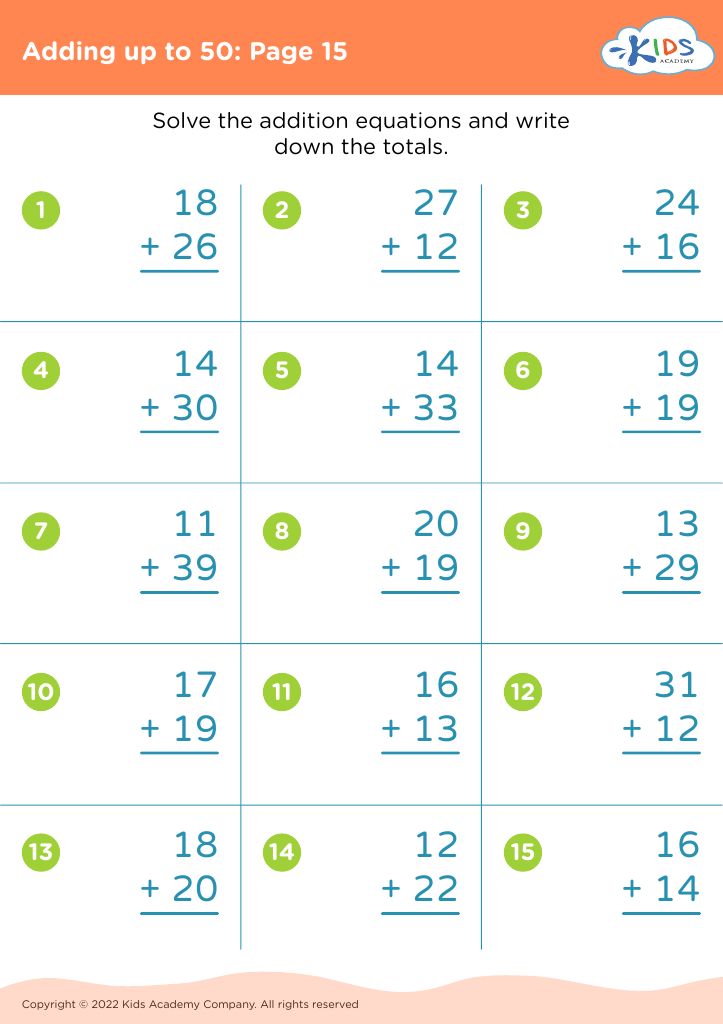
Adding up to 50: Page 15

Adding up to 50: Page 15

Adding up to 50: Page 15
Worksheet


Understanding fractions is crucial for children aged 7-8 as it lays the groundwork for more advanced mathematical concepts and real-life applications. At this age, children are making significant cognitive leaps, and grasping fractions promotes critical thinking and problem-solving skills. Fractions help them understand parts of a whole, enabling better comprehension of division and ratio concepts, which are foundational for later math topics like decimals and percentages.

Moreover, fractions play a significant role in everyday life. Kids encounter fractions in cooking, sharing items, and measuring distances, making it essential for them to develop practical skills. When parents and teachers prioritize this subject, they help children build confidence in their abilities, making math less daunting.

Introducing fractions through interactive and engaging methods, such as visual aids or hands-on activities, can make learning enjoyable and effective. Encouraging a strong understanding at this stage not only fosters academic success but also empowers children to approach future mathematical challenges with a positive mindset.

Ultimately, a solid grasp of fractions provides children with the foundation to function effectively in their society, setting them up for success both academically and financially in their futures.