Understanding grouping Worksheets for Ages 7-8
3 filtered results
-
From - To
Unlock your child's potential with our "Understanding Grouping Worksheets for Ages 7-8". Designed to engage young learners, these worksheets simplify the concept of grouping, fostering critical thinking and problem-solving skills. Perfect for 2nd graders, the activities encourage children to categorize objects, enhancing their mathematical understanding and laying a strong foundation for more advanced arithmetic. With vibrant images and interactive tasks, these worksheets make learning fun and effective, helping young minds build confidence and proficiency in grouping and basic operations. Visit Kids Academy to download and watch your child excel in math!
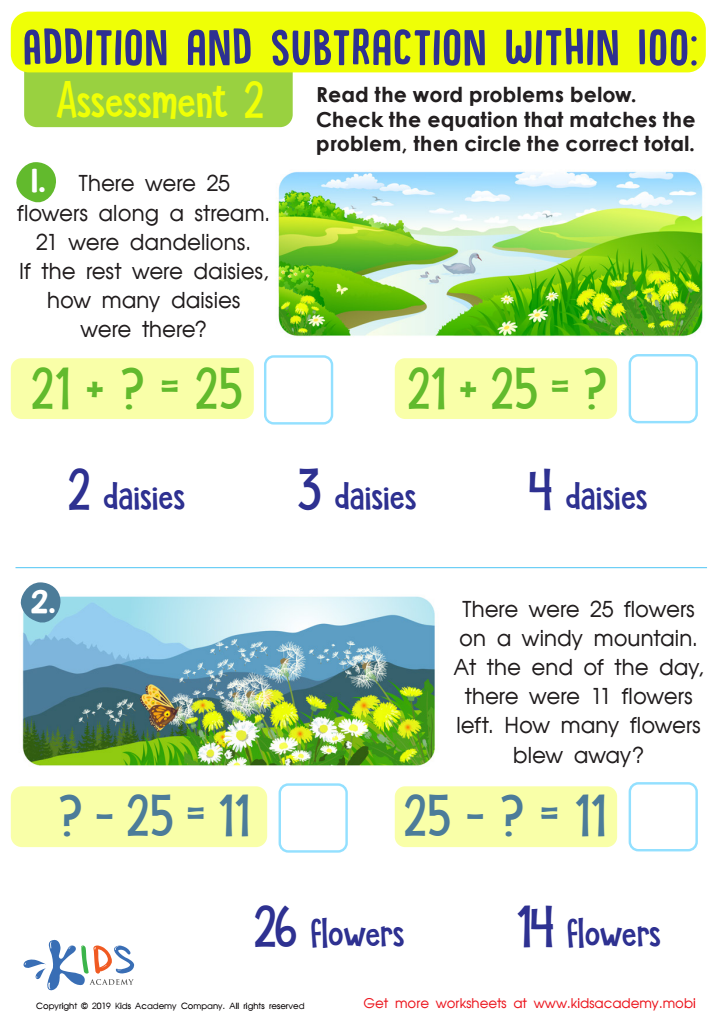
Assessment 2 Math Worksheet
 Assign to My Students
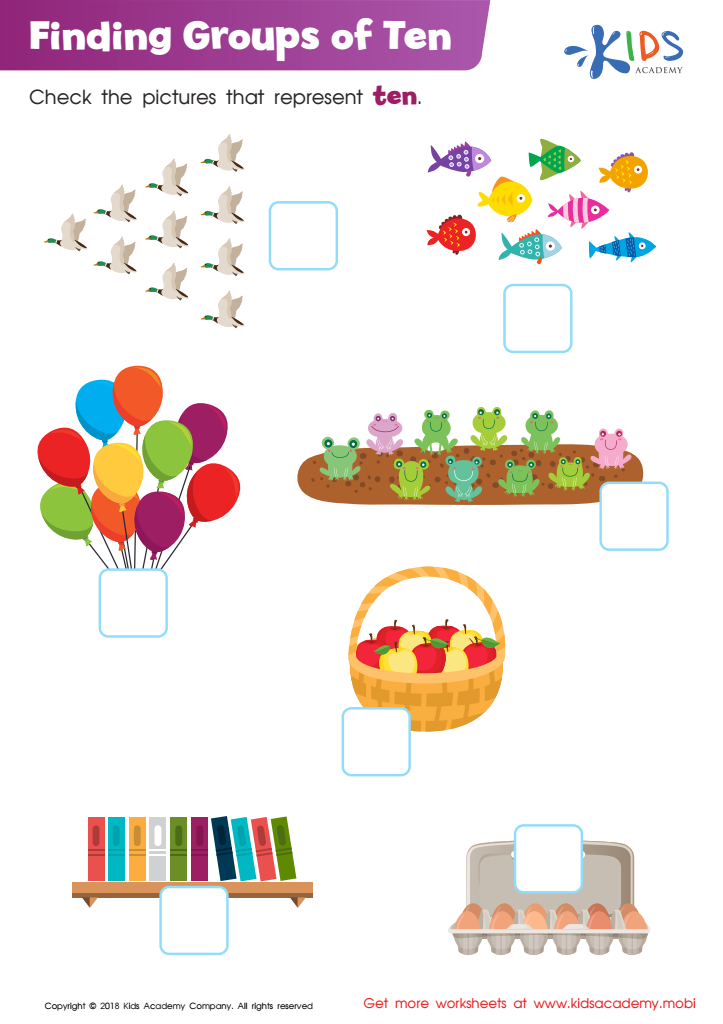
Finding Groups of Ten Worksheet
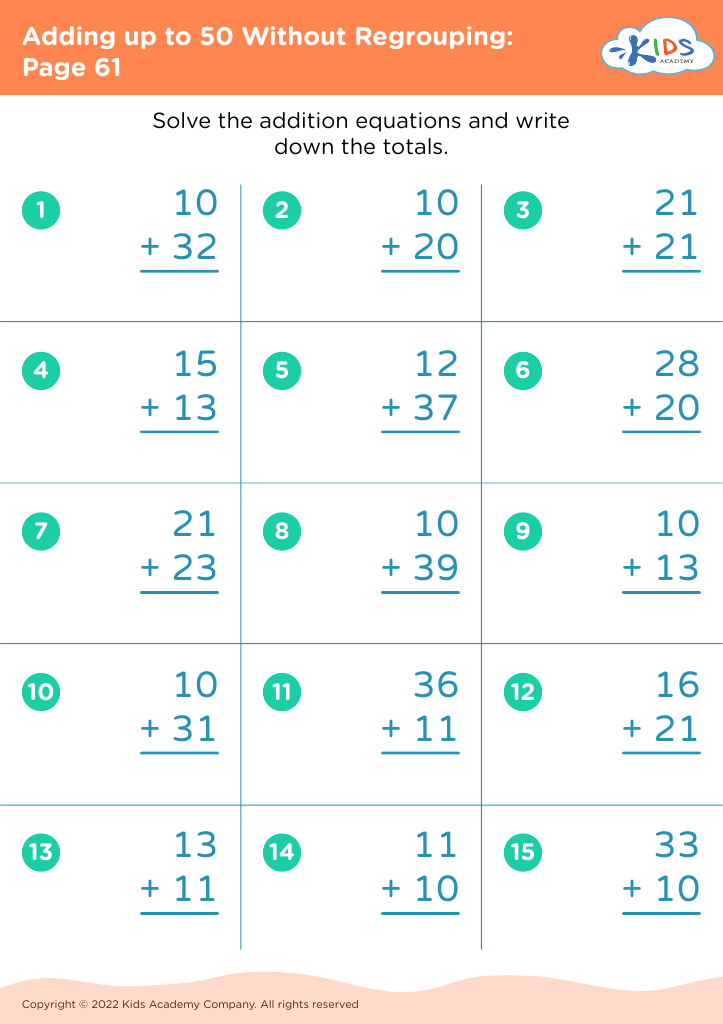







Understanding grouping is a fundamental skill for children ages 7-8 as it supports their mathematical development and builds a solid foundation for more advanced concepts. By learning to group numbers, children become proficient in basic arithmetic operations like addition, subtraction, multiplication, and division. For example, when adding numbers, grasping the notion of grouping helps kids see that the sum of 5 + 7 can be broken down into 10 (a group of ten) and 2 (a group of leftovers), simplifying the process and making it less intimidating.
Furthermore, comprehension of grouping in mathematics nurtures a child's problem-solving abilities and logical thinking. This conceptual groundwork extends beyond math and into everyday situations, enhancing their ability to manage tasks, organize information, and make decisions. Grouping enables children to recognize patterns and categorize objects, which sharpens both their analytical skills and their understanding of the world around them.
For parents and teachers, emphasizing grouping at this stage is critical because it aligns with their developmental milestones. Children at this age are transitioning from concrete thinking to more abstract ideas. Facilitating this skill through grouping aids in this cognitive development and ensures they are prepared for future educational challenges. Engaging and effective instruction in grouping can set them on a path of mathematical confidence and competence.








