
Understanding habitats Worksheets for Ages 7-8
5 filtered results
Difficulty Level
Grade
Age
-
From - To
Subject
Activity
Standards
Explore the fascinating world of habitats with our "Understanding Habitats Worksheets" designed for children ages 7-8! These engaging worksheets help young learners discover the diverse environments where animals and plants thrive, such as forests, deserts, and oceans. Featuring interactive activities, captivating illustrations, and thought-provoking questions, children will enhance their comprehension of ecosystems while developing critical thinking skills. Perfect for both homeschoolers and classroom settings, these resources encourage creativity and a deeper appreciation for nature. Dive into the essentials of ecological balance with activities that make learning about habitats both fun and educational. Start your journey into the wonders of the natural world today!
Favorites
With answer key
Interactive
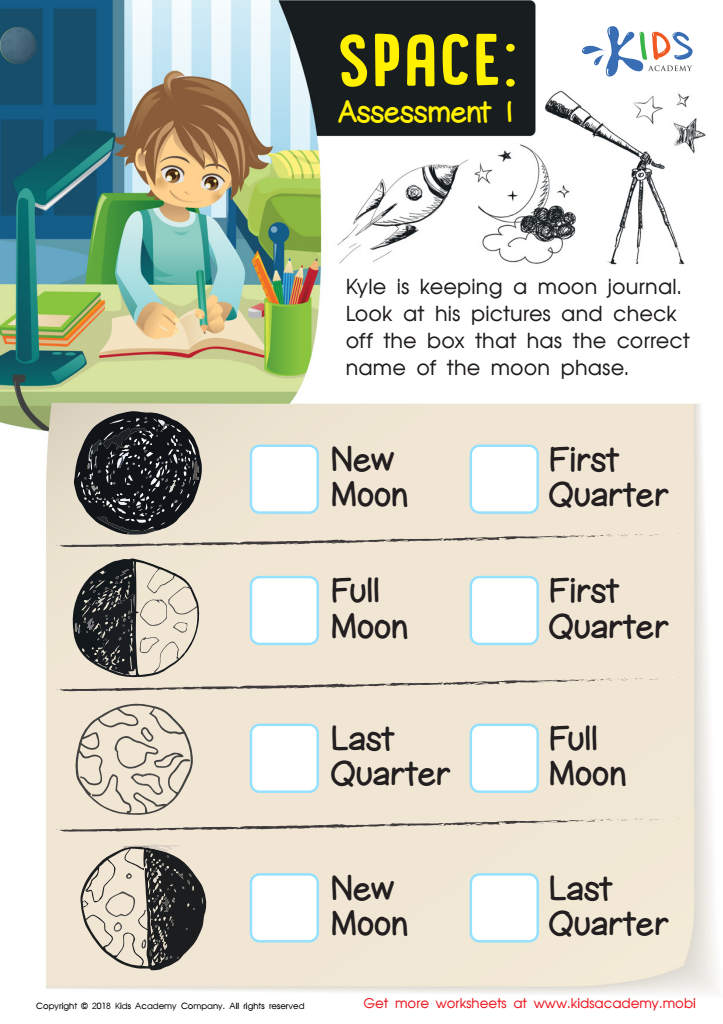
Space: Assessment 1 Worksheet
Introduce Kyle and his moon journal to your kids! Ask if they know what it is, or if they keep one too. Together, look at Kyle's pics and help them identify the phases of the moon. Have them check off the correct name of each. It's a great way to get kids interested in space!
 Assign to My Students
Space: Assessment 1 Worksheet
Worksheet
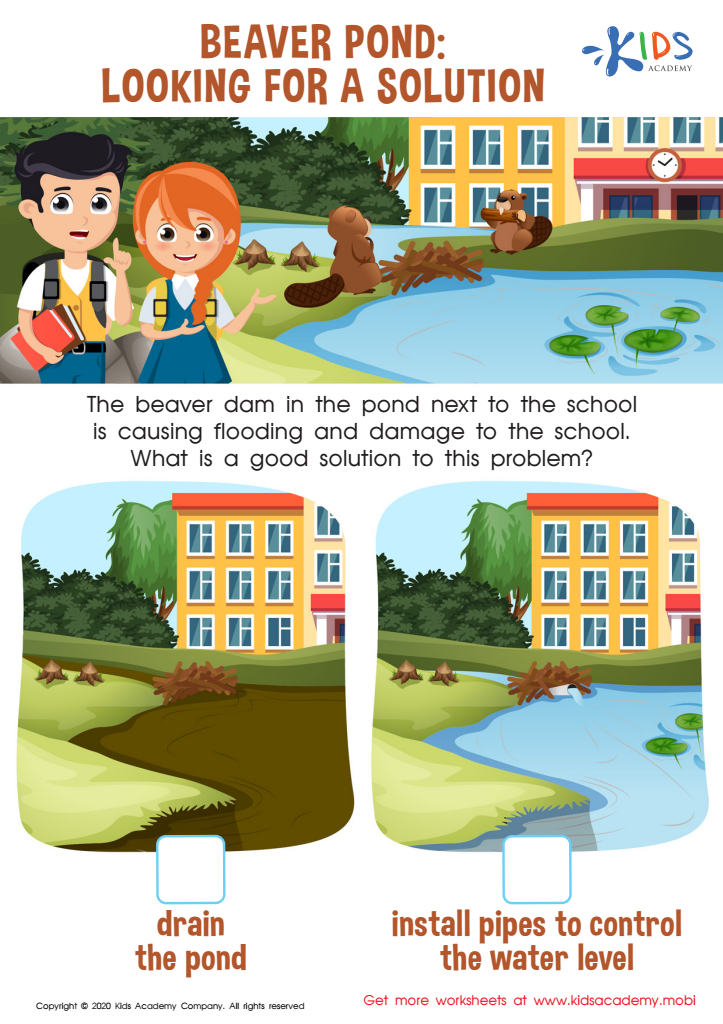
Beaver Pond: Looking for a Solution Worksheet
Beavers are building dams and flooding the local pond! Help your child practice problem-solving skills by reading through and selecting from possible solutions, with this fun PDF worksheet. See how your child's skills are improved!
Beaver Pond: Looking for a Solution Worksheet
Worksheet
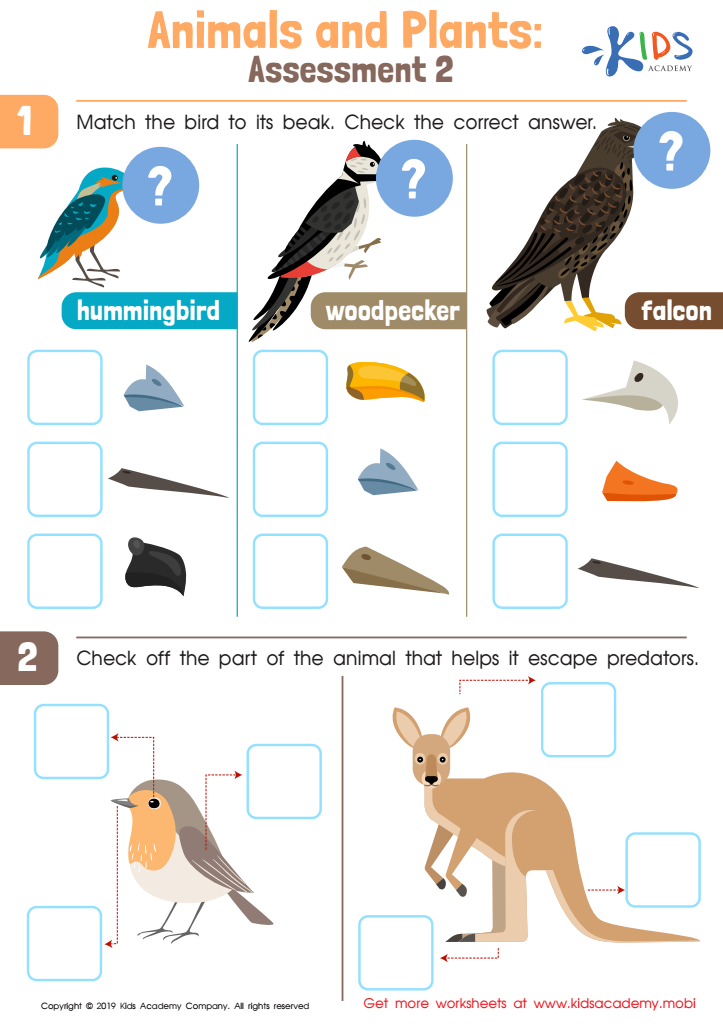
Animals and Plants: Assessment 2 Worksheet
This free PDF is ideal to quickly test your child's knowledge of animal adaptations. They'll select the right beak patterns for hummingbird, woodpecker and falcon, and identify which parts of animals help them escape predators. It's easy to assess your kid's understanding.
Animals and Plants: Assessment 2 Worksheet
Worksheet
Join Kids Academy for Free
Who is primarily going to use this learning content?








Understanding habitats is essential for children aged 7-8, as it lays the groundwork for their awareness of ecosystems and the natural world. By learning about various habitats—such as forests, wetlands, deserts, and oceans—children discover how diverse plant and animal species thrive in different environments. This knowledge fosters a sense of curiosity and respect for nature.
Moreover, understanding habitats promotes critical thinking skills. Children begin to explore questions about food chains, interdependence of species, and ecological balance. This knowledge encourages them to think about human impacts on these environments, fostering a sense of stewardship early on.
Parents and teachers play a key role in nurturing this awareness. Engaging in discussions about local habitats through field trips, outdoor exploration, or classroom activities can make learning exciting and tangible. Such experiences allow children to connect textbook knowledge to real-world situations.
Furthermore, developing a love for nature can promote mental well-being, reduce stress, and enhance concentration. As these young learners gain respect for their environments, they are more likely to become environmentally conscious adults. Therefore, both parents and teachers should prioritize understanding habitats to enrich children’s education, cultivation of empathy, and commitment to protecting our planet.








