Understanding mass Worksheets for Ages 7-8
3 filtered results
-
From - To
Unlock the world of measurements with our "Understanding Mass Worksheets" designed specifically for ages 7-8. These engaging and interactive worksheets help young learners explore the concept of mass through a variety of activities. Designed to build essential math skills, students will practice comparing weights, converting measurement units, and solving real-world problems. Our resources use vibrant visuals and relatable examples to make learning fun and effective. Perfect for classroom or home use, these worksheets encourage critical thinking and enhance understanding of mass in everyday life. Start your child's journey into measurement mastery today with these thoughtfully crafted worksheets!
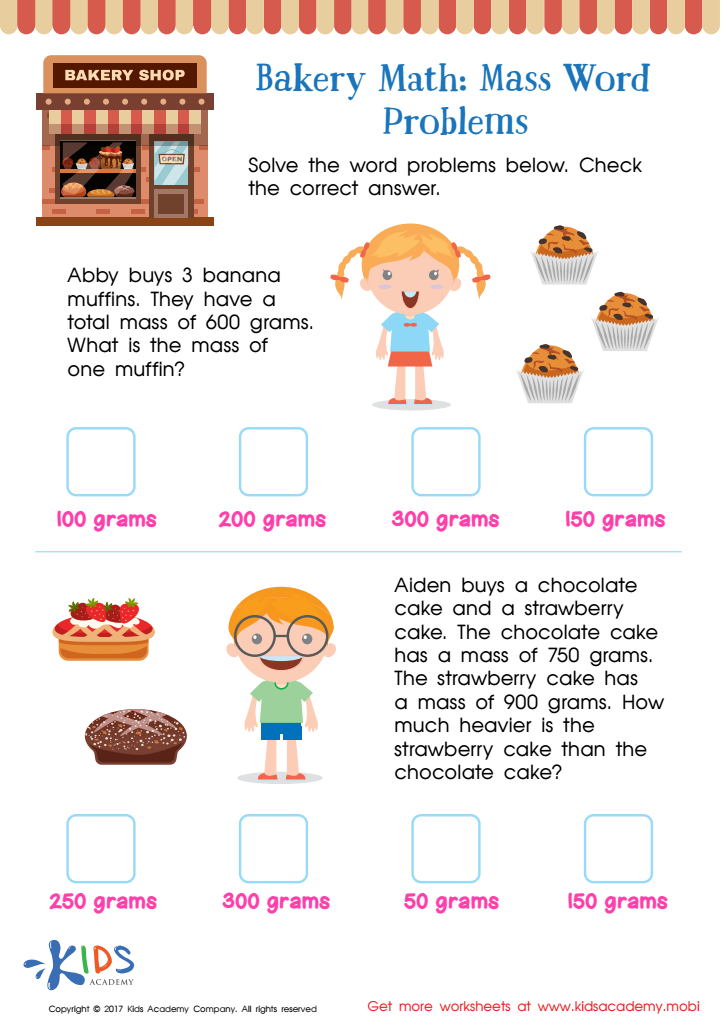
Mass Word Problems Worksheet
 Assign to My Students
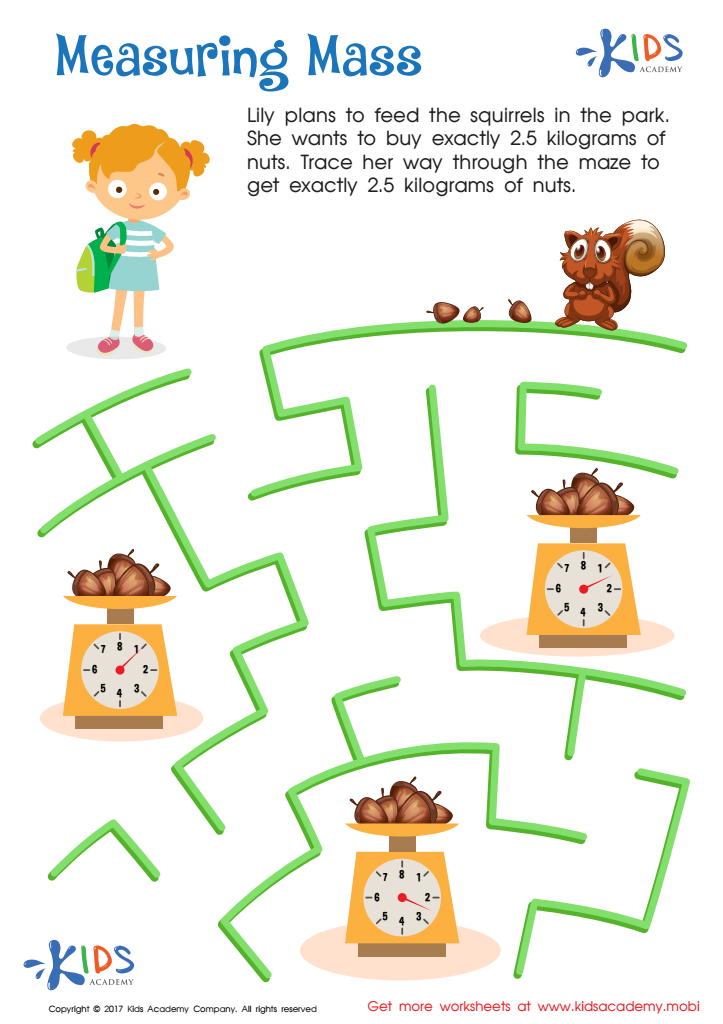
Measuring Mass Worksheet
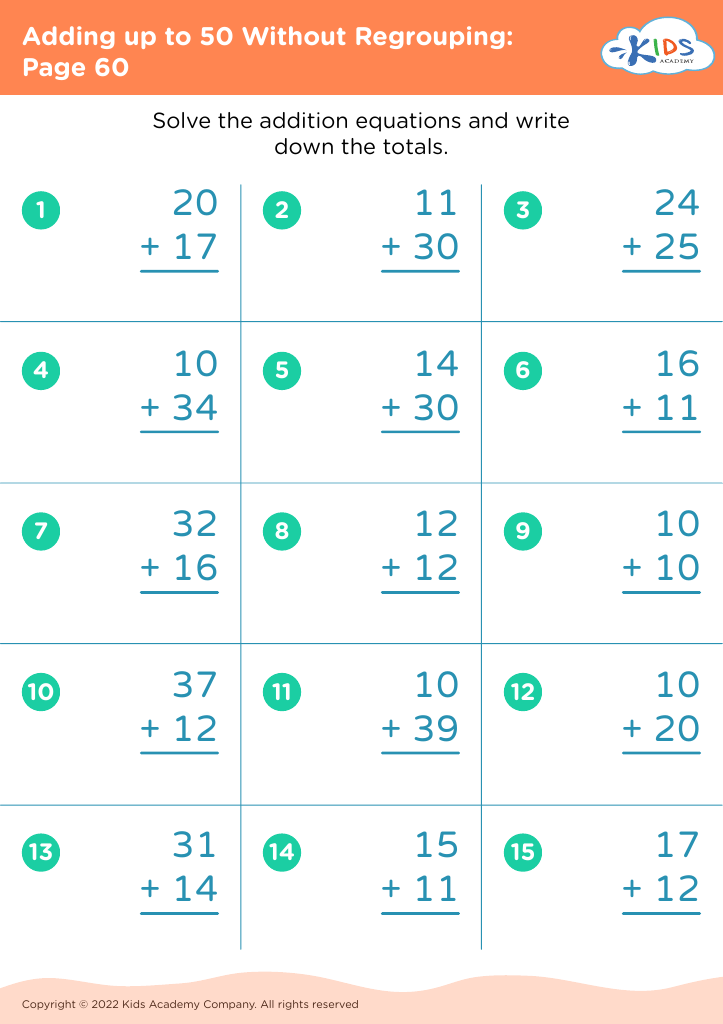






Understanding mass is crucial for children aged 7-8, as it lays a foundation for their comprehension of various scientific and mathematical concepts. At this age, children are naturally curious and begin to make sense of the world around them. By learning about mass, they develop critical thinking and problem-solving skills through hands-on experiences, like weighing objects and understanding measurement units.
Knowledge of mass helps children grasp fundamental concepts in science, such as gravity, density, and matter. It encourages them to explore how different materials have varying weights and how this affects their everyday lives. For example, understanding why some objects sink while others float fosters an early interest in physics.
Additionally, mastering mass introduces children to basic mathematical operations, such as addition and subtraction, in practical contexts. It allows for cross-curricular learning, connecting science and math with arts through cooking or crafts, where measurements are essential.
Supporting children in their understanding of mass not only enriches their educational experience but also equips them with skills that will be applicable in real-life situations, promoting independence and informed decision-making. Thus, parents and teachers play a vital role in facilitating this understanding, nurturing inquiry, and fostering a lifelong love of learning.








