Understanding pollination Worksheets for Ages 7-8
4 filtered results
-
From - To
Unlock the wonders of nature with our "Understanding Pollination Worksheets" for ages 7-8, designed to stimulate young minds with engaging, educational activities. Tailored to enhance kids' learning skills, our printable worksheets explain the fascinating process of pollination through fun, interactive exercises. Harnessing vibrant illustrations and simple language, these resources make complex concepts clear and exciting for early learners. Ideal for both classroom and home use, our worksheets support curriculum goals while inspiring a love for science and the environment. Help your students or children discover the crucial role of pollinators with these hands-on learning materials today!
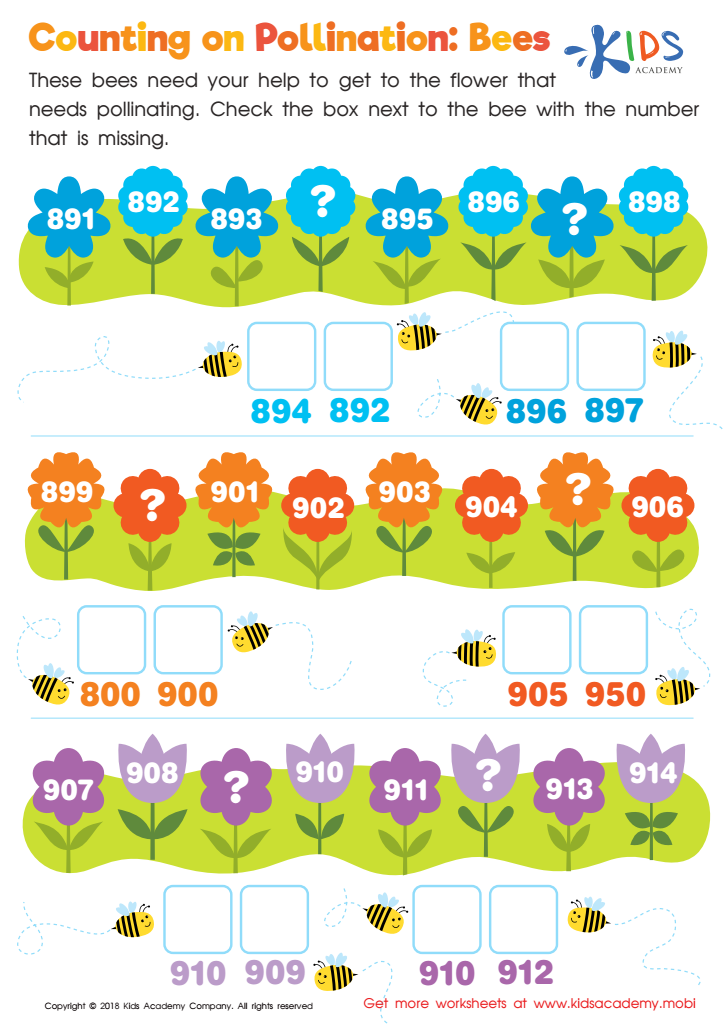
Counting on Pollination: Bees Worksheet
 Assign to My Students
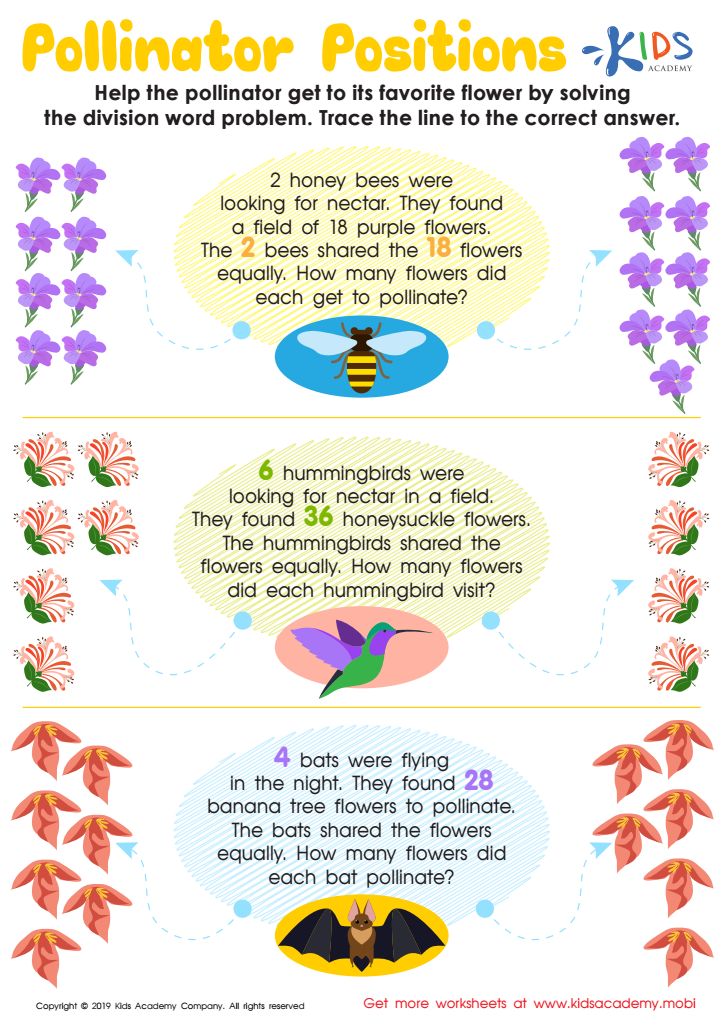
Pollinator Positions Worksheet
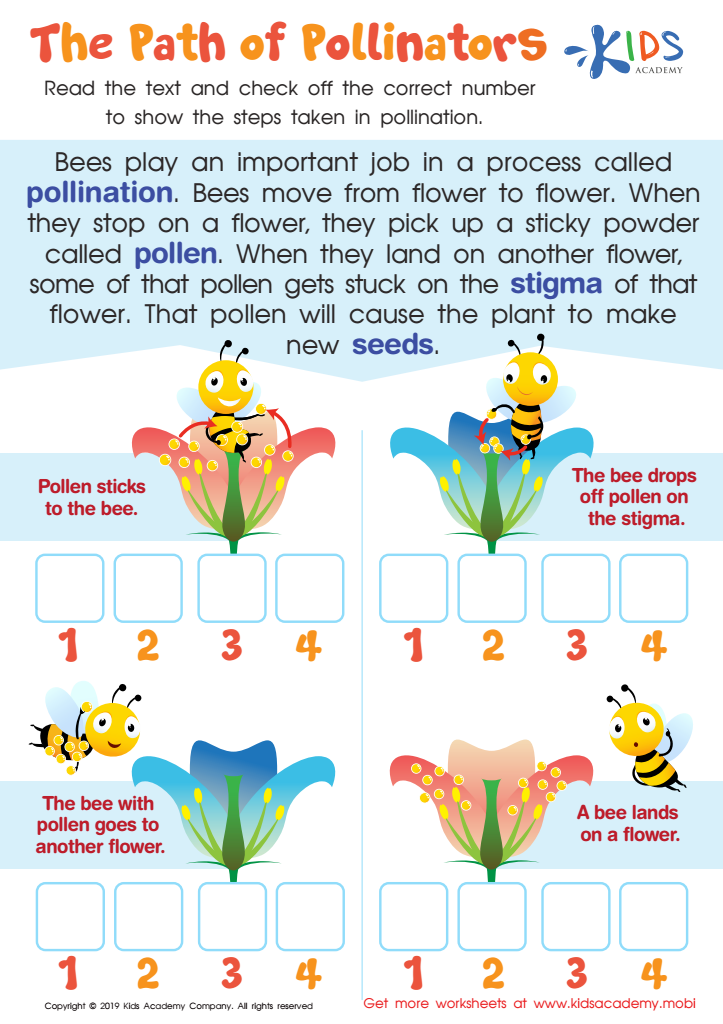
The Path of Pollinators Worksheet
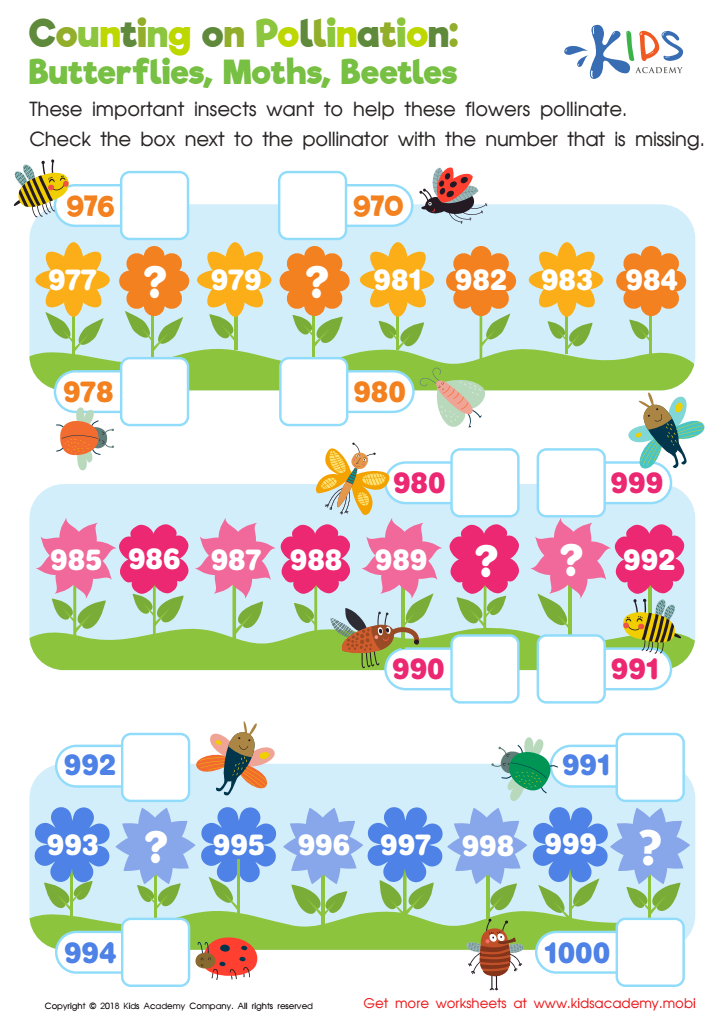
Counting on Pollination: Butterflies, Moths, Beetles Worksheet





Understanding pollination is crucial for children aged 7-8 as it fosters an early appreciation for nature and science. At this impressionable age, kids are keen to explore the world, and learning about pollination can provide them with a fundamental understanding of plant biology and ecosystems. Pollination is a simple yet vital process involving the transfer of pollen from one flower to another, leading to the production of seeds and fruits.
Firstly, grasping pollination aids in realizing how interconnected natural systems are. For instance, children learn that insects like bees and butterflies are not only beautiful but also essential for food production. This knowledge can instill respect and a sense of responsibility towards conserving these pollinators.
Secondly, it ties directly into curriculum objectives for science education by introducing basic concepts of reproduction, growth, and life cycles. Such exposure promotes critical thinking, observation skills, and a curiosity for research.
Lastly, understanding pollination can influence healthier lifestyle choices. Recognizing where food comes from highlights the importance of eating fresh fruits and vegetables and may encourage an interest in gardening or supporting local agriculture. Thus, exploring the topic of pollination cultivates respect for nature, enhances educational outcomes, and promotes healthy living, making it a valuable lesson for young learners.








