Understanding sequencing Worksheets for Ages 7-8
10 filtered results
-
From - To
Engage your 7-8-year-olds with our comprehensive sequencing worksheets, designed to enhance critical thinking and storytelling skills. These interactive resources from Kids Academy guide children through the fundamental concept of sequencing, aiding their ability to logically arrange events and boost reading comprehension. Each worksheet combines fun and educational exercises, encouraging your child’s cognitive development with captivating stories, colorful illustrations, and sequential tasks. Perfect for young learners, these worksheets lay a strong foundation for academic success and everyday problem-solving. Start your child’s journey toward mastering sequencing skills today with our expertly crafted activities!
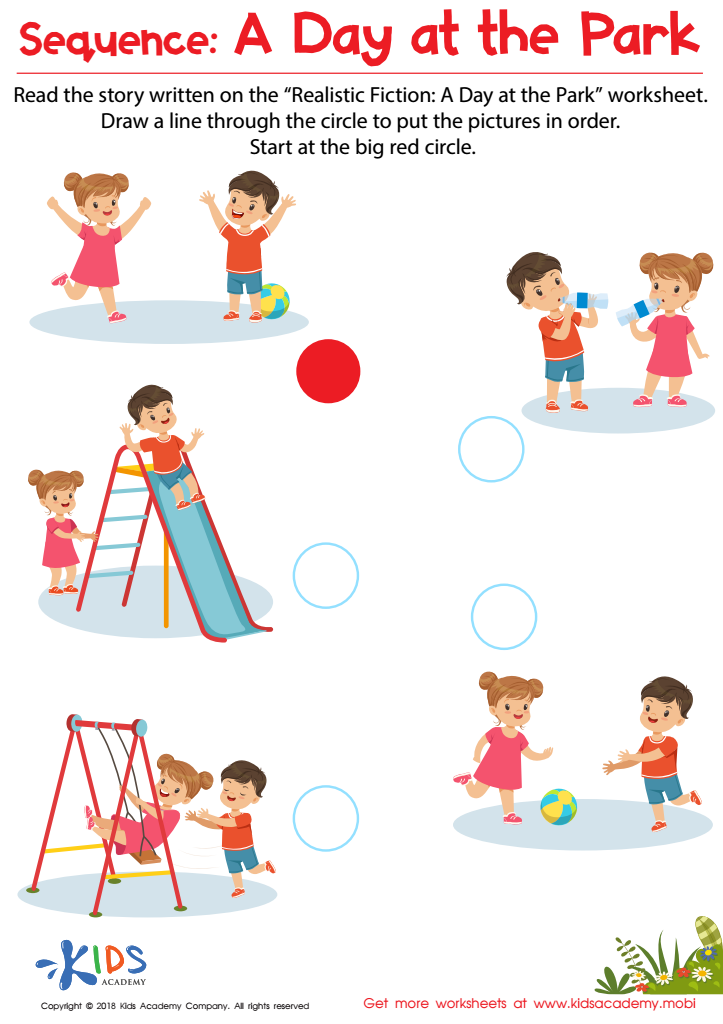
Sequence: A Day at the Park Worksheet
 Assign to My Students
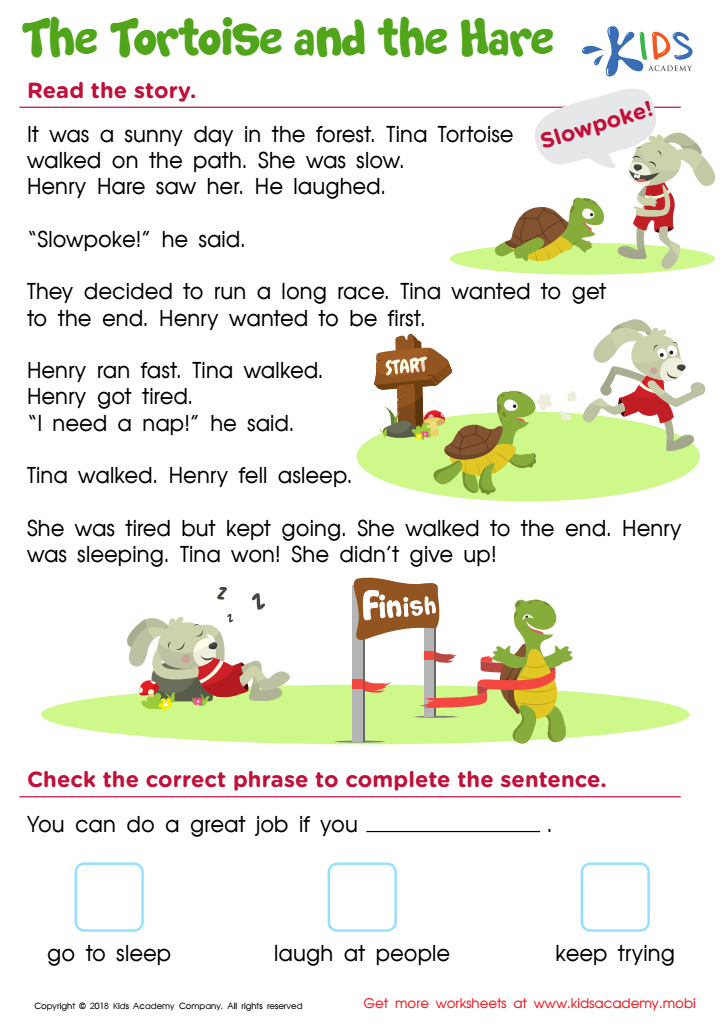
The Tortoise and the Hare Worksheet
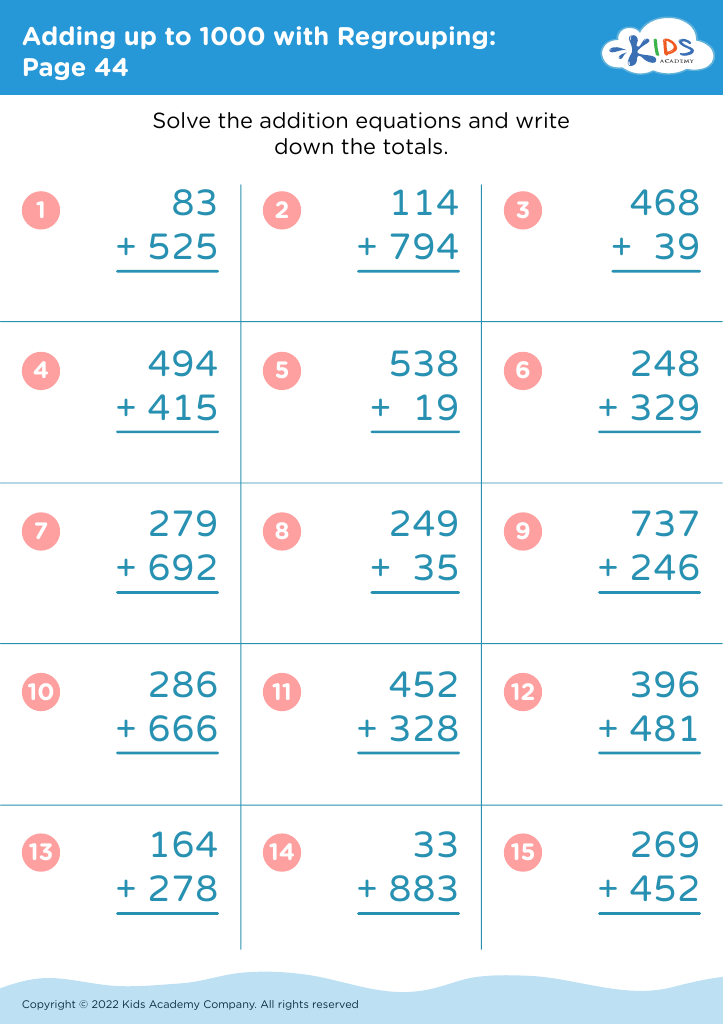
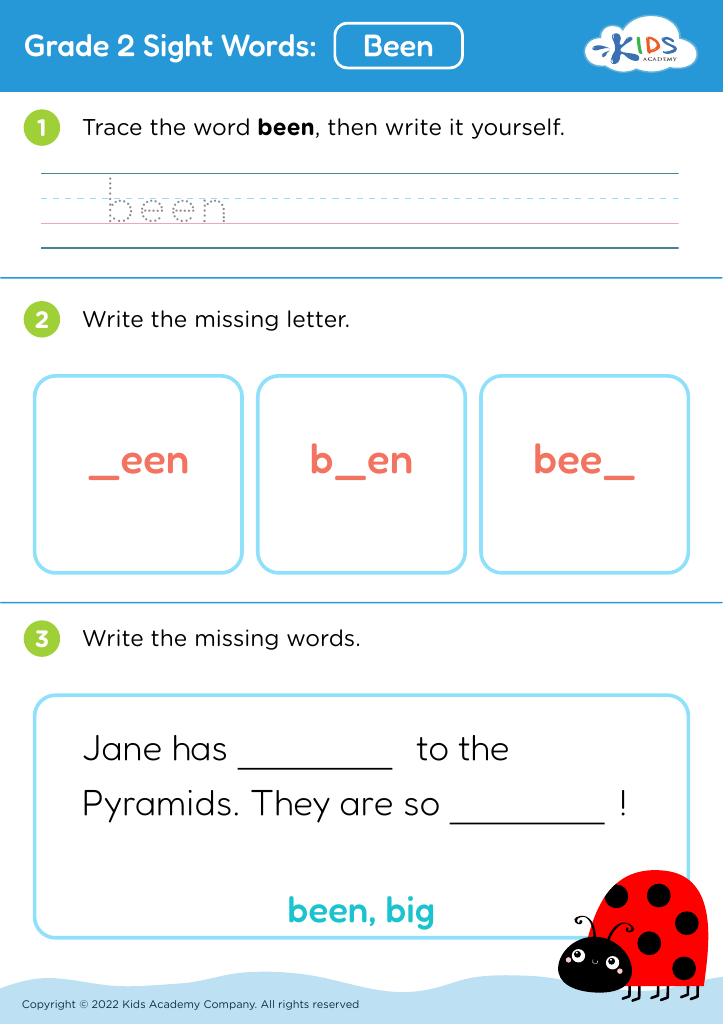








Understanding sequencing is essential for children aged 7-8 as it lays the foundation for critical thinking and problem-solving skills. Sequencing helps children recognize patterns and predict outcomes, which are fundamental aspects of logical reasoning. For young learners, mastering sequencing enhances their reading comprehension skills because stories and texts follow a specific order; understanding this order can aid in recalling details, making inferences, and grasping the narrative's overall meaning.
Sequencing is also crucial in mathematics, particularly when learning concepts such as number lines, basic arithmetic operations, and the step-by-step procedures required to solve problems. When children understand sequencing, they are better equipped to follow multi-step instructions both in academic activities and in everyday tasks, promoting greater independence and self-confidence.
Moreover, grasping sequencing at an early age improves a child’s ability to organize thoughts, which benefits their writing and storytelling skills. Teachers and parents can foster this skill through activities like storytelling, cooking (following recipes), and playing games that involve step-by-step strategies. Since sequencing extends to different areas of learning and daily life, nurturing this skill supports holistic cognitive development, making it a critical focus for educators and parents aiming to provide a strong educational foundation.








